





Pathophysiology of Osteoporosis
calcitonin, estrogen, vitamin D, various cytokines, and other local factors such as prostaglandins.
Peak bone mass in men and women occurs around age 30. Men have higher bone mass than women. (Previous data suggesting people with African ancestry achieve higher peak bone mass are currently being questioned.) After achieving its peak, bone mass plateaus for about 10 years, during which time bone formation approximately equals bone resorption. Beginning with menopause, bone loss accelerates in women to approximately 2% a year for about 10 years and then the rate of loss decelerates (1).
Osteoporotic bone loss affects cortical and trabecular (cancellous) bone. Cortical thickness and the number and size of trabeculae decrease, resulting in increased porosity. Trabeculae may be disrupted or entirely absent. Trabecular bone loss occurs more rapidly than cortical bone loss because trabecular bone is more porous and bone turnover is higher. However, loss of both types contributes to skeletal fragility.
Fragility fractures
A fragility fracture is one that occurs after less trauma than might be expected to fracture a normal bone. Fractures resulting from falls from a standing height or less, including falls out of bed, are typically considered fragility fractures. The most common sites for fragility fractures are the following:
Spine (thoracic and lumbar vertebral compression fractures—the most common osteoporosis-related fracture)
Other sites may include the proximal humerus and pelvis.
Fractures at sites such as the nose, ribs, clavicle, patella, and metatarsals are not considered osteoporosis-related fractures.
Pathophysiology reference
1. Finkelstein JS, Brockwell SE, Mehta V, et al: Bone mineral density changes during the menopause transition in a multiethnic cohort of women. J Clin Endocrinol Metab 93(3):861-868, 2008. doi:10.1210/jc.2007-1876
Classification of Osteoporosis
Osteoporosis can develop as a primary disorder of bone turnover or secondarily due to some other factor. The sites of fracture are similar in primary and secondary osteoporosis.
Primary osteoporosis
Nearly all occurrences of osteoporosis in men and women are primary, without an identifiable underlying cause. Most cases occur in postmenopausal women and older men. However, certain conditions may accelerate bone loss in patients with primary osteoporosis. Gonadal insufficiency is an important factor in both men and women; other factors include decreased calcium intake, , certain medications, and hyperparathyroidism. Some patients have an inadequate intake of calcium during the bone growth years of adolescence and thus never achieve ideal peak bone mass.
The major mechanism of bone loss is increased bone resorption, resulting in decreased bone mass and microarchitectural deterioration, but sometimes bone formation is impaired. The mechanisms of bone loss may involve the following:
Local changes in cytokine production, particularly involving cytokines such as receptor activator of nuclear factor kappa-B ligand [RANKL] that increase bone resorption by promoting differentiation and maturation of osteoclasts
Impaired formation response during bone remodeling, probably caused by age-related decline in the number and activity of osteoblasts, partly related to cytokine-mediated increases in the protein sclerostin
vitamin D
Idiopathic osteoporosis refers to the rare cases of fragility fractures in children, adolescents, premenopausal women, or men < 50 years with normal gonadal function and no detectable secondary cause, including those with low bone mass for age (low Z-scores on dual-energy x-ray absorptiometry [DXA] scans).
Secondary osteoporosis
Secondary osteoporosis accounts for < 5% of osteoporosis in women and about 20% in men. The causes (see table Causes of Secondary Osteoporosis) may also further accelerate bone loss and increase fracture risk in patients with primary osteoporosis.
Patients with chronic kidney disease may have several reasons for low bone mass, including secondary hyperparathyroidism, elevated serum phosphorus, calcitriol deficiency, abnormalities of serum calcium and vitamin D, osteomalacia, and low-turnover bone disorders (adynamic bone disease).
Risk Factors for Osteoporosis
Because mechanical stress, including weight bearing, is necessary for bone growth, immobilization or extended sedentary periods result in bone loss. A low body mass index predisposes to decreased bone mass.
Insufficient dietary intake of calcium, phosphorus, magnesium, and vitamin D predisposes to bone loss, as does endogenous acidosis. Tobacco and alcohol use also adversely affect bone mass. A family history of osteoporosis, particularly a parental history of hip fracture, also increases risk. Patients who have had one fragility fracture are at increased risk of having other clinical (symptomatic) fractures and clinically asymptomatic vertebral compression fractures.
Certain populations, including White and Asian people, have been thought to have a higher risk of osteoporosis than other groups. However, these purported population differences are coming into question because of newly understood difficulties in sorting individuals into population groups.
Symptoms and Signs of Osteoporosis
Patients with osteoporosis are asymptomatic unless a fracture has occurred. Nonvertebral fractures are typically symptomatic, but about two thirds of vertebral compression fractures are asymptomatic (although patients may have underlying chronic back pain due to other causes such as osteoarthritis). A vertebral compression fracture that is symptomatic begins with acute onset of pain that usually does not radiate, is aggravated by weight bearing, may be accompanied by point spinal tenderness, and typically begins to subside in 1 week. Residual pain may last for months or be constant, in which case additional fractures or underlying spine disorders (including malignancy or infection) should be suspected.
Multiple thoracic compression fractures eventually cause dorsal kyphosis, with exaggerated cervical lordosis (dowager hump). Abnormal stress on the spinal muscles and ligaments may cause chronic, dull, aching pain, particularly in the lower back. Patients may have shortness of breath due to the reduced intrathoracic volume and/or early satiety due to the compression of the abdominal cavity as the rib cage approaches the pelvis.
Diagnosis of Osteoporosis
Dual-energy x-ray absorptiometry (DXA)
X-rays (generally done, but not diagnostic)
Although low bone mineral density (and the associated increased risk of fracture) can be suggested by x-rays, it should be confirmed by a bone mineral density measurement. Typically DXA is used; quantitative CT scanning can produce similar bone mineral density measurements but is not widely available.
Dual-energy x-ray absorptiometry (DXA)
Bone mineral density should be measured using DXA scan to screen people at risk, provide a quantitative measure of bone loss, help predict the risk of fracture, and monitor those undergoing treatment (1). In a DXA scan, the target areas, typically the spine and one or both hips, are imaged using x-rays of high and low energy (hence the term "dual energy"). The difference in attenuation between high and low energy beams is a reflection of bone mineral content. The bone mineral content divided by area of bone (also measured in the DXA scan) is the bone mineral density in g/cm2.
If the spine or a hip is not available for scanning (eg, because of hardware from prior total hip arthroplasty), the distal radius can be scanned (called "1/3 radius" on the DXA scan report). The distal radius should also be scanned in a patient with hyperparathyroidism because this is the most common site of bone loss in hyperparathyroidism.
DXA results are reported as T-scores and Z-scores.
The T-score corresponds to the number of standard deviations that the patient's bone mineral density differs from the peak bone mass of a healthy, young person of the same sex and race/ethnicity. The World Health Organization establishes cutoff values for T-scores that define osteopenia and osteoporosis (2). A T-score < -1.0 and > -2.5 defines osteopenia. A T-score ≤ -2.5 defines osteoporosis.
The Z-score corresponds to the number of standard deviations that the patient's bone mineral density differs from that of a person of the same age and sex and should be used for children, premenopausal women, or men < 50 years. If the Z-score is ≤ -2.0, bone mineral density is low for the patient's age and secondary causes of bone loss should be considered.

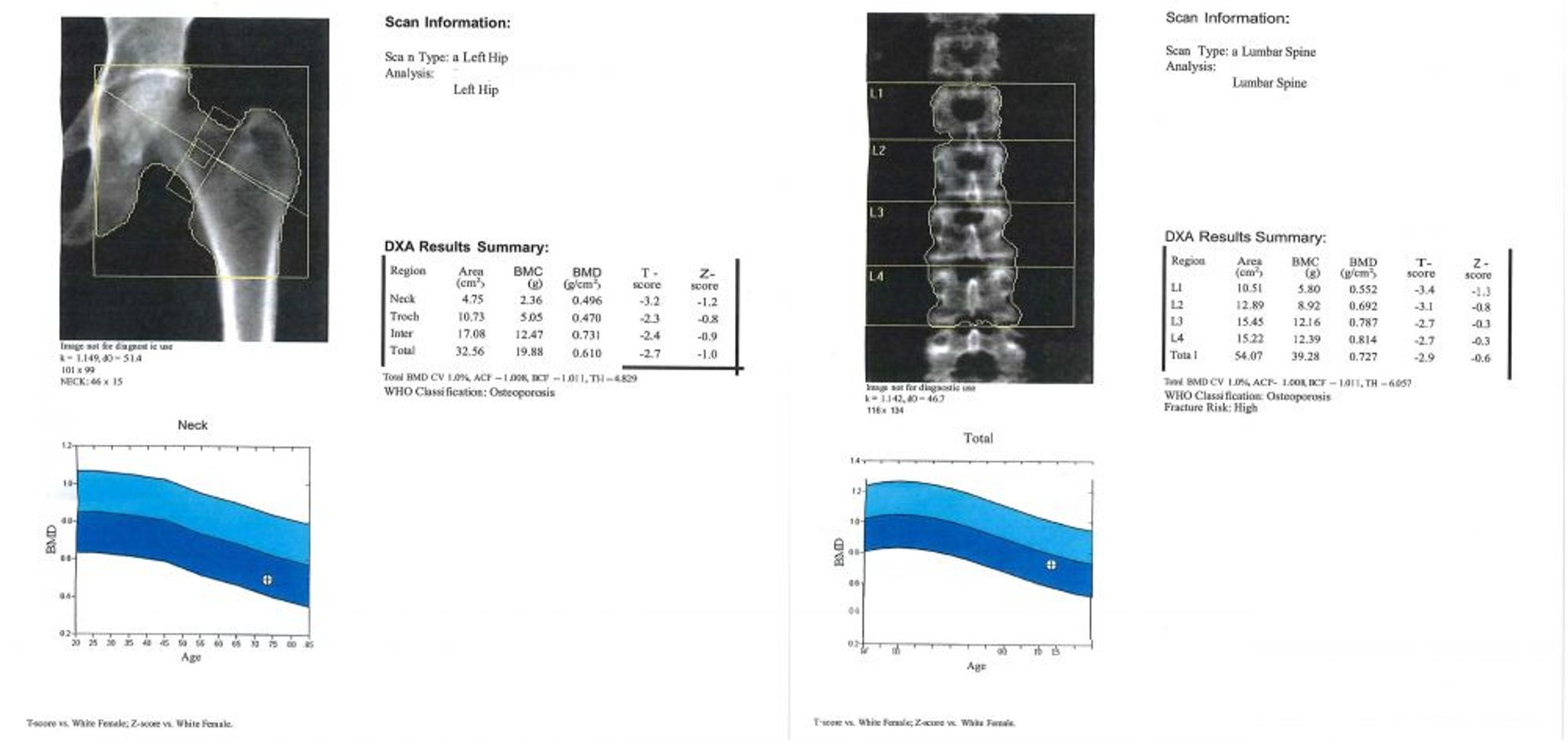
Image courtesy of Marcy B. Bolster, MD.
A DXA scan is recommended for the following patients:
All women ≥ 65 years
Women between menopause and age 65 who have risk factors, including a family history of osteoporosis, a low body mass index, and use of tobacco and/or medications with a high risk of bone loss (eg, corticosteroids, aromatase inhibitors)
Patients (men and women) of any age who have had fragility fractures
Patients with evidence on imaging studies of decreased bone mineral density or asymptomatic vertebral compression fractures incidentally noted on imaging studies
Patients at risk of secondary osteoporosis
Current central DXA systems can also assess vertebral deformities in the lower thoracic and lumbar spine, a procedure termed vertebral fracture assessment (VFA). Vertebral compression deformities in the absence of trauma, even those clinically silent, are diagnostic of osteoporosis and are predictive of an increased risk of future fractures. VFA is more likely to be useful in patients with height loss ≥ 3 cm. If the VFA results reveal suspected abnormalities, x-rays should be done to confirm the diagnosis.
The need for pharmacologic therapy is based on the probability of fracture, which is related to DXA results as well as other factors. The fracture risk assessment (FRAX) score (see Fracture Risk Assessment Tool) predicts the 10-year probability of a major osteoporotic (hip, spine, forearm, or humerus) fracture in untreated patients. The score accounts for several significant risk factors for bone loss and fracture, including bone mineral density, multiple clinical features, and country of origin of the patient (to account for observed population differences). If the FRAX score is above certain thresholds (in the United States, a ≥ 20% probability of major osteoporotic fracture or 3% probability of hip fracture), pharmacologic therapy should generally be recommended (3). There are limitations to the use of the FRAX score because it does not account for several factors, including history of falls or increased fall risk, the patient's bone mineral density at the lumbar spine, or family history of vertebral fractures.
X-rays
Bones show decreased radiodensity and loss of trabecular structure but are inadequate for diagnostic purposes. However, x-rays are important for documenting fractures resulting from bone loss. Loss of vertebral body height and increased biconcavity characterize vertebral compression fractures. Thoracic vertebral fractures may cause anterior wedging of the bone. Vertebral fractures most commonly occur at the mid-thoracic level when due to osteoporosis (4). Vertebral fractures above the mid-thoracic region should raise consideration for malignancy or trauma as the etiology. X-rays of the spine to look for asymptomatic vertebral fragility fractures should be considered in older patients with severe back pain and localized vertebral spinous tenderness and in patients who report > 3 cm height loss. In long bones, although the cortices may be thin, the periosteal surface remains smooth.

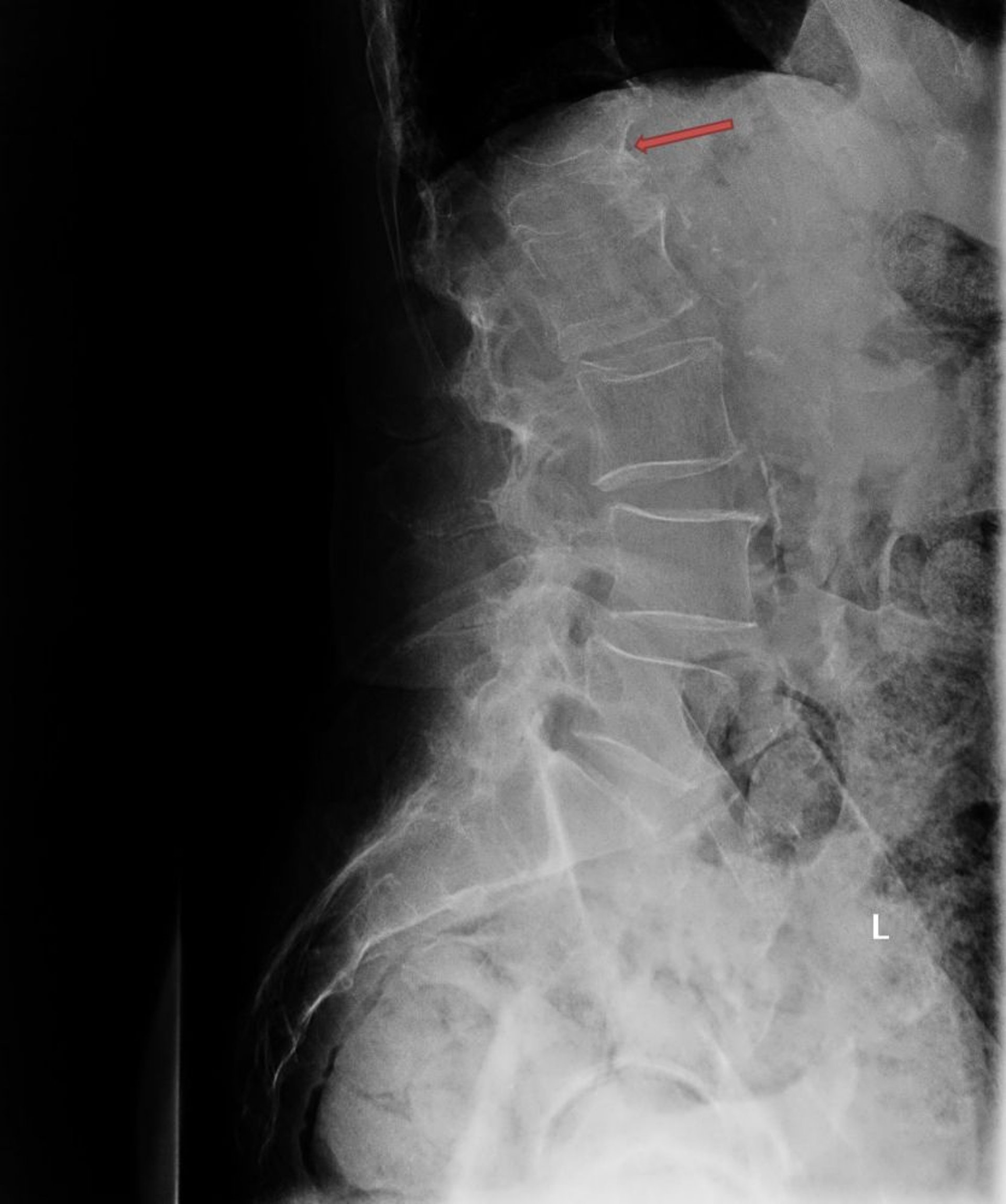
Photo courtesy of Marcy B. Bolster, MD.
Corticosteroid-related osteoporosis, called glucocorticoid-induced osteoporosis (GIOP), is most likely to cause vertebral compression fractures but may also cause fractures at other sites where osteoporotic fractures are common (5). Hyperparathyroidism can be differentiated when it causes subperiosteal resorption or cystic bone lesions (rarely). Osteomalacia may cause abnormalities on imaging tests similar to those of osteoporosis.
Other testing
An evaluation for secondary causes of bone loss should be considered in a patient with a Z-score ≤ -2.0. Laboratory testing should usually include the following:
Serum calcium, magnesium, and phosphorus
25-Hydroxy vitamin D level
Liver tests, including testing for a low alkaline phosphatase (hypophosphatasia)
Intact PTH level (hyperparathyroidism)
Serum testosterone in men (hypogonadism)
24-hour urine for calcium and creatinine (hypercalciuria)
Other tests such as thyroid-stimulating hormone or free thyroxine to check for hyperthyroidism, measurements of urinary free cortisol, and blood counts and other tests to rule out cancer, especially myeloma (eg, serum protein electrophoresis, serum free light chains, urine protein electrophoresis), should be considered depending on the clinical presentation.
Patients with weight loss should be screened for gastrointestinal disorders (eg, malabsorption, celiac disease, inflammatory bowel disease) as well as cancer. Bone biopsy is reserved for unusual cases (eg, young patients with fragility fractures and no apparent cause, patients with chronic kidney disease who may have other bone disorders, patients with persistently very low vitamin D levels suspected of having osteomalacia).
Levels of fasting serum C-telopeptide cross-links (CTX) or urine N-telopeptide cross-links (NTX) reflect increased bone resorption. However, the reliability of the assays vary, which complicates their utility for routine clinical care. Studies suggest that elevated levels of CTX and NTX may be helpful in predicting fracture risk in an untreated patient, monitoring response to antiresorptive therapy, and determining the timing of a drug holiday (6). In patients on antiresorptive therapy, levels should be markedly suppressed. If not, abnormal absorption or poor adherence to treatment regimen should be suspected.
Diagnosis references
1. Leslie WD, Majumdar SR, Morin SN, Lix LM: Change in bone mineral density is an indicator of treatment-related anti-fracture effect in routine clinical practice: A registry-based cohort study. Ann Intern Med 165(7):465–472, 2016. doi: 10.7326/M15-2937
2. Kanis JA, McCloskey EV, Johansson H, et al: A reference standard for the description of osteoporosis. Bone 42(3):467-475, 2008. doi:10.1016/j.bone.2007.11.001
3. Siris ES, Adler R, Bilezikian J, et al: The clinical diagnosis of osteoporosis: a position statement from the National Bone Health Alliance Working Group. Osteoporos Int 25(5):1439-1443, 2014. doi:10.1007/s00198-014-2655-z
4. Alsoof D, Anderson G, McDonald CL, et al: Diagnosis and management of vertebral compression fracture. Am J Med 135(7):815-821, 2022. doi:10.1016/j.amjmed.2022.02.035
5. Van Staa TP, Leufkens HG, Abenhaim L, et al: Use of oral corticosteroids and risk of fractures. J Bone Miner Res 15(6):993-1000, 2000. doi:10.1359/jbmr.2000.15.6.993
6. Lorentzon M, Branco J, Brandi ML et al: Algorithm for the use of biochemical markers of bone turnover in the diagnosis, assessment, and follow-up or treatment of osteoporosis. Adv Ther 36(10): 2811–2824, 2019. doi: 10.1007/s12325-019-01063-9
Treatment of Osteoporosis
Risk factor modification
Antiresorptive medications (eg, bisphosphonates, hormone replacement therapy, a selective estrogen
The goals of treatment of osteoporosis are to preserve bone mass, prevent fractures, decrease pain, and maintain function.
Risk factor modification
Risk factor modifications aim to reduce risk of osteoporosis and risk of fractures. Measures include
Doing weight-bearing exercise
Moderating alcohol intake
Fall prevention measures
Weight-bearing exercise can help increase bone mineral density (1). The optimal amount of weight-bearing exercise is not established, but an average of 30 minutes a day is recommended (2). However, excessive exercise without adequate dietary intake in premenopausal women may lead to weight loss and amenorrhea, and subsequent bone loss. If alcohol is consumed, intake should be no more than 1 drink a day for women and 2 drinks a day for men.
Clinicians should routinely ask about recent falls and otherwise assess fall risk. Many older patients are at risk of falls because of poor coordination and balance, poor vision, muscle weakness, confusion, and use of medications that cause postural hypotension or alter the sensorium. Physical therapists can evaluate a patient's gait and fall risk and help create safe individualized programs of core-strengthening exercises to help increase stability and decrease risk of falls. Educating patients about the risks of falls and fractures, instructing how to safely do daily activities, and modifying the home environment for safety also are important for preventing fractures.
Calcium and vitamin D
Vitamin D supplementation with 600 to 800 units a day is recommended. Patients with vitamin Dvitamin D, although ergocalciferol, the synthetic plant-derived form, is also acceptable. The 25-hydroxy vitamin D level should be ≥ 30 ng/mL.
Antiresorptive medications
Bisphosphonates are first-line therapy. By inhibiting bone resorption, bisphosphonates preserve bone mass and can decrease vertebral and hip fractures by up to 50% (3). Bone turnover is reduced after 3 months of bisphosphonate therapy and fracture risk reduction is evident as early as 1 year after beginning therapy. Bisphosphonates can be given orally or IV. Bisphosphonates include the following:
4).
Osteonecrosis of the jaw (5). Risk factors include invasive dental procedures, IV bisphosphonate use, and cancer. The benefits of reduction of osteoporosis-related fractures far outweigh this small risk. Although some dentists ask a patient to discontinue a bisphosphonate for several weeks or months before an invasive dental procedure, it is not clear that doing so decreases the risk of osteonecrosis of the jaw.
Long-term bisphosphonate use may increase the risk of atypical femoral fractures (6). These fractures occur in the mid-shaft of the femur with minimal or no trauma and may be preceded by weeks or months of thigh pain. The fractures may be bilateral even if symptoms are only unilateral.
To minimize fracture incidence, consideration should be given to stopping bisphosphonates after about
3 to 5 years of use in patients with osteoporosis (by DXA scan) but few or no other risk factors for bone loss
5 to 10 years of use in patients with osteoporosis (by DXA scan) and fractures or additional significant ongoing risk factors for bone loss and future fractures (7, 8)
Intermittent cessation of bisphosphonate treatment (drug holiday), as well as initiation and duration of therapy, depend on patient risk factors such as age, comorbidities, prior fracture history, DXA scan results, and fall risk. The drug holiday is 1 year or longer. Patients on a bisphosphonate holiday should be closely monitored for a new fracture or accelerated bone loss evident on a DXA scan, especially after being off therapy for 2 years or more.
During therapy with an antiresorptive medication such as a bisphosphonate, bone turnover is suppressed, as evidenced by low serum or urinary levels of (fasting) N-telopeptide cross-links (NTX) or C-telopeptide cross-links (CTX). Thus, measures of bone turnover markers can help determine adherence to therapy, as well as sufficient absorption, which are particularly useful for monitoring in patients taking oral bisphosphonates. These markers may remain low for ≥ 2 years off therapy. In untreated patients, an increase in levels of bone turnover markers, particularly with higher levels, indicates an increased risk of fracture. However, it is not clear whether levels of bone turnover markers should be used as criteria for when to start or end a drug holiday.
The immediate initiation of a bisphosphonate after an osteoporotic fracture has been controversial because of a theoretical concern that these agents may impede bone healing. However, most experts recommend starting a bisphosphonate during the hospitalization for the fracture (9). There is no reason to delay therapy in order to obtain a DXA scan because a hip or vertebral fragility fracture establishes the presence of osteoporosis.
is a monoclonal antibody against the receptor activator of nuclear factor kappa-B ligand (RANKL) and reduces bone resorption by inhibiting osteoclast formation (10). Denosumab may be helpful in patients not tolerant of or unresponsive to other therapies or in patients with impaired renal function. This medication has been found to have a good safety profile at 10 years of therapy (11). Denosumab is contraindicated in patients with hypocalcemia because it can cause calcium shifts that result in profound hypocalcemia and adverse effects such as tetany. Osteonecrosis of the jaw and atypical femoral fractures have been rarely reported in patients taking denosumab.
Patients taking denosumab should not undergo a drug holiday because discontinuation may cause a rapid loss in bone mineral density and, importantly, increase the risk of fractures, particularly vertebral fractures, often multiple (12). If and when denosumab13).
is a selective estrogen receptor modulator (SERM14). Raloxifene does not stimulate the uterus and antagonizes estrogen effects in the breast. It reduces the risk of invasive breast cancer. Raloxifene may increase risk of thromboembolism.
Estrogen may preserve bone mineral density and prevent fractures. However, because of the availability of other more effective treatments and the potential harms associated with estrogen treatment, its use is limited to selected cases. The use of estrogen increases the risk of thromboembolism and endometrial cancer and may increase the risk of breast cancer. The risk of endometrial cancer can be reduced in women with an intact uterus by taking a progestin with estrogen (see Hormone therapy). However, taking a combination of a progestin and estrogen increases the risk of breast cancer, coronary artery disease, stroke, and biliary disease. Thus, the potential harms of estrogen treatment for osteoporosis outweigh its potential benefits for most women.
15). It has not been shown to reduce fractures.
Anabolic agents
Cannot tolerate antiresorptive medications or have contraindications to their use
Possibly have severe osteoporosis (eg, T-score < -3.0) or multiple vertebral fragility fractures
Any of these three anabolic agents can be considered for use during a bisphosphonate holiday.
The use of anabolic agents to treat osteoporosis had been limited to 2 years based on a boxed warning because of concern of increased risk of developing osteosarcoma in initial 2-year clinical trials, but the restriction of 2 years of therapy is no longer required. Consequently, although 2 years of treatment with an anabolic agent remains a reasonable course of therapy, giving a second 2-year course of therapy can now be considered. However, after completion of a treatment course with an anabolic agent, the bone mineral density gains are quickly lost if a patient is not quickly transitioned to an antiresorptive agent such as a bisphosphonate. Anabolic agents should be used before antiresorptive agents (18). Gains in bone mineral density are greater if an anabolic agent is used prior to an antiresorptive agent (ie, considering an "anabolic window"), and bone mineral density gains are attenuated if an anabolic agent is administered following an antiresorptive medication.
Anabolic agents are safe to initiate at any time after a fracture. It is not clear whether early post-fracture use of anabolic agents accelerates bone healing.
Other medications for osteoporosis
is a monoclonal antibody against sclerostin (a small protein made by osteocytes that inhibits new bone formation by osteoblasts). It has both antiresorptive and anabolic effects and has been shown to increase bone mineral density in the hip and lumbar spine and reduce fracture risk in postmenopausal women (19). Romosozumab is indicated for patients with severe osteoporosis, particularly in older people, those who are frail, and those with an increased risk of falling. It should also be considered in patients who fracture despite adequate antiresorptive therapy. It is given via monthly subcutaneous injection for 1 year (20).
Romosozumabalendronate for 2 years (21), and romosozumab21). As with denosumab, when romosozumab is discontinued, antiresorptive therapy should be given to prevent rapid bone loss (22). Romosozumab carries a boxed warning due to increased risk for cardiovascular events, including myocardial infarction, stroke, and cardiovascular death. Romosozumab should not be initiated within 12 months of a patient having had a myocardial infarction or stroke.
Monitoring response to treatment
Monitoring for ongoing bone loss or the response to treatment with serial DXA scans should be done using the same DXA machine, and the comparison should use actual bone mineral density (g/cm2) rather than T-score. In patients with osteopenia, DXA should be repeated periodically to determine whether there is ongoing bone loss or development of frank osteoporosis requiring treatment. The frequency for follow-up DXA scanning varies from patient to patient, but some reasonable guidelines are as follows:
Patients being treated with oral bisphosphonates: Repeat DXA scan usually after 2 to 3 years of therapy. DXA scan may be repeated more frequently if clinically warranted, for example in a patient taking corticosteroids.
Patients treated with IV bisphosphonates: Repeat DXA scan for monitoring after 3 years of therapy to help determine if treatment has been adequate or a longer therapy course is warranted.
Results may help identify patients at higher risk of fractures due to a suboptimal response to osteoporosis treatment. Patients who have a significantly lower bone mineral density despite treatment, or those who fracture while on treatment, should be evaluated for secondary causes of bone loss, poor medication absorption (if taking an oral bisphosphonate), and (except for patients treated with IV bisphosphonates or parenteral medications given in the office) medication adherence.
Treating pain and maintaining function
Acute back pain resulting from a vertebral compression fracture can be treated with short-term orthopedic bracing as needed, analgesics, and, when muscle spasm is prominent, moist heat and massage. Core-strengthening exercises are helpful for patients who have back pain and a prior healed vertebral fracture. Chronic backache may be relieved by exercises to strengthen paravertebral muscles. Avoiding heavy lifting can help. Bed rest should be minimized, and consistent, carefully designed weight-bearing exercise should be encouraged.
In some patients, vertebroplasty or kyphoplasty can be used to relieve severe pain due to a new vertebral fragility fracture; however, the evidence for efficacy is inconclusive (23, 24). In vertebroplasty, methyl methacrylate is injected into the vertebral body. In kyphoplasty, the vertebral body is first expanded with a balloon then injected with methyl methacrylate. These procedures may reduce deformity in the injected vertebrae but do not reduce and may even increase the risk of fractures in adjacent vertebrae. Other adverse effects include rib fractures, cement leakage, pulmonary embolism, and myocardial infarction. Further study to determine indications for these procedures is warranted.
Treatment references
1. Howe TE, Shea B, Dawson LJ, et al: Exercise for preventing and treating osteoporosis in postmenopausal women. Cochrane Database Syst Rev (7):CD000333, 2011. Published 2011 Jul 6. doi:10.1002/14651858.CD000333.pub2
2. Brooke-Wavell K, Skelton DA, Barker KL, et al: Strong, steady and straight: UK consensus statement on physical activity and exercise for osteoporosis [published online ahead of print, 2022 May 16]. Br J Sports Med 56(15):837-846, 2022. doi:10.1136/bjsports-2021-104634
3. Ayers C, Kansagara D, Lazur B, Fu R, Kwon A, Harrod C: Effectiveness and safety of treatments to prevent fractures in people with low bone mass or primary osteoporosis: a living systematic review and network meta-analysis for the American College of Physicians [published correction appears in Ann Intern Med 176(6):884, 2023]. Ann Intern Med 176(2):182-195, 2023. doi:10.7326/M22-0684
4. Black DM, Reid IR, Boonen S, et al: The effect of 3 versus 6 years of zoledronic acid treatment of osteoporosis: A randomized extension to the HORIZON-Pivotal Fracture Trial (PFT). J Bone Miner Res 27(2): 243–254, 2012. doi: 10.1002/jbmr.1494
5. Khan AA, Morrison A, Hanley DA, et al: Diagnosis and management of osteonecrosis of the jaw: a systematic review and international consensus. J Bone Miner Res 30(1):3-23, 2015. doi:10.1002/jbmr.2405
6. Black DM, Abrahamsen B, Bouxsein ML, et al: Atypical Femur Fractures: Review of Epidemiology, Relationship to Bisphosphonates, Prevention, and Clinical Management. Endocr Rev 40(2):333-368, 2019. doi:10.1210/er.2018-00001
7. Black DM, Schwartz AV, Ensrud KE, et alJAMA 296(24):2927-2938, 2006. doi:10.1001/jama.296.24.2927
8. Black DM, Reid IR, Boonen S, et alJ Bone Miner Res 27(12):2612, 2012]. J Bone Miner Res 27(2):243-254, 2012. doi:10.1002/jbmr.1494
9. Conley RB, Adib G, Adler RA, et al. Secondary Fracture Prevention: Consensus Clinical Recommendations from a Multistakeholder Coalition. J Bone Miner Res 35(1):36-52, 2020. doi:10.1002/jbmr.3877
10. Cummings SR, San Martin J, McClung MR, et al: Denosumab for prevention of fractures in postmenopausal women with osteoporosis [published correction appears in N Engl J Med 361(19):1914, 2009]. N Engl J Med 361(8):756-765, 2009. doi:10.1056/NEJMoa0809493
11. Bone HG, Wagman RB, Brandi ML, et al: 10 years of denosumab treatment in postmenopausal women with osteoporosis: results from the phase 3 randomised FREEDOM trial and open-label extension. Lancet Diabetes Endocrinol 5(7):513-523, 2017. doi:10.1016/S2213-8587(17)30138-9
12. Lyu H, Yoshida K, Zhao SS, et al. Delayed Denosumab Injections and Fracture Risk Among Patients With Osteoporosis : A Population-Based Cohort Study. Ann Intern Med 173(7):516-526, 2020. doi:10.7326/M20-0882
13. Sølling AS, Harsløf T, Langdahl B: Treatment with zoledronate subsequent to denosumab in osteoporosis: a 2-year randomized study. J Bone Miner Res 36(7):1245-1254, 2021. doi:10.1002/jbmr.4305
14. Ettinger B, Black DM, Mitlak BH, et al. Reduction of vertebral fracture risk in postmenopausal women with osteoporosis treated with raloxifene: results from a 3-year randomized clinical trial. Multiple Outcomes of Raloxifene Evaluation (MORE) Investigators [published correction appears in JAMA 282(22):2124, 1999]. JAMA 282(7):637-645, 1999. doi:10.1001/jama.282.7.637
15. Knopp-Sihota JA, Newburn-Cook CV, Homik J, et al: Calcitonin for treating acute and chronic pain of recent and remote osteoporotic vertebral compression fractures: a systematic review and meta-analysis. Osteoporos Int 23(1):17-38, 2012. doi:10.1007/s00198-011-1676-0
16. Neer RM, Arnaud CD, Zanchetta JR, et alN Engl J Med 344(19):1434-1441, 2001. doi:10.1056/NEJM200105103441904
17. Miller PD, Hattersley G, Riis BJ, et al: Effect of abaloparatide vs placebo on new Vertebral fractures in postmenopausal women with osteoporosis: a randomized clinical trial [published correction appears in JAMA. 2017 Jan 24;317(4):442]. JAMA 316(7):722-733, 2016. doi:10.1001/jama.2016.11136
18. Curtis EM, Reginster JY, Al-Daghri N, et al: Management of patients at very high risk of osteoporotic fractures through sequential treatments. Aging Clin Exp Res 34(4):695-714, 2022. doi:10.1007/s40520-022-02100-4
19. Cosman F, Crittenden DB, Adachi JD, et al: Romosozumab treatment in postmenopausal women with osteoporosis. N Engl J Med 375(16):1532-1543, 2016. doi: 10.1056/NEJMoa1607948
20. Saag KG, Petersen J, Brandi ML, et al: Romosozumab or alendronate for fracture prevention in women with osteoporosis. N Engl J Med 377(15):1417-1427, 2017. doi: 10.1056/NEJMoa1708322
21. Lewiecki EM, Dinavahi RV, Lazaretti-Castro M, et al: One year of romosozumab followed by two years of denosumab maintains fracture risk reductions: Results of the FRAME Extension Study. J Bone Miner Res 34(3):419-428, 2019. doi: 10.1002/jbmr.3622
22. McClung MR, Brown JP, Diez-Perez A, et al: Effects of 24 Months of Treatment With Romosozumab Followed by 12 Months of Denosumab or Placebo in Postmenopausal Women With Low Bone Mineral Density: A Randomized, Double-Blind, Phase 2, Parallel Group Study. J Bone Miner Res 33(8):1397-1406, 2018. doi:10.1002/jbmr.3452
23. Buchbinder R, Johnston RV, Rischin KJ, et al: Percutaneous vertebroplasty for osteoporotic vertebral compression fracture. Cochrane Database Syst Rev 4(4):CD006349, 2018. Published 2018 Apr 4. doi:10.1002/14651858.CD006349.pub3
24. Lou S, Shi X, Zhang X, Lyu H, Li Z, Wang Y: Percutaneous vertebroplasty versus non-operative treatment for osteoporotic vertebral compression fractures: a meta-analysis of randomized controlled trials. Osteoporos Int 30(12):2369-2380, 2019. doi:10.1007/s00198-019-05101-8
Prevention of Osteoporosis
The goals of prevention are 2-fold: preserve bone mass and prevent fractures. Preventive measures are indicated for the following:
Postmenopausal women
Older men
Patients who have osteopenia
Patients who already have osteoporosis (to prevent worsening)
Patients taking high-dose and/or long-term systemic corticosteroids or aromatase inhibitors
Patients with secondary causes for bone loss
Key Points
Peak bone mass in men and women occurs around age 30; in women, bone loss accelerates after menopause to about 2% a year for about 10 years.
Nearly all cases of osteoporosis in men and women are primary, without an identifiable cause.
Suspect osteoporosis in patients who have fractures caused by unexpectedly little force (fragility fractures) of the spine, humerus, distal radius, or hip.
Use DXA to measure bone mineral density in women ≥ 65 years; women between menopause and age 65 who have risk factors (eg, family history of osteoporosis, a low body mass index, and use of tobacco and/or medications with a high risk of bone loss [eg, chronic corticosteroid use]); men and women of any age who have fragility fractures; evidence on imaging studies of decreased bone mineral density or asymptomatic vertebral compression fractures; and patients at risk of secondary osteoporosis.
Consider testing patients for causes of secondary bone loss if they have a Z-score ≤ -2.0, a decline in bone mineral density, an unexplained fracture while on treatment for osteoporosis, or a cause of secondary bone loss is clinically suspected.
Medications include antiresorptives (eg, bisphosphonates, a receptor activator of nuclear factor kappa-B ligand [RANKL] inhibitor, a selective estrogen
Monitor response to treatment with DXA at appropriate intervals depending upon the specific medication regimen used.
More Information
The following English-language resources may be useful. Please note that THE MANUAL is not responsible for the content of these resources.
Fracture Risk Assessment Tool: Online tool to evaluate fracture risk of patients
American Association of Clinical Endocrinology (AACE) Clinical Practice Guidelines for the Diagnosis and Treatment of Postmenopausal Osteoporosis, 2020 Update: Information for healthcare professionals and their patients about the diagnosis, evaluation, and treatment of postmenopausal osteoporosis
Qaseem A, Hicks LA, Etxeandia-Ikobaltzeta I, et al: Pharmacologic Treatment of Primary Osteoporosis or Low Bone Mass to Prevent Fractures in Adults: A Living Clinical Guideline From the American College of Physicians [published correction appears in Ann Intern Med. 176(6):882-884, 2023]. Ann Intern Med 176(2):224-238, 2023. doi:10.7326/M22-1034


