





Lymphedema is the accumulation of lymph in tissues, resulting in swelling.
When lymphatic vessels are injured or obstructed (blocked), lymph fluid cannot drain and accumulates in tissues, causing swelling.
Compression bandages or pneumatic stockings can reduce the swelling.
(See also Overview of the Lymphatic System.)
Lymph nodes are tiny, bean-shaped organs that filter lymph fluid. They are located throughout the body, but particular collections are found just under the skin in the neck, under the arms, and in the groin area. Lymph nodes are part of the lymphatic system, which is one of the body's defense mechanisms against the spread of infection and cancer.
Lymph is clear fluid that is made up of water, white blood cells, proteins, and fats that have filtered out of blood vessels into the spaces between cells. Some of the fluid is reabsorbed by the blood vessels, but the rest enters the lymphatic vessels. Lymph then passes through the lymph nodes, which are specific collection points where damaged cells, infectious organisms, and cancer cells are filtered from the fluid and destroyed. If many infectious organisms or cancer cells are present, the lymph nodes swell. Sometimes, organisms cause infection within a lymph node.
Causes of lymphedema
Lymphedema results when the lymphatic system cannot adequately drain lymph from the tissues, causing swelling. Lymphedema is classified as
Primary lymphedema: Caused by underdevelopment of the lymphatic system
Secondary lymphedema: Caused by a blockage of the lymphatic system
Primary lymphedema
Primary lymphedema results from having so few lymphatic vessels that they cannot handle all the lymph. The problem almost always affects the legs. Rarely, it affects the arms.
Several inherited disorders may cause primary lymphedema. These disorders differ according to the age at which swelling becomes obvious.
Rarely, the swelling is obvious at birth, but usually, the lymphatic vessels can handle the small amount of lymph produced in an infant. More often, the swelling appears later in life, as the volume of lymph increases and overwhelms the small number of lymph vessels.
The swelling starts gradually in one or both legs. The first sign of lymphedema may be puffiness of the foot, making the shoe feel tight at the end of the day. The shoe may leave indentations in the skin of the foot. (Many people who do not have lymphedema experience swelling after they stand for prolonged periods. They may have indentations around their ankles after they wear ankle socks, but the indentations are much less deep than those of lymphedema, and the surrounding area is not puffy.)
In the early stages of primary lymphedema, the swelling goes away when the leg is elevated. This disorder worsens with time. The swelling becomes more obvious and does not disappear completely, even after a night’s rest.
Secondary lymphedema

SCIENCE PHOTO LIBRARY
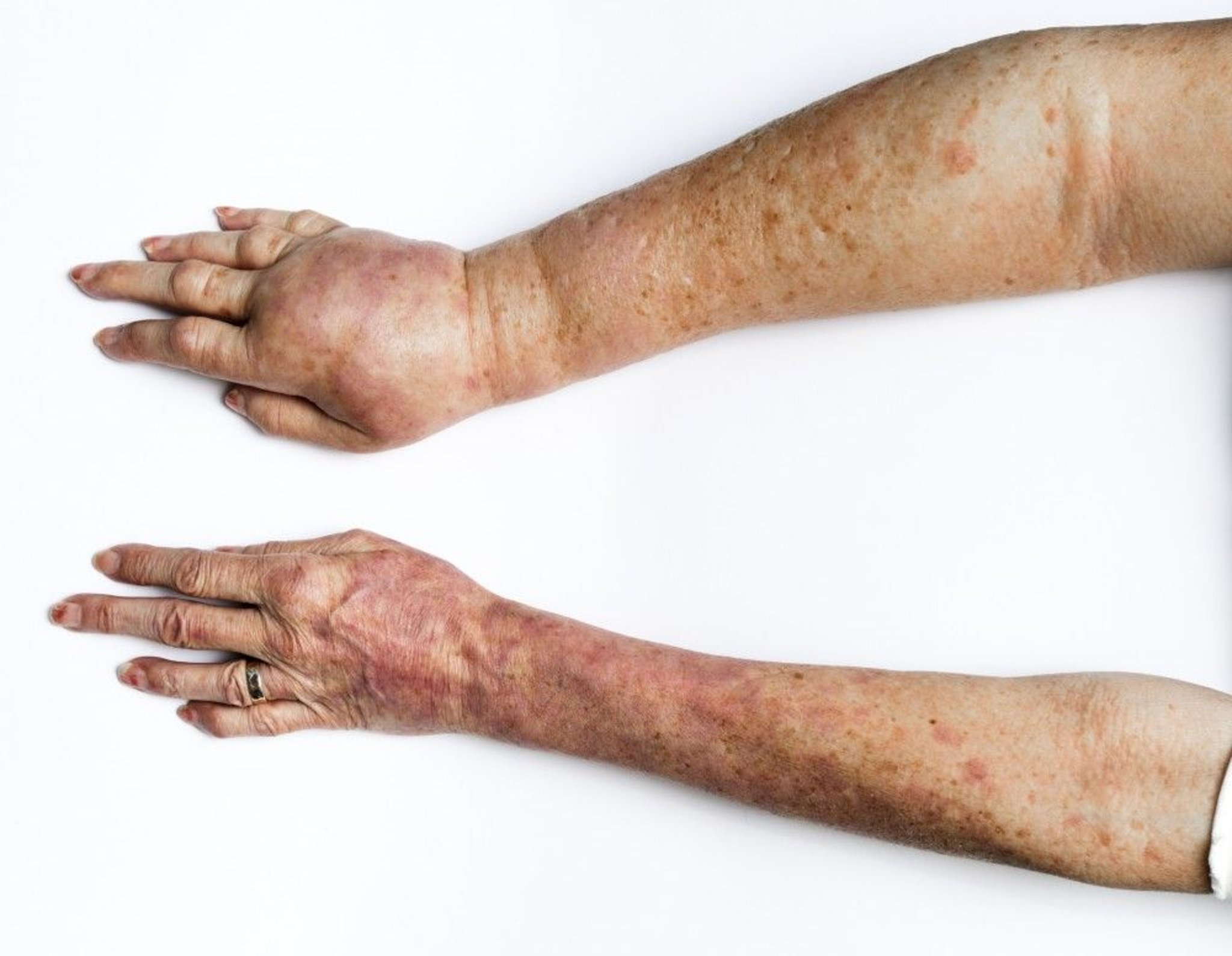
Secondary lymphedema is more common than primary lymphedema, accounting for the overwhelming majority of cases. It typically occurs after major surgical treatment, especially after cancer treatment in which lymph nodes and lymphatic vessels are removed or treated with radiation therapy. For example, the arm tends to swell after removal of lymph nodes in the armpit, most often as treatment for breast cancer.
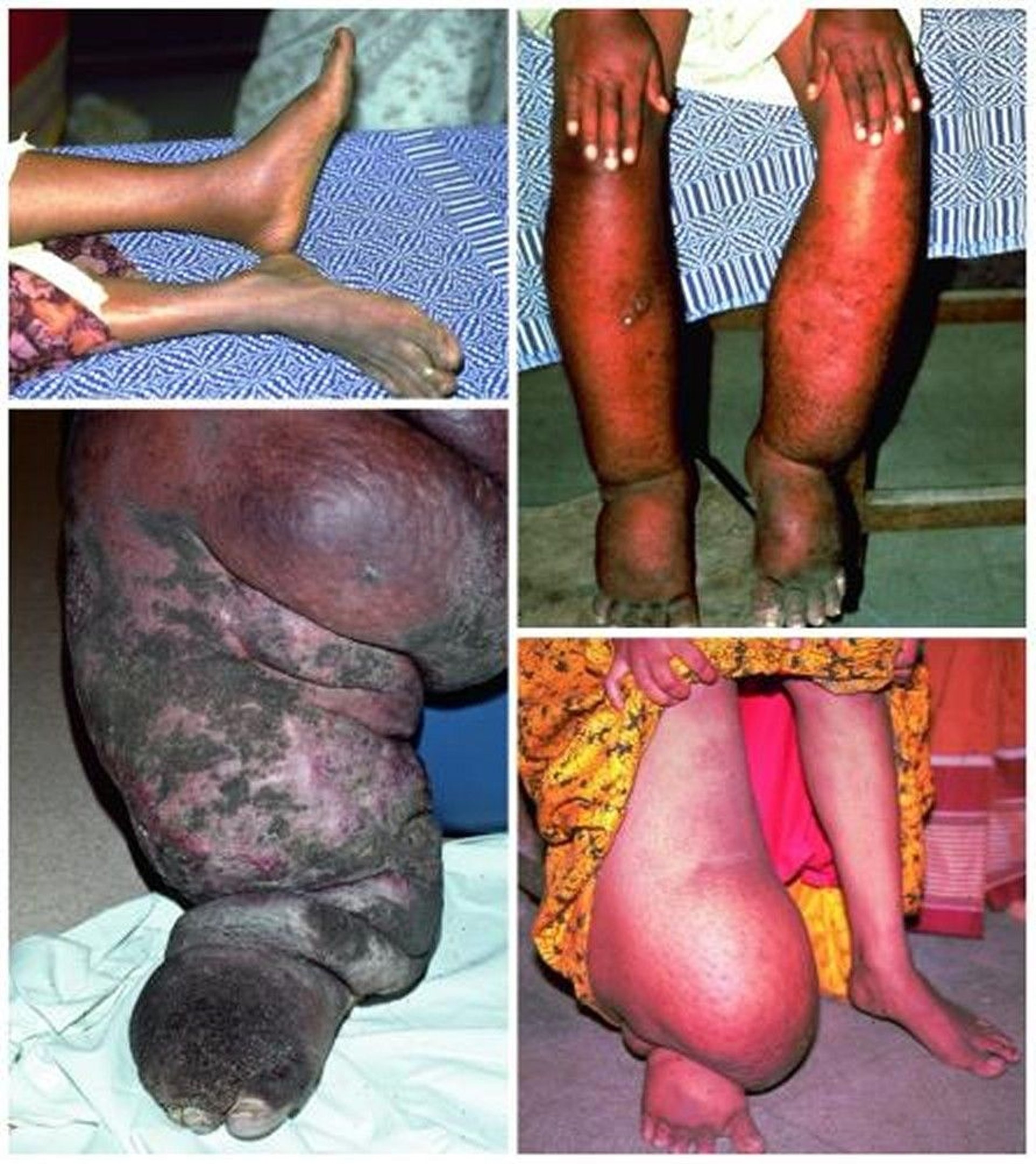
Scarring of lymphatic vessels as a result of repeated infection also may cause secondary lymphedema, but this type of scarring is very uncommon except among people who have an infection due to the tropical parasite Filaria (filariasis).
In secondary lymphedema, the skin looks healthy but is puffy or swollen. Pressing the area with a finger does not leave a significant indentation, as it does when edema results from inadequate blood flow in the veins. Rarely, especially in filariasis, the swollen limb becomes extremely large and the skin is so thick and ridged that it looks almost like elephant skin. This disorder is called elephantiasis.

© Springer Science+Business Media
Diagnosis of Lymphedema
A doctor's evaluation
Sometimes imaging
The diagnosis of lymphedema is usually based on the person's symptoms. Sometimes an imaging test such as computed tomography (CT) or magnetic resonance imaging (MRI) is needed to determine the location of a blockage.
In areas where filariasis is prevalent, tests for the parasite may be needed.
Treatment of Lymphedema
Relieving fluid build-up
Sometimes, surgery
Lymphedema has no cure.
Treatment of lymphedema typically involves measures to relieve the lymph fluid build-up in a limb. These may include
Manual lymphatic drainage
Limb exercises
Compression bandages or stocking
Limb massage with intermittent pneumatic compression stockings or sleeves
For people with mild lymphedema, manual lymphatic drainage can be helpful. The limb is elevated and manually massaged to drain fluid out of the affected limb. Special limb exercises and compression stockings applied to the legs or sleeves applied to the arms can also reduce the swelling.
People who are more severely affected may wear intermittent pneumatic compression stockings every day for several hours, depending on the extent of symptoms, to reduce the swelling. Once the swelling has been reduced, the person must wear graduated elastic stockings up to the knee or thigh every day from the moment of rising until bedtime. These stockings apply pressure at the ankle and less pressure farther up the leg. This measure controls the swelling to some degree.
For lymphedema in the arm, pneumatic sleeves—like pneumatic stockings—can be used every day to reduce the swelling. Elastic sleeves are also available.
Primary and secondary lymphedema are sometimes treated with surgery to remove the swollen tissues under the skin and to form new lymphatic drainage channels.
People who have lymphedema may be able to prevent worsening symptoms by avoiding heat, vigorous exercise, and tight garments on the affected arm or leg. Skin and nail care require meticulous attention to avoid infection. Doctors try to avoid doing medical procedures, such as vaccination, drawing blood, taking blood pressure, and inserting intravenous devices, in the affected arm.


