





Personality disorders are mental health conditions that involve long-lasting, pervasive patterns of thinking, perceiving, reacting, and relating that cause the person significant distress and/or impair the person's ability to function.
There are 10 types of personality disorders, and each has characteristic problems with people's understanding of themselves and patterns of response to other people and to stressful events.
Doctors consider diagnosing a personality disorder when people persistently view themselves or others in ways that differ from reality or when they continue to act in ways that consistently have negative consequences.
Psychotherapy may help people become aware of their role in creating their personal and interpersonal problems and help them change the behaviors of theirs that cause these difficulties.
Medications do not directly treat personality disorders but may help decrease distressing symptoms.
Personality traits represent patterns of thinking, perceiving, reacting, and relating that are relatively stable over time. For example, some people tend to be moody or withdrawn. Others tend to be outgoing and social.
Personality disorders are diagnosed as a mental health condition when people's personality traits become so pronounced, rigid, and maladaptive that the person has problems at work, at school, and/or in dealing with other people. Such patterns are called maladaptive because people do not adjust (adapt) as circumstances require. Maladaptive patterns vary in how severe they are and how long they persist. These social maladaptations can cause significant distress in people with personality disorders and in their family members, friends, coworkers, and other social contacts. Usually, people with personality traits that are ineffective or produce negative consequences try to change their response patterns. In contrast, people with a personality disorder do not change their response patterns, even when these patterns are repeatedly ineffective and have negative consequences.
There are 10 types of personality disorders according to the Diagnostic and Statistical Manual of Mental Disorders, 5th ed, Text Revision (DSM-5-TR), the standard reference for psychiatric diagnosis from the American Psychiatric Association.
Sometimes people think that they or others have a personality disorder when they show certain personality traits some of the time. People may casually use terms like "paranoid" or "borderline." However, a personality disorder is diagnosed as a mental health condition only when the traits are consistent and meet specific psychiatric criteria.
About 9% of people have a personality disorder. These disorders usually affect men and women equally, although some types of personality disorder affect one sex more than the other. For example, antisocial personality disorder is 3 times more common among men.
For most people with a personality disorder, the disorder causes moderate problems and lessens over time. However, some people have severe social and psychological problems that last a lifetime.
Personality disorders usually become noticeable during late adolescence or early adulthood, but they may appear earlier (during childhood). The amount of time they last varies greatly. Some types of personality disorders (such as antisocial or borderline) tend to lessen or resolve as people age. Others (such as obsessive-compulsive or schizotypal) are less likely to do so. In some people, symptoms may continue, but they are less severe.
Many people with a personality disorder also have another mental health disorder, usually one or more of the following:
Having a personality disorder and one of these other mental health disorders makes people less likely to respond to treatment for either mental health disorder and thus worsens their prognosis.
Causes of Personality Disorders
Personality disorders result from an interaction of genes and environment. That is, some people are born with a genetic tendency to have a personality disorder, and this tendency is then either suppressed or enhanced by environmental factors, such as experiences or sources of stress or well-being. It is generally thought that genes and environment contribute about equally to the development of personality disorders.
Types of Personality Disorders
The 10 personality disorders can be grouped into 3 clusters (A, B, and C). The types in each cluster share certain basic personality traits, but each disorder has its own distinguishing features.
People with cluster A disorders appear odd or eccentric. Cluster A includes the following personality disorders, each with its distinguishing features:
Paranoid: Mistrust and suspicion
Schizoid: Disinterest in others
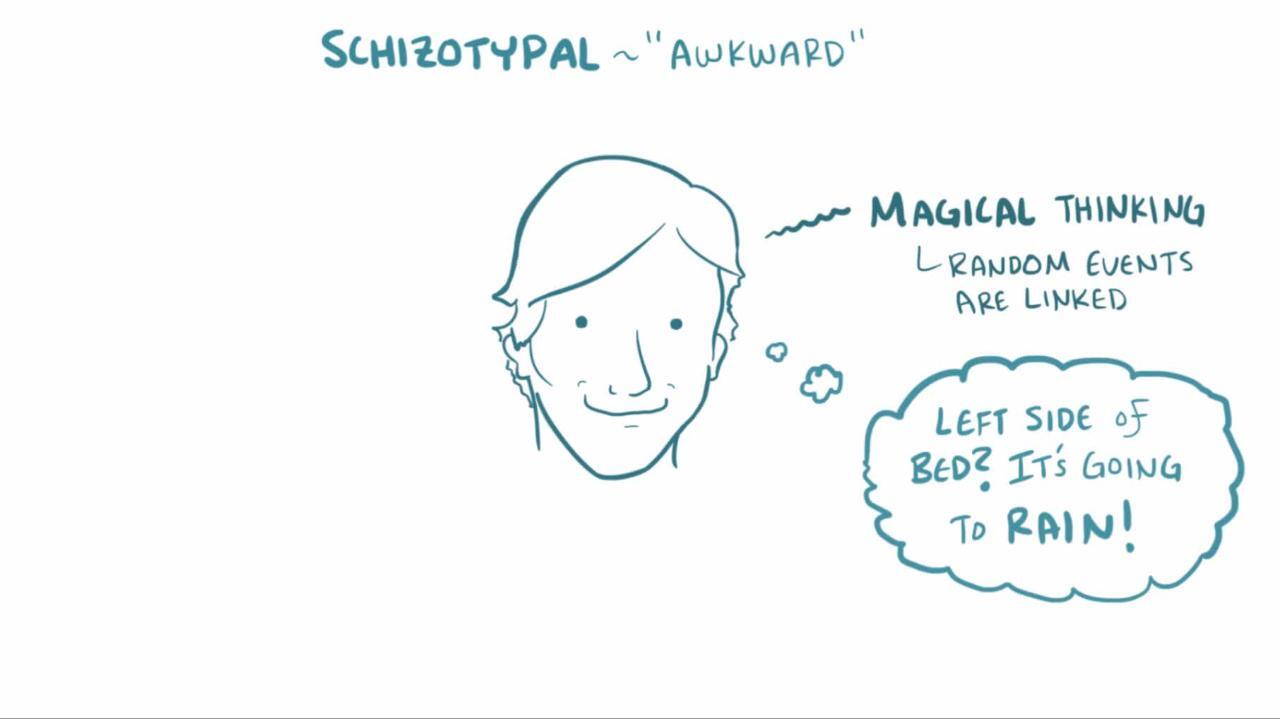
Schizotypal: Odd or eccentric ideas and behavior
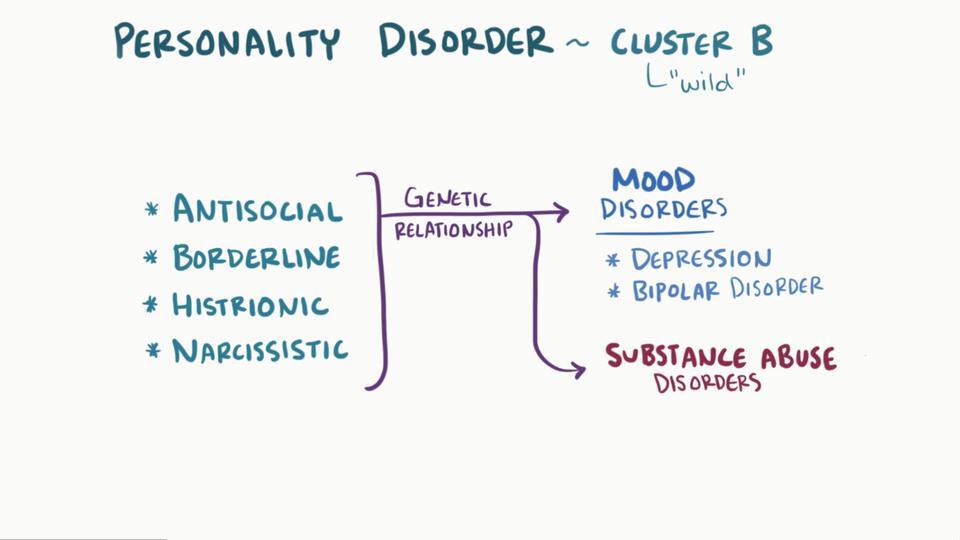
People with cluster B disorders have behaviors that are dramatic, emotional, or erratic. Cluster B includes the following personality disorders, each with its distinguishing features:
Antisocial: Social irresponsibility, disregard for others, and deceitfulness and manipulation of others for personal gain
Borderline: Inner emptiness, fear of being abandoned in relationships, unstable relationships, problems controlling emotions, and impulsive behavior
Histrionic: Attention-seeking and dramatic behavior
Narcissistic: Need to be admired, lack of empathy, and an inflated view of self-worth (called grandiosity)
People with cluster C disorders appear anxious or fearful. Cluster C includes the following personality disorders, each with its distinguishing features:
Avoidant: Avoidance of interpersonal contact due to fear of rejection
Dependent: Submissiveness and dependency (due to a need to be taken care of)
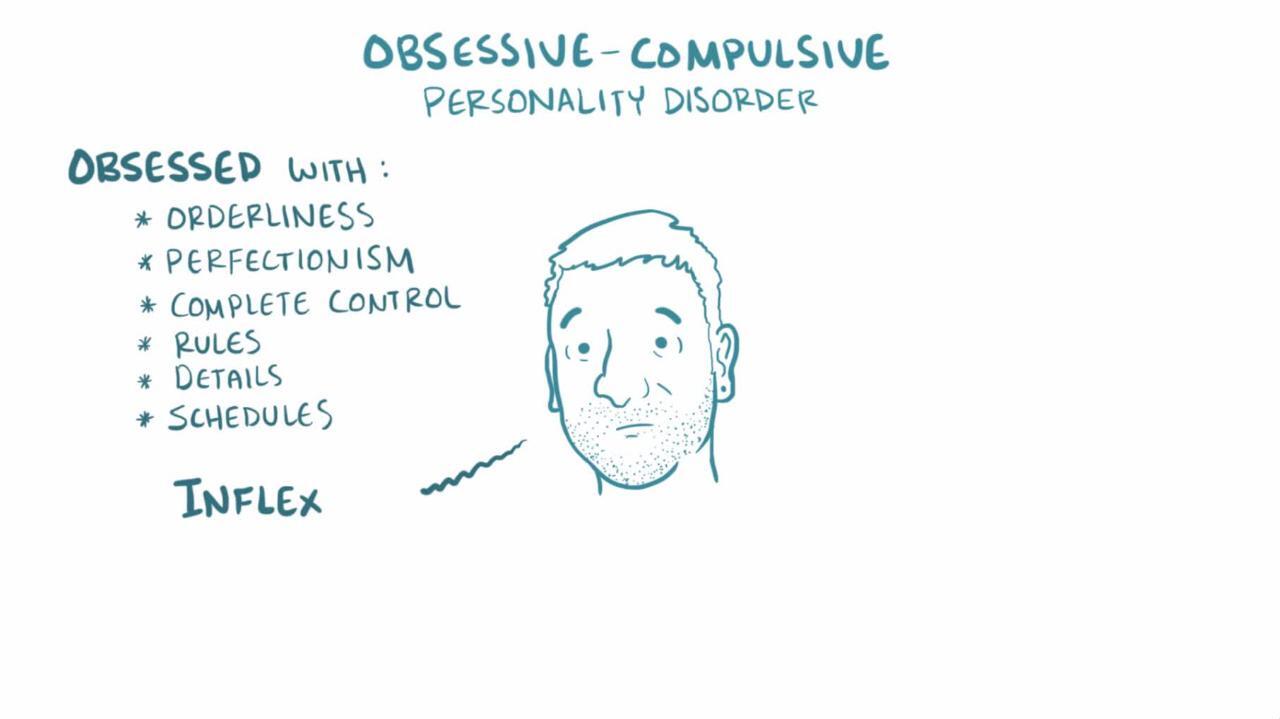
Obsessive-compulsive: Perfectionism, rigidity, and obstinacy
Symptoms of Personality Disorders
Personality disorders involve mainly problems with
Identity and sense of self: People with a personality disorder lack a clear or stable image of themselves. That is, how they view themselves changes depending on the situation and the people they are with. For example, they may alternate between thinking of themselves as cruel or kind. Or they may be inconsistent in their values and goals. For example, they may be deeply religious while in church but irreverent and disrespectful elsewhere. Self-esteem may be unrealistically high or low.
Relationships: People with a personality disorder struggle to form close, stable relationships with others. They may be insensitive to other people or emotionally detached, or they may lack empathy.
People with a personality disorder often seem to behave inconsistently, and this can be confusing and frustrating to family members, friends, coworkers, and other people around them, including health care professionals. Their parenting style may be inconsistent, detached, overemotional, abusive, or irresponsible and sometimes causes physical and/or emotional problems for their children.
People with a personality disorder may have problems understanding what are reasonable, safe, and acceptable ways to treat and to behave around others.
People with a personality disorder may be unaware of their role in creating their problems and the impact of their behavior on their relationships.
Did You Know...
|
Diagnosis of Personality Disorders
A doctor's evaluation, based on standard psychiatric diagnostic criteria
Doctors base the diagnosis of a specific personality disorder on lists of personality traits (criteria) provided for each disorder in the DSM-5-TR.
Some people with a personality disorder are distressed by their behavior and actively seek treatment. Others cannot see a problem with their own behavior. Thus, they tend not to seek help on their own. Instead, they may be referred by their friends, family members, or a social agency because their behavior is causing difficulty for others.
When people with a personality disorder seek help, the reason is likely to be to get help with other mental health disorders, such as anxiety, depression, or substance use, or with the problems created by their personality disorder, such as divorce, unemployment, or loneliness—rather than the disorder itself. When people report symptoms or problems, doctors usually ask them questions to determine whether a personality disorder might be involved. For example, doctors ask how they view themselves and others and how they respond when people react negatively to their behavior. Personality disorders are underdiagnosed because the symptoms of more common mental health disorders, such as anxiety or depression, may overshadow the features of an underlying personality disorder.
A doctor suspects a personality disorder if people
Consistently view themselves or others in ways that differ from reality
Describe a pattern of inappropriate thoughts or behaviors that they do not change despite negative consequences
Are distressed by their behavior and/or its consequences or cannot function adequately because of their behavior
The inappropriate thoughts and behaviors may involve how people see and understand themselves and others, how they interact with others, and/or how well they control their impulses. Such thoughts and behaviors are considered a disorder only if they are persistent (not just once in a while) and if a person keeps doing them even though they cause the person distress or difficulties in daily life. Also, for people with personality disorders, the thoughts and behaviors start during adolescence or early adulthood, not later in life.
To help confirm the diagnosis, doctors may talk with the person's friends and family members to obtain additional information. This can be very helpful, because people are often unaware of their own role in creating the problems.
Treatment of Personality Disorders
Psychotherapy
Personality disorders are treated with psychotherapy, which may include individual psychotherapy or group therapy. Therapy is more likely to be effective when people seek treatment and are motivated to change.
Medications do not treat personality disorders directly but can help relieve symptoms of distress, such as depression and anxiety, and can help control certain personality traits such as aggression.
Personality disorders can be particularly difficult to treat, so it is important to choose a psychotherapist who is experienced and nonjudgmental and who can understand the person's self-image, areas of sensitivity, and usual ways of coping.
General principles of treatment
Although specific treatments differ according to the type of personality disorder, treatment generally aims to
Reduce distress
Help people understand that their problems are internal (not caused by other people or situations)
Decrease maladaptive and socially undesirable behavior
Modify the personality traits that are causing difficulties
Reducing immediate distress, such as anxiety and depression, is the first goal of treatment. Reducing distress makes treatment of the personality disorder easier. First, therapists help people identify what is causing distress. Then, they consider ways to relieve it. Therapists provide strategies to help the person get out of highly distressing situations or relationships (called psychosocial support). These strategies may include care and support by family members, friends, neighbors, health care practitioners, and others. Medications for anxiety or depression can help relieve these symptoms. When medications are used, they are ideally used in small doses and for a limited time.
Helping people understand that their problems are internal is crucial because people with a personality disorder may not see a problem with their own behavior. Doctors try to help people understand when their behavior is inappropriate and has harmful consequences. By establishing a cooperative, mutually respectful doctor-patient relationship, doctors can help people become more aware of themselves and recognize their socially undesirable, inappropriate behavior. Doctors can also help people realize that changes in their behavior and view of themselves and others will take time and effort.
Maladaptive and undesirable behaviors (such as recklessness, social isolation, lack of assertiveness, and temper outbursts) should be dealt with quickly to minimize ongoing damage to jobs and relationships. Sometimes doctors need to set limits on behavior in their office. For example, doctors may tell people that yelling and threatening makes conducting a session difficult. If behavior is extreme—for example, if people are reckless, isolate themselves socially, have outbursts of anger, or are self-destructive—they may need treatment at a day hospital or in a residential institution.
Changes in behavior are most important for people with one of the following personality disorders:
Group therapy and behavioral modification methods can typically improve behavior within months. Self-help groups or family therapy can also help change inappropriate behavior. The involvement of family members is helpful and often essential because they can act in ways that either reinforce or diminish the inappropriate behavior or thoughts.
Modifying problematic personality traits (such as dependency, distrust, arrogance, and manipulativeness) takes a long time, typically more than a year. The key to modifying these traits is individual psychotherapy.
Psychotherapy can help people understand how their personality disorder relates to their current problems. It can also help people learn new and better ways of interacting and coping. Usually, change is gradual.
More Information
The following English-language resource may be useful. Please note that THE MANUAL is not responsible for the content of this resource.
American Psychiatric Association, Types of Personality Disorders: A brief overview of all personality disorders and links to additional resources.


