THE MERCK MANUAL MEDICAL LIBRARY: The Merck Manual of Medical Information--Home Edition
Print This Topic

Section

Subject

Phobic Disorders

-
-

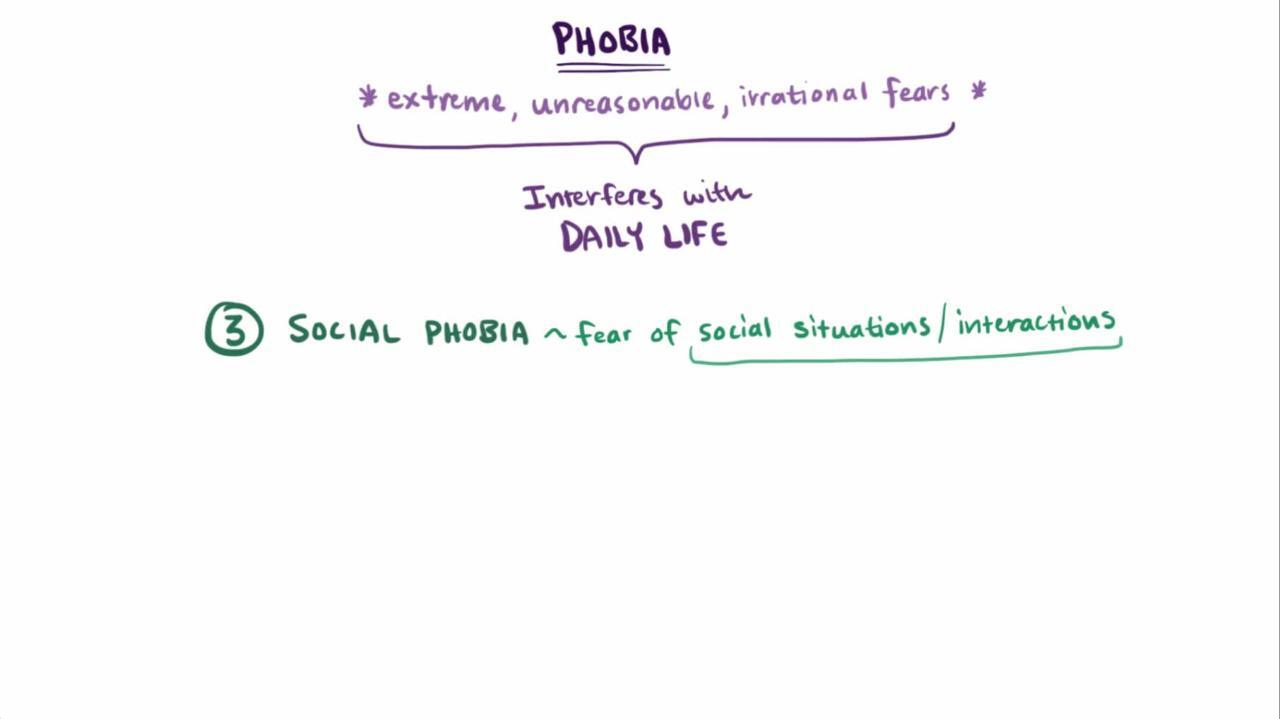
Phobias involve persistent, unrealistic, intense anxiety about and fear of certain situations, circumstances, or objects.

  • The anxiety caused by a phobic disorder can interfere with daily living because people avoid certain activities and situations.
  • The diagnosis is usually obvious based on symptoms.
  • Treatment may include exposure therapy, cognitive-behavior therapy, and drugs (such as antidepressants and, for specific phobias, benzodiazepines).
  • People who have a phobia avoid situations that trigger their anxiety and fear, or they endure them with great distress. However, they recognize that their anxiety is excessive and therefore are aware that they have a problem.

    Agoraphobia

    Agoraphobia is anxiety about being trapped in situations or places with no way to escape easily if anxiety or panic develops, often resulting in avoidance.

    Agoraphobia is diagnosed in about 4% of women and 2% of men during any 12-month period. Most people with this disorder develop it in their early 20s. Agoraphobia rarely develops after age 40.

    Although agoraphobia literally means “fear of the marketplace,” the term more specifically describes the fear of being trapped, often in a busy place filled with people, without a graceful and easy way to leave if anxiety becomes severe. Typical situations that are difficult for people with agoraphobia include the following:

    • Standing in line at a bank or supermarket
    • Sitting in the middle of a long row in a theater or classroom
    • Riding on a bus or airplane

    Some people develop agoraphobia after experiencing a panic attack in one of these situations. Other people simply feel uncomfortable in these settings and may never, or only later, develop panic attacks. Agoraphobia often interferes with daily living, sometimes so drastically that it makes people housebound.

    Treatment

    If agoraphobia is not treated, it usually waxes and wanes in severity and may even disappear without formal treatment, possibly because the person has conducted some personal form of behavior therapy.

    Exposure therapy, a type of behavior therapy in which people are exposed repeatedly to the anxiety-provoking situation, is the best treatment for agoraphobia. This therapy helps more than 90% of people who practice it faithfully. Cognitive-behavior therapy may also help. With this therapy, people learn to recognize when their thinking is distorted, to control the distorted thinking, and to modify their behavior accordingly. Substances that depress the central nervous system (brain and spinal cord), such as alcohol or large doses of antianxiety drugs, may interfere with behavior therapy and are often tapered off before therapy is begun.

    If people with agoraphobia are deeply depressed or have panic attacks, they may need to take an antidepressant.

    Social Phobia

    Social phobia (social anxiety disorder) is fear of and anxiety about exposure to certain social or performance situations, often resulting in avoidance.

    Humans are social animals, and their ability to relate comfortably in social situations affects many important aspects of their lives, including family, education, work, leisure, dating, and mating.

    Although some anxiety in social situations is normal, people with social phobia have so much anxiety that they either avoid social situations or endure them with distress. About 13% of people have social phobia sometime in their life. The disorder affects about 9% of women and 7% of men during any 12-month period. Men are more likely than women to have the most severe form of social anxiety, avoidant personality disorder (see Personality Disorders: Avoidant Personality). Some people are shy by nature and, early in life, show timidness that later develops into social phobia. Others first experience anxiety in social situations around the time of puberty.

    People with social phobia are concerned that their performance or actions will seem inappropriate. Often they worry that their anxiety will be obvious—that they will sweat, blush, vomit, or tremble or that their voice will quaver. They also worry that they will lose their train of thought or that they will not be able to find the words to express themselves.

    Some social phobias are tied to specific performance situations, producing anxiety only when the people must perform a particular activity in public. The same activity performed alone produces no anxiety. Situations that commonly trigger anxiety among people with social phobia include the following:

    • Public speaking
    • Performing publicly, such as reading in church or playing a musical instrument
    • Eating with others
    • Signing a document before witnesses
    • Using a public bathroom

    A more general type of social phobia is characterized by anxiety in many social situations.

    In both types of social phobia, people's anxiety comes from the belief that if their performance falls short of expectations, they will feel embarrassed and humiliated.

    Treatment

    Social phobia often persists if left untreated, causing many people to avoid activities that they would otherwise like to do.

    Exposure therapy, a type of behavior therapy in which people are exposed repeatedly to the anxiety-provoking situation, is effective. But arranging for exposure to last long enough to allow people to get used to the anxiety-provoking situation and grow comfortable in that situation may not be easy. For example, people who are afraid of speaking in front of their boss may not be able to arrange a series of speaking sessions in front of that boss. Substitute situations may help, such as joining Toastmasters (an organization for those who have anxiety about speaking in front of an audience) or reading a book to nursing home residents. Cognitive-behavior therapy may also help (see Anxiety Disorders: Psychotherapy).

    Antidepressants, such as selective serotonin reuptake inhibitors (SSRIs) and monoamine oxidase inhibitors (MAOIs), and antianxiety drugs can often help people with social phobia. Many people use alcohol as a social lubricant, but for some people, alcohol abuse and dependence can result. Beta-blockers are commonly used to reduce the increased heart rate, trembling, and sweating experienced by people who are distressed by performing in public, but these drugs do not treat the underlying anxiety.

    Specific Phobias

    A specific phobia is an irrational fear of specific objects or situations.

    Specific phobias, as a group, are among the most common anxiety disorders but are often less troubling than other anxiety disorders. During any 12-month period, about 13% of women and 4% of men have a specific phobia.

    Some specific phobias cause little inconvenience, while others severely interfere with functioning. For example, a city dweller who is afraid of snakes may have no trouble avoiding them. However, a city dweller who fears small, closed places such as elevators may encounter them frequently.

    Some specific phobias, such as fear of large animals, the dark, or strangers, begin early in life. Many such phobias stop as people get older. Other phobias, such as fear of rodents, insects, storms, water, heights, flying, or enclosed places, typically develop later in life.

    At least 5% of people are to some degree phobic about blood, injections, or injury. These people can actually faint because of a decrease in heart rate and blood pressure, which does not happen with other phobias and anxiety disorders. Many people with other phobias and anxiety disorders hyperventilate. Hyperventilating can cause them to feel as though they might faint, although they virtually never faint.

    Some Common Phobias

    Phobia

    Definition

    Acrophobia

    Fear of heights

    Amathophobia

    Fear of dust

    Astraphobia

    Fear of thunder and lightning

    Aviophobia

    Fear of flying

    Belonephobia

    Fear of needles, pins, or other sharp objects

    Brontophobia

    Fear of thunder

    Claustrophobia

    Fear of confined spaces

    Eurotophobia

    Fear of female genitals

    Gephyrophobia

    Fear of crossing bridges

    Hydrophobia

    Fear of water

    Odontiatophobia

    Fear of dentists

    Phartophobia

    Fear of passing gas in a public place

    Phasmophobia

    Fear of ghosts

    Phobophobia

    Fear of having fears or developing a phobia

    Spargarophobia

    Fear of asparagus

    Triskaidekaphobia

    Fear of all things associated with the number thirteen

    Trypanophobia

    Fear of injections

    Zoophobia

    Fear of animals (usually spiders, snakes, or mice)

    There are over 500 named phobias, listed at the Phobia List web site. Most are extremely rare.

    Treatment

    People can often cope with a specific phobia by avoiding the feared object or situation. When treatment is needed, exposure therapy is the treatment of choice. A therapist can help ensure that the therapy is carried out correctly, although it can be done without a therapist. Even people with a phobia of blood or needles respond well to exposure therapy. For example, people who faint while blood is drawn can have a needle brought close to a vein and then removed when the heart rate begins to slow down. Repeating this process allows the heart rate to return to normal. Eventually, people should be able to have blood drawn without fainting.

    Drug therapy is not very useful in helping people overcome specific phobias. However, benzodiazepines (antianxiety drugs) may give people short-term control over a phobia, such as the fear of flying.

    Last full review/revision August 2007 by John H. Greist, MD; James W. Jefferson, MD

    Contact UsSite MapPrivacy PolicyTerms of UseCopyright 1995-2007 Merck & Co., Inc.