





Acute myeloid leukemia is a life-threatening disease in which the cells that normally develop into the types of white blood cells called neutrophils, basophils, eosinophils, and monocytes become cancerous and rapidly replace normal cells in the bone marrow.
People may be tired or pale, may be easily susceptible to infection and fever, and may bruise or bleed easily.
Blood tests and bone marrow examination are needed for diagnosis.
Treatment includes chemotherapy to achieve remission plus additional chemotherapy to avoid relapse and sometimes stem cell transplantation.
(See also Overview of Leukemia.)
Acute myeloid leukemia (AML) is the most common type of leukemia among adults, although it affects people of all ages. AML sometimes is caused by chemotherapy or radiation therapy given to treat another cancer.
In AML, immature leukemia cells rapidly accumulate in the bone marrow, destroying and replacing cells that produce normal blood cells including one or more of the following:
Red blood cells, which carry oxygen in the bloodstream
White blood cells, which help defend the body against infection
Platelets, small cell-like particles that help in the clotting process
Cancerous white blood cells do not function like normal white blood cells. So even though the person seems to have more white blood cells, they have fewer normal white blood cells and thus have trouble fighting off infections.
The leukemia cells also are released into the bloodstream and are transported to other organs, where they continue to grow and divide.
There are several subtypes of AML, which are identified based on characteristics of the leukemia cells.
Acute promyelocytic leukemia is an important subtype of AML. In this subtype, chromosomal changes in promyelocytes—cells that are at an early stage in the development into mature neutrophils—allow accumulation of these immature cells. Acute promyelocytic leukemia affects a younger age group (median age 31 years) and particular ethnicity (Hispanic people).
Symptoms of AML
The first symptoms of AML are very similar to those of acute lymphoblastic leukemia and result from the inability of the bone marrow to produce enough normal blood cells.
Fever and excessive sweating may indicate infection, which may result from too few normal white blood cells.
Weakness, fatigue, and paleness, which may result from too few red blood cells (anemia). Some people may have trouble breathing, a rapid heart rate, or chest pain.
Easy bruising and bleeding, sometimes in the form of nosebleeds or bleeding gums, which may result from too few platelets (thrombocytopenia). In some cases, people may bleed into their brain or abdomen.
Leukemia cells can invade other organs. Leukemia cells in the bone marrow may cause bone and joint pain. A sense of fullness in the abdomen and sometimes pain can result when leukemia cells cause enlargement of the liver and spleen. Leukemia cells can form small masses throughout the body, including in or just under the skin (called leukemia cutis) or gums, or in the eyes.


© Springer Science+Business Media
AML cells can spread to the layers of tissue covering the brain and spinal cord (meninges), leading to leukemic meningitis, which may cause
Headaches
Vomiting
Stroke
Disturbances of vision, hearing, and facial muscles (leukemic meningitis)
In the subtype of AML called acute promyelocytic leukemia, bleeding or blood clotting problems often occur.
Diagnosis of AML
Blood tests
Bone marrow examination
The diagnosis of AML is similar to the diagnosis of acute lymphoblastic leukemia. A complete blood count is done, including measurement of the numbers of each of the types of white blood cells. A bone marrow examination is almost always done to confirm the diagnosis and to distinguish AML from other types of leukemia. The immature white blood cells (blasts) are tested for chromosome abnormalities, which helps doctors determine the type of the leukemia and what drugs to use to treat it.
Tests of blood, including for tumor markers and electrolyte abnormalities, and urine are also done to detect other abnormalities related to AML.
Imaging tests may also be needed. Computed tomography (CT) or magnetic resonance imaging (MRI) is done if the person has symptoms that suggest leukemia cells in the brain. CT of the chest may be done to check for leukemia cells in the area around the lungs. CT, MRI, or ultrasonography of the abdomen may be done to determine whether internal organs are enlarged. An echocardiogram (ultrasound of the heart) may be done before starting chemotherapy because chemotherapy drugs sometimes affect the heart.
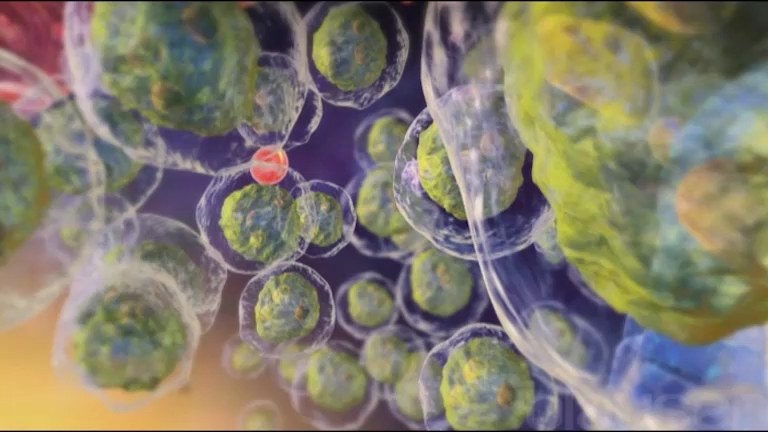
Treatment of AML
Chemotherapy
Stem cell transplantation
Treatment of AML is aimed at bringing about prompt remission—the destruction of the vast majority of leukemia cells. However, treatment often makes people sicker before they get better.
Treatment suppresses bone marrow activity, resulting in very few white blood cells, particularly neutrophils. Having too few neutrophils makes infection likely. Treatment also disrupts the mucosae (such as the lining of the mouth), which makes it easier for bacteria to enter the body. Meticulous care is taken to prevent infections, and infections that occur must be promptly treated. Red blood cell and platelet transfusions are also needed.
Induction
Consolidation chemotherapy is given once AML is in remission. People usually receive several courses of additional chemotherapy beginning a few weeks after the initial treatment to help ensure that as many leukemia cells as possible are destroyed.
Allogeneic stem cell transplantation ("allogeneic" means the stem cells are from another person) is done after induction and consolidation in some people at risk of relapse. But transplantation can be done only if stem cells can be obtained from a person who has a compatible tissue type (human leukocyte antigen [HLA]–matched). The donor is usually a sibling, but cells from matched, unrelated donors (or occasionally partially matched cells from family members or unrelated donors, as well as umbilical stem cells) are sometimes used.
Unlike in acute lymphocytic leukemia, preventive treatment to the brain usually is not needed for adults, and long-term lower-dose chemotherapy (maintenance therapy) has not been shown to improve survival.
People with acute promyelocytic leukemia can be treated with a type of vitamin A called all-transtrans
Relapse
People who have not responded to treatment and younger people who are in remission but who are likely to have a high rate of relapse (generally identified by certain chromosomal abnormalities) may be given high doses of chemotherapy drugs followed by stem cell transplantation.
When relapse occurs, additional chemotherapy for people unable to undergo stem cell transplantation is less effective and often poorly tolerated. Another course of chemotherapy is most effective in younger people and in people whose initial remission lasted longer than 1 year. Doctors take many factors into consideration when determining the advisability of additional intensive chemotherapy for people with AML in relapse.
Prognosis for AML
Without treatment, most people with AML die within a few weeks to months of the diagnosis. With therapy, between 20% and 40% of people survive at least 5 years, without any relapse. With intensive treatment, 40 to 50% of younger people can survive at least 5 years. Because relapses almost always occur within the first 5 years after initial treatment, most people who remain leukemia-free after 5 years are considered cured.
The strongest predictor of survival is the type of genetic abnormality present in the leukemia cells. People who are older than 65, those with certain findings on blood testing, such as a high white blood cell count, those who develop AML after undergoing chemotherapy or radiation therapy for other cancers, and those with a preceding myelodysplastic syndrome have the poorest prognosis.
Acute promyelocytic leukemia was once considered the most malignant form of leukemia. Now, it is one of the most curable forms of AML. More than 70% of people with acute promyelocytic leukemia can be cured. Rapid diagnosis is essential.
More Information
The following English-language resource may be useful. Please note that the MANUAL is not responsible for the content of this resource.
Leukemia & Lymphoma Society: Acute Myeloid Leukemia: General information on many aspects of acute myeloid leukemia, including diagnosis, treatment options, and latest research findings


