





Scleritis is severe, destructive inflammation of the sclera (the tough, white, fiber layer covering the eye) that may threaten vision.
Scleritis sometimes occurs in people who have a bodywide inflammatory disease.
The main symptom is a deep, painful ache in the eye.
Sometimes imaging tests are done to confirm the diagnosis.
Treatment typically begins with corticosteroids.
Scleritis is most common among women aged 30 to 50. In one third of cases, it affects both eyes. Scleritis may accompany rheumatoid arthritis, systemic lupus erythematosus, or another autoimmune disorder (a malfunction of the body's immune system that causes the body to attack its own tissues). About half of the cases of scleritis have no known cause. (See also Overview of Conjunctival and Scleral Disorders.)
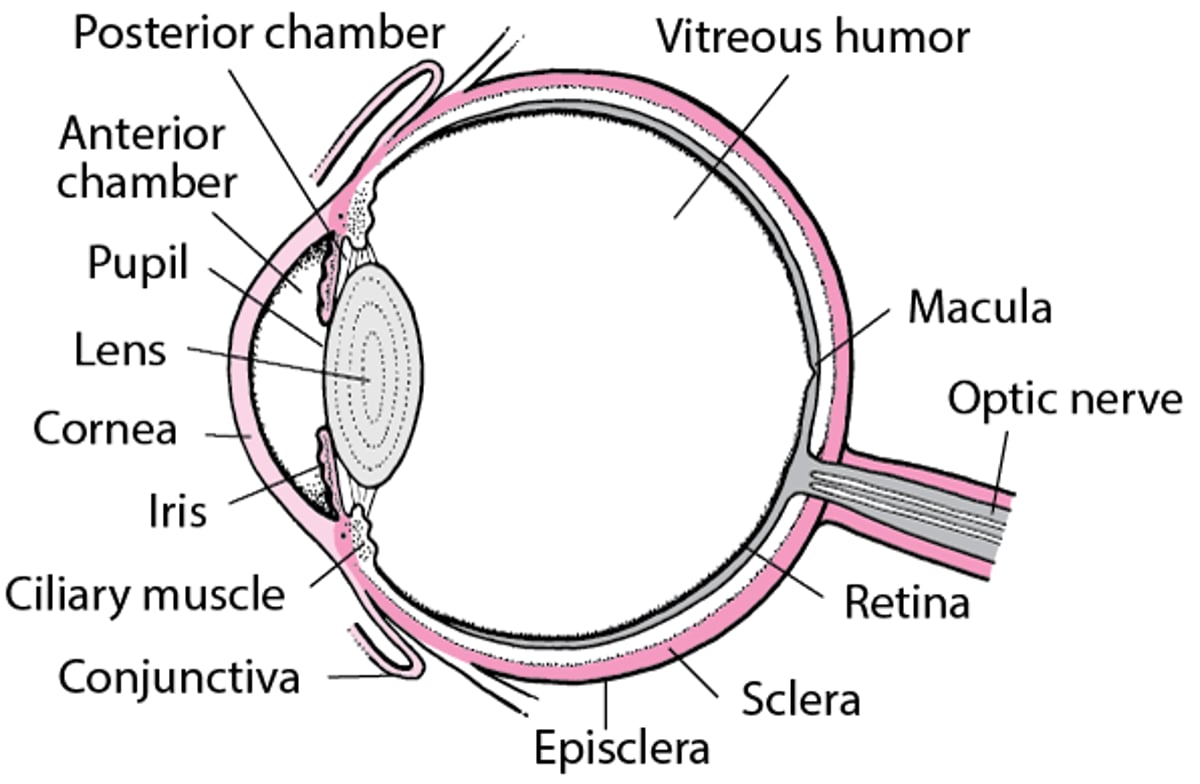
An Inside Look at the Eye

Symptoms of Scleritis
Symptoms of scleritis include pain in the eye (typically a deep ache) that is often constant and severe enough to interfere with sleep and reduce appetite. Other symptoms include eye tenderness, increased watering of the eye, and sensitivity to bright light. Redness that is purplish in color occurs over part or all of the eye.
Rarely, inflammation is severe enough to cause a hole to form in the eyeball (perforation) and loss of the eye. Such severe inflammation is called necrotizing scleritis. People who have necrotizing scleritis often have many years of problems such as autoimmune disorders (for example, rheumatoid arthritis, granulomatosis with polyangiitis, polyarteritis nodosa, and relapsing polychondritis) in other organs of the body.
Diagnosis of Scleritis
A doctor's evaluation of the symptoms and appearance of the eye
Sometimes imaging tests
Doctors diagnose scleritis by its symptoms and appearance during a slit-lamp examination. Sometimes the area of inflammation is in the back part of the eye (posterior scleritis), and ultrasonography or a computed tomography (CT) scan is needed to confirm the diagnosis of posterior scleritis.
Treatment of Scleritis
Corticosteroids
Sometimes immunosuppressants
Sometimes surgical repair
People who are at risk of a perforation may need surgical repair.
Prognosis for Scleritis
About 14% of people who have scleritis develop significant decrease in vision within 1 year, and 30% develop significant decrease in vision within 3 years.


