





Paroxysmal supraventricular tachycardia is a regular, fast (160 to 220 beats per minute) heart rate that begins and ends suddenly and originates in heart tissue other than that in the ventricles.
Most people have uncomfortable awareness of heartbeats (palpitations), shortness of breath, and chest pain.
Episodes can often be stopped by maneuvers that stimulate the vagus nerve, which slows the heart rate.
Sometimes, people are given drugs to stop the episode.
(See also Overview of Abnormal Heart Rhythms.)
Paroxysmal supraventricular tachycardia is most common among young people and is more unpleasant than dangerous. It may occur during vigorous exercise.
Paroxysmal supraventricular tachycardia may be triggered by a premature heartbeat that repeatedly activates the heart at a fast rate. This repeated, rapid activation may be caused by several abnormalities that people are born with. There may be two electrical pathways in the atrioventricular node, which is the electrical junction box between the upper chambers (the atria) and lower chambers (the ventricles) of the heart. Sometimes there is an abnormal electrical pathway between the atria and the ventricles . Much less commonly, the atria may generate abnormal rapid or circling impulses .
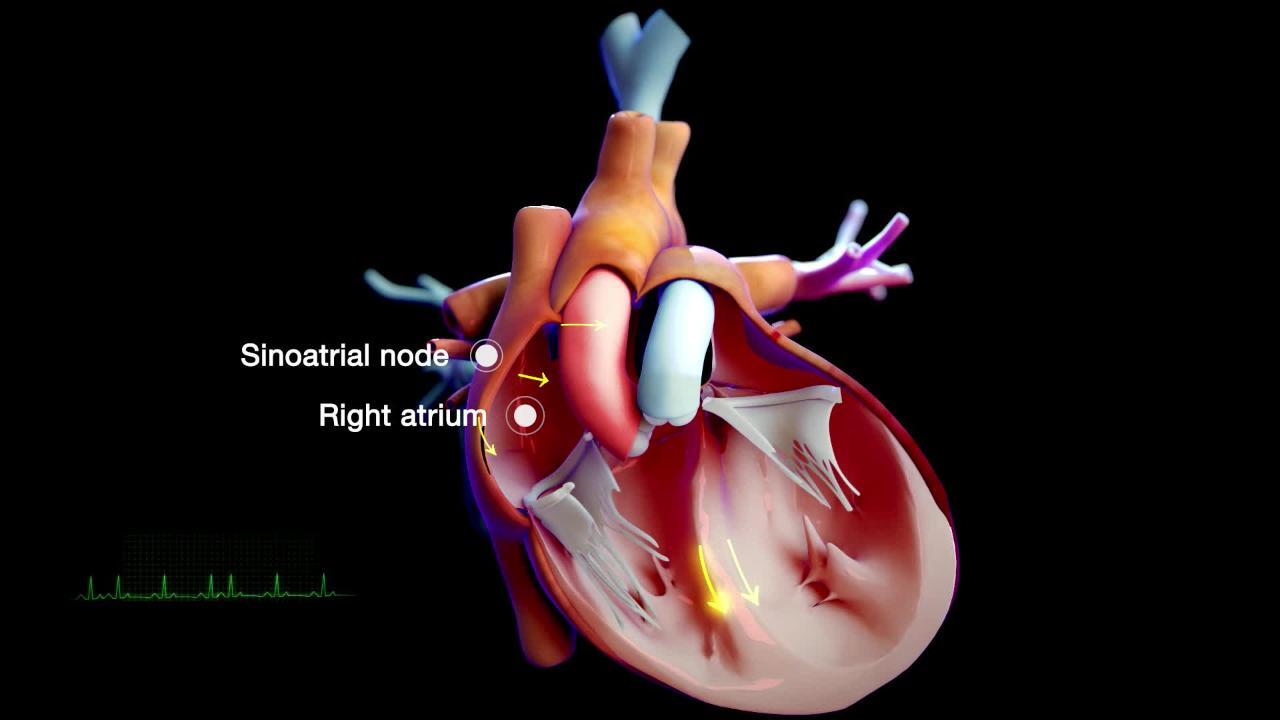
The fast heart rate tends to begin and end suddenly and may last from a few minutes to many hours. It is almost always experienced as an uncomfortable awareness of the heartbeat, such as feeling like the heart is pounding or racing (palpitations). It is often associated with other symptoms, such as weakness, light-headedness, shortness of breath, and chest pain. Usually, the heart is otherwise normal.
The doctor confirms the diagnosis by doing electrocardiography (ECG).
Treatment of PSVT
Maneuvers and drugs to slow heart rate or restore a normal rhythm
Sometimes radiofrequency ablation
Episodes of paroxysmal supraventricular tachycardia often can be stopped by one of several maneuvers that stimulate the vagus nerve and thus decrease the heart rate. These maneuvers are usually conducted or supervised by a doctor, but people who repeatedly experience the arrhythmia often learn to do the maneuvers themselves. Maneuvers include
Straining as if having a difficult bowel movement
Rubbing the neck just below the angle of the jaw (which stimulates a sensitive area on the carotid artery called the carotid sinus)
Plunging the face into a bowl of ice-cold water
These maneuvers are most effective when they are used shortly after the arrhythmia starts.
cardioversion (delivery of an electrical shock to the heart) may be necessary.
Prevention is more difficult than treatment. When episodes are frequent or bothersome, doctors usually recommend catheter ablation. For this procedure, radiowaves, laser pulses, high-voltage electrical current, or cold is delivered through a catheter inserted in the heart. This energy or cold temperature destroys the tissue in which paroxysmal supraventricular tachycardia originates.
More Information
The following English-language resource may be useful. Please note that THE MANUAL is not responsible for the content of this resource.
American Heart Association: Arrhythmia: Information to help people understand their risks of arrhythmias as well as information on diagnosis and treatment


