





Bundle branch block is a type of conduction block involving partial or complete interruption of the flow of electrical impulses through the right or left bundle branches.
(See also Overview of Abnormal Heart Rhythms and Overview of Heart Block.)
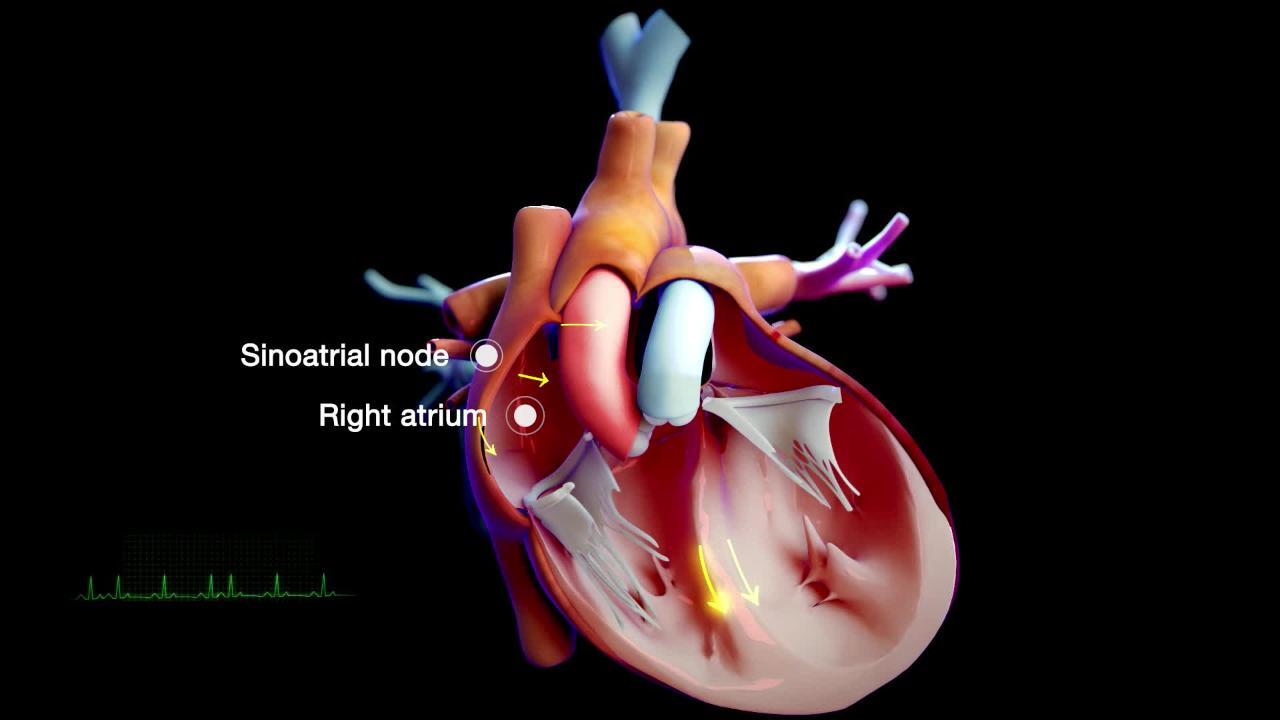
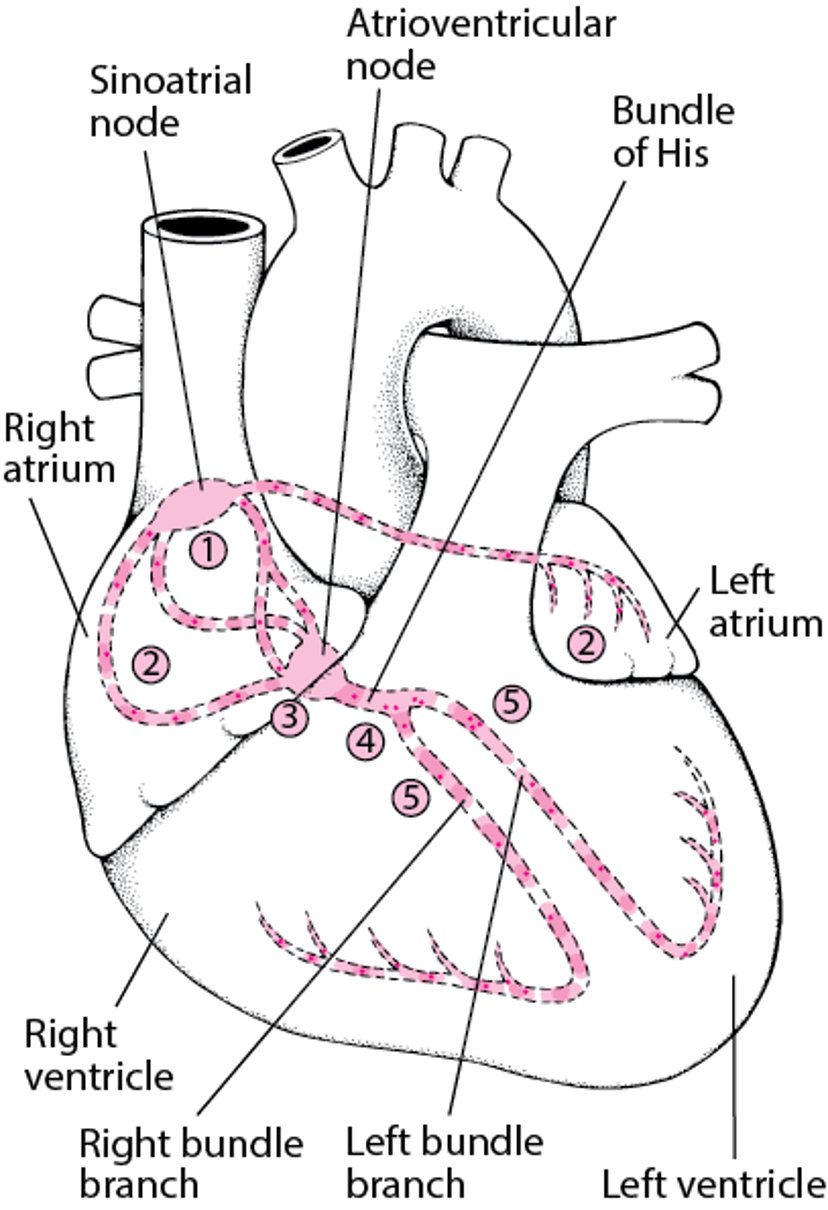
The electrical current that controls the contraction of heart muscle starts in the sinoatrial node, flows through the heart's upper chambers (atria) and then goes to the heart's lower chambers (ventricles) through an electrical junction box called the atrioventricular node (AV node). The AV node is located in the lower part of the wall between the atria near the ventricles and provides the only electrical connection between the atria and ventricles. The bundle of His is a group of fibers that conducts electrical impulses from the atrioventricular node to the lower chambers of the heart (the ventricles). The bundle of His divides into two bundle branches. The left bundle branch conducts impulses to the left ventricle, and the right bundle branch conducts impulses to the right ventricle. Conduction may be blocked in the left or right bundle branch.
The left bundle branch further divides into two branches, called the anterior and posterior fascicles. If conduction is blocked through one of these fascicles, the blockage is called a hemiblock or a fascicular block.
Tracing the Heart’s Electrical Pathway
The sinoatrial (sinus) node (1) initiates an electrical impulse that flows through the right and left atria (2), making them contract. When the electrical impulse reaches the atrioventricular node (3), it is delayed slightly. The impulse then travels down the bundle of His (4), which divides into the right bundle branch for the right ventricle (5) and the left bundle branch for the left ventricle (5). The impulse then spreads through the ventricles, making them contract. |

Bundle branch block usually causes no symptoms. Right bundle branch block is not serious in itself and may occur in apparently healthy people. However, it may also indicate significant heart damage due to, for example, a previous heart attack.
Left bundle branch block tends to be more serious. In older people, it often indicates coronary artery disease due to atherosclerosis.
Bundle branch block can be detected by electrocardiography (ECG). Each type of block produces a characteristic pattern.
Bundle branch block itself usually requires no treatment unless all the bundle branches are blocked. However, if the block was caused by an underlying heart disorder, that disorder may require treatment.
More Information
The following English-language resource may be useful. Please note that THE MANUAL is not responsible for the content of this resource.
American Heart Association: Arrhythmia: Information to help people understand their risks of arrhythmias as well as information on diagnosis and treatment


