





Mitral valve prolapse is a disorder in which the valve flaps (cusps) bulge into the left atrium when the left ventricle contracts, sometimes allowing leakage (regurgitation) of blood into the atrium.
Mitral valve prolapse is sometimes caused by weakness in the tissue of the valve.
Most people have no symptoms, but some people have chest pain, a rapid pulse, awareness of heartbeats, migraine headaches, fatigue, and dizziness.
Doctors make the diagnosis after hearing a characteristic clicking sound through a stethoscope placed over the heart and confirm the diagnosis with echocardiography.
Most people do not need treatment.
(See also Overview of Heart Valve Disorders and the video The Heart.)
The mitral valve is in the opening between the left atrium and the left ventricle. The mitral valve opens to allow blood from the left atrium to fill the left ventricle and closes as the left ventricle contracts to pump blood into the aorta. Prolapse means that the valve flaps bulge back into the left atrium when the left ventricle contracts. With prolapse, blood sometimes leaks (regurgitates) back into the atrium (see also Mitral Regurgitation).

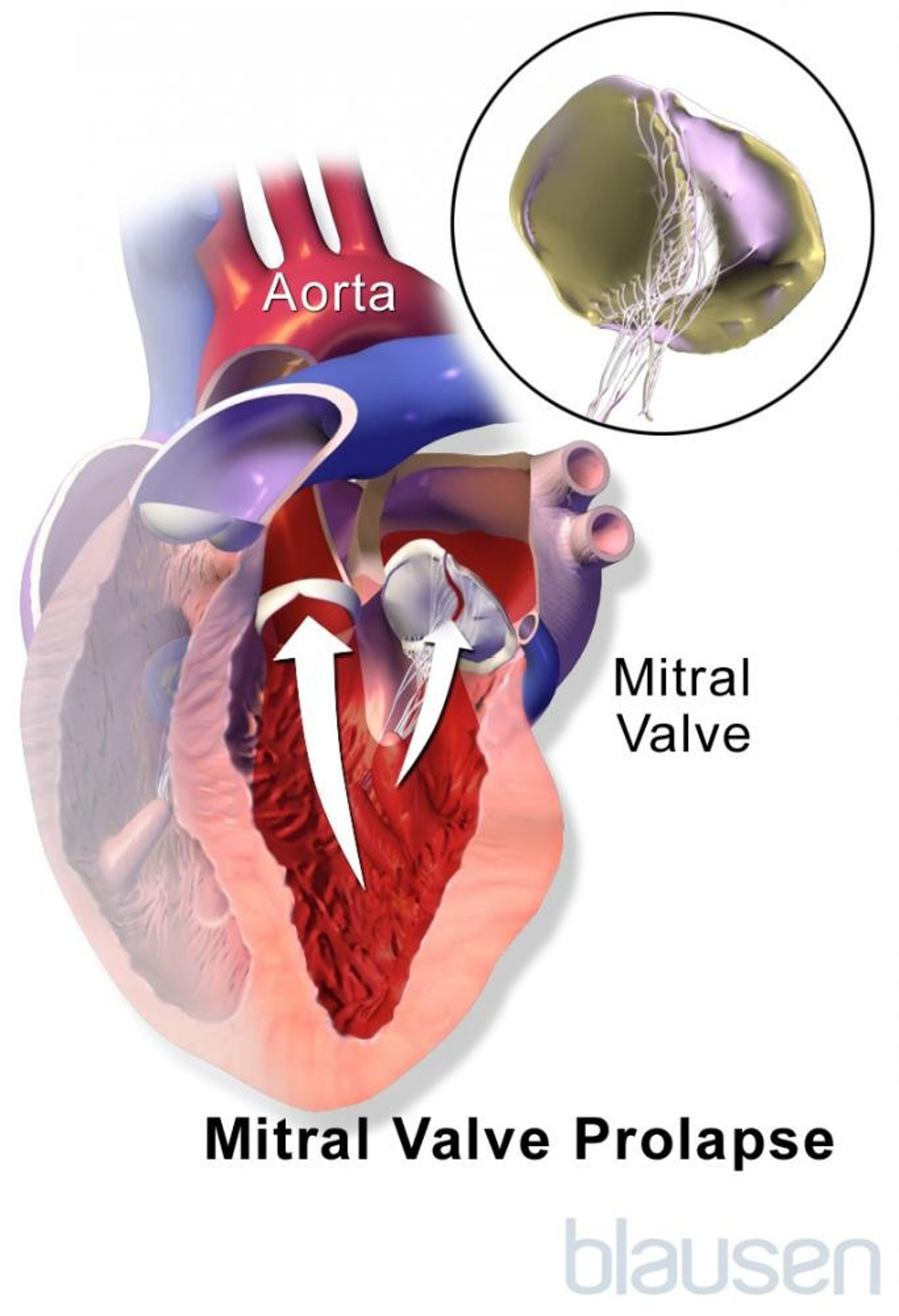
About 1 to 3% of people have mitral valve prolapse. It causes serious heart problems only if the regurgitation becomes severe, infection of the valve occurs (infective endocarditis), or weak tissue ruptures.
Causes of Mitral Valve Prolapse
The cause is usually excessive lengthening of the valve tissue due to a weakness in the tissue of the valve (myxomatous degeneration). Myxomatous degeneration is genetic. Other disorders that seem to increase the risk of mitral valve prolapse include rheumatic heart disease, Marfan syndrome, and Ehlers-Danlos syndrome.
Symptoms of Mitral Valve Prolapse
Most people with mitral valve prolapse have no symptoms. Others have symptoms that are difficult to explain solely on the basis of the valve's mechanical problem. These symptoms include chest pain, a rapid pulse, palpitations (awareness of heartbeats), migraine headaches, fatigue, and dizziness. In some people, blood pressure may fall below normal when they stand up (a disorder called orthostatic hypotension).
Diagnosis of Mitral Valve Prolapse
Physical examination
Echocardiography
Doctors often diagnose mitral valve prolapse after hearing the characteristic clicking sound through a stethoscope. Regurgitation is diagnosed if a murmur is heard when the left ventricle contracts.
Echocardiography enables doctors to view the prolapse and determine the severity of regurgitation if present.
Treatment of Mitral Valve Prolapse
Sometimes beta-blockers
Most people with mitral valve prolapse do not need treatment. If the heart is beating too fast, a beta-blocker may be taken to slow the heart rate and to reduce palpitations and other symptoms.
Prognosis for Mitral Valve Prolapse
Mitral valve prolapse is usually benign, but severe myxomatous degeneration of the valve can lead to mitral regurgitation. When mitral regurgitation becomes severe, the risk of enlargement of the left atrium or left ventricle, abnormal heart rhythms (eg, atrial fibrillation), infection of the valve (infective endocarditis), stroke, and death increase, as does the need for valve replacement. Although men are less likely to have mitral valve prolapse, they are more likely to progress to severe mitral regurgitation.
More Information
The following English-language resource may be useful. Please note that THE MANUAL is not responsible for the content of this resource.
American Heart Association: Heart Valve Disease: Provides comprehensive information on diagnosis and treatment of diseases of the heart valves


