





Tumors rarely affect joints unless a bone tumor or soft-tissue tumor is near a joint. However, two conditions—synovial chondromatosis and tenosynovial giant cell tumors—occur in the lining (synovium) of joints. These tumors are noncancerous (benign) but can cause severe damage to the joint. Both conditions usually affect one joint, most often the knee or the hip, and can cause pain and a buildup of fluid.
To diagnose these conditions, doctors do x-rays, computed tomography (CT), magnetic resonance imaging (MRI), or a combination. To confirm the diagnosis, doctors usually remove a tissue sample for examination under a microscope (biopsy).
Treatment for both requires surgical removal of the abnormal synovium (called synovectomy).
(See also Overview of Bone Tumors.)
Tenosynovial giant cell tumor
Tenosynovial giant cell tumor (also known as pigmented villonodular synovitis [PVNS]) causes the lining of the joint to become swollen and grow. This growth harms the cartilage and bone around the joint. The lining also produces extra fluid that can cause pain and swelling. The process often causes bloody fluid in the joint. Tenosynovial giant cell tumor usually affects one joint.
Pexidartinib is available in the United States only in cancer centers through the manufacturer's Risk Evaluation and Mitigation Strategy Program. The drug can cause serious and potentially fatal liver injury in some people.
A total joint replacement may be needed if the condition returns after treatment. On rare occasions after several synovectomies, radiation therapy is sometimes given.
Synovial chondromatosis
Synovial chondromatosis (previously called synovial osteochondromatosis) is a condition in which cells in the lining of the joint turn into cartilage-producing cells. These converted cells can form clumps of cartilage, which then shed into the space around the joint, forming loose bodies that may be no larger than a grain of rice, and cause pain and swelling. This condition rarely becomes cancerous (malignant).

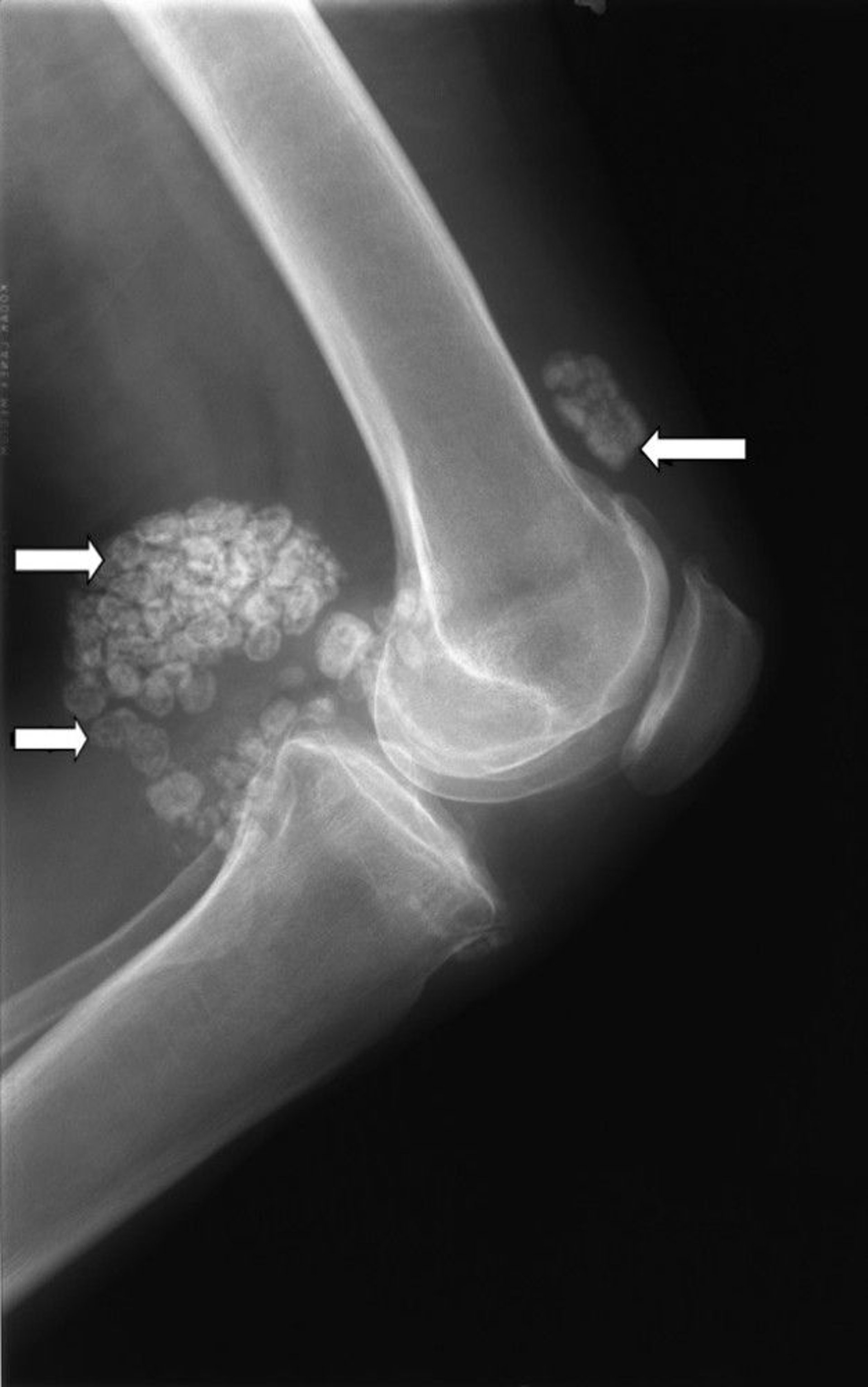
Image courtesy of Michael J. Joyce, MD, and Hakan Ilaslan, MD.
If symptoms are severe, the loose bodies are removed along with the abnormal synovium. This condition commonly returns after treatment.


