





Systemic lupus erythematosus is a chronic autoimmune inflammatory connective tissue disorder that can involve joints, kidneys, skin, mucous membranes, and blood vessel walls.
Problems in the joints, nervous system, blood, skin, kidneys, gastrointestinal tract, lungs, and other tissues and organs can develop.
Blood tests and sometimes other tests are done to make the diagnosis.
About 70 to 90% of people who have lupus are women of child-bearing age, but children (mostly girls), older men and women, and even newborns can also be affected. Lupus occurs in all parts of the world but may be more common among Black people and Asian people than White people.

The number and variety of antibodies that can appear in lupus are greater than those in any other disorder. These antibodies may sometimes determine which symptoms develop. However, the levels of these antibodies may not always be proportional to the person’s symptoms.
Discoid lupus erythematosus (DLE), sometimes called chronic cutaneous lupus erythematosus, is a form of lupus that affects only the skin. In this condition, raised, round, red rashes occur, sometimes progressing to some loss of the skin with scarring and hair loss in affected areas. The rash clusters on light-exposed areas of the skin, such as the face, scalp, and ears. Sometimes a rash or sores also affect the mucous membranes, especially in the mouth. In 10% of people, manifestations of systemic lupus—for example, those affecting the joints, kidneys, and brain—may occur.


Subacute cutaneous lupus erythematosus (SCLE) is a form of lupus that affects mostly the skin, causing various rashes that are widespread, come and go, and may worsen with exposure to sunlight. Red and ring-shaped or psoriasis–like patches may form on the arms, face, and trunk. SCLE differs from DLE because SCLE rarely causes scarring. People commonly have fatigue and joint pains but usually do not have the serious damage to internal organs that can occur in SLE.
Symptoms of Lupus
Symptoms of lupus vary greatly from person to person. Symptoms may begin suddenly with fever, resembling a sudden infection. Or symptoms may develop gradually over months or years with episodes (called flare-ups) of fever, feeling unwell, or any of the symptoms discussed below alternating with periods when symptoms are absent or minimal. Most people with lupus have mild symptoms affecting mostly the skin and joints.
Migraine-type headaches, epilepsy, or severe mental disorders (psychoses) may be the first abnormalities that are noticed. Eventually, however, symptoms may affect any organ system.
Joint problems
Joint symptoms, ranging from intermittent joint pains (arthralgias) to sudden inflammation of multiple joints (acute polyarthritis), occur in about 90% of people and may exist for years before other symptoms appear. In long-standing disease, marked joint looseness and deformity may occur (Jaccoud arthropathy or arthritis) but is rare. However, joint inflammation is generally intermittent and usually does not damage the joints.
Skin and mucous membrane problems
Rashes include a butterfly-shaped redness across the nose and cheeks (called a malar rash or butterfly rash), raised bumps or patches of thin skin, and flat or raised red areas on exposed areas of the face and neck, upper chest, and elbows. Blisters and skin ulcers (sores) are rare, but ulcers do commonly occur on mucous membranes, particularly on the roof of the mouth, on the inside of the cheeks, on the gums, and inside the nose.


Generalized or patchy loss of hair (alopecia) is common during flare-ups.
Mottled red areas on the sides of the palms and up the fingers, redness and swelling around the nails, and flat, reddish purple blotches between the knuckles on the inner surfaces of the fingers also may occur. Purplish spots (purpura) may occur because of bleeding in the skin as a result of low platelet levels in the blood.
Long-lasting rashes resulting from exposure to sunlight (photosensitivity) occur in some people with lupus, particularly fair-skinned people.

© Springer Science+Business Media

© Springer Science+Business Media
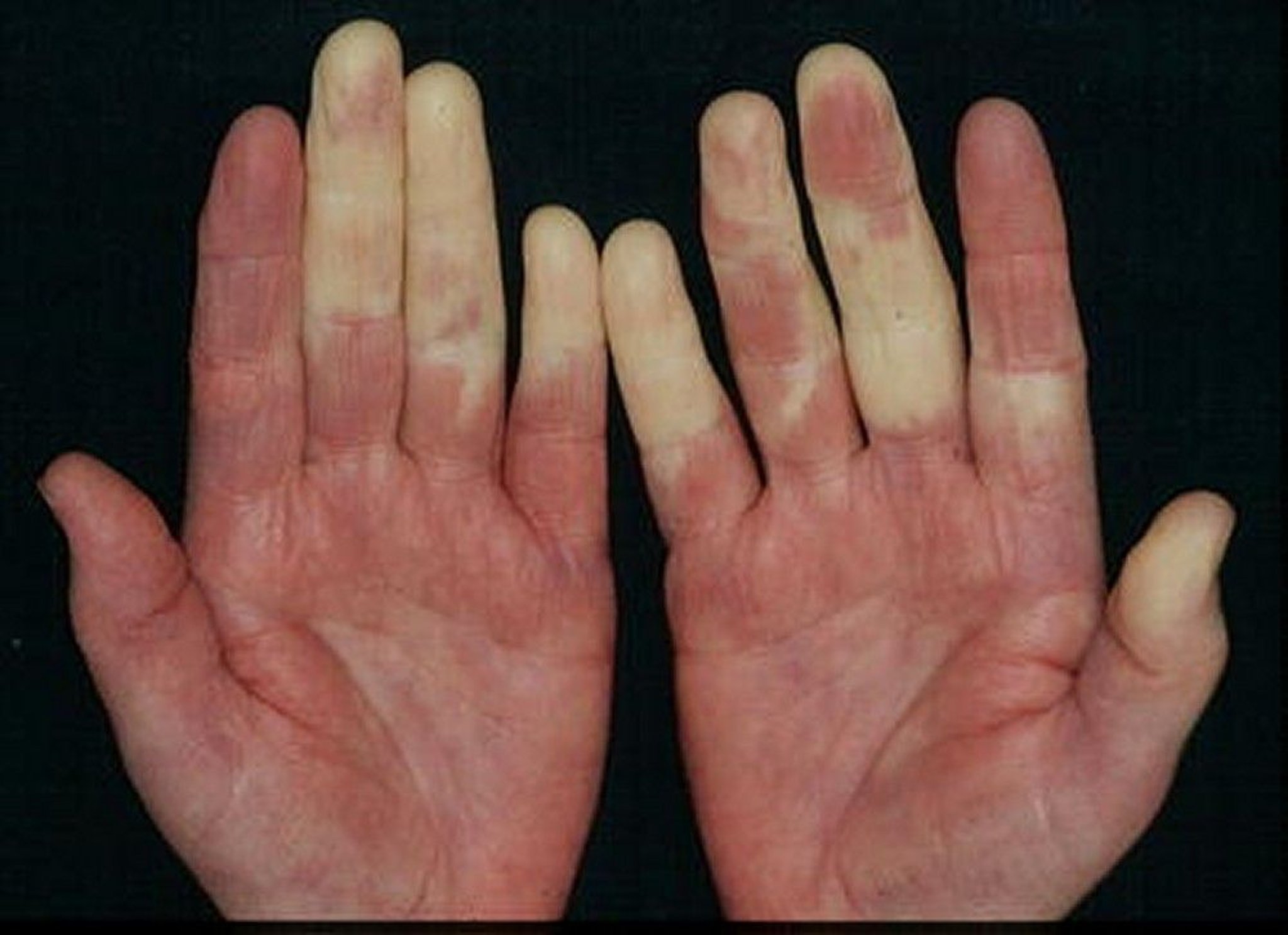
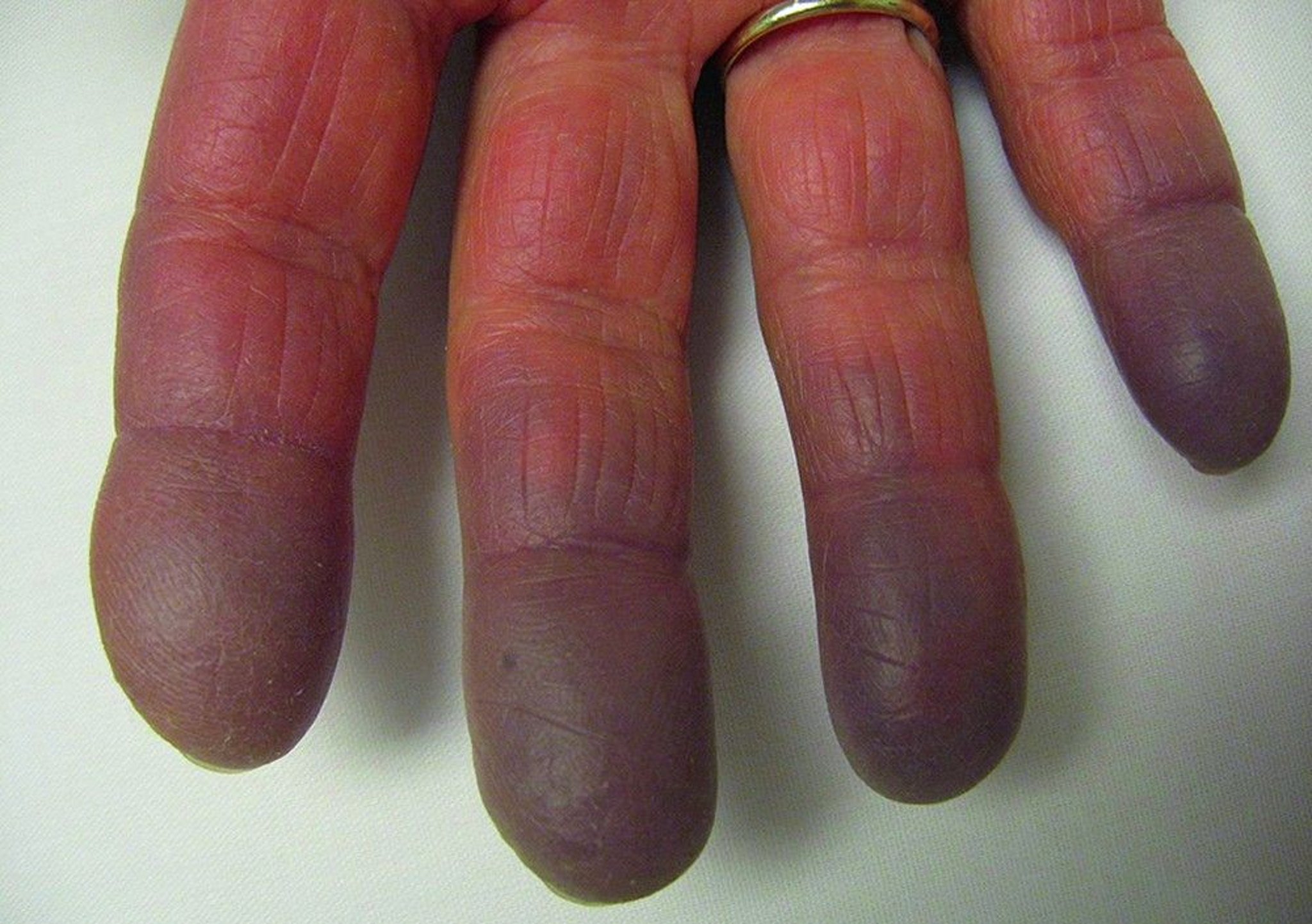
People with lupus who have Raynaud syndrome have very pale or bluish fingers and toes when they are exposed to cold.
Lung problems
It is common for people with lupus to feel pain when breathing deeply. The pain is due to recurring inflammation of the sac around the lungs (pleurisy), with or without fluid (effusion—see symptoms of pleural effusion) inside this sac. Inflammation of the lungs (lupus pneumonitis), resulting in breathlessness, is rare, although minor abnormalities in lung function are common. Life-threatening bleeding into the lungs may rarely occur. Blockage of arteries in the lung caused by blood clots (thrombosis) can also occur.
Heart problems
People with lupus may have chest pain due to inflammation of the sac around the heart (pericarditis). More serious but rare effects on the heart are inflammation of the walls of the coronary arteries (coronary artery vasculitis), which can lead to angina, and inflammation of the heart muscle (myocarditis), which can lead to heart failure. The valves of the heart can rarely be involved and may need to be surgically repaired. People are at increased risk of coronary artery disease.
An infant whose mother has lupus and has a certain type of antibody (anti-Rho/SSA antibody) can be born with heart block.
Lymph node and spleen problems
Widespread enlargement of the lymph nodes is common, particularly among children, young adults, and Black people of all ages.
Enlargement of the spleen (splenomegaly) occurs in about 10% of people.
Nervous system problems
Involvement of the brain (neuropsychiatric lupus) can cause headaches, mild impairment of thinking, personality changes, stroke, seizures, severe mental disorders (psychoses), or a condition in which a number of physical changes may occur in the brain, resulting in disorders such as dementia. The nerves in the body or spinal cord may also be damaged.
Kidney problems
Kidney involvement may be minor and without symptoms or may be progressive and fatal. People may develop kidney failure that requires dialysis. The kidneys can be affected at any time and may be the only organ affected by lupus. The most common results of kidney impairment are high blood pressure and protein in the urine that leads to swelling (edema) in the legs.
Blood problems
The numbers of red blood cells, white blood cells, and platelets may decrease. Platelets assist in blood clotting, so if these numbers decrease greatly, bleeding may occur. Also, and for other reasons, the blood may clot too easily, which accounts for many of the problems that can affect other organs (such as strokes and blood clots to the lungs or repeated miscarriages).
Gastrointestinal tract problems
People may have nausea, diarrhea, and vague abdominal discomfort. The occurrence of these symptoms may be the forewarning of a flare-up. Impairment of blood supply to various parts of the gastrointestinal tract may result in more severe abdominal pain, damage to the liver or pancreas (pancreatitis), or a blockage or hole (perforation) of the gastrointestinal tract.
Pregnancy problems
Pregnant women have a higher-than-normal risk of miscarriage and stillbirth. Flare-ups are common during pregnancy and especially immediately after delivery (see also Systemic Lupus Erythematosus in pregnancy).
Doctors advise women not to conceive if their lupus has not been controlled during the prior 6 months.
Diagnosis of Lupus
A doctor's examination
Laboratory tests
Doctors suspect lupus mainly on the basis of the person’s symptoms during a thorough physical examination, particularly in a young woman.
To help confirm the diagnosis, doctors do several laboratory tests. Although there is no single laboratory test that confirms the diagnosis of lupus, doctors do these tests to rule out other connective tissue disorders. Doctors then base the diagnosis of lupus on all of the information they gather, including symptoms, physical examination results, and all test results. Doctors use this information to help them determine whether people meet specific, established criteria that are used to confirm lupus. Nonetheless, because of the wide range of symptoms, distinguishing lupus from similar diseases and making the diagnosis can be difficult.
Laboratory tests
Although blood test results can help doctors diagnose lupus, they alone cannot confirm a definite diagnosis of lupus because sometimes the abnormalities they detect are present in healthy people or in people who have other disorders.
A blood test can detect antinuclear antibodies (ANA), which are present in almost all people who have lupus. However, these antibodies also occur in other diseases. Therefore, if antinuclear antibodies are detected, a test for antibodies to double-stranded DNA as well as a test for other autoimmune antibodies (autoantibodies) are done. A high level of these antibodies to DNA strongly supports the diagnosis of lupus, but not all people who have lupus have these antibodies.
Other blood tests, such as measuring the level of complement proteins (proteins with various immune functions, such as killing bacteria), are also done and can help predict the activity and course of the disease in some people.
Women with lupus who have repeated miscarriages or have had problems with blood clots should be tested for antiphospholipid antibodies. This is an important test when planning contraceptive methods or pregnancy. This blood test, which detects antibodies to phospholipids, can also help identify people at risk of repeated blood clots. Women with positive antibodies to phospholipids should not take estrogen-containing oral contraceptives and should choose other methods of contraception.
Blood tests can also indicate a low red blood cell count (anemia), a low white blood cell count, or a low platelet count. People who have anemia undergo a direct Coombs test. This test is used to detect increased amounts of certain antibodies that are attached to the surface of red blood cells and can destroy red blood cells, causing anemia.
Additional laboratory tests are done to detect the presence of protein or red blood cells in the urine (urinalysis) or an elevation of creatinine in the blood. These findings indicate kidney inflammation of the filtering structure in the kidneys (glomeruli), a condition referred to as glomerulonephritis. Sometimes a kidney biopsy (removal of tissue for examination and testing) is done to help the doctor plan treatment. People who have lupus should be tested frequently for kidney damage even if they have no symptoms (see Kidney Function Tests).
Prognosis for Lupus
Lupus tends to be chronic and relapsing, often with symptom-free periods (remissions) that can last for years. Flare-ups can be triggered by sun exposure, infection, surgery, or pregnancy. Flare-ups in women occur less often after menopause.
Many people are being diagnosed earlier and with milder lupus than in the past, and better treatment is available. As a result, in most developed countries, more than 95% of people live for at least 10 years after the diagnosis is made. However, because the course of lupus is unpredictable, the prognosis varies widely. Usually, if the initial inflammation is controlled, the long-term prognosis is good. Early detection and treatment of kidney damage reduce the incidence of severe kidney disease. However, people who have lupus have an increased risk of heart disease.
Treatment of Lupus
Nonsteroidal anti-inflammatory drugs for mild joint symptoms and corticosteroid creams for mild skin symptoms
Corticosteroids, immunosuppressive drugs, and antimalarial drugs for severe disease
Treatment of lupus depends on which organs are affected and how active the inflammation is. The severity of organ damage in lupus is not necessarily the same as the activity of inflammation. For example, organs may be permanently damaged and scarred from lupus that caused inflammation in the past. Such damage may be referred to as “severe,” even if the lupus is not active (that is, it is not causing any inflammation or any further damage at this time). The goal of treatment is to decrease the activity of lupus—that is, to decrease inflammation, which in turn should prevent new or further damage.
Mild to moderate lupus
If lupus is not very active, causing mild joint or skin symptoms, treatment may not need to be intensive. Nonsteroidal anti-inflammatory drugs
People who have rashes or sores should stay out of direct sunlight and use strong sunscreens (with a sun protection factor of at least 30) when outside. Rashes may also be treated with corticosteroid creams or ointments.
Severe lupus
Corticosteroids: Uses and Side Effects
People who have end-stage kidney disease can undergo a kidney transplantation as an alternative to dialysis.
People with severe lupus often notice their symptoms have lessened after 4 to 12 weeks of treatment.
Maintenance drug therapy
People who take corticosteroids should be tested periodically and, if necessary, treated for osteoporosis, which can occur with chronic corticosteroid use. People who take high doses of corticosteroids for long periods may be given and bisphosphonates to help prevent osteoporosis even if their bone density is normal.
People who are receiving immunosuppressants are also given drugs to prevent infections such as by the fungus Pneumocystis jirovecii (see prevention of pneumonia in immunocompromised people) and vaccines against common infections such as pneumonia, influenza, and COVID-19.
Other medical conditions and pregnancy
All people should be monitored closely by a doctor for heart disease. Common risk factors for coronary artery disease (for example, high blood pressure, diabetes, and high cholesterol levels) should be controlled as well as possible.
More Information
The following English-language resource may be useful. Please note that THE MANUAL is not responsible for the content of this resource.
Lupus Foundation of America: Provides information about living with lupus and ongoing lupus research


