





Brain damage can cause many types of dysfunction. Such dysfunction ranges from complete loss of consciousness (as occurs in a coma), to disorientation and an inability to pay attention (as occurs in delirium), to impairment of one or several of the many specific functions that contribute to conscious experience.
The type and severity of brain dysfunction depend on
How extensive brain damage is
Where the brain damage is
How quickly the disorder causing it is progressing
Brain dysfunction may be
Localized (focal): Limited to a specific area
Diffuse (global): Widespread
Causes of Brain Dysfunction
Localized brain dysfunction is caused by disorders that occur in a specific area of the brain, including the following:
Disorders that reduce blood flow (and thus the oxygen supply) to a specific area, such as a stroke
Certain types of seizure disorders
Diffuse brain dysfunction is caused by disorders that affect large areas of the brain, including the following:
Disorders that cause metabolic abnormalities, such as low levels of sugar in the blood (hypoglycemia) or low levels of oxygen in the blood (hypoxia—usually due to a lung or heart disorder or, often, to respiratory or cardiac arrest)
Infections, such as meningitis and encephalitis
Very high blood pressure or very low blood pressure
Disorders that affect blood vessels, such as vasculitis (inflammation of blood vessels)
Cancer that has spread through several areas of the brain or to the tissues that cover the brain and spinal cord (meninges)
Disorders that cause progressive degeneration of the brain, such as Alzheimer disease and other dementias
Diffuse brain dysfunction may also result from disorders that occur in a specific area of the brain if they cause swelling of or put pressure on a large area of the brain. These disorders include the following:
Brain abscesses
Large brain tumors
Severe or blunt head injuries
COVID-19 is mainly a respiratory illness, but it can also affect many organs in the body, including the brain. The virus that causes COVID-19 can cause widespread brain dysfunction, resulting in nervous system (neurologic) and mental health problems. Some of these problems may linger after recovery from the acute illness.
Certain drugs, such as opioids (narcotics), some sedatives (such as benzodiazepines and barbiturates), and antidepressants, cause diffuse brain dysfunction if people are sensitive to their effects (as older people are) or if the level of drug in the blood is too high.
When Specific Areas of the Brain Are Damaged
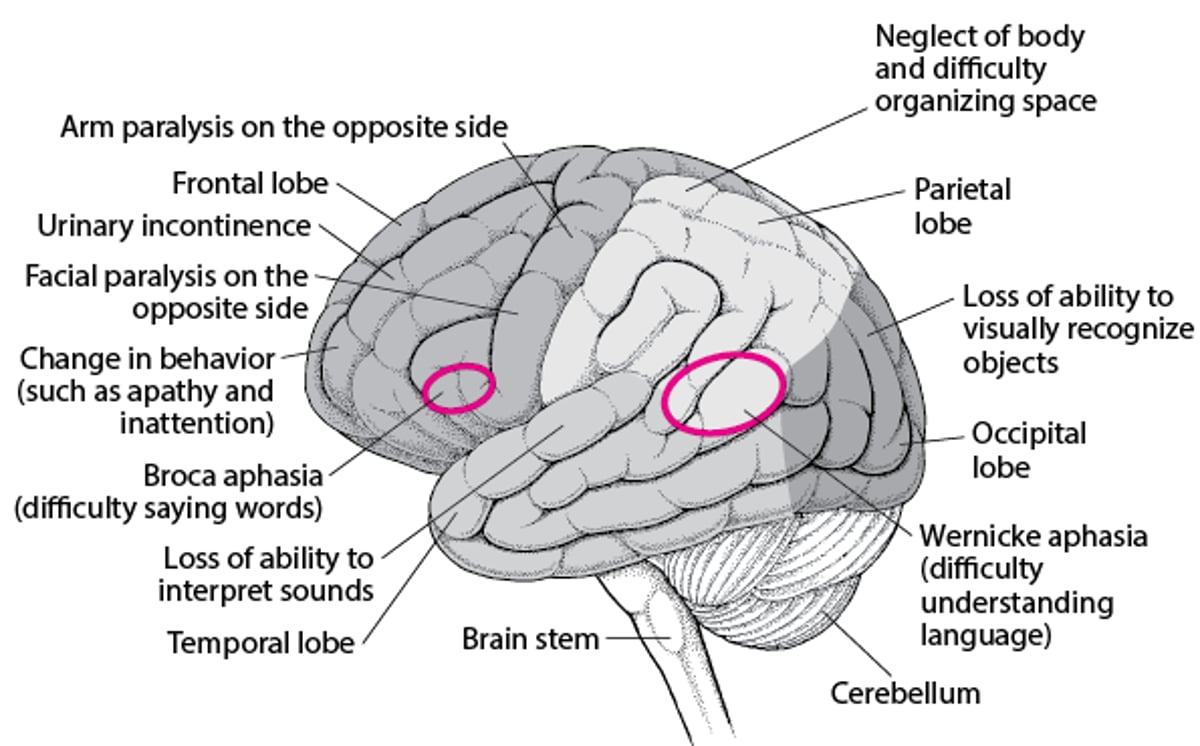
Different areas of the brain control specific functions. Consequently, where the brain is damaged determines which function is lost. |

Symptoms of Brain Dysfunction
The type and severity of brain dysfunction depend on the location of the brain damage, as well as whether it affects the whole brain (diffuse) or only part (localized) of the brain. When the cerebral cortex (the outer layer of the cerebrum, the largest part of the brain) is damaged, the degree of dysfunction is often proportionate to the extent of the damage: The more extensive the damage, the more severe the dysfunction is likely to be. However, damage to some areas of the brain can cause severe dysfunction even when the damaged area is small. When the brain stem (which regulates critical body functions and levels of consciousness) is damaged, a relatively small amount of damage may cause coma and even death.
Disorders that progress rapidly are more likely to cause more noticeable symptoms of brain dysfunction than disorders that progress slowly. For example, a severe stroke is more likely to cause noticeable symptoms than a slow-growing tumor. The brain compensates for gradual changes more easily than for rapid changes.
Also, diffuse brain damage that occurs suddenly tends to affect consciousness, making people drowsy, difficult to arouse (causing stupor), or impossible to arouse (causing coma). However, diffuse brain damage can progress more slowly and affect consciousness less often. So people usually remain conscious and awake. Localized damage tends to affect specific functions.
Prognosis for Brain Dysfunction
Two characteristics of the brain help it compensate and recover after it has been damaged:
Redundancy: More than one area can perform the same function. Areas with somewhat overlapping functions can sometimes compensate for lost functions.
Plasticity: Nerve cells in certain areas can change so that they can perform new functions.
Did You Know...
|
Consequently, undamaged areas of the brain sometimes take over functions performed by a damaged area, contributing to recovery. However, as people age, the brain becomes less able to shift functions from one area to another. Some functions, such as vision, cannot be performed by other areas of the brain. Direct damage to areas that control such functions may have permanent effects.


