





The most commonly reported sleep-related problems are insomnia and excessive daytime sleepiness.
Insomnia is difficulty falling asleep or staying asleep, waking up early, or a disturbance in sleep quality that makes sleep seem inadequate or unrefreshing.
Excessive daytime sleepiness refers to being unusually sleepy or falling asleep during the day.
(See also Overview of Sleep.)
Insomnia can be a disorder or can be a symptom of other disorders. Excessive daytime sleepiness is not a disorder but a symptom of various sleep-related disorders.
Difficulty falling and staying asleep and waking up earlier than desired are common among young and old. About 10% of adults have long-standing (chronic) insomnia, and about 30 to 50% sometimes have insomnia.
Did You Know...
|
When sleep is disturbed, people sometimes cannot function normally during the day. People with insomnia or excessive daytime sleepiness are sleepy, tired, and irritable during the day and have trouble concentrating and functioning. People with excessive daytime sleepiness may fall asleep when working or driving.
There are different types of insomnia:
Difficulty falling asleep (sleep-onset insomnia): Commonly, people have difficulty falling asleep when they cannot let their mind relax and they continue to think and worry. Sometimes the body is not ready for sleep at what is considered a usual time for sleep. That is, the body’s internal clock is out of sync with the earth’s cycle of light and dark—as can occur with many types of circadian rhythm sleep disorders, such as delayed sleep phase disorder, shift work disorder, and jet lag.
Difficulty staying asleep and waking up earlier than desired (sleep maintenance insomnia):sleep apnea or periodic limb movement disorder). This type of insomnia may be a sign of depression in people of any age.
Causes of Insomnia and EDS
Insomnia and excessive daytime sleepiness may be caused by conditions inside or outside the body. Some conditions cause insomnia and excessive daytime sleepiness, and some cause one or the other. Some people have chronic insomnia that has little or no apparent relationship to any particular cause. Genetic factors may be involved.
Common causes
Insomnia is most often caused by
Poor sleep habits, such as drinking a caffeinated beverage in the late afternoon or evening, exercising late at night, or having an irregular sleep-wake schedule
Mental health disorders, particularly depression, anxiety, and substance abuse disorders
Other disorders such as heart and lung disorders, disorders that affect muscles or bones, or chronic pain
Stress, such as that due to hospitalization, loss of a job, or a death in the family (called adjustment insomnia)
Excessive worrying about sleeplessness and another day of fatigue (called psychophysiologic insomnia)
Sleeping late or napping to make up for lost sleep may make sleeping during the next night even harder.
Excessive daytime sleepiness is most often caused by
Insufficient sleep despite having ample opportunity to sleep (called insufficient sleep syndrome)
Obstructive sleep apnea (a serious disorder in which breathing frequently stops during sleep)
Various disorders, particularly mental health disorders, brain or nerve (neurologic) disorders (such as encephalitis, meningitis, a brain tumor, or narcolepsy), and disorders that affect muscles or bones
Disorders that disrupt people's internal sleep-wake schedule (circadian rhythm disorders), such as jet lag and shift work disorder
Most major mental health disorders are accompanied by insomnia and excessive daytime sleepiness. About 80% of people with major depression have excessive daytime sleepiness and insomnia, and about 40% of people with chronic insomnia have a mental health disorder, usually depression or an anxiety disorder.
Any disorder that causes pain or discomfort, particularly if worsened by movement, can cause brief awakenings and interfere with sleep.
Less common causes
Drugs, when used for a long time or when stopped (withdrawal), can cause insomnia and excessive daytime sleepiness.
Many mind-altering (psychoactive) drugs can cause abnormal movements during sleep and may disturb sleep. Sedatives that are commonly prescribed to treat insomnia can cause irritability and apathy and reduce mental alertness. Also, if a sedative is taken for more than a few days, stopping the sedative can make the original sleep problem suddenly worse.
Sometimes the cause is a sleep disorder.
Central or obstructive sleep apnea is often first identified when people report insomnia or disturbed or unrefreshing sleep. It also occurs in people who have other disorders (such as a heart disorder) or who take certain drugs. Central or obstructive sleep apnea causes breathing to become shallow or to stop repeatedly throughout the night.
Narcolepsy is a sleep disorder characterized by excessive daytime sleepiness with uncontrollable episodes of falling asleep during normal waking hours and sudden, temporary episodes of muscle weakness (called cataplexy).
Periodic limb movement disorder interrupts sleep because it causes repeated twitching or kicking of the legs during sleep. As a result, people are sleepy during the day. Typically, people with periodic limb movement disorder are unaware of their movements and the brief awakenings that follow.
Restless legs syndrome makes falling and staying asleep difficult because people feel as if they have to move their legs and, less often, their arms when they sit still or lie down. People usually also have creepy, crawly sensations in the limbs.
Evaluation of Insomnia and EDS
Usually, the cause of insomnia can be identified based on the person's description of the current problem and results of a physical examination. Many people have obvious problems, such as poor sleep habits, stress, or coping with shift work.
Warning signs
Certain symptoms are cause for concern:
Falling asleep while driving or during other potentially dangerous situations
Frequently falling asleep without warning
Stopping breathing during sleep or waking up with gasping or choking (reported by a bed partner)
Moving violently or injuring self or others during sleep
Sleepwalking
A heart or lung disorder that is constantly changing (is unstable)
Attacks of muscle weakness (cataplexy attacks)
A recent stroke
When to see a doctor
People should see a doctor soon if they have warning signs or if their sleep-related symptoms interfere with their daily activities.
If healthy people have sleep-related symptoms for a short time (less than 1 or 2 weeks) but do not have warning signs, they can try changes in behavior that can help improve sleep. If these changes do not help after a week or so, people should see a doctor.
What the doctor does
The doctor asks people about the following:
Their sleep patterns
Habits around bedtime
Use of drugs (including recreational drugs)
Degree of stress
Medical history (including disorders that can interfere with sleep)
Level of physical activity
Disorders that interfere with sleep include chronic obstructive pulmonary disease (COPD), asthma, heart failure, an overactive thyroid gland (hyperthyroidism), gastroesophageal reflux, painful disorders (such as rheumatoid arthritis), disorders that cause urinary incontinence or frequent urination, and brain, spinal cord, and nerve disorders (particularly movement disorders).
People may be asked to keep a sleep log. In it, they record a detailed description of their sleep habits, with sleep and wake times (including awakening during the night), use of naps, and any problems with sleeping. When considering the diagnosis of insomnia, the doctor considers that some people need less sleep than others.
If people have excessive daytime sleepiness, the doctor may ask them to fill out a questionnaire indicating how likely they are to fall asleep in various situations. The doctor may ask their sleep partner to describe any abnormalities that occur during sleep, such as snoring and pauses in breathing.
A physical examination is done to check for disorders that can cause insomnia or excessive daytime sleepiness, particularly obstructive sleep apnea.
Testing
Tests are not needed if symptoms suggest a cause such as poor sleep habits, stress, shift work disorder, or restless leg syndrome (an irresistible urge to move the legs or arms just before or during sleep).
Doctors sometimes refer people to a sleep disorders specialist for evaluation in a sleep laboratory. Reasons for such a referral include
An uncertain diagnosis
Suspicion of certain disorders (such as sleep apnea, a seizure disorder, narcolepsy, and periodic limb movement disorder)
Insomnia or excessive daytime sleepiness persisting despite basic measures to correct it (changing behavior to improve sleep and taking sleep aids for a short time)
Presence of warning signs or other symptoms such as nightmares and twitching of the legs or arms during sleep
Dependence on sleep aids
The evaluation consists of polysomnography and observation (and sometimes video recording) of unusual movements during an entire night's sleep. Other tests are sometimes also done.
Polysomnography is usually done overnight in a sleep laboratory, which may be located in a hospital, clinic, hotel room, or other facility that is equipped with a bed, bathroom, and monitoring equipment. Electrodes are pasted to the scalp and face to record the brain's electrical activity (electroencephalography, or EEG) as well as eye movements. Applying these electrodes is painless. The recordings help provide doctors with information about sleep stages. Electrodes are also attached to other areas of the body to record heart rate (electrocardiography, or ECG), muscle activity (electromyography), and breathing. A painless clip is attached to a finger or an ear to record oxygen levels in the blood. Polysomnography can detect breathing disorders (such as obstructive or central sleep apnea), seizure disorders, narcolepsy, periodic limb movement disorder, and unusual movements and behaviors during sleep (parasomnias). Polysomnography is now commonly done in the home to diagnose obstructive sleep apnea, but not any other sleep disorders.
A multiple sleep latency test is done to distinguish between physical fatigue and excessive daytime sleepiness and to check for narcolepsy. People spend the day in a sleep laboratory. They are given the opportunity to take five naps at 2-hour intervals. They lie in a darkened room and are asked to take a nap. Polysomnography is used as part of this test to assess how quickly people fall asleep. It detects when people fall asleep and is used to monitor the stages of sleep during the naps.
The maintenance of wakefulness test is used to determine how well people can remain awake while sitting in a quiet room. This test helps determine how severe daytime sleepiness is and whether people can safely do their usual daily activities (such as driving a car).
Tests to evaluate the heart, lungs, and liver may be done in people with excessive daytime sleepiness if symptoms or results from the physical examination suggest that another disorder is the cause.
Treatment of Insomnia and EDS
Treatment of insomnia depends on its cause and severity but typically involves a combination of the following:
Treatment of disorders contributing to insomnia
Good sleep hygiene
Cognitive-behavioral therapy
Sleep aids
If insomnia results from another disorder, that disorder is treated. Such treatment may improve sleep. For example, if people have insomnia and depression, treating the depression often relieves the insomnia. Some antidepressant drugs also have sedative effects that help with sleep when the drugs are given before bed. However, these drugs may also cause daytime sleepiness, particularly in older people.
Good sleep hygiene is important whatever the cause and is often the only treatment patients with mild problems need.
But if daytime sleepiness and fatigue develop, especially if they interfere with daytime functioning, additional treatment is warranted, mainly counseling (cognitive-behavioral therapy) and sometimes prescription sleep aids or over-the-counter sleep aids. If people are considering taking an over-the-counter sleep aid, they should first talk to their doctor because these drugs can have significant side effects.
Alcohol is not an appropriate sleep aid and may actually interfere with sleep. It produces an unrefreshing sleep with many awakenings during the night.
Sleep hygiene
Sleep hygiene focuses on changes in behavior to help improve sleep. These changes include limiting the amount of time spent in bed, establishing a regular sleep/wake schedule, and doing things to relax before going to bed (such as reading or taking a warm bath). Limiting the amount of time spent in bed is intended to help eliminate long periods of being awake in the middle of the night.
Cognitive-behavioral therapy
Cognitive-behavioral therapy, done by a trained sleep therapist, may help people when insomnia interferes with daily activities and when changes in behavior to help improve sleep (good sleep hygiene) alone are ineffective. Cognitive-behavioral therapy is typically done in four to eight individual or group sessions but can be done remotely through the Internet or by telephone. The effects of this therapy last a long time after therapy ends.
Therapists may recommend limiting the amount of time spent in bed so that people spend less time lying in bed and trying unsuccessfully to sleep.
Cognitive-behavioral therapy can help people understand their problem, unlearn bad sleeping habits, and eliminate unhelpful thoughts, such as worrying about losing sleep or the next day’s activities. This therapy also includes relaxation training, which may involve techniques such as visual imagery, progressive muscle relaxation, and breathing exercises.
Prescription sleep aids
When a sleep disorder interferes with normal activities and a sense of well-being, occasionally taking prescription sleep aids (also called hypnotics or sleeping pills) for up to a few weeks may help.
Among the most commonly used sleep aids are sedatives, minor tranquilizers, and antianxiety drugs.
Most sleep aids require a doctor’s prescription because they may cause problems.
Loss of effectiveness: Once people become accustomed to a sleep aid, it may become ineffective. This effect is called tolerance.
Withdrawal symptoms: If a sleep aid is taken for more than a few days, stopping it suddenly can make the original sleep problem worse (causing rebound insomnia) and can increase anxiety. Thus, doctors recommend reducing the dose slowly over a period of several weeks until the drug is stopped.
Habit-forming or addiction potential: If people use certain sleep aids for more than a few days, they may feel that they cannot sleep without them. Stopping the drug makes them anxious, nervous, and irritable or causes disturbing dreams.
Potential for overdose: If taken in higher than recommended doses, some of the older sleep aids can cause confusion, delirium, dangerously slow breathing, a weak pulse, blue fingernails and lips, and even death.
Serious side effects: Most sleep aids, even when taken at recommended doses, are particularly risky for older people and for people with breathing problems because sleep aids tend to suppress areas of the brain that control breathing. Some can reduce daytime alertness, making driving or operating machinery hazardous. Sleep aids are especially dangerous when taken with other drugs that can cause daytime drowsiness and suppress breathing, such as alcohol, opioids (narcotics), antihistamines, or antidepressants. The combined effects are more dangerous. Rarely, especially if taken at higher than recommended doses or with alcohol, sleep aids have been known to cause people to walk or even drive during sleep and to cause severe allergic reactions. Sleep aids also increase the risk of falls at night.
Benzodiazepines
Other useful sleep aids
Over-the-counter sleep aids
Some sleep aids that are available without a prescription (over-the-counter, or OTC) contain However, the drugs that contain antihistamines should not be taken to treat insomnia. Antihistamines may have significant side effects, such as daytime drowsiness or sometimes nervousness, agitation, difficulty urinating, falls, and confusion, especially in older people.
Marijuana (cannabis) contains many chemicals, such as
THC (tetrahydrocannabinol), which causes euphoria, reduces pain and nausea, and affects sleep stages
CBN (cannabinol), which causes drowsiness, reduces pain, and increases appetite
is a synthetic version that is used to treat nausea and vomiting associated with cancer chemotherapy and to enhance appetite in AIDS patients.
Antidepressants
Some antidepressants
Essentials for Older People: Insomnia and EDS
Because sleep patterns deteriorate as people age, older people are more likely to report insomnia than younger people. As people age, they tend to sleep less and to awaken more often during the night and to feel sleepier and to nap during the day. The periods of the deep sleep that are most refreshing become shorter and eventually disappear. Usually, these changes alone do not indicate a sleep disorder in older people.
Older people who have interrupted sleep can benefit from the following:
Regular bedtimes
Lots of exposure to light during the day
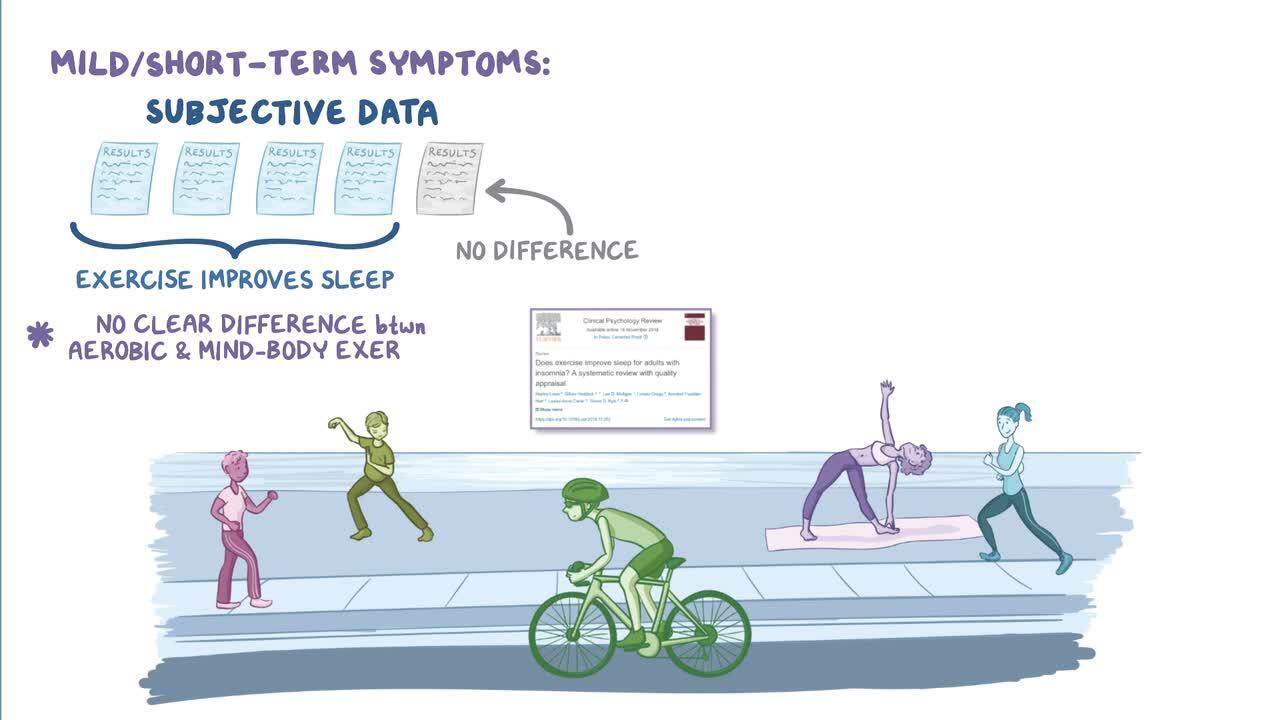
Regular exercise
Less napping during the day (because napping may make getting a good night’s sleep even harder)
Many older people with insomnia do not need to take sleep aids. But if they do, they should keep in mind that these drugs can cause problems. For example, sleep aids can cause confusion and reduce daytime alertness, making driving hazardous. Thus, caution is required.
Key Points
Poor sleep habits, stress, and conditions that disrupt people's internal sleep-wake schedule (such as shift work) cause many cases of insomnia and excessive daytime sleepiness.
However, sometimes the cause is a disorder, such as obstructive sleep apnea or a mental disorder.
Polysomnography done in a sleep laboratory or at home is usually recommended when doctors suspect the cause is obstructive sleep apnea or another sleep disorder, when the diagnosis is uncertain, or when general measures do not help.
If insomnia is mild, changes in behavior (good sleep hygiene), such as following a regular sleep schedule, may be all that is needed.
If changes in behavior are ineffective, cognitive-behavioral therapy is usually the next step, and, if needed, short-term use of a sleep aid (up to a few weeks) may be considered.
Sleep aids are more likely to cause problems in older people and can increase the risk of falls.


