





The autonomic nervous system regulates certain body processes, such as blood pressure and the rate of breathing. This system works automatically (autonomously), without a person’s conscious effort.
Disorders of the autonomic nervous system can affect any body part or process. Autonomic disorders may be reversible or progressive.
Anatomy of the autonomic nervous system
The autonomic nervous system is the part of the nervous system that supplies the internal organs, including the blood vessels, stomach, intestine, liver, kidneys, bladder, genitals, lungs, pupils, heart, and sweat, salivary, and digestive glands.
The autonomic nervous system has two main divisions:
Sympathetic
Parasympathetic
After the autonomic nervous system receives information about the body and external environment, it responds by stimulating body processes, as may be done through the sympathetic division, or inhibiting them, as may be done through the parasympathetic division.
An autonomic nerve pathway involves two nerve cells. One cell is located in the brain stem or spinal cord. It is connected by nerve fibers to the other cell, which is located in a cluster of nerve cells (called an autonomic ganglion). Nerve fibers from these ganglia connect with internal organs. Most of the ganglia for the sympathetic division are located just outside the spinal cord on both sides of it. The ganglia for the parasympathetic division are located near or in the organs they connect with.
Function of the autonomic nervous system
The autonomic nervous system controls internal body processes such as the following:
Blood pressure
Heart and breathing rates
Body temperature
Digestion
Metabolism (thus affecting body weight)
The balance of water and electrolytes (such as sodium and calcium)
The production of body fluids (saliva, sweat, and tears)
Urination
Defecation
Sexual response
Many organs are controlled primarily by either the sympathetic or the parasympathetic division. Sometimes the two divisions have opposite effects on the same organ. For example, the sympathetic division increases blood pressure, and the parasympathetic division decreases it. Overall, the two divisions work together to ensure that the body responds appropriately to different situations.
Autonomic Nervous System

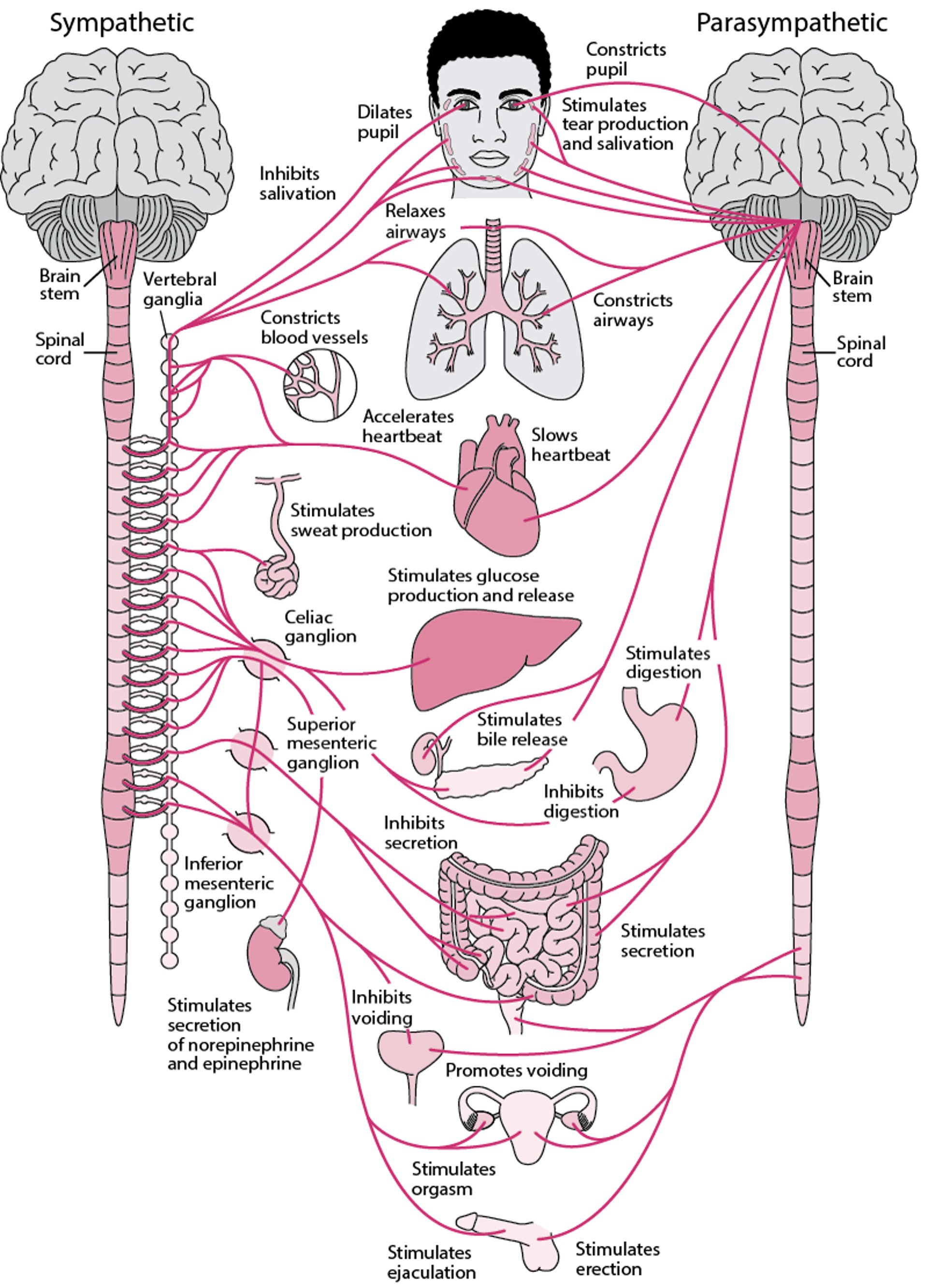
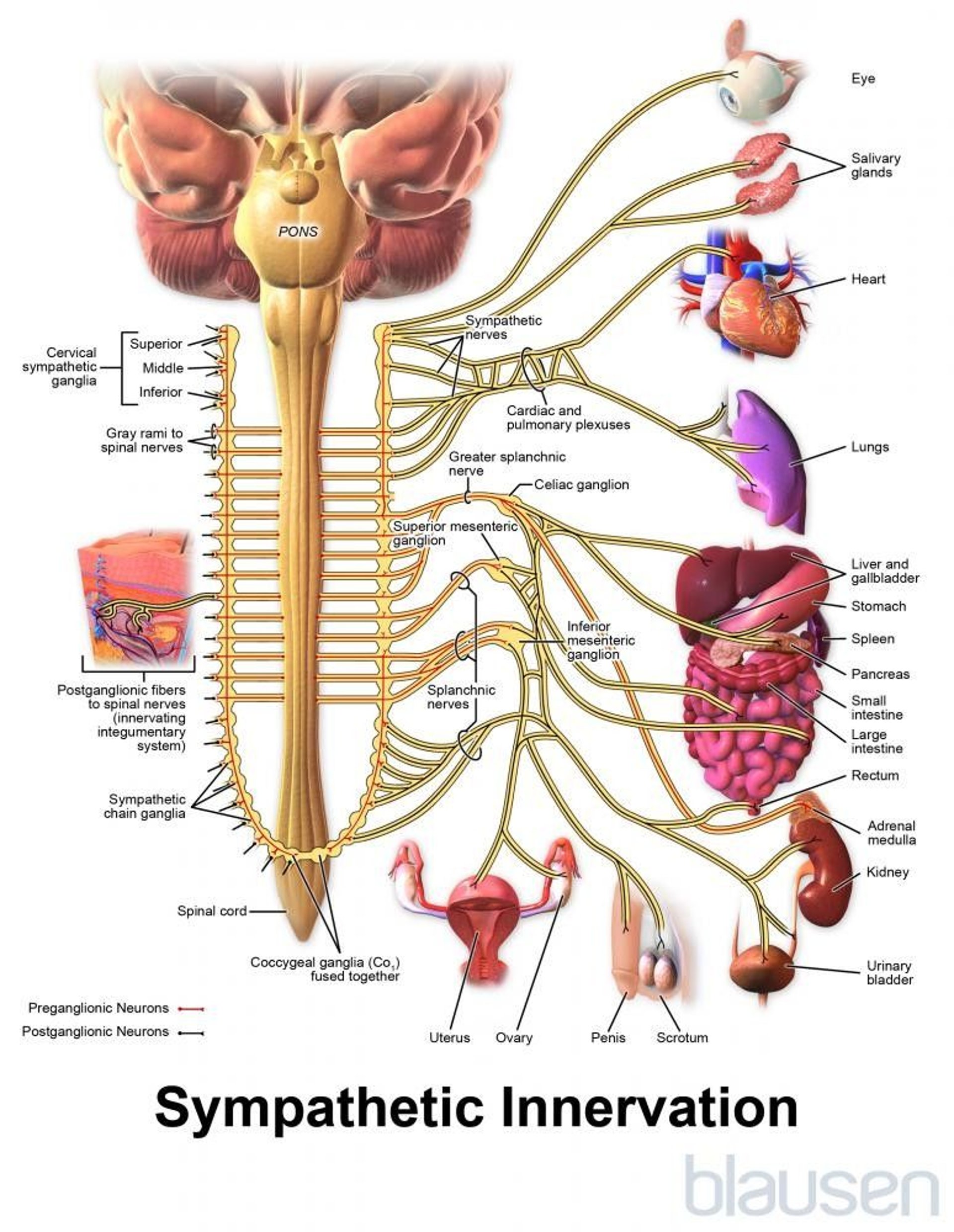
Generally, the sympathetic division does the following:
Prepares the body for stressful or emergency situations—fight or flight
Thus, the sympathetic division increases heart rate and the force of heart contractions and widens (dilates) the airways to make breathing easier. It causes the body to release stored energy. Muscular strength is increased. This division also causes palms to sweat, pupils to dilate, and hair to stand on end. It slows body processes that are less important in emergencies, such as digestion and urination.

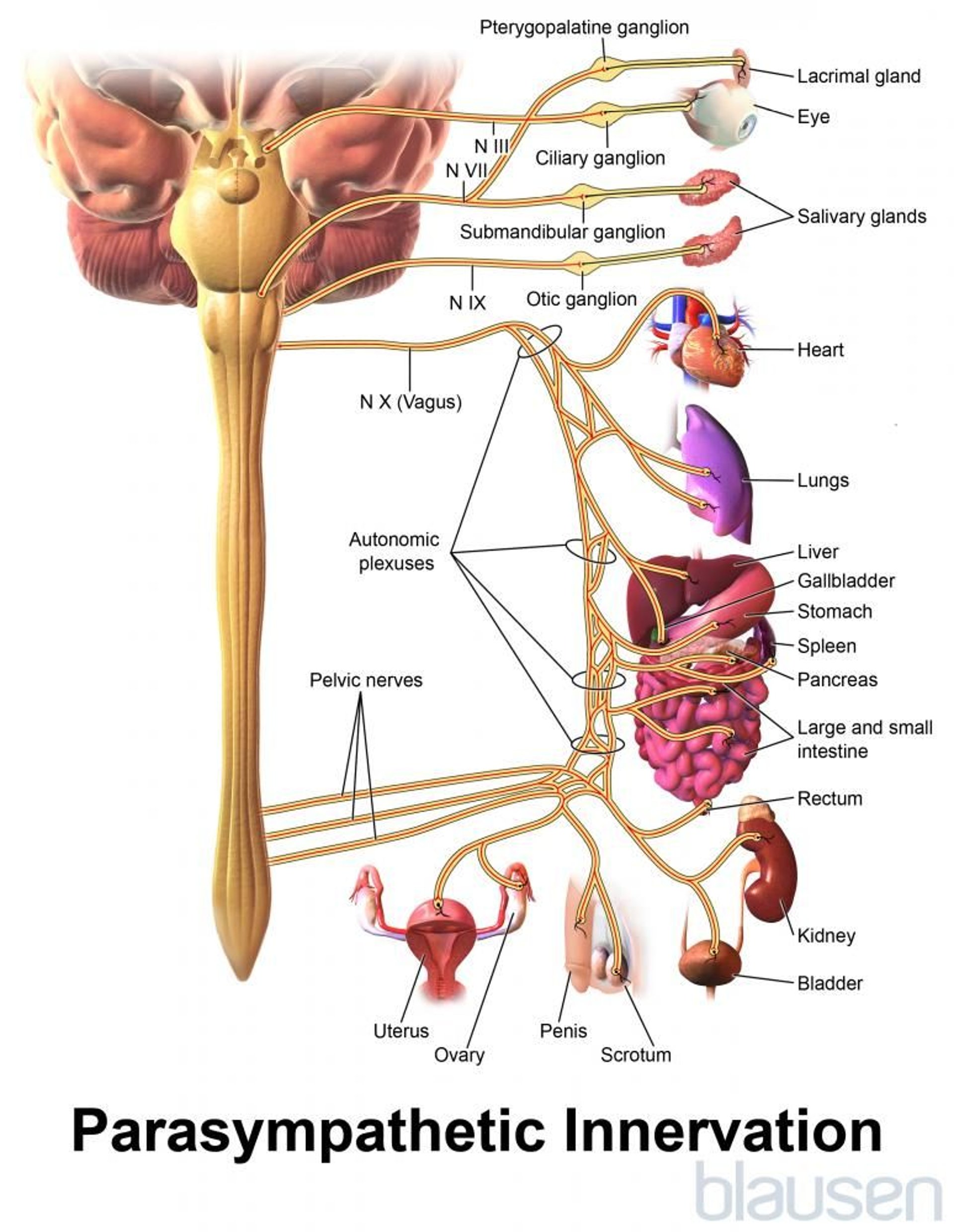
The parasympathetic division does the following:
Controls body process during ordinary situations.
Generally, the parasympathetic division conserves and restores. It slows the heart rate and decreases blood pressure. It stimulates the digestive tract to process food and eliminate wastes. Energy from the processed food is used to restore and build tissues.
Both the sympathetic and parasympathetic divisions are involved in sexual activity, as are the parts of the nervous system that control voluntary actions and transmit sensation from the skin (somatic nervous system).
Two main chemical messengers (neurotransmitters) are used to communicate within the autonomic nervous system:
Acetylcholine
Norepinephrine
Nerve fibers that secrete acetylcholine are called cholinergic fibers. Fibers that secrete norepinephrine are called adrenergic fibers. Generally, acetylcholine has parasympathetic effects and norepinephrine has sympathetic effects. However, acetylcholine has some sympathetic effects. For example, it sometimes stimulates sweating or makes the hair stand on end.
Causes of Autonomic Disorders
Autonomic disorders may result from disorders that damage autonomic nerves or parts of the brain that help control body processes, or they may occur on their own, without a clear cause.
Common causes of autonomic disorders are
Diabetes (the most common cause)
Aging
Other, less common causes include the following:
Certain drugs
Disorders of the neuromuscular junction (where nerves connect with muscles), such as botulism and Lambert-Eaton syndrome
Certain viral infections, including COVID-19
Injury to nerves in the neck, including that due to surgery
Autonomic dysfunction that occurs with COVID-19 is still being studied. It can cause orthostatic intolerance and, less commonly, an autonomic neuropathy. Orthostatic intolerance describes dysfunction of the autonomic nervous system that occurs when a person stands up. Symptoms include light-headedness, blurred vision, head pressure, palpitations, tremulousness, nausea, and difficulty breathing. Even loss of consciousness can occur.
Symptoms of Autonomic Disorders
In men, difficulty initiating and maintaining an erection (erectile dysfunction) can be an early symptom of an autonomic disorder.
Autonomic disorders commonly cause dizziness or light-headedness due to an excessive decrease in blood pressure when a person stands (orthostatic hypotension).
People may sweat less or not at all and thus become intolerant of heat. The eyes and mouth may be dry.
After eating, a person with an autonomic disorder may feel prematurely full or even vomit because the stomach empties very slowly (called gastroparesis). Some people pass urine involuntarily (urinary incontinence), often because the bladder is overactive. Other people have difficulty emptying the bladder (urine retention) because the bladder is underactive. Constipation may occur, or control of bowel movements may be lost.
The pupils may not dilate and narrow (constrict) as light changes.
Diagnosis of Autonomic Disorders
A doctor's evaluation
Tests to determine how blood pressure changes during certain maneuvers
Electrocardiography
Sweat testing
During the physical examination, doctors can check for signs of autonomic disorders, such as orthostatic hypotension. For example, they measure blood pressure and heart rate while a person is lying down or sitting and after the person stands to check how blood pressure changes when position is changed. When a person stands up, gravity makes it harder for blood from the legs to get back to the heart. Thus, blood pressure decreases. To compensate, the heart pumps harder, and the heart rate increases. However, the changes in heart rate and blood pressure are slight and brief. If the changes are larger or last longer, the person may have orthostatic hypotension.
Blood pressure is also measured continuously while the person does a Valsalva maneuver (forcefully trying to exhale without letting air escape through the nose or mouth—similar to straining during a bowel movement). Electrocardiography is done to determine whether the heart rate changes as it normally does during deep breathing and the Valsalva maneuver.
A tilt table test may be done to check how blood pressure and heart rate change when position is changed. In this test, blood pressure is measured before and after the person, who is lying flat on a pivoting table, is tilted into an upright position.
The tilt table test and the Valsalva maneuver, done together, can help doctors determine whether a decrease in blood pressure is due to an autonomic nervous system disorder.
Doctors examine the pupils for abnormal responses or lack of response to changes in light.
Sweat testing is also done. For one sweat test, the sweat glands are stimulated by electrodes that are filled with acetylcholine and placed on the legs and forearm. Then, the volume of sweat is measured to determine whether sweat production is normal. A slight burning sensation may be felt during the test.
In the thermoregulatory sweat test, a dye is applied to the skin, and a person is placed in a closed, heated compartment to stimulate sweating. Sweat causes the dye to change color. Doctors can then evaluate the pattern of sweat loss, which may help them determine the cause of the autonomic nervous system disorder.
Other tests, including blood tests, may be done to check for disorders that can cause the autonomic disorder.
Treatment of Autonomic Disorders
Treatment of the cause if identified
Symptom relief
Disorders that may be contributing to the autonomic disorder are treated. If no other disorders are present or if such disorders cannot be treated, the focus is on relieving symptoms.
Simple measures and sometimes medications can help relieve some symptoms of autonomic disorders:
Orthostatic hypotension:
Decreased or absent sweating: If sweating is reduced or absent, avoiding warm environments is useful.
Urinary retention:
Constipation: A high-fiber diet and stool softeners are recommended. If constipation persists, enemas may be necessary.
Erectile dysfunction:Constriction devices (bands and rings placed at the base of the penis) and/or vacuum devices are sometimes used.


