





Acute necrotizing ulcerative gingivitis (ANUG) is a painful infection of the gums that causes fever, sometimes foul-smelling breath, and feeling ill.
If the normal bacteria in the mouth overgrow, the gums can become infected.
The gums hurt, and people sometimes have extremely bad breath.
Acute necrotizing ulcerative gingivitis is now rare, but minor gum infections involving just a few teeth probably occur relatively commonly. The severe form usually affects only people with an impaired immune system (for example, due to human immunodeficiency virus [HIV]/acquired immunodeficiency syndrome [AIDS] or immunosuppressive drugs). Acute necrotizing ulcerative gingivitis is not contagious.
Did You Know...
|
The infection is caused by an abnormal overgrowth of the bacteria that normally exist harmlessly in the mouth. Poor oral hygiene usually contributes to the development of ANUG, as do physical or emotional stress, poor diet, and lack of sleep. The infection occurs most often in people who have gingivitis and then experience a stressful event (for example, final exam week or military basic training). Acute necrotizing ulcerative gingivitis is far more common among smokers than nonsmokers.
Symptoms of ANUG

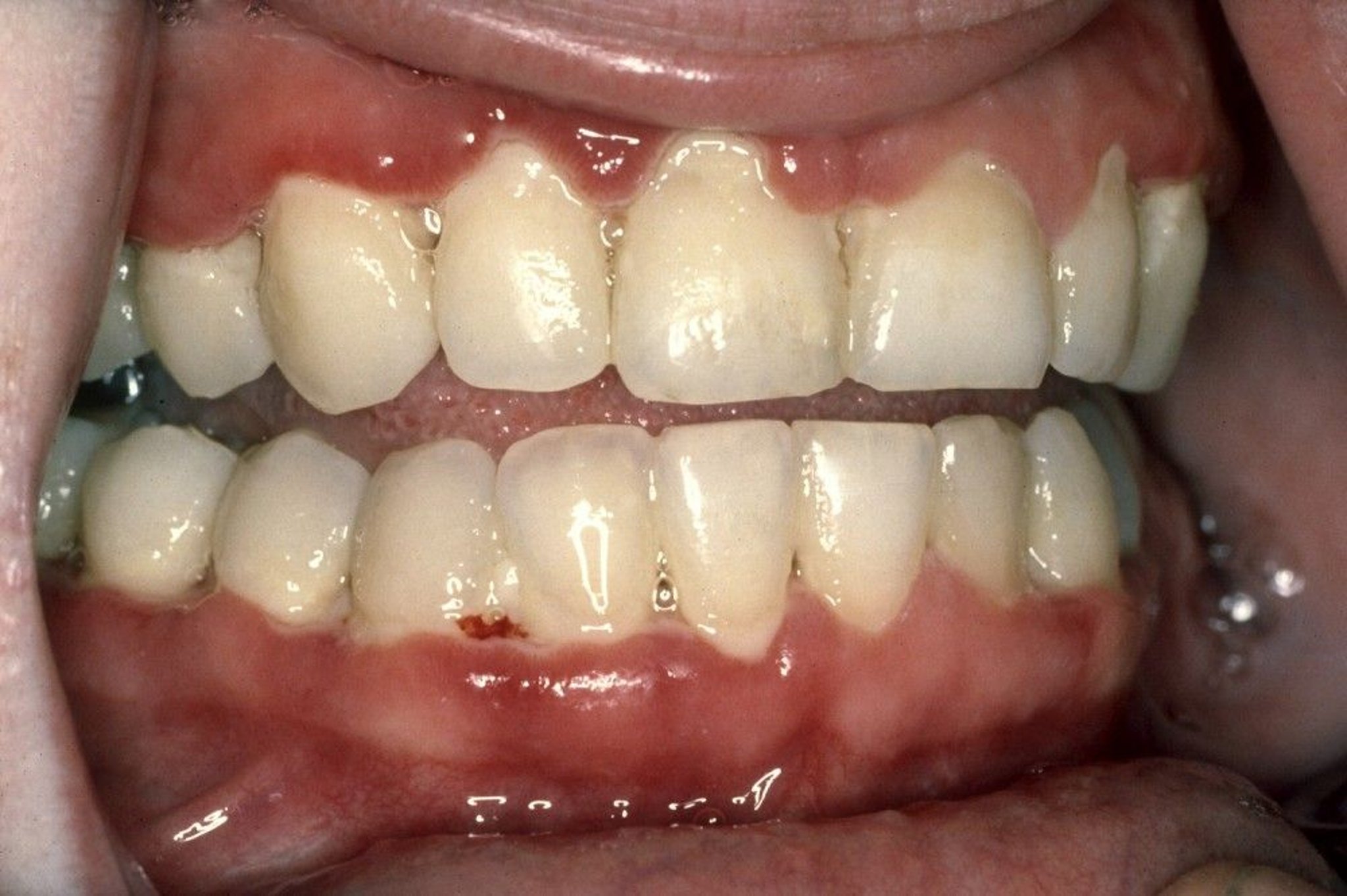
Image courtesy of Craig Fowler, DDS
Usually, ANUG begins abruptly with painful and bleeding gums, excessive saliva production, and sometimes extremely foul-smelling breath. People may also have a fever and feel ill. The tips of the gums between the teeth appear punched-out and become sores (ulcers) covered with a gray layer of dead tissue. The gums bleed easily, and talking, eating, and swallowing cause pain. Often, the lymph nodes under the jaw swell, and a mild fever develops.
Diagnosis of ANUG
A dentist's evaluation
When the breath smells extremely foul, dentists sometimes suspect the diagnosis of acute necrotizing ulcerative gingivitis (ANUG) immediately, as soon as they come into contact with affected people. Other times the diagnosis is evident from the appearance of the mouth and gums.
If the gums do not respond quickly to therapy, dentists may do other tests to rule out other causes.
Treatment of ANUG
Professional cleaning
Mouth rinses
Sometimes antibiotics
Good oral hygiene
Treatment of acute necrotizing ulcerative gingivitis (ANUG) begins with a gentle, thorough, professional cleaning done over several days.
The infection responds very well to good oral hygiene (daily brushing and flossing). Dentists also recommend people rest, drink plenty of fluids, eat nutritious foods, and take drugs for pain. Dentists also recommend people avoid smoking or eating hot or spicy foods.
More Information
The following are some English-language resources that may be useful. Please note that THE MANUAL is not responsible for the content of these resources.
Mouth Healthy: This general resource provides information on oral health, including nutrition and guidance on selecting products that carry the American Dental Association's seal of approval. There is also advice on finding a dentist and how and when to see one.
National Institute of Dental and Craniofacial Research: This government site covers a wide variety of topics related to oral and dental health (in English and Spanish), including definitions of common terms and the latest information on clinical trials related to oral and dental diseases.


