





The large intestine consists of the
Cecum and ascending (right) colon
Transverse colon
Descending (left) colon
Sigmoid colon (which is connected to the rectum)
(See also Overview of the Digestive System.)
The cecum, which is at the beginning of the ascending colon, is the point at which the small intestine joins the large intestine. Projecting from the cecum is the appendix, which is a small finger-shaped tube that serves no known function. The large intestine secretes mucus and is largely responsible for the absorption of water from the stool.
Locating the Large Intestine

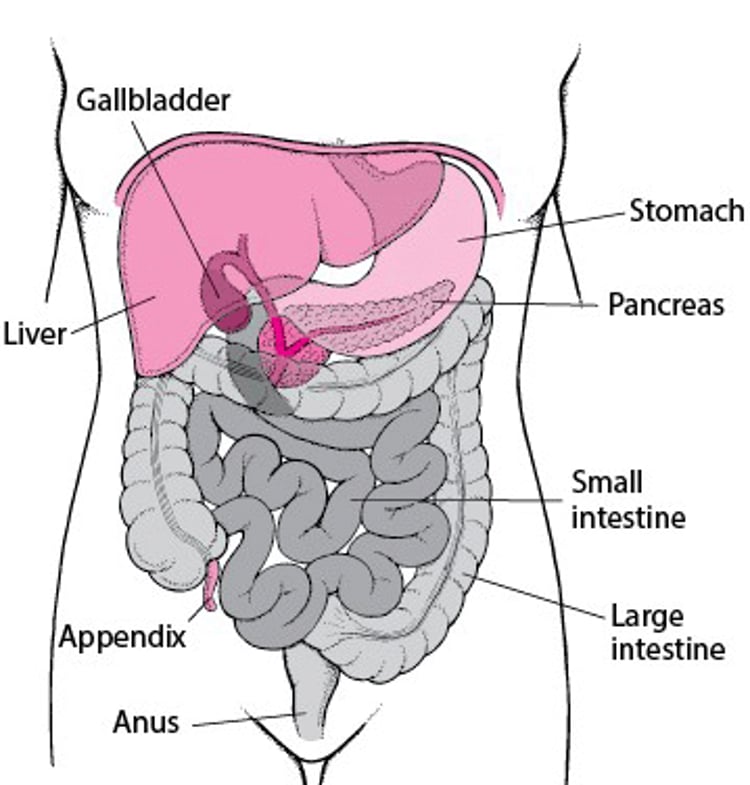
Intestinal contents are liquid when they reach the large intestine but are normally solid by the time they reach the rectum as stool.
The many bacteria that inhabit the large intestine can further digest some material, creating gas. Bacteria in the large intestine also make some important substances, such as vitamin K, which plays an important role in blood clotting. These bacteria, called resident flora, are necessary for healthy intestinal function, and some diseases and antibiotics can upset the balance between the different types of bacteria in the large intestine.


