





Appendicitis is inflammation and infection of the appendix.
Often a blockage inside the appendix causes the appendix to become inflamed and infected.
Abdominal pain, nausea, and fever are common.
Exploratory surgery or an imaging test, such as computed tomography or ultrasonography, is done.
Treatment involves surgery to remove the appendix and antibiotics to treat the infection.
(See also Acute Abdominal Pain.)
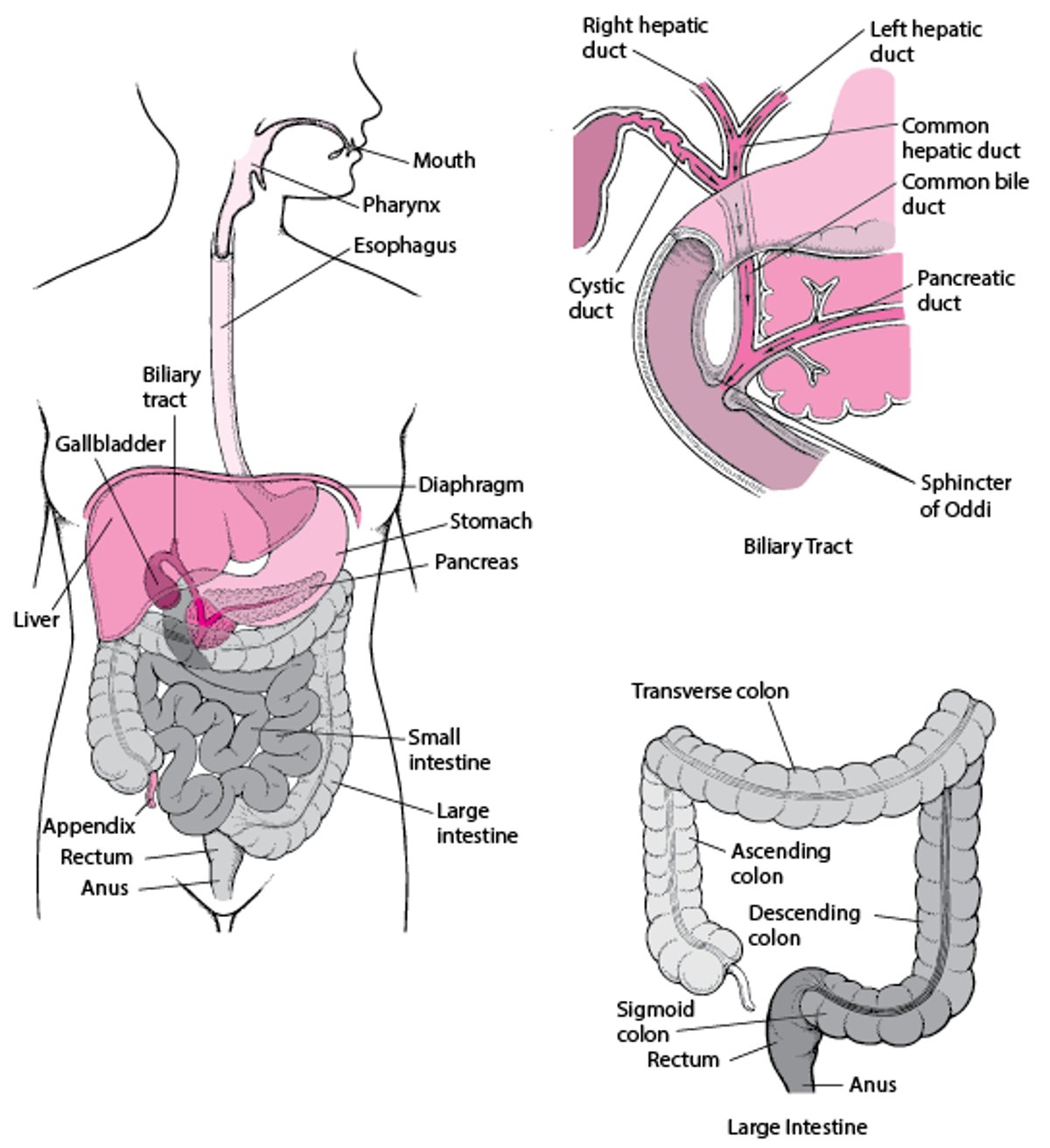
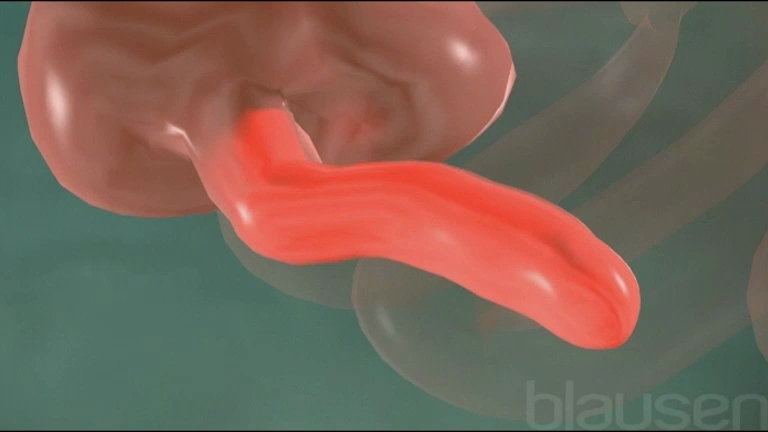
The appendix is a small finger-shaped tube projecting from the large intestine near the point where it joins the small intestine. The appendix may have some immune function, but it is not an essential organ.
The Digestive System

Appendicitis is the most common cause of sudden, severe abdominal pain and abdominal surgery in the United States. Over 5% of the population develops appendicitis at some point. Appendicitis most commonly occurs during adolescence and in the 20s but may occur at any age.
Causes of Appendicitis
The cause of appendicitis is not fully understood. However, in most cases, a blockage inside the appendix probably starts a process. The blockage may be from a small, hard piece of stool (fecalith), a foreign body, tumor, or, rarely, even worms. As a result of the blockage, the appendix becomes inflamed and infected. If inflammation continues without treatment, the appendix can rupture.
A ruptured appendix may cause a pus-filled pocket of infection (abscess) to form. As a result, peritonitis (inflammation and usually infection of the abdominal cavity, which may result in a life-threatening infection) may develop. In a woman, the ovaries and fallopian tubes may become infected, and the resulting scarring may block the fallopian tubes and cause infertility. A ruptured appendix also may allow bacteria to infect the bloodstream—a life-threatening condition called sepsis.
Symptoms of Appendicitis
Pain begins in the upper abdomen or around the navel, then nausea and vomiting develop, and then, after a few hours, the nausea passes, and the pain shifts to the right lower portion of the abdomen. Although these symptoms are the most traditionally described, fewer than 50% of people with appendicitis have them.
When a doctor presses on the right lower portion of the abdomen, it is tender, and when the pressure is released, the pain may increase sharply (rebound tenderness).
A fever of 100° to 101° F (37.7° to 38.3° C) is common. Moving and coughing increase the pain.
In many people, particularly infants and children, the pain may be widespread rather than confined to the right lower portion of the abdomen. In older people and in pregnant women, the pain may be less severe, and the area is less tender.
If the appendix ruptures, pain may lessen for several hours. Then, peritonitis occurs, and pain and fever may become severe. Worsening infection can lead to shock.
Did You Know...
|
Diagnosis of Appendicitis
A doctor's examination
Imaging tests
Laparoscopy
A doctor may suspect appendicitis after reviewing the person’s symptoms and examining the abdomen. Typically, surgery is done immediately if the doctor strongly suspects appendicitis.
If the diagnosis of appendicitis is not clear, doctors usually do an imaging test such as computed tomography (CT) or ultrasonography. Ultrasonography is particularly useful in children, in whom it is important to limit radiation exposure to reduce the risk of future cancers.
Surgeons can also do laparoscopy to explore the abdominal cavity and help determine the diagnosis.
A blood test often shows a moderate increase in the white blood cell count because of the infection, but there is no definitive blood test for appendicitis.
Treatment of Appendicitis
Surgical removal of the appendix
Antibiotics and fluids by vein
Surgery is the main treatment of appendicitis. Delaying surgery until the cause of the abdominal pain is certain can be fatal: An infected appendix can rupture less than 36 hours after symptoms begin.
If appendicitis is found, fluids and antibiotics are given by vein and the appendix is removed (appendectomy). If the doctor does an operation and appendicitis is not found, the appendix is usually removed anyway to prevent any future risk of appendicitis.
There has been recent interest in treating appendicitis only with antibiotics, so that surgery can be postponed or avoided. Although this treatment may be successful in some people, many of them eventually need surgery. Surgical removal of the appendix is still considered the most effective and thus usually the recommended treatment for appendicitis.
Prognosis for Appendicitis
With an early operation, the chance of death from appendicitis is very low. The person can usually leave the hospital in 1 to 3 days, and recovery is normally quick and complete. However, older people often take longer to recover.
Without surgery or antibiotics (as might occur in a person in a remote location without access to modern medical care), more than 50% of people with appendicitis die.
The prognosis is worse for people who have a ruptured appendix, an abscess, or peritonitis.


