Patients & CaregiversHealthcare ProfessionalsWorldwide
HomeAbout MerckProductsNewsroomInvestor RelationsCareersResearchLicensingThe Merck Manuals
THE MERCK MANUAL MEDICAL LIBRARY: The Merck Manual of Medical Information--Home Edition
Tips for better results
ABCDEFGHI
JKLMNOPQR
STUVWXYZ

Section

Subject

Topics

Hypopituitarism

Pronunciations

Hypopituitarism is an underactive pituitary gland that results in deficiency of one or more pituitary hormones.

  • Hypopituitarism can be caused by several factors, including certain inflammatory diseases, a tumor of the pituitary gland, or an insufficient blood supply to the pituitary gland.
  • Symptoms depend on what hormone is deficient and may include short height, infertility, intolerance to cold, fatigue, and an inability to produce breast milk.
  • The diagnosis is based on measuring the blood levels of hormones produced by the pituitary gland and on imaging tests performed on the pituitary gland.
  • Treatment focuses on replacing deficient hormones with synthetic ones but sometimes includes surgical removal or irradiation of any pituitary tumors.

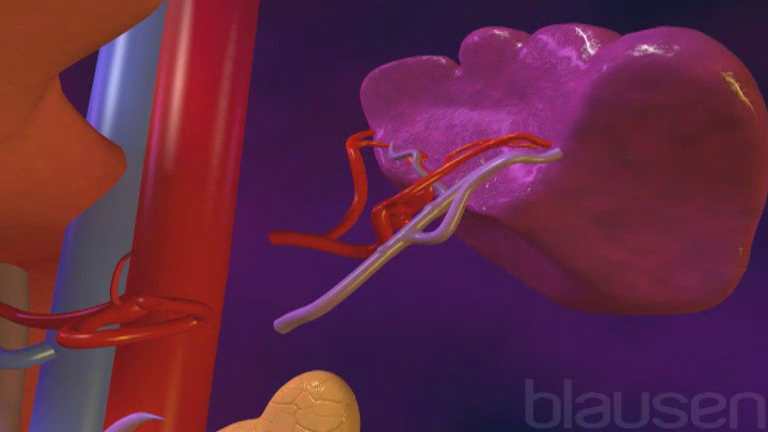
Hypopituitarism, an uncommon disorder, can be caused by a number of factors, including a pituitary tumor or an insufficient blood supply to the pituitary gland.

What Causes an Underactive Pituitary?

  • Causes affecting primarily the pituitary gland
    • Pituitary tumors
    • Inadequate blood supply to the pituitary (from severe bleeding, blood clots, anemia, or other causes)
    • Infections and inflammatory diseases
    • Sarcoidosis or amyloidosis (unusual diseases)
    • Irradiation (as for a brain tumor)
    • Surgical removal of pituitary tissue
    • Autoimmune disease
  • Causes affecting primarily the hypothalamus, which then affects the pituitary
    • Tumors of the hypothalamus
    • Inflammatory diseases
    • Head injuries
    • Surgical damage to the pituitary or to the blood vessels or nerves leading to it

Symptoms and Complications

Although symptoms sometimes begin suddenly and dramatically, they usually begin gradually and may go unrecognized for a long time. Symptoms depend on which pituitary hormones are deficient. In some cases, the pituitary gland's production of a single hormone decreases. More typically, the levels of several hormones decrease at the same time (panhypopituitarism). Production of growth hormone, luteinizing hormone, and follicle-stimulating hormone often decreases before that of thyroid-stimulating hormone and adrenocorticotropic hormone.

Growth Hormone Deficiency: A lack of growth hormone typically leads to poor overall growth and short height (dwarfism) if it occurs in childhood. In adults, growth hormone deficiency does not affect height, because the bones have finished growing, but it can cause increased fat and reduced muscle tissue, thinning of bones, and reduced energy and quality of life.

Deficiency of Gonadotropins (follicle-stimulating hormone and luteinizing hormone): In premenopausal women, deficiencies of these hormones cause menstrual periods to stop (amenorrhea), infertility, vaginal dryness, and loss of some female sexual characteristics. In men, deficiencies of these hormones result in wasting away (atrophy) of the testes, decreased sperm production and consequent infertility, and loss of some male sexual characteristics. Deficiencies of luteinizing hormone and follicle-stimulating hormone can also occur in Kallmann's syndrome, in which people may also have a cleft lip or palate (see Birth Defects: Facial Defects), are color-blind, and are unable to sense smells.

Thyroid-stimulating Hormone Deficiency: Thyroid-stimulating hormone deficiency leads to an underactive thyroid gland (hypothyroidism), which results in such symptoms as confusion, intolerance to cold, weight gain, constipation, and dry skin (see Thyroid Gland Disorders: Hypothyroidism). Most cases of hypothyroidism, however, are due to a problem originating in the thyroid gland itself, not to low levels of pituitary hormones.

Adrenocorticotropic Hormone Deficiency: Adrenocorticotropic hormone (ACTH) deficiency leads to an underactive adrenal gland, which results in fatigue, low blood pressure, low levels of sugar in the blood, and low tolerance for stress. This is the most serious pituitary hormone deficiency. If the body is unable to make any ACTH, it can be fatal.

Prolactin Deficiency: Prolactin deficiency reduces or eliminates a woman's ability to produce breast milk after childbirth. One cause of low prolactin levels and deficiency of other pituitary hormones is Sheehan's syndrome, a rare complication of childbirth. Sheehan's syndrome typically develops because of excessive blood loss and shock during childbirth, which results in partial destruction of the pituitary gland. Symptoms include fatigue, loss of pubic and underarm hair, and inability to produce breast milk. Prolactin deficiency has no known ill effects in men.

Diagnosis

Because the pituitary gland stimulates other glands, a deficiency in pituitary hormones often reduces the amount of hormones those other glands produce. Therefore, a doctor considers the possibility of pituitary malfunction when investigating a deficiency in another gland, such as the thyroid or adrenal gland. When symptoms suggest that several glands are underactive, a doctor may suspect hypopituitarism or a polyglandular deficiency syndrome.

An evaluation usually begins by measuring levels of the hormones that the pituitary gland produces and at the same time measuring levels of the hormone produced by the target organ. For example, a person with hypothyroidism due to failure of the pituitary gland has low levels of thyroid hormone and low or inappropriately normal levels of thyroid-stimulating hormone, which is produced by the pituitary gland. In contrast, a person with hypothyroidism due to failure of the thyroid gland itself has low levels of thyroid hormone and high levels of thyroid-stimulating hormone.

Growth hormone production by the pituitary is difficult to evaluate because no test accurately measures it. The body produces growth hormone in several bursts each day, and the hormone is quickly used. Thus, the blood level at any given moment does not indicate whether production is normal over the course of a day. Instead, doctors measure the levels of insulin-like growth factor 1 (IGF-1) in the blood. Production of IGF-1 is controlled by growth hormone, and the level of IGF-1 tends to change slowly in proportion to the overall amount of growth hormone produced by the pituitary. In infants and young children, doctors may instead measure levels of a similar substance, IGF-binding protein type 3.

Because the levels of luteinizing hormone and follicle-stimulating hormone fluctuate with the menstrual cycle, their measurement in women may be difficult to interpret. However, in postmenopausal women who are not taking estrogen, luteinizing hormone and follicle-stimulating hormone levels normally are high.

Production of ACTH is usually measured by assessing the response of its target hormone (cortisol) to stimuli, such as a low level of sugar in the blood after an insulin Some Trade Names
HUMULIN
NOVOLIN
injection. If the level of cortisol does not change and the level of ACTH in the blood is normal or low, a deficiency of ACTH production is confirmed.

Once hypopituitarism is established by blood tests, the pituitary gland is usually evaluated with a computed tomography (CT) or magnetic resonance imaging (MRI) scan to identify structural problems. CT or MRI scans help reveal individual (localized) areas of abnormal tissue growth as well as general enlargement or shrinkage of the pituitary gland. The blood vessels that supply the pituitary can be examined with cerebral angiography (see Common Imaging Tests: Angiography).

Polyglandular Deficiency Syndromes

Polyglandular deficiency syndromes are hereditary disorders in which several endocrine glands malfunction simultaneously. The actual cause of the malfunction may be related to an autoimmune reaction in which the body's immune defenses mistakenly attack the body's own cells. Polyglandular deficiency syndromes are classified into three types:

  • Type 1:
    In this type, which develops in children, the parathyroid and adrenal glands are underactive, which can lead to diabetes, hepatitis, malabsorption of nutrients and weight loss, and hair loss. Affected children are prone to chronic yeast infections as well.
  • Type 2:
    In this type, which develops in adults, the adrenal and thyroid glands are underactive, although the thyroid gland sometimes becomes overactive. People with type 2 polyglandular deficiency also develop diabetes.
  • Type 3:
    This type is very similar to type 2, except that the adrenal glands remain normal.

Treatment

When possible, treatment is aimed at removing the cause of the pituitary hormone deficiency, such as a tumor. Surgical removal of a tumor is often the most appropriate first treatment, and removal also usually reduces any pressure symptoms and vision problems caused by the tumor. For all but the largest tumors, surgery can usually be done through the nose (transphenoidal).

Supervoltage or proton beam irradiation of the pituitary gland can be used to destroy a tumor. Large tumors and those that have extended beyond the sella turcica may be impossible to remove with surgery alone. If so, doctors use supervoltage irradiation after surgery to kill the remaining tumor cells. Irradiation of the pituitary gland tends to cause a slow loss of pituitary function. The loss may be partial or complete. Therefore, the function of the target glands is generally evaluated every 3 to 6 months for the first year and yearly thereafter. Tumors that produce prolactin can be treated with drugs that act like dopamine, such as bromocriptine Some Trade Names
PARLODEL
or cabergoline Some Trade Names
DOSTINEX
. These drugs shrink the tumor while also lowering prolactin levels.

When it is not possible to remove the cause of the hormone deficiency, such as an insufficient blood supply to the pituitary gland, treatment focuses on replacing the deficient hormones, usually by replacing the target hormones. For example, people deficient in thyroid-stimulating hormone are given thyroid hormone. Those deficient in ACTH are given adrenocortical hormones such as hydrocortisone. Those deficient in luteinizing hormone and follicle-stimulating hormone are given estrogen, progesterone, or testosterone Some Trade Names
DELATESTRYL
DEPOTESTOSTERONE
.

Growth hormone is the one pituitary hormone that is replaced. Growth hormone treatment must be given by injection. When given to children who have growth hormone deficiency before the growth plates in their bones close, replacement growth hormone prevents them from being exceptionally short. Growth hormone is now also being used to treat some adults with growth hormone deficiency to improve body composition, increase bone density, and enhance quality of life.

Last full review/revision February 2007 by Ian M. Chapman, MBBS, PhD

Back to Top

Previous: Galactorrhea

Audio
Figures
Photographs
Pronunciations
Tables
Videos
Contact UsSite MapAccessibility StatementPrivacy PolicyTerms of UseCopyright 1995-2009 Merck & Co., Inc.