





White blood cells (leukocytes) are an important part of the body’s defense against infectious organisms and foreign substances (the immune system). To defend the body adequately, a sufficient number of white blood cells must receive a message that an infectious organism or foreign substance has invaded the body, get to where they are needed, and then kill and digest the harmful organism or substance (see figure Lymphatic System: Helping Defend Against Infection).

Like all blood cells, white blood cells are produced primarily in the bone marrow. They develop from stem (precursor) cells that mature into one of the five major types of white blood cells:
Basophils
Eosinophils
Lymphocytes
Monocytes
Neutrophils

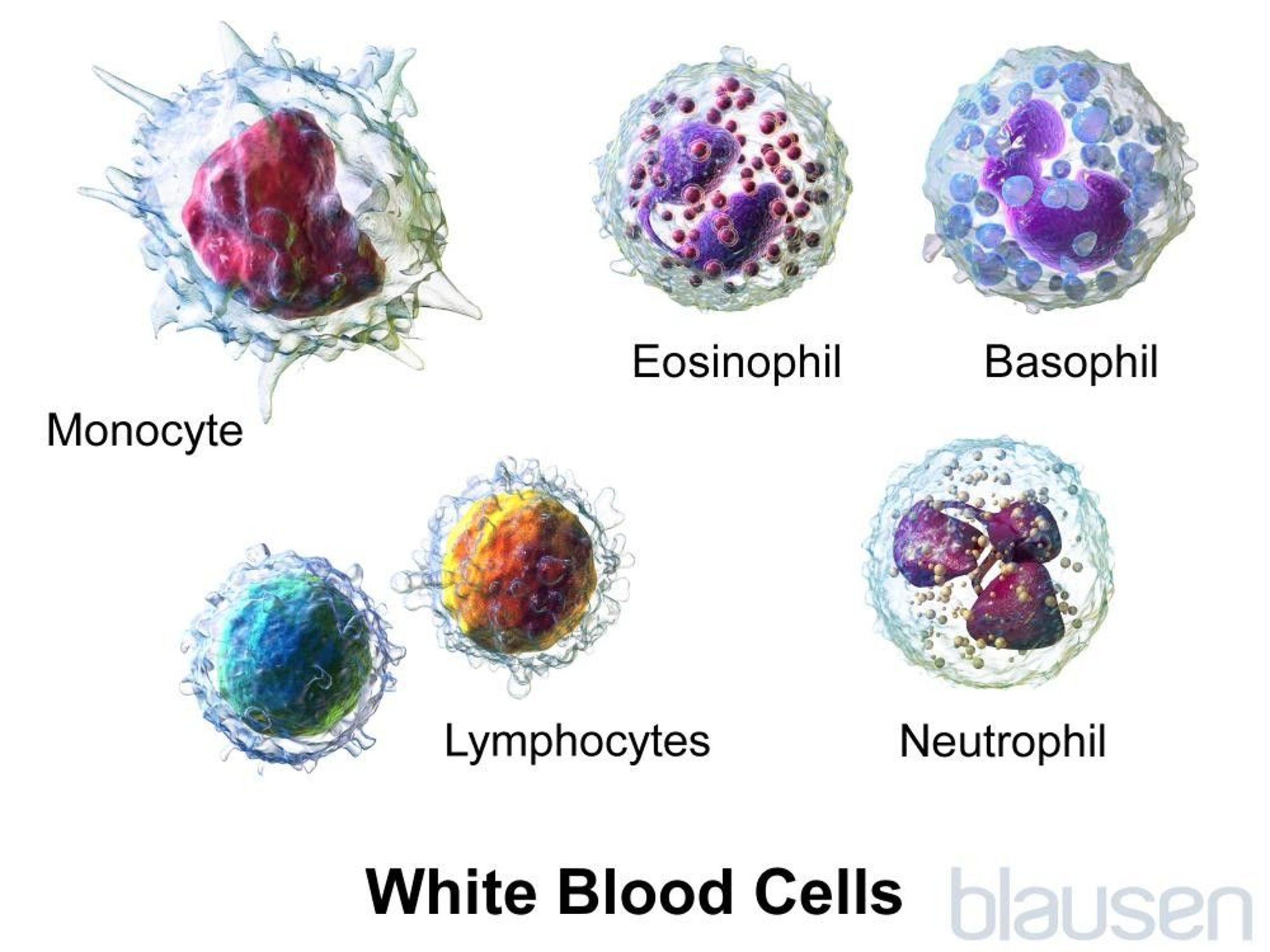
Normally, people produce about 100 billion white blood cells a day. The number of white blood cells in a given volume of blood is expressed as cells per microliter of blood. The total white blood cell count normally ranges between 4,000 and 11,000 cells per microliter (4 to 11 × 109 per liter). The proportion of each of the five major types of white blood cells and the total number of cells of each type in a given volume of blood can be determined through laboratory tests.
Too few or too many white blood cells indicates a disorder.
Leukopenia, a decrease in the number of white blood cells to fewer than 4,000 cells per microliter of blood (4 × 10⁹ per liter), frequently makes people more susceptible to infections.
Leukocytosis, an increase in the number of white blood cells to more than 11,000 cells per microliter of blood (11 × 109 per liter), is often caused by the normal response of the body to help fight an infection, or to some medications such as corticosteroids. However, an increase in the number of white blood cells is also caused by cancers of the bone marrow (such as leukemia), in which the affected cells multiply uncontrollably.
Some white blood cell disorders involve only one of the five types of white blood cells.
Lymphocytic leukocytosis is an abnormally high number of lymphocytes
Lymphocytopenia is an abnormally low number of lymphocytes
Neutropenia is an abnormally low number of neutrophils
Neutrophilic leukocytosis is an abnormally high number of neutrophils
Other disorders may involve a few types together or all five white blood cell types. Disorders of neutrophils and disorders of lymphocytes are the most common. Disorders that involve monocytes and eosinophils are less common, and disorders involving basophils are rare.


