





Lymphomas are cancers of lymphocytes, which reside in the lymphatic system and in blood-forming organs.
Lymphomas are cancers of a specific type of white blood cells known as lymphocytes. These cells help fight infections. Lymphomas can develop from either of the main types of lymphocyte:
B lymphocytes (B cells)
T lymphocytes (T cells)
B lymphocytes produce antibodies, which are essential in fighting off some infections. T lymphocytes are important in regulating the immune system and in fighting viral infections. Lymphomas are similar to other cancers of white blood cells called leukemias.
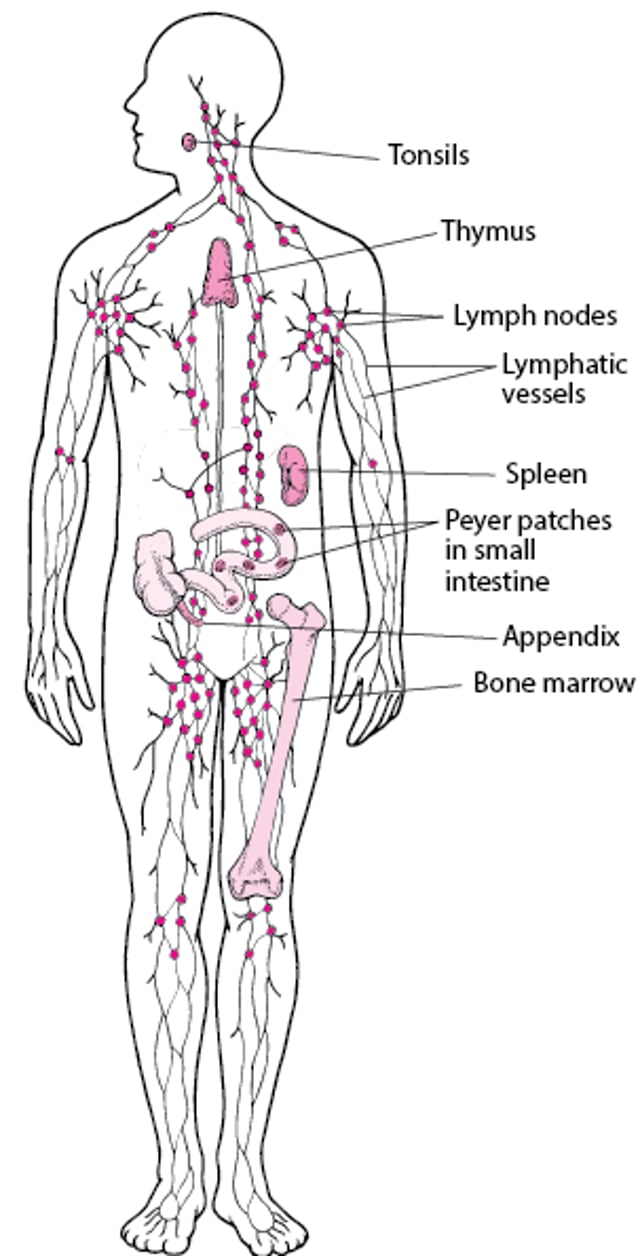
Lymphocytes originate in the bone marrow and move about to all parts of the body through the bloodstream and through a network of tubular channels called lymphatic vessels. Scattered throughout the network of lymphatic vessels are lymph nodes, which house collections of lymphocytes. Lymphocytes that become cancerous (lymphoma cells) may remain confined to a single lymph node or may spread to the bone marrow, blood, the spleen, or virtually any other organ.
The cancerous white blood cells do not function like normal white blood cells so they cannot help the body fight off infections.

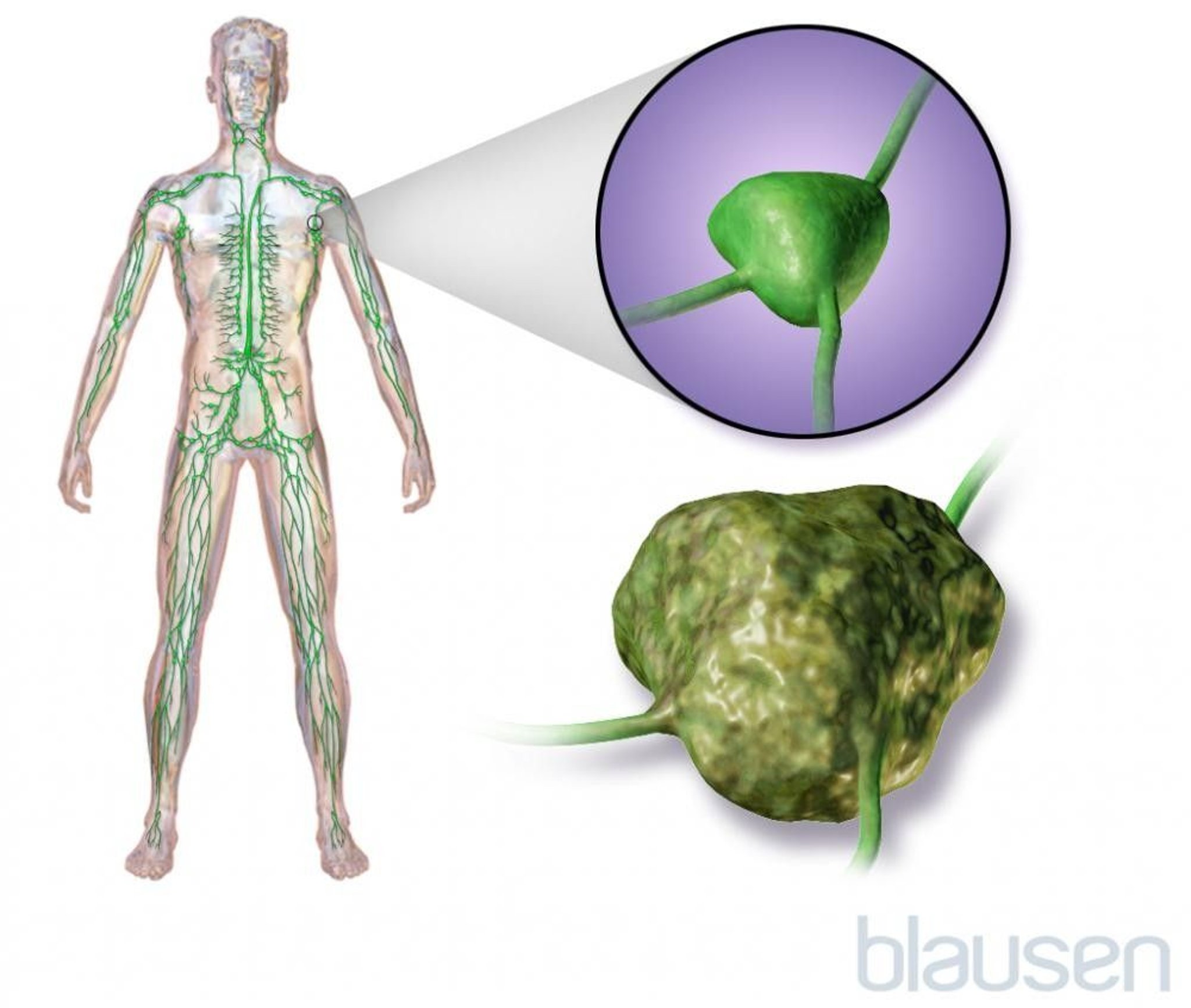
The 2 major types of lymphoma are
Hodgkin lymphoma (previously known as Hodgkin's disease)
Non-Hodgkin lymphomas are more common than Hodgkin lymphoma. There are many subtypes of non-Hodgkin lymphoma.
Lymphatic System: Helping Defend Against Infection

More Information
The following English-language resource may be useful. Please note THE MANUAL is not responsible for the content of this resource.
Leukemia & Lymphoma Society: Comprehensive information on blood cancers, including diagnosis, treatment and support


