





After a cell becomes cancerous, the immune system is often able to recognize it as abnormal and destroy it before it replicates or spreads. The cancerous cells may be completely eliminated, in which case the cancer never appears. Certain cancers are more likely to progress in people whose immune system is altered or impaired, as in people with AIDS, people receiving medications that suppress the immune system, people with certain autoimmune disorders, and older people, in whom the immune system works less well than in younger people. Cancers that are more common with a weakened immune system include melanoma, kidney cancer, and lymphoma. Doctors are not sure why certain other cancers, such as cancers of the lung, breast, prostate and colon, are not more common in people with a weakened immune system.
Tumor antigens
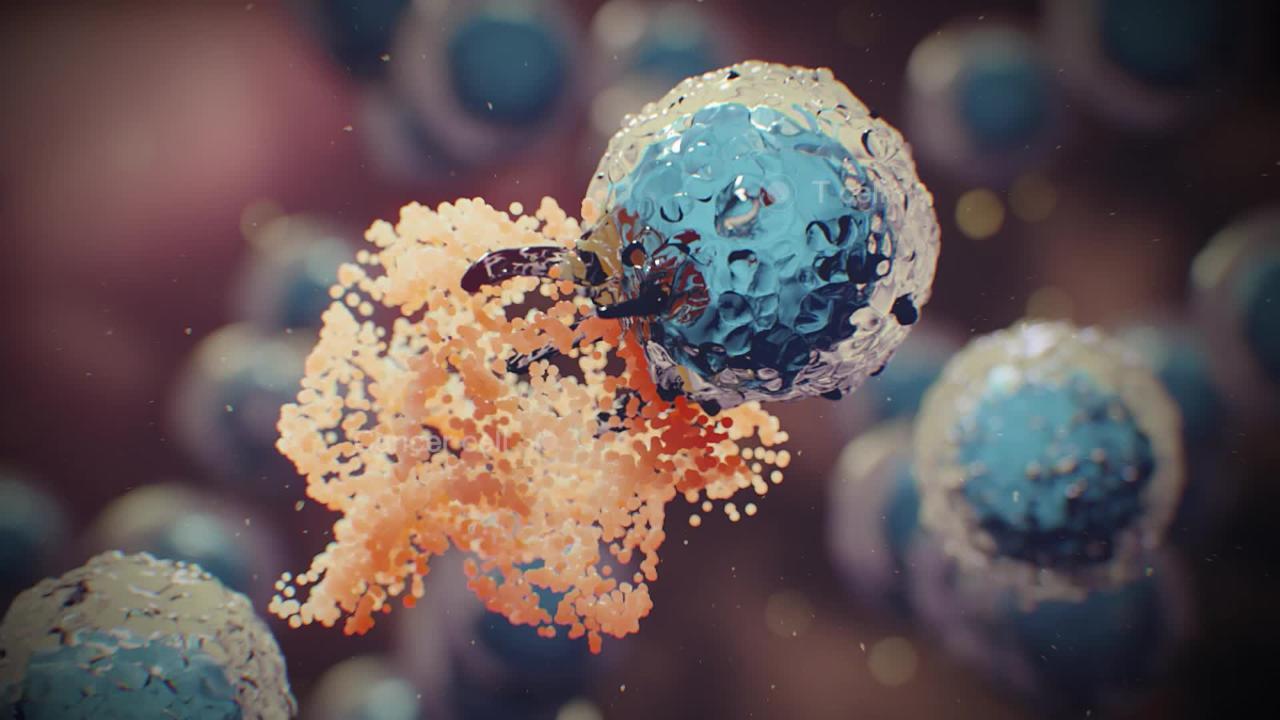
An antigen is a foreign substance recognized and targeted for destruction by the body’s immune system. Antigens are found on the surface of all cells, but normally the immune system does not react to a person’s own cells. When a cell becomes cancerous, new antigens—unfamiliar to the immune system—appear on the cell’s surface. The immune system may regard these new antigens, called tumor antigens, as foreign and may be able to contain or destroy the cancerous cells. This is the mechanism by which the body destroys abnormal cells and is often able to destroy cancerous cells before they can become established. However, even a fully functioning immune system cannot always destroy all cancerous cells. And, once cancerous cells reproduce and form a large mass of cancerous cells (a cancerous tumor), the body’s immune system may be overwhelmed.
Tumor antigens have been identified in several types of cancer, including melanoma, breast cancer, ovarian cancer, and liver cancer. Vaccines made from tumor antigens are being used to treat prostate cancer and may be able to prevent or treat other types of cancer by stimulating the immune system. Such vaccines are an area of great research interest.
Certain tumor antigens can be detected with blood tests. These antigens are sometimes called tumor markers. Measurements of some of these tumor markers can be used to evaluate people’s response to treatment (see table Some Tumor Markers).
Immune checkpoints
Even when the immune system is functioning normally, cancer can escape the immune system’s protective surveillance.
One reason the immune system usually does not attack normal cells is that the surface of normals cells carries proteins that signal to circulating immune cells (T cells) that the cell bearing them is normal and should not be attacked. These are called checkpoint proteins. Sometimes cancer cells develop the ability to produce one or more of these checkpoint proteins and thus escape from attack. Newer types of cancer medications called checkpoint inhibitors can block the signal and allow the immune system to attack the cancer.


