





Tularemia is infection that is caused by the gram-negative bacteria Francisella tularensis, which is acquired when people have direct contact with infected wild animals, usually rabbits, or are bitten by an infected tick, deer fly, or flea.
Handling animal carcasses, being bitten by a tick, inhaling contaminated sprayed particles, or eating or drinking contaminated material can cause infection.
Symptoms can include fever, sores, and swollen lymph nodes.
Cultures of tissue samples or blood help doctors make the diagnosis.
Injections of antibiotics are almost always effective.
Preventing tick bites, handling carcasses carefully, and disinfecting water can reduce the risk of tularemia.
(See also Overview of Bacteria.)
Transmission
Francisella tularensis is normally present in animals, especially rodents, rabbits, and hares. Wild animals and pets may carry the bacteria.
People may be infected by doing the following:
Handling infected animal carcasses (as when hunters skin rabbits or when butchers, farmers, fur handlers, and laboratory workers handle animals or animal products)
Being bitten by an infected tick, deer fly, flea, or other insect, usually during the summer (particularly for children)
Eating or drinking contaminated food (such as undercooked rabbit meat) or water
Inhaling airborne particles that contain the bacteria (as when people mowing grass run over a dead, infected animal or when people are working with the bacteria in a laboratory)
Francisella tularensis is a potential biological weapon. It can be spread through the air and be inhaled. The size of the airborne particles determines where they lodge in the respiratory tract. Small particles lodge in air sacs of the lungs and cause pneumonia. Larger particles lodge in the throat. Particles may also lodge in the eyes.
Tularemia is not spread from person to person.
Spread through the bloodstream
Infection can spread through the bloodstream and infect the following:
Lungs (causing pneumonia)
Bone
Membrane around the heart (causing pericarditis)
Membrane that lines the abdomen (causing peritonitis)
Heart valves (causing endocarditis)
Tissues covering the brain and spinal cord (causing meningitis)
Sometimes pus collects in the lungs, forming an abscess.
Types of Tularemia
There are several types of tularemia.
Ulceroglandular tularemia
This type is the most common. Painful open sores (ulcers) develop where the bacteria entered the skin: through a break in the skin, usually on the hands and fingers, or a tick bite, usually in the groin, armpit, or trunk.
The bacteria travel to nearby lymph nodes, making them swollen and painful. Occasionally, the skin around the lymph nodes breaks down, and pus may drain from them.
Glandular tularemia
The lymph nodes become swollen and painful, but skin sores do not form.
Oculoglandular tularemia
An eye becomes painful, swollen, and red, and pus often oozes from it. Nearby lymph nodes become swollen and painful.
Oculoglandular tularemia probably results from touching the eye with a contaminated finger or from having infected fluid splashed into the eye.
Oropharyngeal tularemia
The throat (pharynx) is sore, and lymph nodes in the neck are swollen. Some people also have abdominal pain, nausea, vomiting, and diarrhea.
Oropharyngeal tularemia is usually caused by eating undercooked contaminated meat or drinking contaminated water.
Typhoidal tularemia
Chills, high fever, and abdominal pain develop, but no sores form and lymph nodes do not swell.
Typhoidal tularemia develops when the bloodstream is infected. Sometimes the source of infection is unknown.
Pneumonic tularemia
The lungs are infected. People may have a dry cough, be short of breath, and have chest pain. A rash may appear.
Pneumonic tularemia is caused by inhaling the bacteria or spread of the bacteria through the bloodstream to the lungs. This type develops in 10 to 15% of people with ulceroglandular tularemia and in 50% of people with typhoidal tularemia.
Septicemic tularemia
This rare type is the most serious. It is a bodywide illness that develops when bacteria spread through the bloodstream and cause many organs to malfunction.
Blood pressure is low, the lungs fill with fluid, and clotting factors in blood are used up, causing bleeding (disseminated intravascular coagulation).
Symptoms of Tularemia
Different types of tularemia affect different parts of the body (such as the eyes, throat, or lungs) and thus cause different symptoms. Symptoms usually appear 2 to 4 days after exposure to the bacteria but can take up to 10 days.

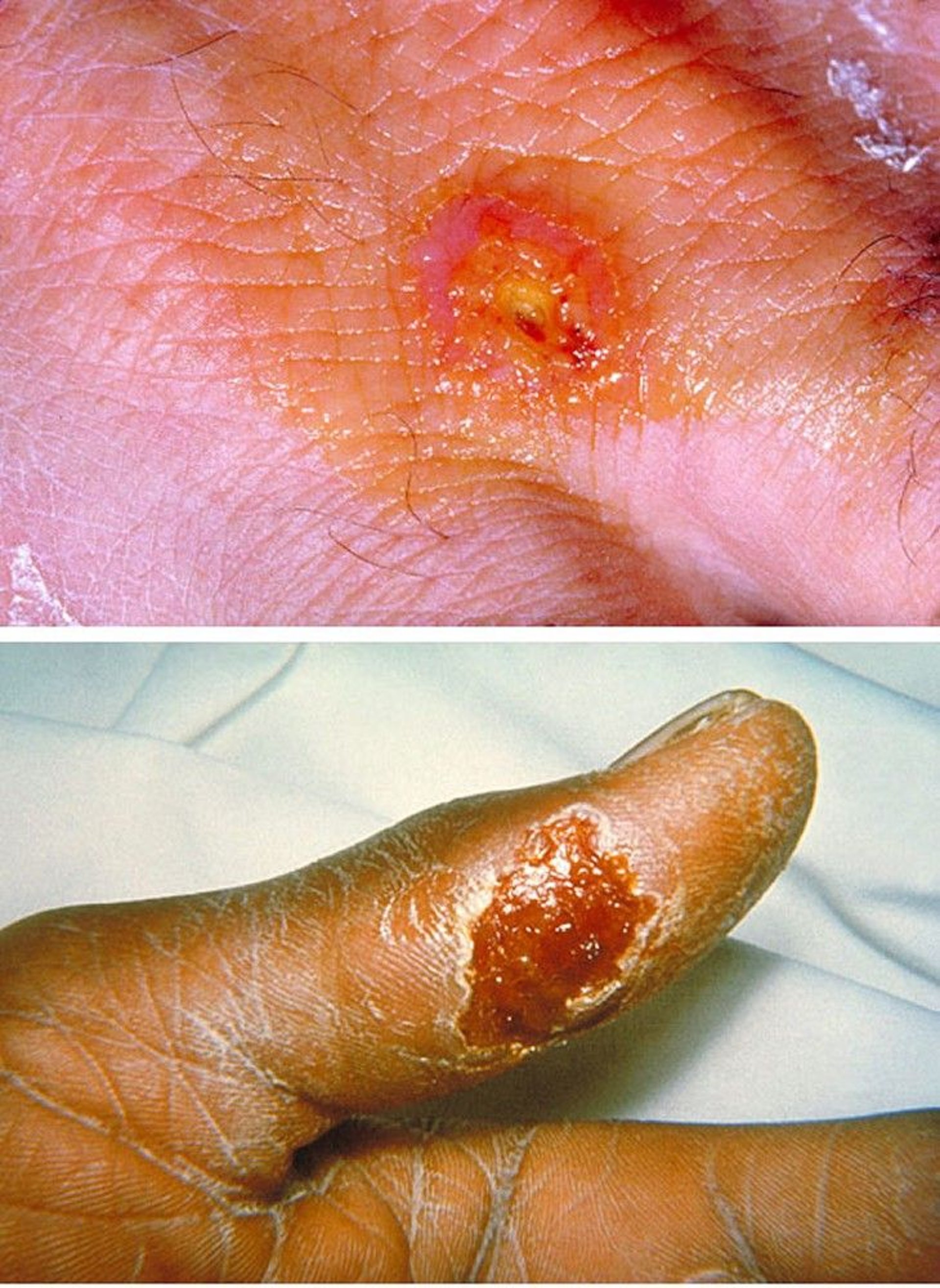
Images courtesy of CDC/Dr. Brachman (top) and CDC/Emory Univ.; Dr. Sellers (bottom) via the Public Health Image Library of the Centers for Disease Control and Prevention.
Sores may develop near the scratch or bite that started the infection. Lymph nodes near the infected area may swell and become painful. A fever up to 104° F (40° C) may appear suddenly, with headache, chills, drenching sweats, and muscle aches. People may have a general feeling of illness (malaise) and feel nauseated. They may vomit and lose weight. A rash may appear at any time.
Prognosis for Tularemia
With appropriate treatment, almost everyone recovers. Without treatment, the death rate varies from 6% in people with ulceroglandular tularemia to as high as 33% in people with typhoidal, pneumonic, or septicemic tularemia. Death usually results from overwhelming infection, pneumonia, meningitis, or peritonitis.
Relapses are uncommon but can occur if treatment is inadequate. People who have had tularemia are immune to reinfection.
Diagnosis of Tularemia
Culture and testing of samples of blood and/or other infected fluids
A doctor suspects tularemia in people who develop sudden fever, swollen lymph nodes, and characteristic sores after having been exposed to ticks or deer flies or after having even slight contact with rabbits, hares, or rodents.
Samples of infected material, such as blood, fluids from a lymph node, pus from sores, or sputum, are taken. They are sent to a laboratory where the bacteria, if present, can be grown (cultured) and identified. Blood may also be tested for antibodies to the bacteria.
Doctors may use the polymerase chain reaction (PCR) technique to increase the amount of the bacteria's DNA, so that the bacteria can be detected more quickly.
Prevention of Tularemia
If people are visiting areas where tularemia is common, they should do all of the following:
Apply insect repellent containing 25 to 30% diethyltoluamide (DEET) to exposed skin
Stay on paths and trails when walking in wooded areas
Walk in the center of trails to avoid brushing against bushes and weeds
Wear long pants and tuck them into socks and boots
Thoroughly search their clothing, themselves, family members, and pets for ticks
Not drink or bathe, swim, or work in untreated water, which may be contaminated
Promptly searching for ticks can help prevent the infection because transmission of infection usually requires that ticks be attached for 4 or more hours. If found, ticks should be removed immediately (see figure Preventing Tick Bites).
When handling rabbits, hares, and rodents, people should wear protective clothing (such as rubber gloves and face masks) because bacteria may be present. Wild birds and game should be thoroughly cooked before they are eaten.
Currently, no vaccine is available, but one is being evaluated.
Treatment of Tularemia
Antibiotics
People who have tularemia do not need to be isolated.
Rarely, large abscesses must be drained surgically.
Applying warm compresses to an affected eye, wearing dark glasses, and using prescription eye drops may help.
People with intense headaches are usually treated with pain relievers.
More Information
The following English-language resource may be useful. Please note that THE MANUAL is not responsible for the content of this resource.
Centers for Disease Control and Prevention (CDC): Tularemia: A resource providing information about tularemia, including infection control and other resources


