





Epstein-Barr virus causes a number of diseases, including infectious mononucleosis.
The virus is spread through kissing.
Symptoms vary, but the most common are extreme fatigue, fever, sore throat, and swollen lymph nodes.
A blood test is done to confirm the diagnosis.
Infection with the Epstein-Barr virus (EBV) is very common. EBV is a type of herpesvirus called herpesvirus 4. In the United States, about 50% of all children 5 years of age and over 90% of adults have had an EBV infection.
Most EBV infections cause no symptoms. Infectious mononucleosis typically develops in adolescents and young adults who are infected with EBV. Infectious mononucleosis is named for the large numbers of a certain type of white blood cell (mononuclear cells) in the bloodstream. Adolescents and young adults usually catch infectious mononucleosis by kissing someone infected with EBV.
After the initial infection, EBV, like other herpesviruses, remains in the body, mainly in white blood cells, for life. Infected people shed the virus periodically in their saliva. They can infect others during shedding, which causes no symptoms.
Rarely, EBV contributes to the development of multiple sclerosis and several types of cancer, such as Burkitt lymphoma and certain cancers of the nose and throat (nasopharyngeal cancer). It is thought that specific viral genes alter the growth cycle of infected cells and cause them to become cancerous. EBV does not cause chronic fatigue syndrome, as was once suspected.
Symptoms of Infectious Mononucleosis
In most children younger than 5 years, the infection causes no symptoms. In adolescents and adults, it may or may not cause infectious mononucleosis.
The usual time between infection and the appearance of symptoms is thought to be 30 to 50 days. This interval is called the incubation period.
The 4 main symptoms of EBV infectious mononucleosis are
Extreme fatigue
Fever
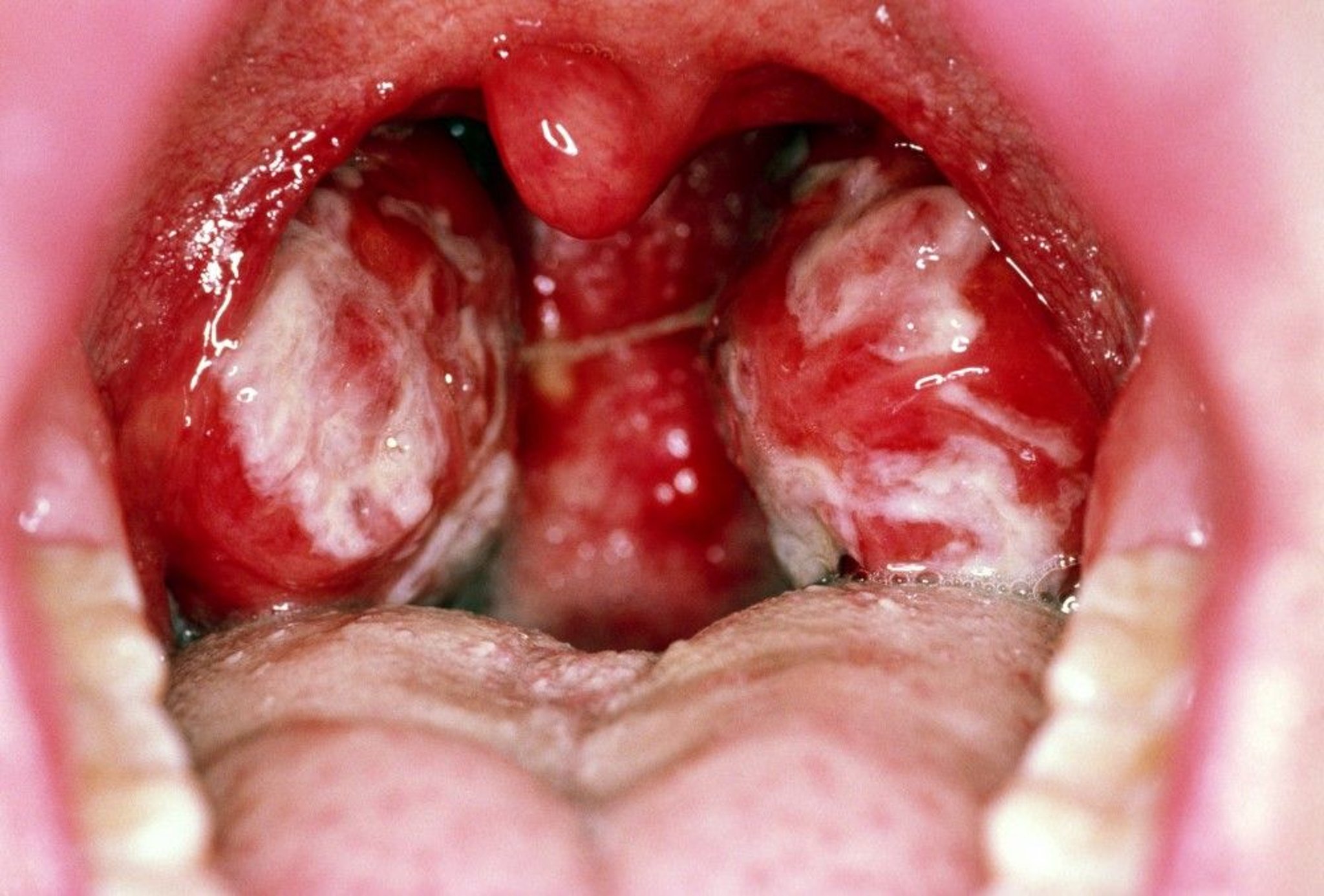
Sore throat

DR P. MARAZZI/SCIENCE PHOTO LIBRARY
Not everyone has all 4 symptoms. Usually, the infection begins with a general feeling of illness (malaise) and low grade fever followed by sore throat and/or swollen lymph nodes. Fatigue is often severe and is usually most severe during the first 2 to 3 weeks but may last for months. The fever usually peaks at about 103° F (about 39.5° C) in the afternoon or early evening. The throat is often very sore, and puslike material may be present at the back of the throat. Most commonly, the lymph nodes of the neck are swollen, but any lymph node may be swollen. In some people, the only symptom is swollen lymph nodes (sometimes mistakenly called "swollen glands").


MID ESSEX HOSPITAL SERVICES NHS TRUST/SCIENCE PHOTO LIBRARY
The spleen is enlarged in about 50% of people with infectious mononucleosis. In most infected people, an enlarged spleen causes few if any symptoms, but it may rupture, particularly if injured. Rupture of the spleen is life threatening. The liver may also enlarge slightly. Sometimes the area around the eyes is swollen.
Other very rare complications include seizures, nerve damage, behavioral abnormalities, inflammation of the brain (encephalitis) or tissues covering the brain (meningitis), anemia, and blockage of airways by the swollen lymph nodes.
How long symptoms last varies. After about 2 weeks, symptoms subside, and most people can resume their usual activities. However, fatigue may persist for several more weeks and, occasionally, for months. Fewer than 1% of people die, usually because of complications such as encephalitis, rupture of the spleen, or blockage of the airways.
Diagnosis of Infectious Mononucleosis
A blood test
The symptoms of infectious mononucleosis also occur in many other viral and bacterial infections. Therefore, infectious mononucleosis is often unrecognized. However, swollen lymph nodes, particularly in the neck, strongly suggest infectious mononucleosis.
Usually, a simple blood test known as a heterophile antibody or monospot test is done to confirm the diagnosis. This test can sometimes be negative early in illness in adolescents and adults, and if doctors strongly suspect the infection, they can repeat the test about a week later. This test is much less reliable and often negative in young children with infectious mononucleosis. An alternative test to confirm the diagnosis is a specific antibody blood test for EBV. (Antibodies are produced by the immune system to defend against a particular attacker, such as EBV.)
Often, a complete blood count is also done. Finding many characteristic mononuclear white blood cells (atypical lymphocytes) may be the first clue that the diagnosis is infectious mononucleosis.
Treatment of Infectious Mononucleosis
Initially rest
Pain relievers
Sometimes corticosteroids for certain complications
There is no specific treatment.
People with infectious mononucleosis are encouraged to rest during the first week or two, while symptoms are severe. After about 2 weeks, they may be more active. However, because of the risk of rupturing the spleen, heavy lifting and contact sports should be avoided for at least 1 month, until doctors confirm by examination or sometimes ultrasonography that the spleen has returned to normal size.
Reye syndrome, which can be fatal.
Some complications, such as severe swelling of the airways, may be treated with corticosteroids.
Currently available antiviral medications have little effect on the symptoms of infectious mononucleosis and should not be used.


