





Dermatitis herpetiformis is an autoimmune disorder causing clusters of intensely itchy, red blisters and hivelike swellings in people who have celiac disease.
In this autoimmune disorder, glutens in wheat, rye, and barley products cause the immune system to attack the skin.
People have red, itchy blisters and hivelike swellings on various areas of the body.
Doctors diagnose dermatitis herpetiformis by examining skin samples under a microscope.
(See also Overview of Blistering Disorders.)
The body's immune system makes special cells that protect the body against harmful foreign invaders such as bacteria and viruses. Some of these cells respond to invaders by producing proteins called antibodies. Antibodies target and attach to the invaders and attract other cells in the immune system to destroy them. In an autoimmune disorder, the body’s immune system mistakenly attacks the body’s own tissues—in this case, the skin. The antibodies that are produced mistakenly target the tissues as invaders, which makes them susceptible to destruction.
Dermatitis herpetiformis affects people of all ages but is most commonly diagnosed in adults between the ages of 30 to 40. It is rare in Black and Asian people.
Despite its name, dermatitis herpetiformis has nothing to do with the herpesvirus. The term herpetiformis is used to describe the way in which the blisters cluster together (similar to a rash caused by some herpesviruses).
In people with dermatitis herpetiformis, glutens (proteins) in wheat, rye, and barley products somehow activate the immune system, which attacks parts of the skin and causes the rash and itching. People with dermatitis herpetiformis often have celiac disease, which is an intestinal disorder caused by sensitivity to gluten, but they may not have symptoms resulting from the celiac disease. People also have a higher incidence of other autoimmune disorders, such as thyroiditis, systemic lupus erythematosus, sarcoidosis, pernicious anemia, and diabetes. People with dermatitis herpetiformis occasionally develop lymphoma in the intestines.
Symptoms of Dermatitis Herpetiformis
The blisters and hives usually develop gradually, mostly on the elbows, knees, buttocks, lower back, and back of the head, but can develop suddenly. Sometimes blisters break out on the face and neck. Itching and burning are likely to be severe. Because itching is intense and the skin is fragile, blisters usually break quickly, and few remain intact for the doctor to see. Blisters may develop in the mouth but they usually do not cause symptoms.
Iodides and iodine-containing preparations (such as kelp and seaweed products and certain skin cleansers) may worsen the rash. Some specialists also suggest avoiding iodized salt.

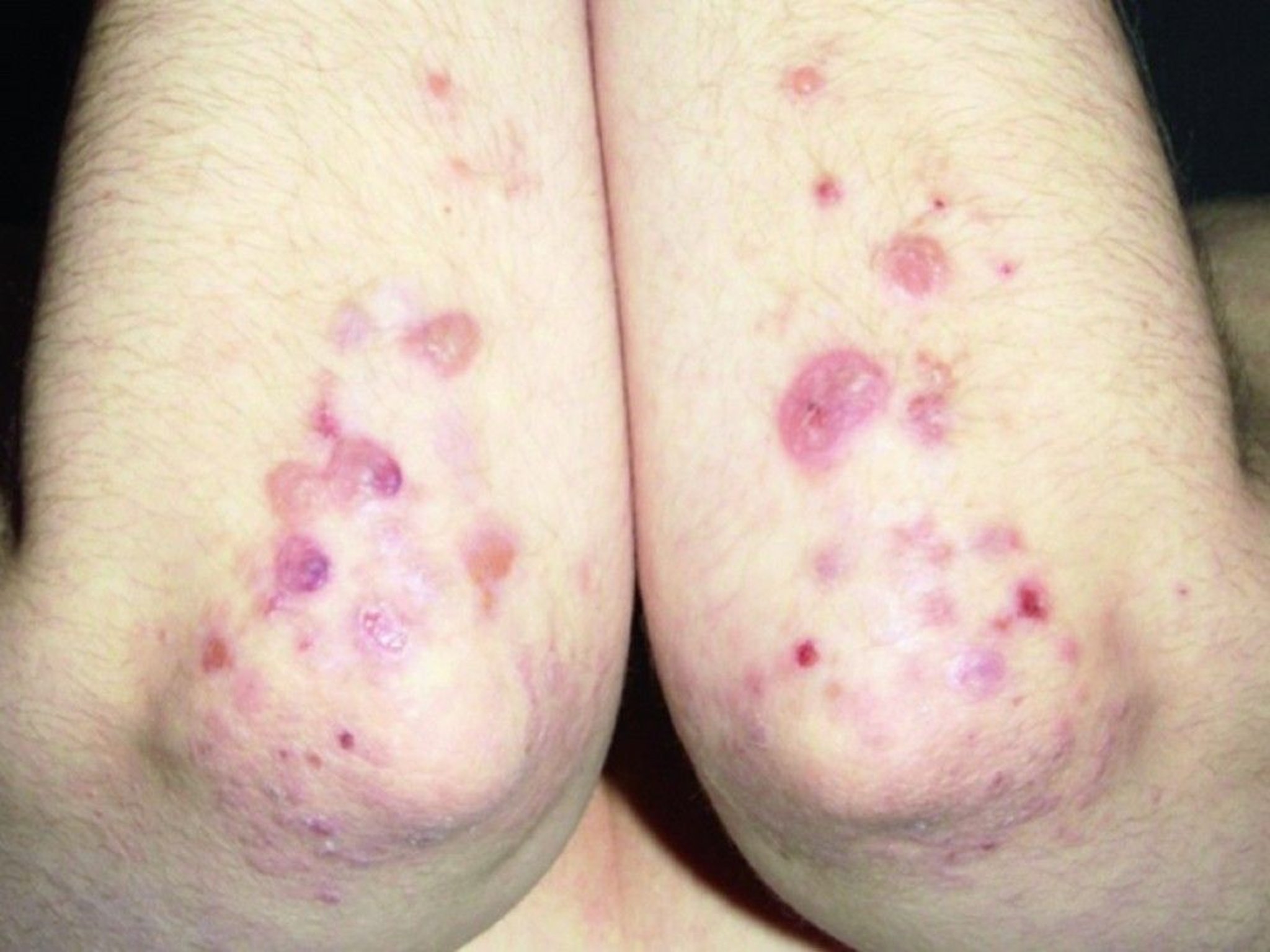
© Springer Science+Business Media
Did You Know...
|
Diagnosis of Dermatitis Herpetiformis
Skin biopsy
The diagnosis of dermatitis herpetiformis is based on a skin biopsy, in which doctors find particular kinds and patterns of antibodies in the skin samples.
All people with dermatitis herpetiformis are evaluated for celiac disease.
Treatment of Dermatitis Herpetiformis
Gluten-free diet
The blisters do not go away without treatment. People are usually placed on a gluten-free diet (a diet that is free of wheat, rye, and barley), which is the main treatment for celiac disease.
Once the disease has been brought under control with drugs and people have followed a strict gluten-free diet, drug treatment can sometimes be discontinued. However, some people can never stop taking the drugs. In most people, any re-exposure to gluten, however small, triggers another outbreak. A gluten-free diet that is strictly followed for 5 to 10 years decreases the risk of intestinal lymphoma.
More Information
The following English language resource may be useful. Please note that THE MANUAL is not responsible for the content of this resource.
National Organization for Rare Disorders: Information about dermatitis herpetiformis, including links to resources and supporting organizations


