





Chronic suppurative otitis media is a long-standing, persistently draining perforation of the eardrum (tympanic membrane).


Causes of chronic suppurative otitis media include acute otitis media and blockage of a eustachian tube.
A flare-up may occur after a cold, an ear infection or after water enters the middle ear.
People usually have hearing loss and persistent drainage from the ear.
Doctors clean the ear canal and give ear drops.
Antibiotics and surgery may be used for severe cases.
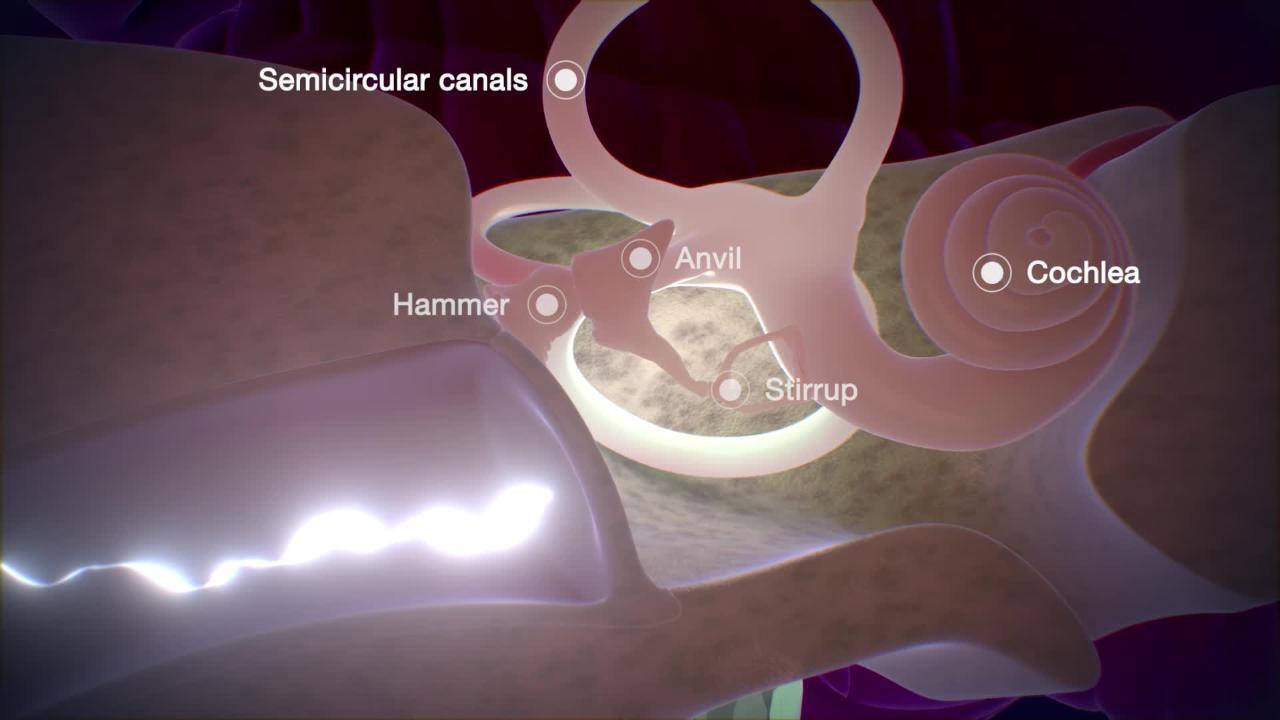
Chronic suppurative otitis media is usually caused by acute otitis media, blockage of the eustachian tube (which connects the middle ear and the back of the nose), an injury to the ear, chemical burns, or blast injuries.
Chronic suppurative otitis media may flare up after an infection of the nose and throat, such as the common cold, or after water enters the middle ear through a hole (perforation) in the eardrum during bathing or swimming. Usually, flare-ups result in a painless, sometimes very foul-smelling discharge of pus from the ear. Persistent flare-ups may result in the formation of protruding growths called polyps, which extend from the middle ear through the perforation and into the ear canal. Persistent infection can destroy parts of the ossicles—the small bones in the middle ear that connect the eardrum to the inner ear and conduct sounds from the outer ear to the inner ear—causing conductive hearing loss (hearing loss that occurs when sound is blocked from reaching the sensory structures in the inner ear). Often, chronic suppurative otitis media is painless.

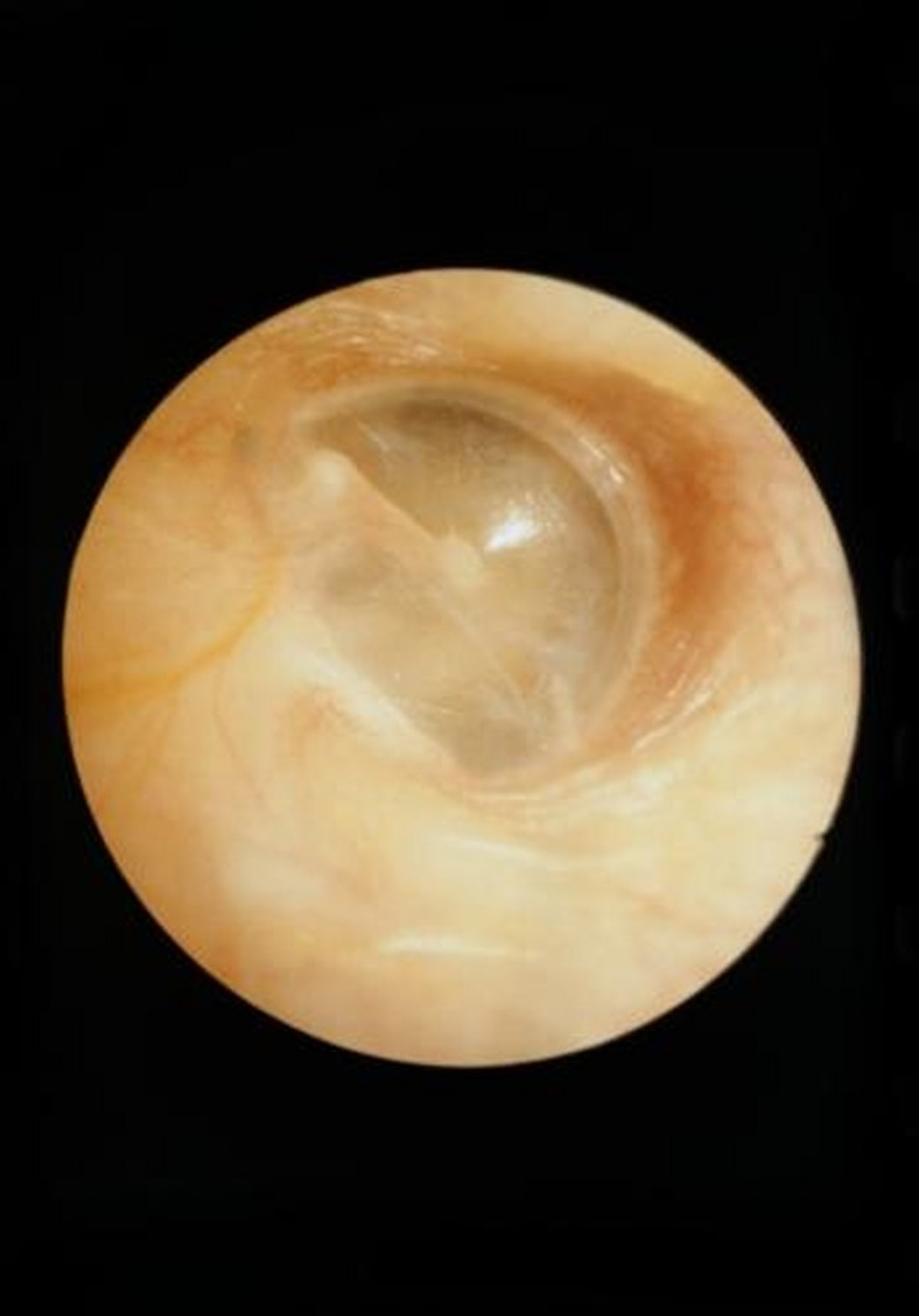
CLINICA CLAROS/SCIENCE PHOTO LIBRARY

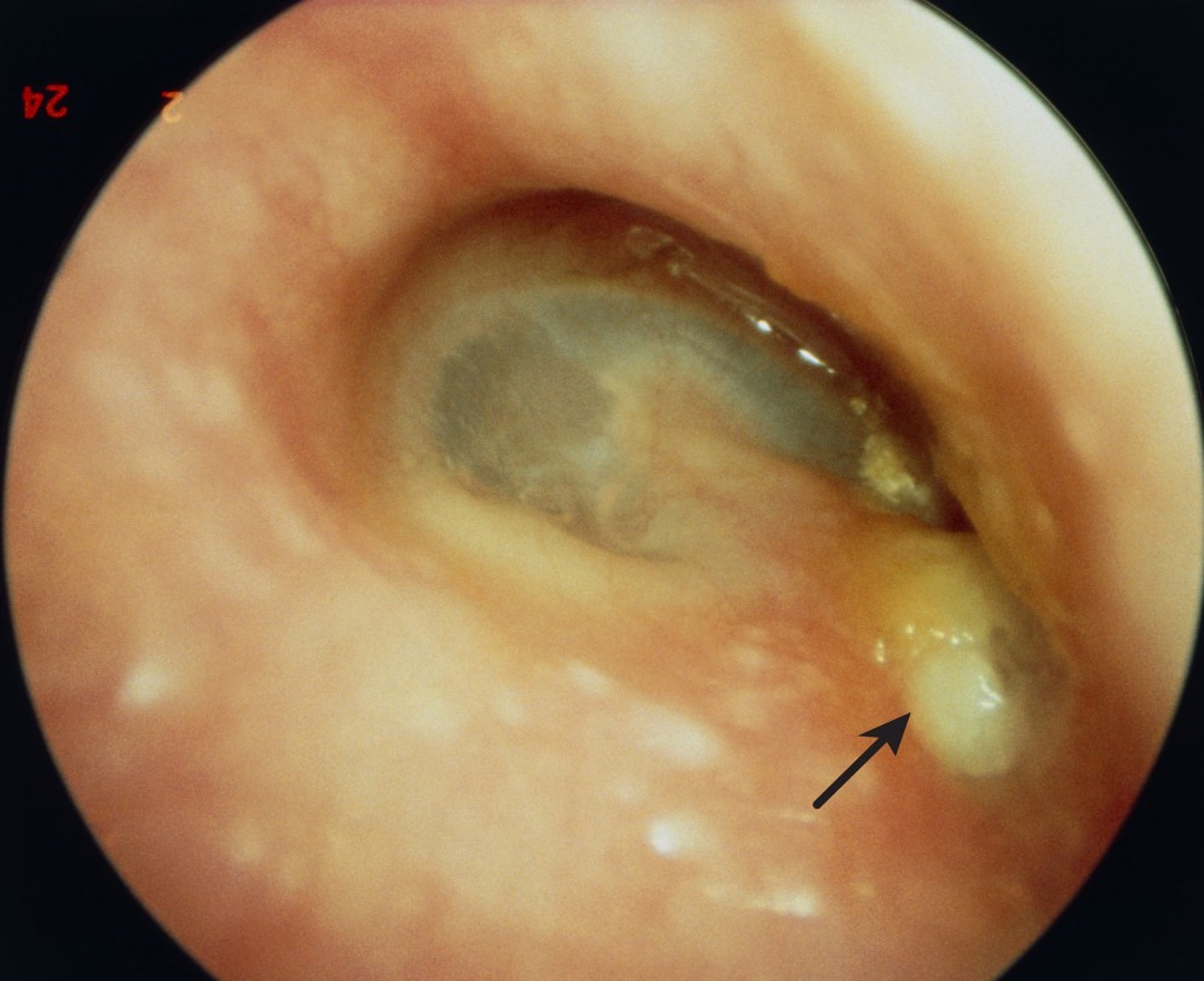
PROFESSOR TONY WRIGHT, INSTITUTE OF LARYNGOLOGY & OTOLOGY/SCIENCE PHOTO LIBRARY
Some people with chronic suppurative otitis media develop a cholesteatoma in the middle ear. A cholesteatoma is a noncancerous (benign) growth of white skinlike material. People with a cholesteatoma may have a fever, vertigo, and/or an earache. A cholesteatoma, which destroys bone, greatly increases the likelihood of other serious complications such as infections of the inner ear, facial paralysis, and brain abscesses.
Diagnosis of Chronic Suppurative Otitis Media
A doctor's evaluation
A doctor diagnoses chronic suppurative otitis media when pus or skinlike material accumulates in a hole or pocket in the eardrum and the material often drains. To identify the bacteria causing the infection, doctors take samples of the discharge from the ear.
If doctors suspect the person has a cholesteatoma, they may do computed tomography (CT) or magnetic resonance imaging (MRI) tests. In people with persistent or recurrent granulation tissue (new tissue that grows on the healing surface of the eardrum), doctors may do a biopsy to check for tumors.
Treatment of Chronic Suppurative Otitis Media
Antibiotic ear drops
Sometimes antibiotics by mouth
When chronic suppurative otitis media flares up, doctors prescribe antibiotic ear drops. People with severe flare-ups are also given antibiotics by mouth. Except for prescribed ear drops, the ear must be kept dry when a perforation is present. People are instructed to place a cotton ball lathered with petroleum jelly in their ear when they take a bath or shower to prevent water from getting in the ear. Swimming should be avoided.
Usually, the eardrum perforation can be repaired by a procedure called tympanoplasty. If the ossicles have been damaged, they may be repaired at the same time.
A cholesteatoma must be removed surgically, and the middle ear structures must be reconstructed. Otherwise, serious complications, such as polyps, damage of the ossicles or other bones, and spread of infection, can develop. Because cholesteatomas can recur, a second operation is done to check whether it has recurred before reconstruction is started


