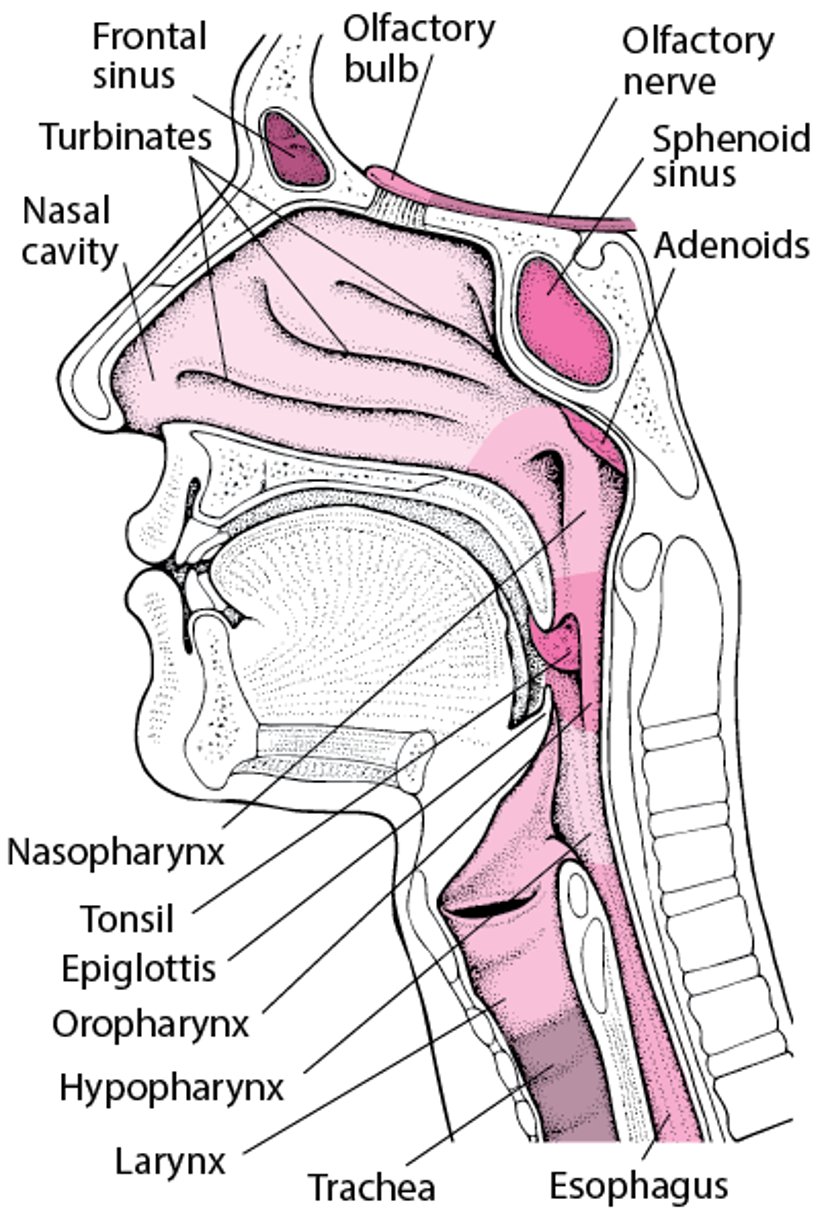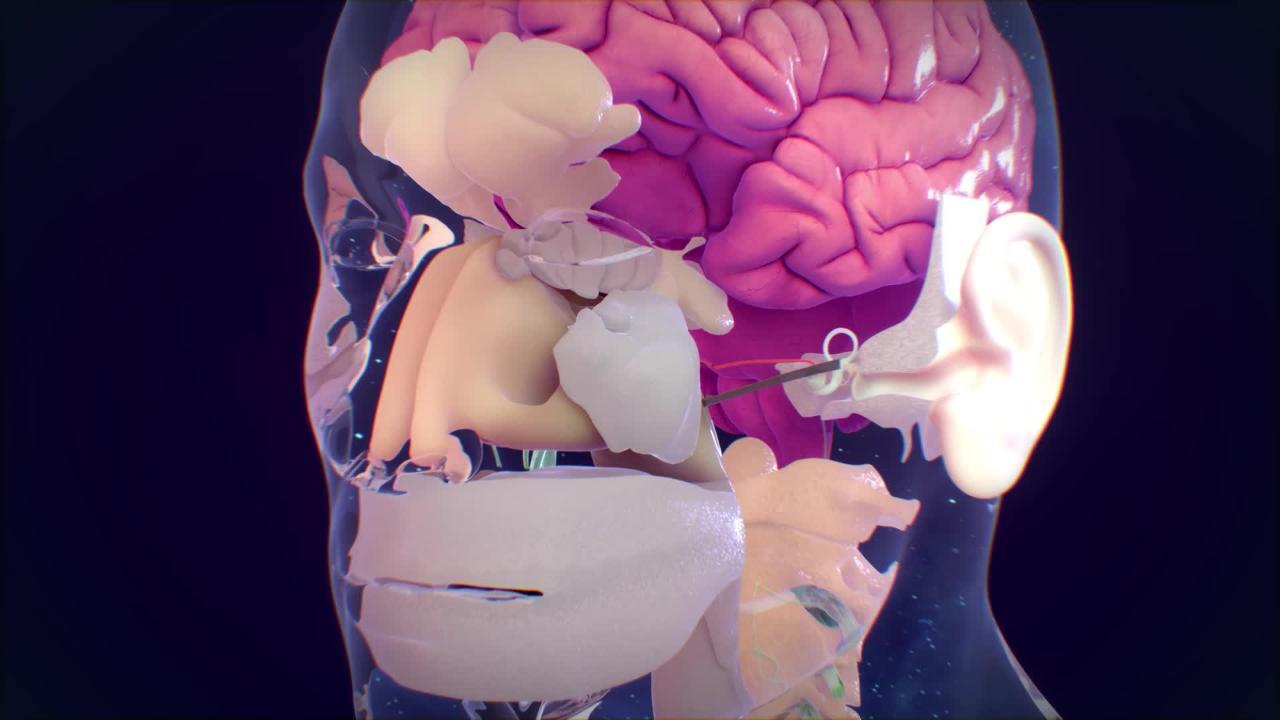
The upper part of the nose consists mostly of bone. The lower part of the nose gains its support from cartilage. Inside the nose is a hollow cavity (nasal cavity), which is divided into two passages by a thin sheet of cartilage and bone called the nasal septum. The bones of the face contain the paranasal sinuses, which are hollow cavities that open into the nasal cavity (see Nose and Sinuses).
Because of its prominent position, the nose is especially vulnerable to injury, including fractures. Bacterial nasal infections, nosebleeds, objects inserted in the nose, and polyps also can affect the nose. The mucous membrane of the nose may become inflamed (rhinitis). This inflammation may spread to the lining of the sinuses (rhinosinusitis).
A Look Inside the Nose and Throat