





Nasopharyngeal cancers are cancers originating at the back of the nasal passage, from above the soft palate to the upper part of the throat.
People often develop lumps in their neck or may have a sensation of fullness or pain in the ears and may have hearing loss.
A biopsy is needed for diagnosis, and imaging tests are done to evaluate the extent of the cancer.
Treatment involves radiation therapy, chemotherapy, and sometimes surgery.
(See also Overview of Mouth, Nose, and Throat Cancers.)
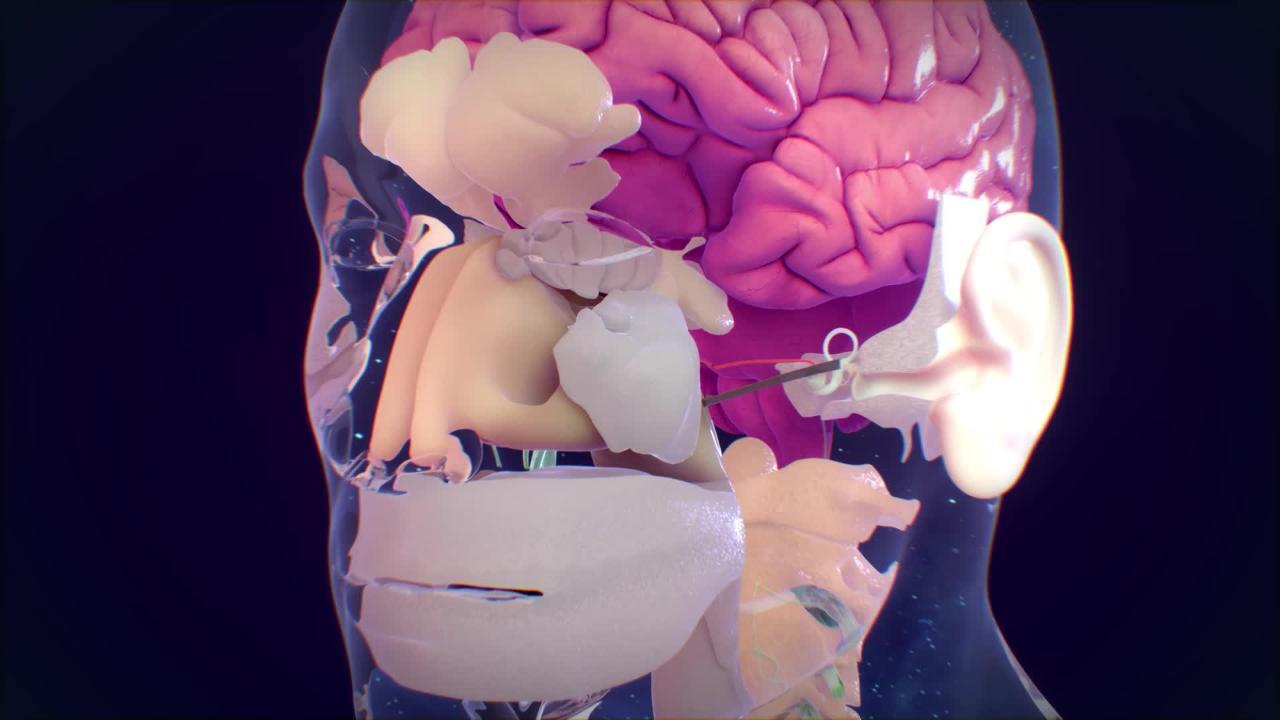
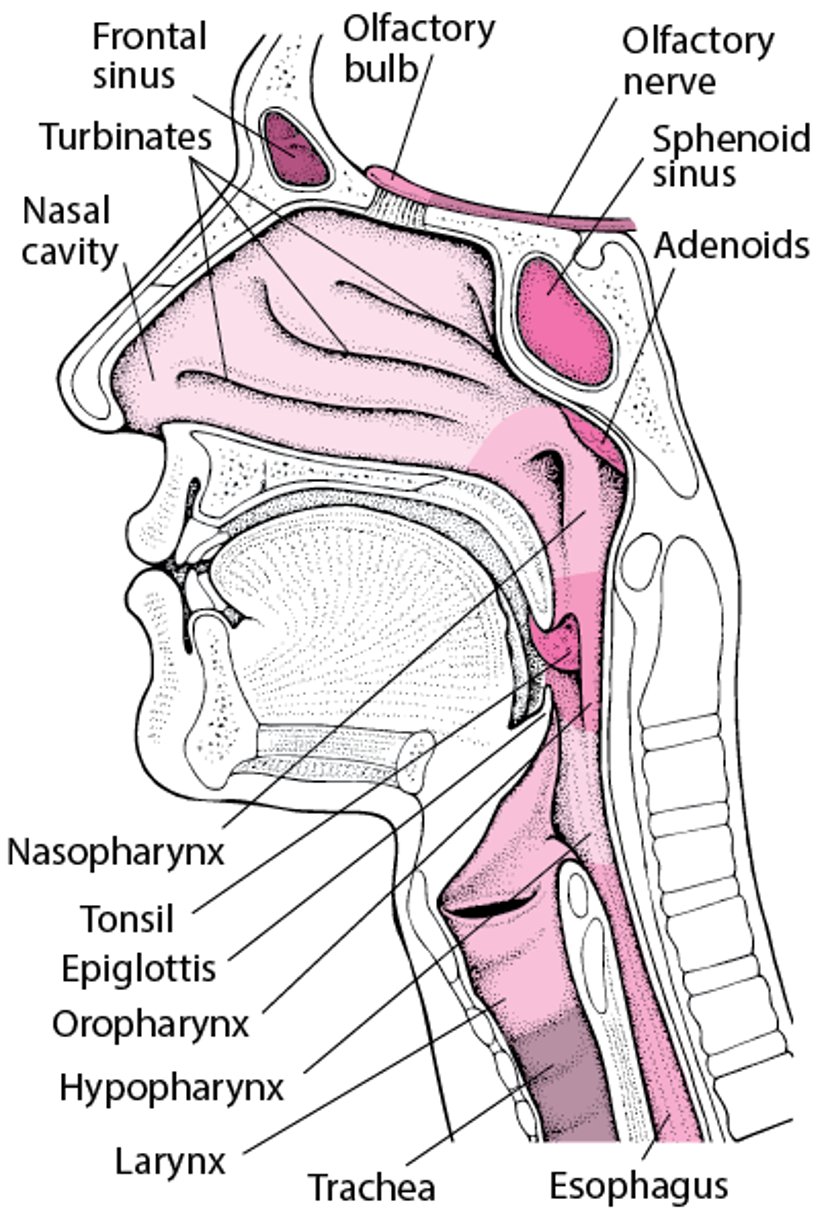
The nasopharynx includes the back of the nasal passage from above the soft palate to the upper part of the throat. Most nasopharyngeal cancers are squamous cell carcinomas, which means the cancer develops in the squamous cells that line the nasopharynx.
Nasopharyngeal cancer may occur in people of any age group. Although rare in North America, nasopharyngeal cancer is one of the most common cancers among people of China, especially those of southern Chinese, and Southeast Asian ancestry. This cancer is also more common among Chinese people who immigrated to North America than among other Americans. It is less common among American-born Chinese than their immigrant parents or grandparents.
The Epstein-Barr virus, which causes infectious mononucleosis, plays a role in the development of nasopharyngeal cancer. There is also a hereditary predisposition. In addition, children and young adults who eat large amounts of salted fish and food preserved with nitrites are more likely to develop nasopharyngeal cancer.
Locating the Nasopharynx

Symptoms of Nasopharyngeal Cancer
Most often, nasopharyngeal cancer first spreads to lymph nodes in the neck, causing lumps in the neck before other symptoms. Occasionally, persistent blockage of the nose or eustachian tubes may first cause a sensation of fullness or pain in the ears and hearing loss, particularly in one ear. If a eustachian tube is blocked, fluid may accumulate in the middle ear. A person also may have ear pain, a swollen face, a discharge of pus and blood from the nose, swollen lymph nodes, and nosebleeds. Part of the face or an eye may become paralyzed.
Diagnosis of Nasopharyngeal Cancer
Endoscopy
Biopsy
Imaging tests
To diagnose nasopharyngeal cancer, a doctor first examines the nasopharynx with a special mirror or flexible viewing tube (endoscope). If a tumor is found, a doctor does a biopsy of the tumor, in which a sample of tissue is removed and examined under a microscope. Computed tomography (CT) of the base of the skull and magnetic resonance imaging (MRI) of the head, nasopharynx, and base of the skull are done to evaluate the extent of the cancer. A positron emission tomography (PET) scan also commonly is done to assess the extent of the cancer and the lymph nodes in the neck.
Prognosis for Nasopharyngeal Cancer
Early treatment improves the prognosis of nasopharyngeal cancer significantly. About 60 to 75% of people with early-stage cancer have a good outcome and survive at least 5 years after the diagnosis. Less than 40% of people with stage IV cancer survive at least 5 years after the diagnosis.
Treatment of Nasopharyngeal Cancer
Radiation therapy
Chemotherapy
Sometimes surgery
In nasopharyngeal cancer, the tumor is treated with radiation therapy and chemotherapy because tumors in the nasopharynx are very difficult to remove using surgery. If the tumor recurs, radiation therapy is done again or, in very specific situations, surgery may be tried. This surgery is complex, however, because it typically involves removing part of the base of the skull. This surgery is sometimes done through the nose using an endoscope. In certain cases, this approach is just as effective as more invasive surgery and causes fewer complications.
More Information
The following English-language resource may be useful. Please note that THE MANUAL is not responsible for the content of this resource.
American Cancer Society: Nasopharyngeal cancer


