





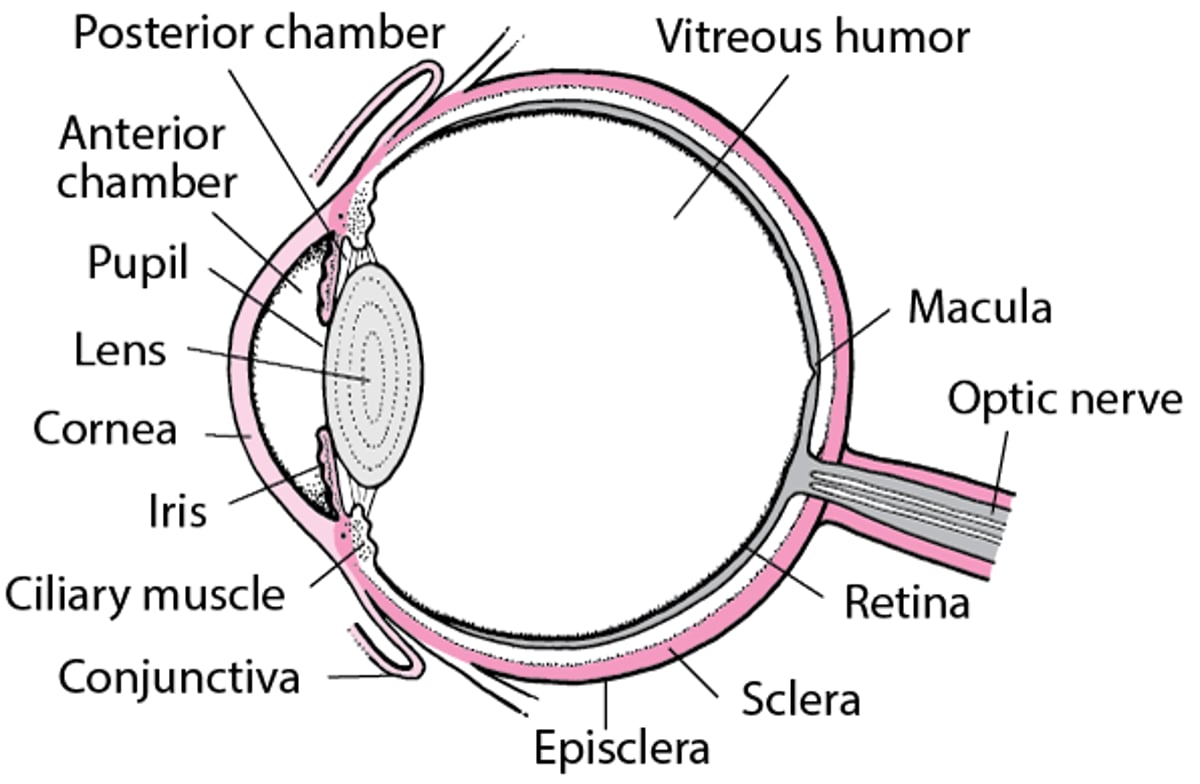
Superficial punctate keratitis is an eye disorder caused by death of small groups of cells on the surface of the cornea (the clear layer in front of the iris and pupil).
The eyes become red, watery, and sensitive to light, and vision may decrease somewhat.
Doctors diagnose superficial punctate keratitis based on the person's symptoms and the results of an eye examination.
Most people recover fully.
Symptoms can often be relieved with eye drops or ointments.
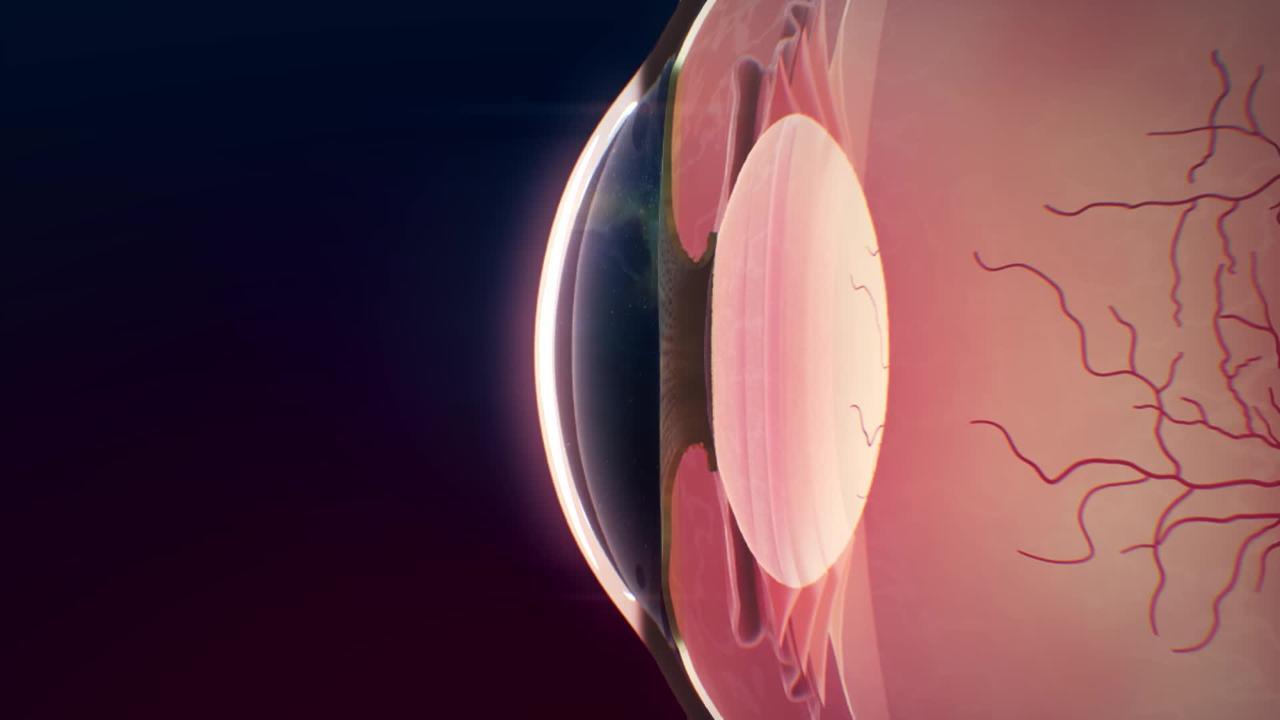
An Inside Look at the Eye

The cause of superficial punctate keratitis may be any of the following:
A viral infection
A bacterial infection (including trachoma)
Dry eyes
Strong chemicals splashed in the eye
Exposure to ultraviolet light (sunlight, sunlamps, or welding arcs)
Prolonged use of contact lenses
An allergy to eye drops
Blepharitis (eyelid inflammation)
A side effect of certain drugs taken by mouth (orally) or by vein (intravenously)
Symptoms of Superficial Punctate Keratitis
In superficial punctate keratitis, the eyes are usually painful, watery, sensitive to bright light, and bloodshot, and vision may be slightly blurred. Often there is a burning, gritty feeling or a feeling as if a foreign object is trapped in the eye.
When ultraviolet light causes the disorder, symptoms usually do not occur until several hours after exposure, and they last for 1 to 2 days.
When a virus causes the disorder, a lymph node in front of the ear on the affected side may be swollen and tender.
Diagnosis of Superficial Punctate Keratitis
A doctor's evaluation
The diagnosis of superficial punctate keratitis is based on the symptoms, on whether the person has been exposed to any of the known causes, and on an examination of the cornea with a slit lamp
Treatment of Superficial Punctate Keratitis
Treatment depends on the cause
Almost everyone who has this disorder recovers completely.
When the cause is a virus (other than a herpes simplex eye infection or herpes zoster of the eye [shingles]), no treatment is needed, and recovery usually occurs within 3 weeks.
When the cause is a bacterial infection or prolonged use of contact lenses, antibiotics are used, and the wearing of contact lenses is temporarily discontinued.
When the cause is dry eyes, ointments and artificial tears are effective. Artificial tears are eye drops prepared with substances that simulate real tears or with substances that when added to the person’s tears coat the eye with more moisture.
When the cause is exposure to ultraviolet light, an antibiotic ointment and an eye drop that dilates the pupil may provide relief.
When the cause is a drug reaction or an allergy to eye drops, the drug or eye drops must be discontinued.


