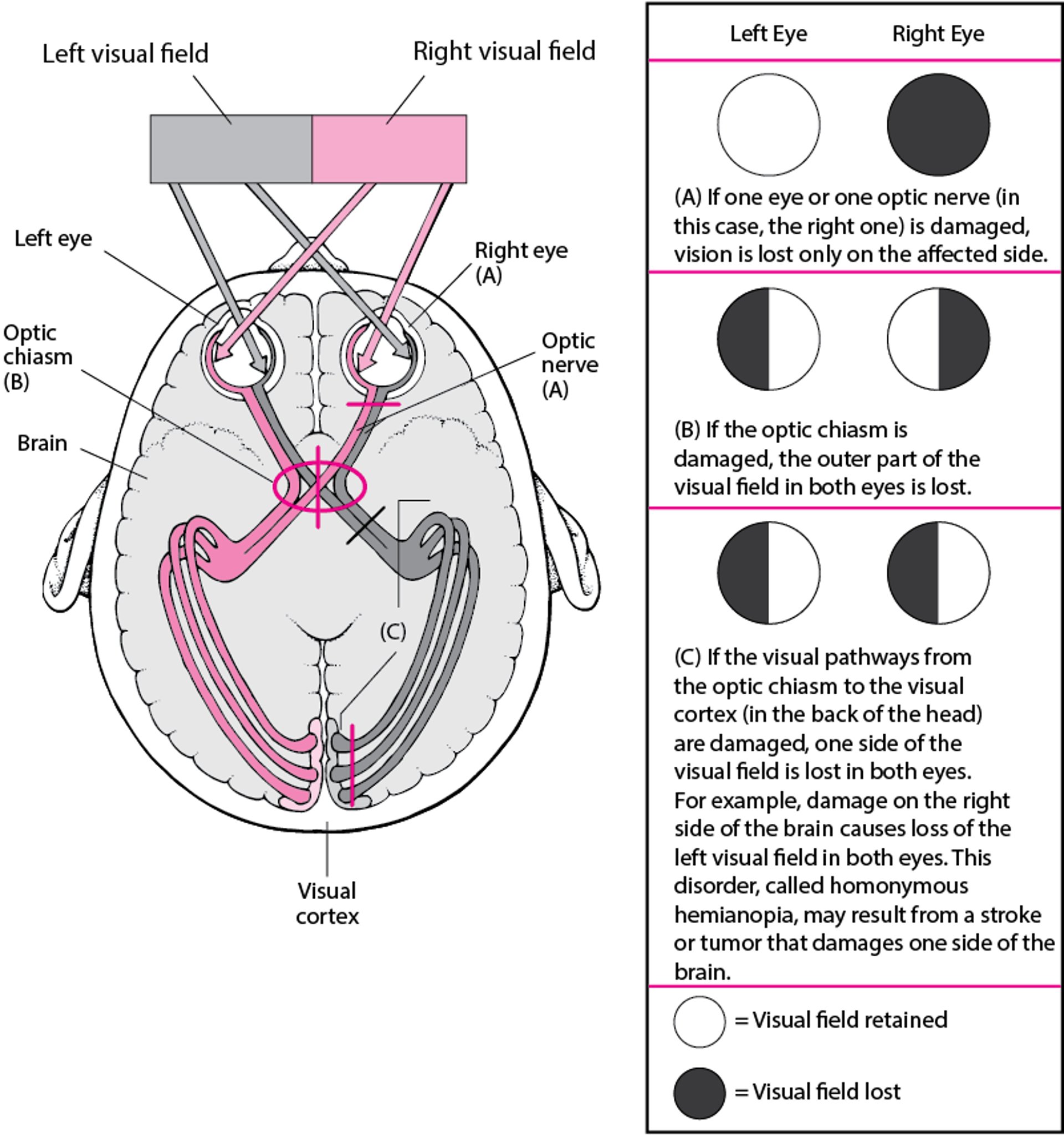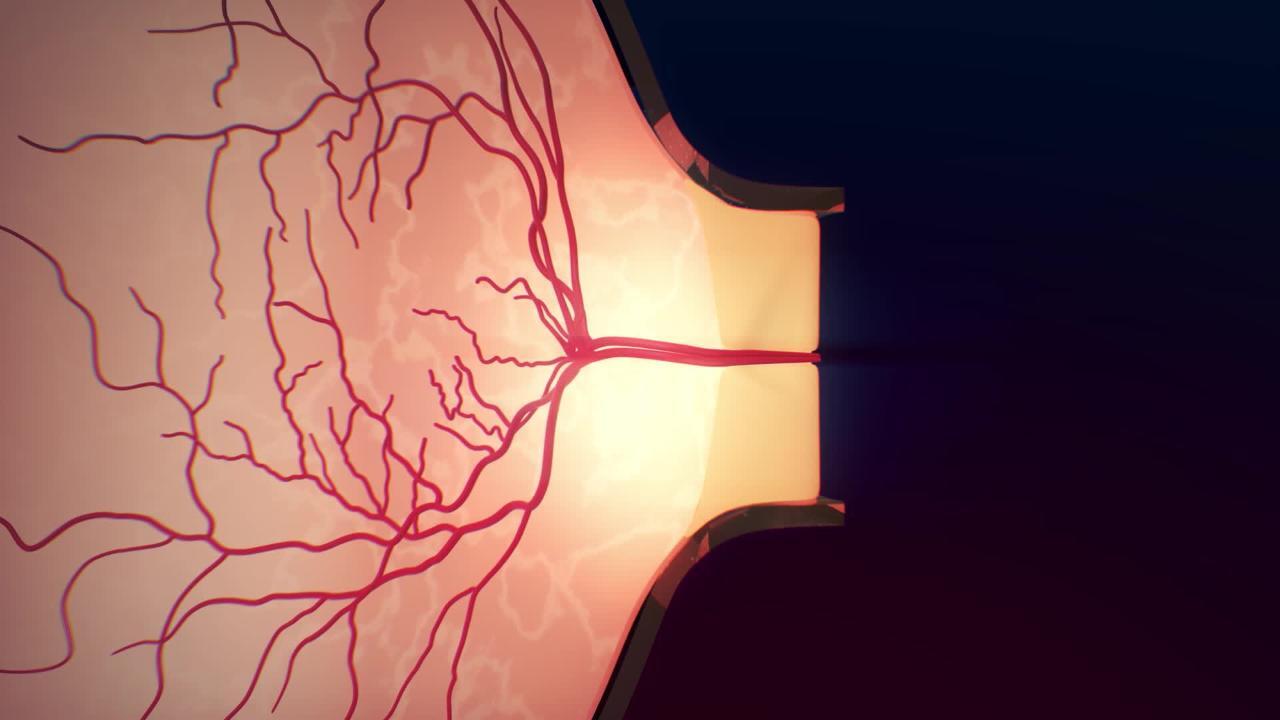
The small photoreceptor cells of the retina (the inner surface at the back of the eye) sense light and transmit impulses to the optic nerve. The optic nerve from each eye carries impulses to the brain, where visual information is interpreted.
Damage to an optic nerve or damage to its pathways to the brain results in loss of vision. At a structure in the brain called the optic chiasm, each optic nerve splits, and half of its fibers cross over to the other side. Because of this anatomic arrangement, damage along the optic nerve pathway causes specific patterns of vision loss. By understanding the pattern of vision loss, a doctor can often determine where the problem is in the pathway.
Visual Pathways and the Consequences of Damage
Nerve signals travel along the optic nerve from each eye. The two optic nerves meet at the optic chiasm. There, the optic nerve from each eye divides, and half of the nerve fibers from each side cross to the other side. Because of this arrangement, the right side of the brain receives information from the left visual field of both eyes, and the left side of the brain receives information from the right visual field of both eyes. Damage to an eye or the visual pathway causes different types of vision loss depending on where the damage occurs. |