





The kidneys and the rest of the urinary tract (the bladder, ureters [tubes that carry urine from the kidneys to the bladder], and urethra [the tube through which urine flows out of the body]) may become injured in a number of ways. Examples include injuries due to a blunt force (most commonly motor vehicle crashes, falls, or sports injuries) or a penetrating force (most commonly gunshot or stab wounds), or surgery. Injuries to the urinary tract often occur together with injuries to other organs, especially abdominal organs. In men, the penis and testes may also be injured.
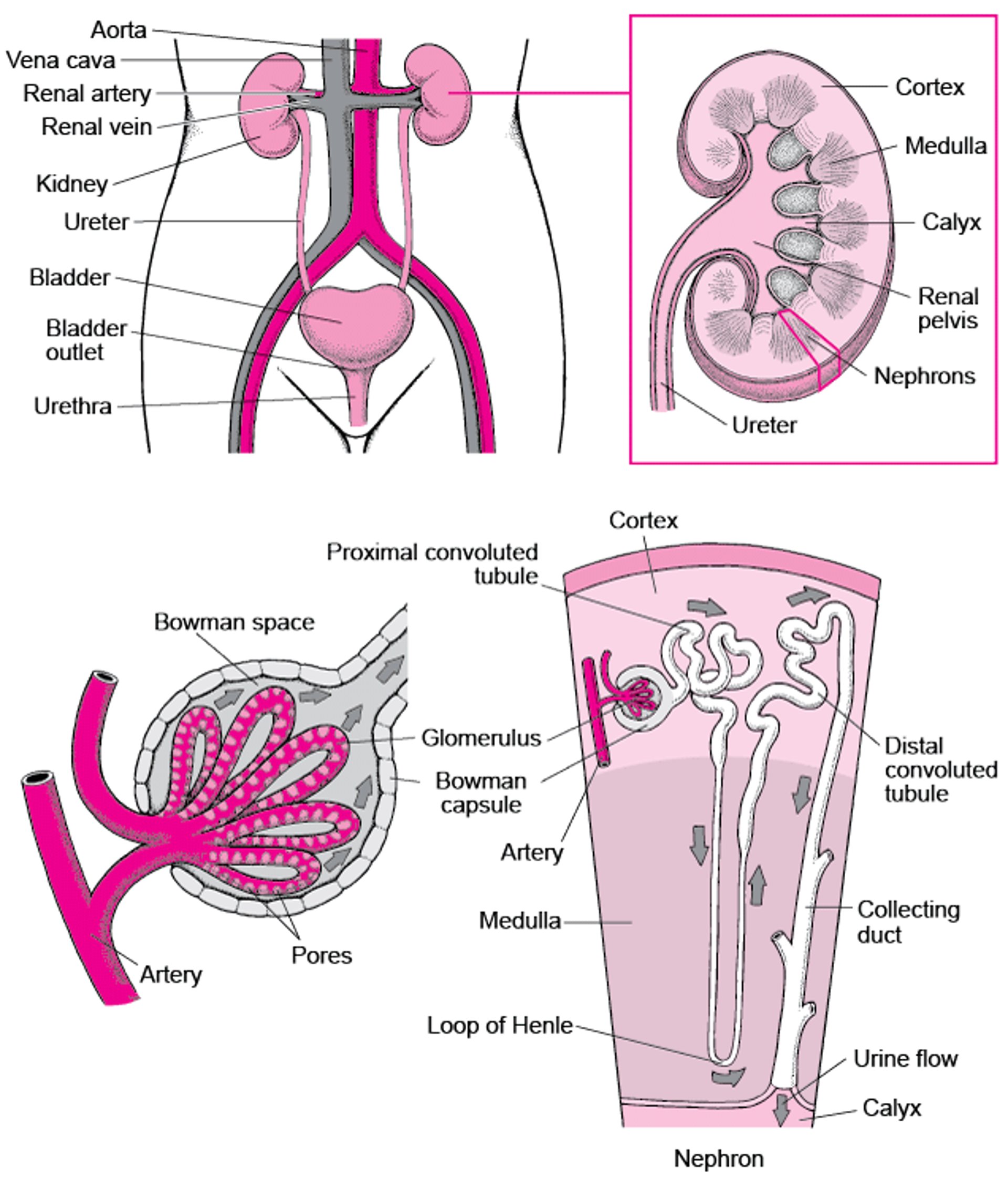
Organs of the Urinary Tract
The urinary tract consists of the kidneys, ureters (tubes that carry urine from the kidneys to the bladder), bladder, and urethra (the tube through which urine flows out of the body). These organs may be injured by blunt force (as occurs in a motor vehicle crash or a fall) or by penetrating force (as results from a gunshot or stabbing). Injuries may also occur unintentionally during surgery. |

Because the function of the kidneys is to continuously filter out metabolic wastes from the blood and remove them from the body through the urinary tract, injuries to the kidneys or urinary tract can lead to the inability to perform these functions (kidney failure). Other complications of injury include bleeding, leakage of urine from the urinary tract into surrounding tissues, and infection. Preventing permanent damage to the urinary tract and even death may depend on prompt diagnosis and treatment.


