





Prostatitis is pain and swelling, often with inflammation, of the prostate gland.
The cause is sometimes a bacterial infection.
Pain can occur in the area between the scrotum and anus or in the lower back, penis, or testes.
Men feel a frequent, urgent need to urinate, and urination, erection, ejaculation, and defecation may be painful.
Urine and sometimes fluids expressed from the prostate gland are cultured.
Bacterial infection is treated with antibiotics.
Symptoms of prostatitis, regardless of the cause, may be treated with warm sitz baths, relaxation techniques, and medications.
The prostate is a gland in men that lies just under the bladder and surrounds the urethra. The gland, along with the nearby seminal vesicles, produces much of the fluid that makes up a man's ejaculate (semen). The prostate is walnut-sized in young men but enlarges with age.
Male Reproductive Organs

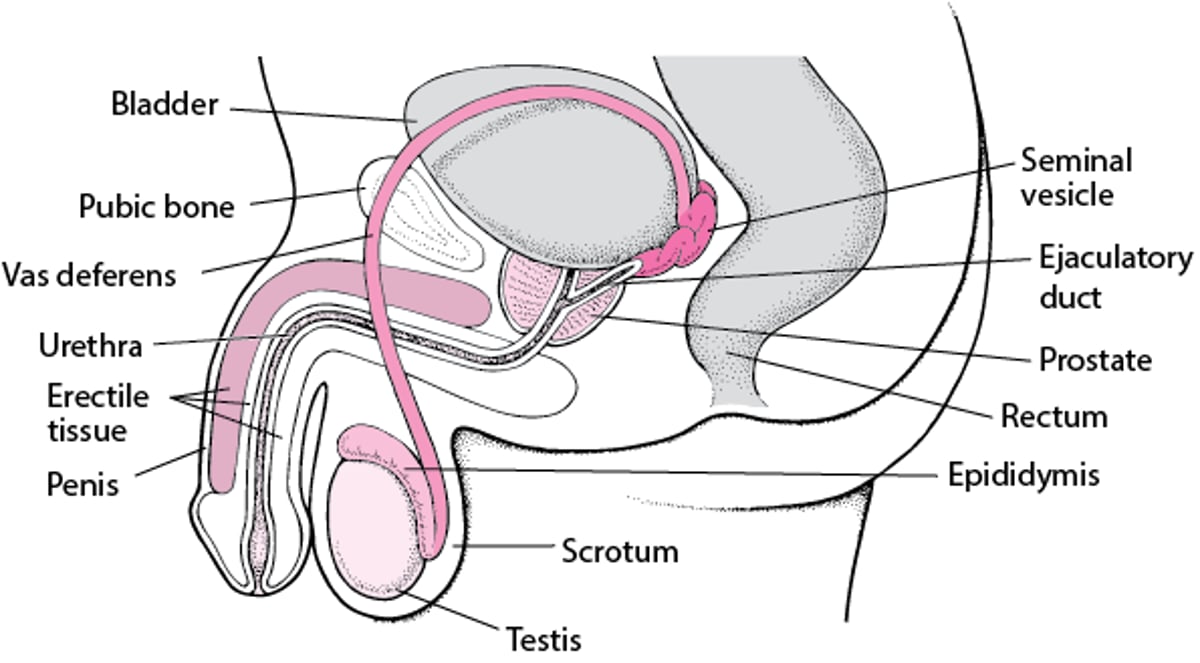
Prostatitis usually develops for unknown reasons. Prostatitis can result from a bacterial infection that spreads to the prostate from the urinary tract or from bacteria in the bloodstream. Bacterial infections may develop slowly and tend to recur (chronic bacterial prostatitis) or develop rapidly (acute bacterial prostatitis).
Some men develop chronic prostatitis in the absence of bacterial infection. This type usually, but not always, involves inflammation. Occasionally, prostatitis without bacterial infection causes inflammation but no symptoms.
Symptoms of Prostatitis
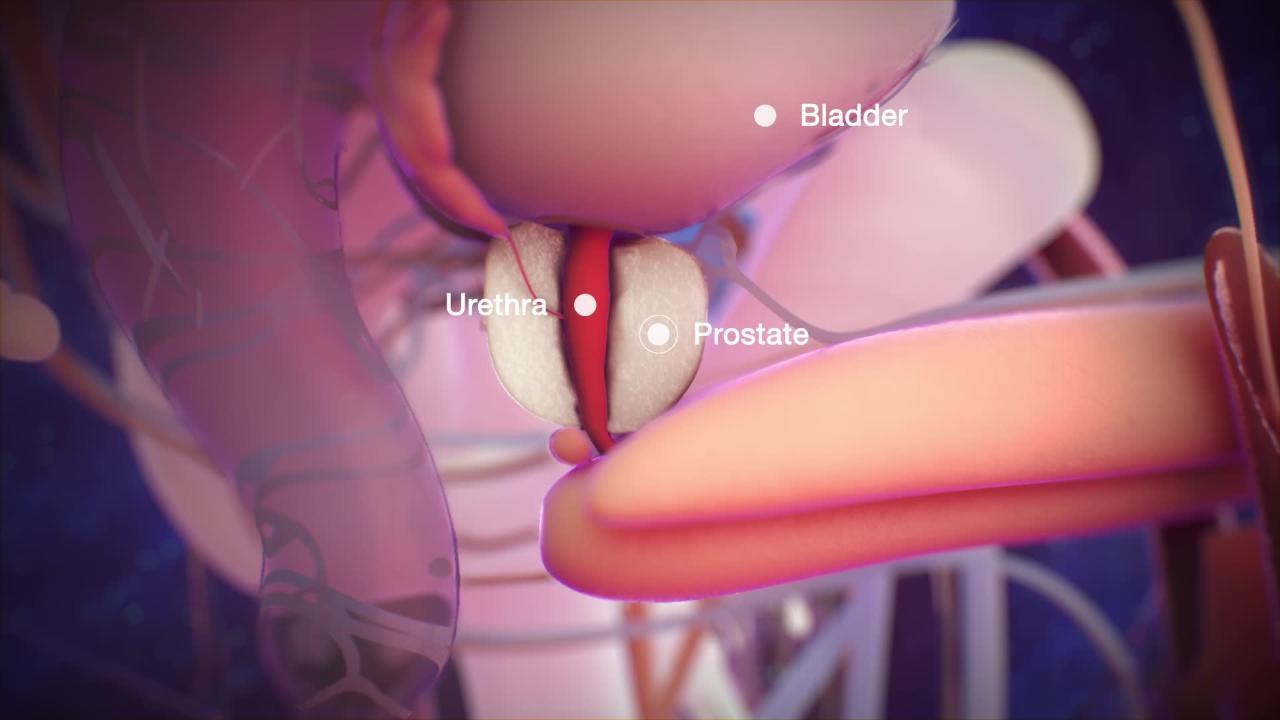
In all types of prostatitis that cause symptoms, many of the symptoms are caused by spasm of the muscles in the bladder and pelvis, especially in the area between the scrotum and the anus (the perineum). Pain develops in the perineum, the lower back, and often the penis and testes. Men also may need to urinate frequently and urgently, and urinating may cause pain or burning. Pain may make obtaining an erection or ejaculating difficult or even painful. Constipation can develop, making defecation painful.
With acute bacterial prostatitis, symptoms tend to be more severe. Some symptoms tend to occur more often, such as fever and chills, difficulty urinating, and blood in the urine. Bacterial prostatitis can result in a collection of pus (abscess) in the prostate or in epididymitis (inflammation of the epididymis).
Diagnosis of Prostatitis
Physical examination
Urinalysis and urine culture
The diagnosis of prostatitis is usually based on the symptoms, physical examination findings, and results of a urine analysis (urinalysis) and urine culture. The prostate, examined through the rectum by a doctor, may be swollen and tender to the touch, particularly in men with acute bacterial prostatitis. Samples of urine and, sometimes, of fluids expressed from the penis after massaging the prostate during the examination are taken for analysis and culture.
Urinalysis may reveal white blood cells, indicating inflammation, and/or bacteria, indicating infection. Urine cultures reveal bacterial infections located anywhere in the urinary tract. In contrast, when infection is found by culturing fluid from the prostate, the prostate is clearly the cause of the infection. When prostatitis occurs without bacterial infection, urine cultures reveal no infection.
Sometimes imaging tests or other tests are needed to exclude other causes of the symptoms.


Treatment of Prostatitis
With bacterial infection, antibiotics
Without infection, treatments to relieve symptoms, such as prostate massage, sitz baths, biofeedback, and medications, and procedures
No infection
When cultures reveal no bacterial infection, prostatitis is usually difficult to cure. Most treatments for this kind of prostatitis relieve symptoms but may not cure the prostatitis. These treatments for symptoms can also be tried in chronic bacterial prostatitis. However, it is not clear how effective these treatments are.
Treatments without medications may include periodic prostate massage (done by a doctor by placing a finger in the rectum) and sitting in a warm sitz bath. Relaxation techniques (biofeedback) to relieve spasm and pain of the pelvic muscles have also been used.
Among medication therapies, stool softeners can relieve painful defecation resulting from constipation. Analgesics and anti-inflammatory medications may relieve pain and swelling regardless of its source. Alpha-adrenergic blockers (such as doxazosin, terazosin, tamsulosin, alfuzosin, and silodosin) may help relieve symptoms by relaxing the muscles within the prostate. For reasons that are not understood, antibiotics sometimes relieve symptoms in nonbacterial prostatitis. Among medication therapies, stool softeners can relieve painful defecation resulting from constipation. Analgesics and anti-inflammatory medications may relieve pain and swelling regardless of its source. Alpha-adrenergic blockers (such as doxazosin, terazosin, tamsulosin, alfuzosin, and silodosin) may help relieve symptoms by relaxing the muscles within the prostate. For reasons that are not understood, antibiotics sometimes relieve symptoms in nonbacterial prostatitis.
If symptoms are severe despite other treatments, surgery, such as partial removal of the prostate, may be considered as a last resort. Delivering electrical impulses to nerves in the pelvis and injecting botulinum toxin into muscles, bladder, and other structures near the prostate are alternatives to surgery.
Infection
To treat acute bacterial prostatitis, an antibiotic that can penetrate prostate tissue (such as ciprofloxacin or trimethoprim/sulfamethoxazole) is taken for at least 30 days. Taking antibiotics for less time may lead to a chronic infection. Most men can be treated at home and take an antibiotic by mouth, but occasionally men with severe infection need to be hospitalized and given an antibiotic through a vein. To treat acute bacterial prostatitis, an antibiotic that can penetrate prostate tissue (such as ciprofloxacin or trimethoprim/sulfamethoxazole) is taken for at least 30 days. Taking antibiotics for less time may lead to a chronic infection. Most men can be treated at home and take an antibiotic by mouth, but occasionally men with severe infection need to be hospitalized and given an antibiotic through a vein.
Chronic bacterial prostatitis can be difficult to cure. It is treated for at least 6 weeks with an antibiotic that can penetrate prostate tissue.
If a prostate abscess occurs, surgical drainage is usually necessary.


