The female reproductive system consists of the external genital organs and internal genital organs. Other parts of the body also affect the development and functioning of the reproductive system. They include the following:
Hypothalamus (an area of the brain)
Pituitary gland (located at the base of the brain, directly below the hypothalamus)
Adrenal glands (located on top of the kidneys)
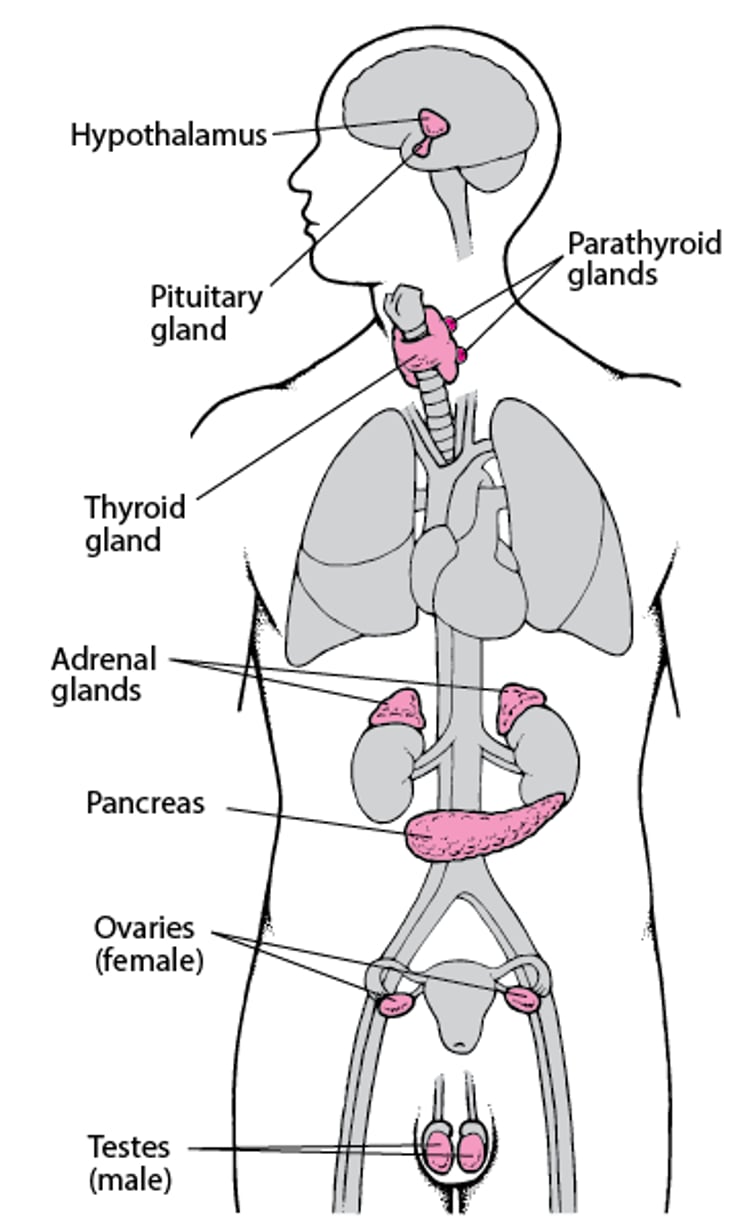
The hypothalamus orchestrates the interactions among the genital organs, pituitary gland, and adrenal glands to regulate the female reproductive system (see figure Major Endocrine Glands). These parts of the body interact with each other by releasing hormones. Hormones are chemical messengers that control and coordinate activities in the body.
The hypothalamus produces gonadotropin-releasing hormone, which stimulates the pituitary gland to produce luteinizing hormone and follicle-stimulating hormone. These hormones stimulate the ovaries to produce the female sex hormones, estrogen and progesterone, and some male sex hormones (androgens). (Male sex hormones stimulate the growth of pubic and underarm hair at puberty and maintain muscle mass in girls as well as boys.) After childbirth, the hypothalamus signals the pituitary gland to produce prolactin, a hormone that stimulates milk production.
The adrenal glands produce small amounts of female and male sex hormones.
Major Endocrine Glands
The major glands of the endocrine system are the hypothalamus, the pituitary gland, the thyroid gland, the parathyroid glands, the islet cells of the pancreas, the adrenal glands, the testes in men, and the ovaries in women. |