





Infertility is a disease defined by the inability to achieve a pregnancy and/or the need for medical intervention to achieve a successful pregnancy.
Infertility is defined as disease by the World Health Organization (WHO) and the American Society for Reproductive Medicine (ASRM). Women under 35 years old without any known cause for infertility in her or her partner should be evaluated by a doctor after having regular, unprotected sexual intercourse for 12 months. Women 35 years or older should be evaluated after 6 months.
Frequent intercourse without birth control usually results in pregnancy:
For 70% of couples within 3 months
For 80% within 6 months
For 90% within 1 year
To maximize the chance of pregnancy, couples should have frequent intercourse in the 6 days—and particularly in the 3 days—before the ovaries release an egg (ovulation). Ovulation usually occurs in the middle of the menstrual cycle, which is about 14 days before the first day of a women's next menstrual period.
Two of the more common methods women can use to estimate when ovulation occurs are
Home ovulation prediction kits (probably the best way)
Measurement of body temperature at rest (basal body temperature)
Home ovulation prediction kits are the most accurate method that can be used at home, but they are not 100% accurate so some ovulations may be missed. These kits are used to detect an increase in luteinizing hormone in the urine. (Luteinizing hormone stimulates the ovaries to trigger ovulation.) Usually, this increase occurs 24 to 36 hours before ovulation. Women usually need to repeat the test for several consecutive days, so kits typically include five to seven sticks. The sticks can be held under a stream of urine or dipped into urine that is collected in a clean container.
Basal body temperature measurement is another option. If women have regular periods, measuring their temperature each day before they get out of bed can help estimate when ovulation is occurring. A decrease suggests that ovulation is about to occur. An increase of 0.9° F (0.5° C) or more suggests ovulation has just occurred. However, this method is time-consuming and is not reliable or precise. At best, it predicts ovulation within 2 days after the fact.

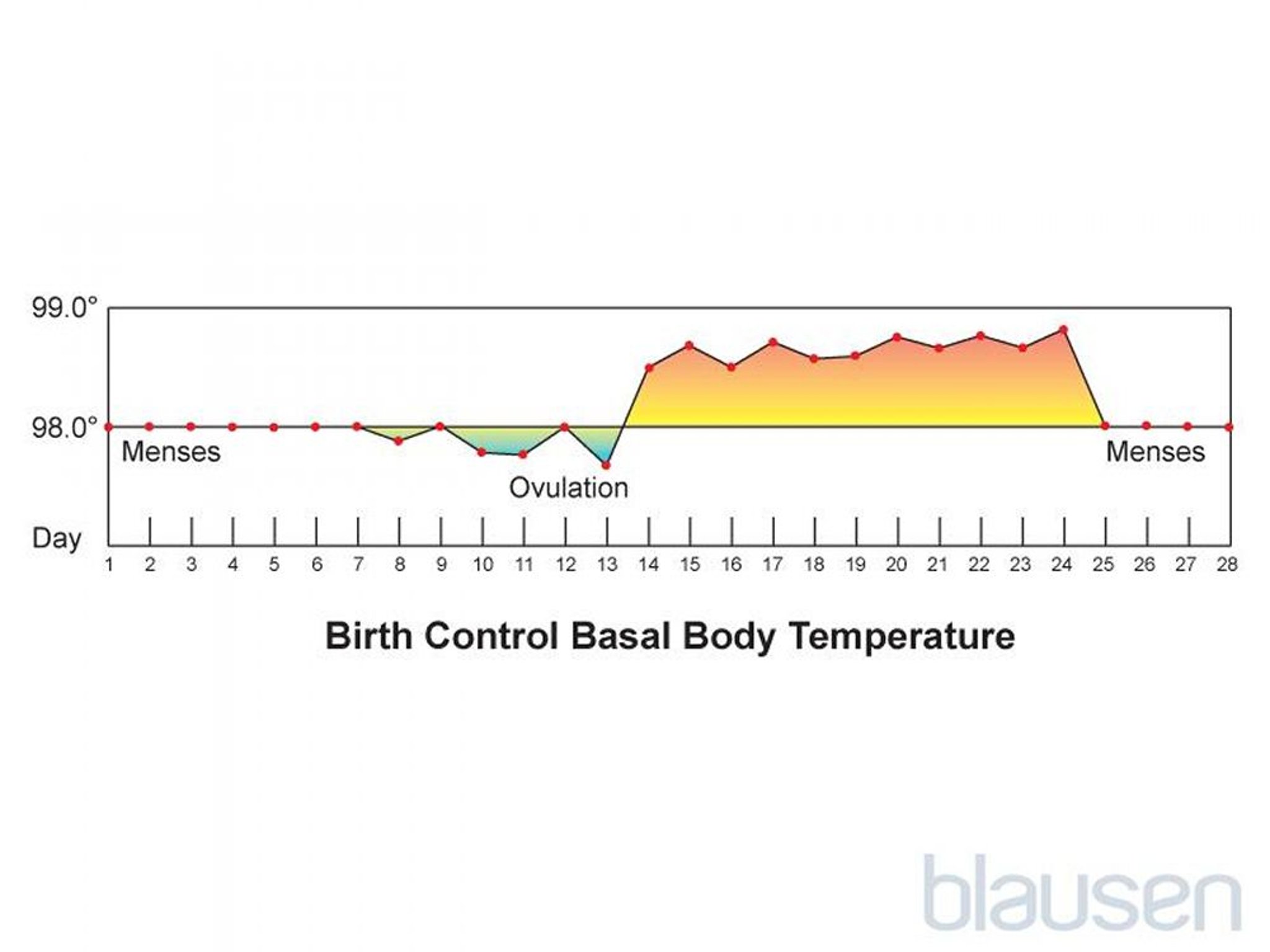
Estimating when ovulation occurs (thereby estimating when the best time for intercourse is) may be particularly helpful for couples who do not have intercourse regularly.
Causes of Infertility
The cause of infertility may be due to problems in the male partner, the female partner, or both. The cause may be a disease or other issue with a person's reproductive function, such as problems with:
Sperm (20 to 35% of couples)
Ovulation (20 to 25%)
Number of healthy eggs in the ovaries (increases with age)
Endometriosis (up to 40%)
Fallopian tubes (up to 65%)
Abnormalities of the uterus (such at uterine fibroids) or other pelvic abnormalities (2% or more)
Cervical mucus (about 3%)
Unidentified factors (15 to 25%)
Most studies have reported that men over 45 years old are less fertile than younger men.
Diagnosis of Infertility
A doctor's evaluation
Various tests depending on the suspected cause
The diagnosis of infertility requires a thorough assessment of both partners. Usually, the assessment is done after at least 1 year of trying to achieve a pregnancy. However, it is done sooner if
A woman is over age 35 (usually after 6 months of trying to become pregnant).
A woman's menstrual periods occur infrequently.
A woman has a previously identified abnormality of the uterus, fallopian tubes, or ovaries (including, for example, having only 1 ovary).
Doctors have identified or suspect problems with sperm in a man.
Tests are usually done for both prospective parents to figure out the cause. Tests may include
Blood tests: To measure the hormones involved in the release of eggs (ovulation) by the ovaries, such as follicle-stimulating hormone
Ultrasonography or other imaging tests: To check for abnormalities of the uterus or fallopian tubes
Semen analysis: To check for sperm disorders
Treatment of Infertility
Treatment of the cause
Sometimes medications
Sometimes assisted reproductive technologies
Making changes to remove or decrease the effect of risk factors, such as smoking cessation
Even when no specific cause of infertility can be identified, prospective parents may still benefit from treatment. In such cases, women may be given medications that stimulate several eggs to mature and be released—fertility medicationsproblems with ovulation.
Alternatively, doctors may use assisted reproductive technologies or other procedures, such as the following:
Intrauterine insemination involves selecting only the most active sperm, which are then placed directly in the uterus.
In vitro fertilization (IVF) involves stimulating the ovaries, retrieving the mature eggs, fertilizing them with sperm in culture dishes (in vitro), growing the embryos in the culture, and implanting 1 or more embryos in a woman's uterus.
Fertility medications and assisted reproductive technologies may result in a multiple gestation (such as twins or triplets).
People with infertility may also make changes to minimize certain risk factors. For example, smoking cessation for people who smoke, weight loss for patients who are overweight, no or moderate consumption of alcohol, and consumption of a balanced diet (with vitamins if needed) are recommended.
While a couple is being treated for infertility, 1 or both partners may experience frustration, emotional stress, feelings of inadequacy, and guilt. They may alternate between hope and despair. Feeling isolated and unable to communicate, they may become angry at or resentful toward each other, family members, friends, or the doctor. The emotional stress can lead to fatigue, anxiety, sleep or eating disturbances, and an inability to concentrate. In addition, the financial burden and time commitment involved in diagnosis and treatment can cause relationship stress.
Managing the stress of infertility treatment can be improved if both partners are involved in the process and receive information about the treatment process (including how long it takes). Knowing what to expect and the chances of success can help prospective parents cope with the stress.
Some questions to ask before or during treatment include
When to end treatment
When to seek a second opinion
When to consider adoption
For example, if pregnancy has not occurred after 3 years of attempting it or after 2 years of being treated for infertility, the chance of pregnancy is very low.
Counseling and psychological support, including support groups such as RESOLVE and Family Equality, can help.
More Information
The following English-language resources may be useful. Please note that THE MANUAL is not responsible for the content of these resources.
World Health Organization (WHO): Infertility: Information about the definition of infertility and estimated global prevalence rates
RESOLVE: The National Infertility Association: General information about infertility, possible treatments and solutions (such as adopting or using a surrogate), and financial issues, as well as links to support groups, ways to manage stress, advice for friends and family, and resources to help LGBTQ+ people have children
Family Equality: Information about becoming pregnant, (including costs) and about adoption, parenting, and legal issues pertaining to the LGBTQ community


