





Cervical insufficiency is painless opening of the cervix that results in delivery of the baby during the second trimester of pregnancy.
Connective tissue disorders that are present at birth and injuries can make tissues of the cervix weak.
When the cervix is weak, the baby may be delivered too early.
Cervical insufficiency is identified only after a woman becomes pregnant.
To prevent early delivery, doctors may stitch the cervix closed (cerclage).
Normally, the cervix (the lower part of the uterus) opens (dilates) only when labor starts, in response to contractions of the uterus. However, in some women, tissues of the cervix are weak. As a result, the cervix may open (dilate) without contractions long before the baby is due, and the baby may be delivered too early.
Cervical insufficiency is estimated to affect one of 100 to 2,000 women.
Locating the Cervix

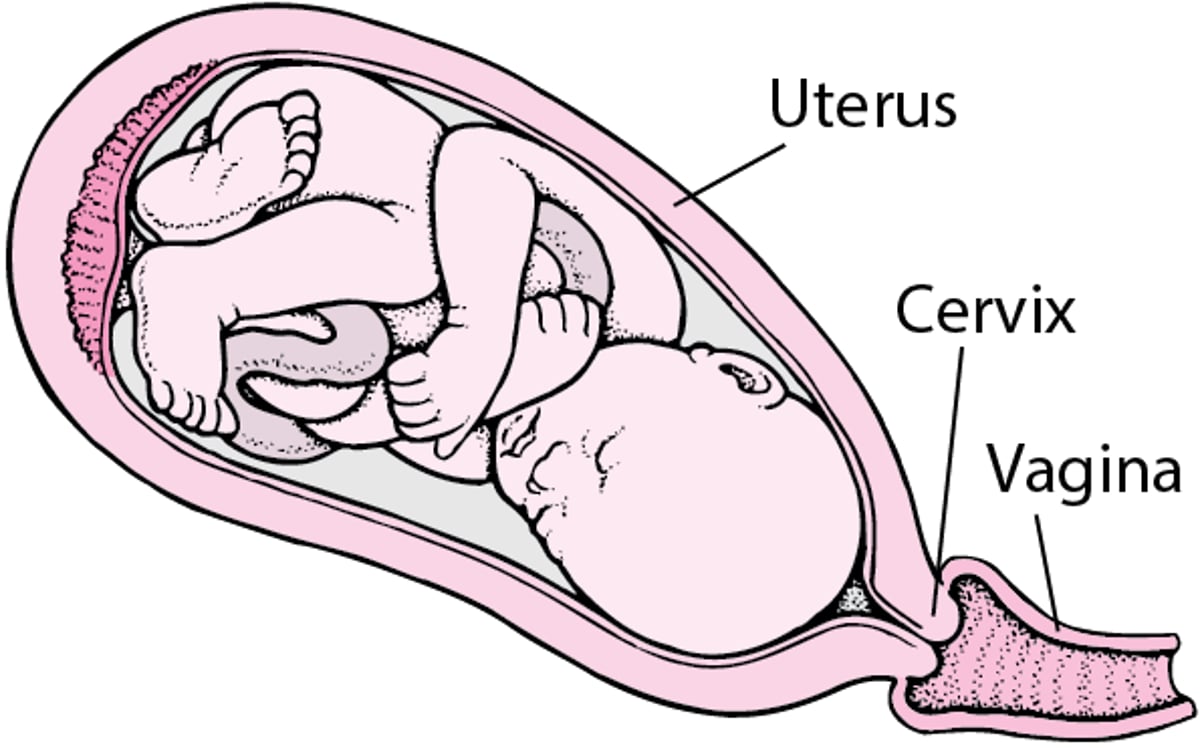
If a woman has cervical insufficiency in one pregnancy, she is likely to have it in future pregnancies.
Causes of Cervical Insufficiency
What causes the cervix to be weak is not well understood. It may involve a combination of structural abnormalities and factors such as infection.
Conditions that increase the risk of having a weak cervix (risk factors) include
A connective tissue disorder present at birth (congenital), such as Ehlers-Danlos syndrome
An injury to the cervix
Birth defects of the uterus, including müllerian duct defects (for example, a uterus that is not shaped normally)
Two or more previous miscarriages during the second trimester
The cervix may be injured during a previous delivery. It may also be injured when a large piece of tissue is removed from the cervix for a biopsy (called a cone biopsy) or when cervical cancer is treated.
Most women with cervical insufficiency do not have any of the above conditions.
Symptoms of Cervical Insufficiency
Many women have no symptoms until the baby is delivered early. Other women have symptoms earlier. These symptoms may include pressure in the vagina, vaginal bleeding or spotting, vague pain in the abdomen or lower back, and a vaginal discharge. However, cervical insufficiency does not cause contractions or labor pains.
Diagnosis of Cervical Insufficiency
Ultrasonography
Cervical insufficiency is usually not identified until a woman delivers a baby too soon.
Doctors suspect cervical insufficiency when a woman has symptoms or risk factors for a weak cervix, such as a previous miscarriage during the second trimester.
Doctors may also suspect cervical insufficiency during a routine examination during pregnancy when they see that the cervix has dilated too soon.
If cervical insufficiency is suspected, ultrasonography using a handheld device inserted inside the vagina (called transvaginal ultrasonography) can be done. Findings during ultrasonography may suggest cervical insufficiency. For example, if ultrasonography shows that a woman has a short cervix, particularly a woman at risk of cervical insufficiency, doctors may closely watch for signs of preterm labor.
Treatment of Cervical Insufficiency
Stitching around or through the cervix to keep it from opening too soon
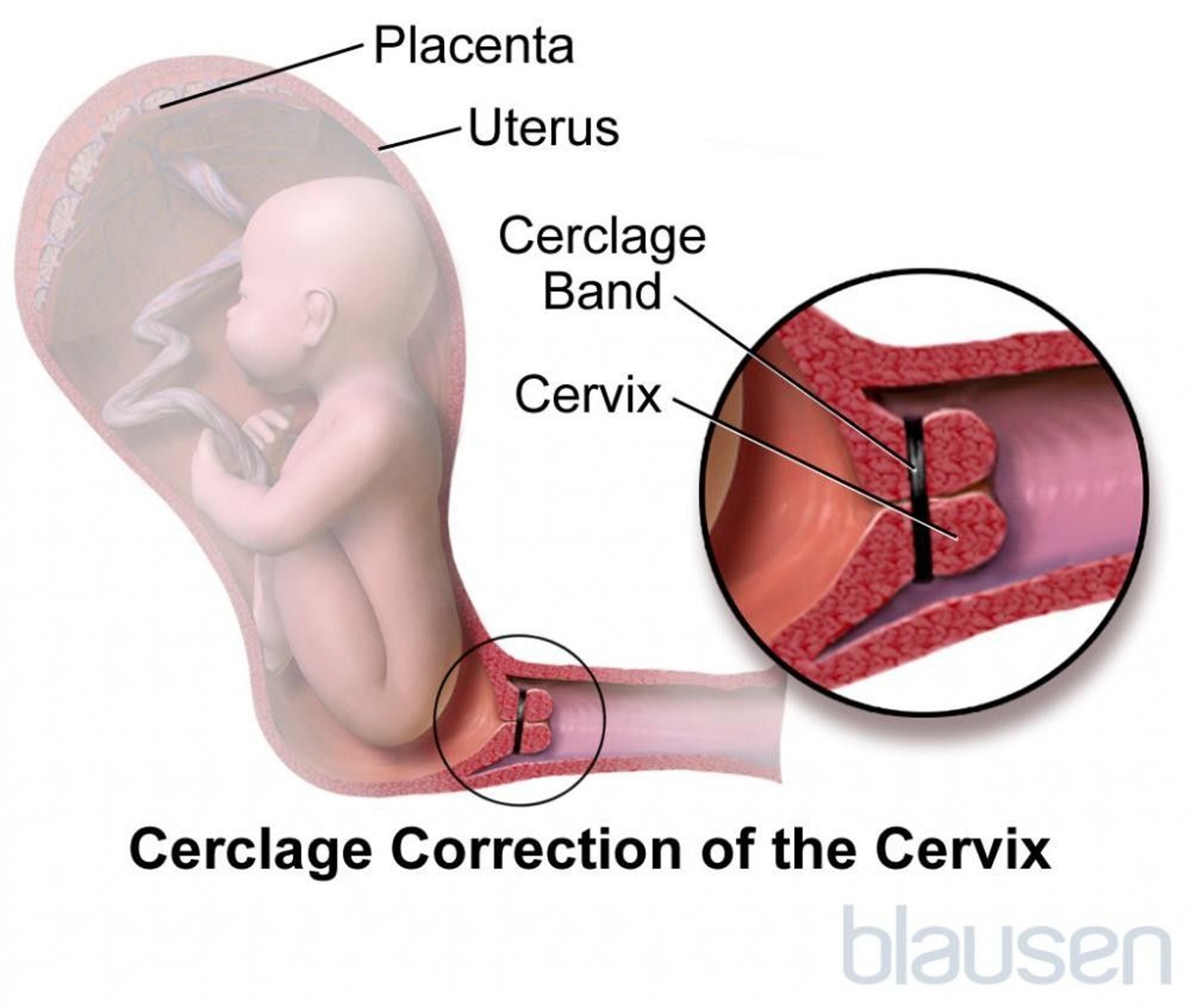
Doctors can place stitches around or through the cervix to keep it from opening too soon. Such procedures are called cervical cerclage.
A cerclage may be placed at different times related to a pregnancy, depending on pregnancy history and medical decisions women make with their doctors. For women who have had two or more pregnancy losses during the second trimester that were diagnosed as being due to cervical insufficiency, a doctor may recommend a cerclage be placed before pregnancy or during first trimester.
Before cervical cerclage, the woman is given a general anesthetic or regional anesthetic. Then doctors usually insert instruments through the vagina to place the stitches. Stitches are usually removed before delivery. If a cerclage was placed before pregnancy, the stitches are left in place, and cesarean delivery is done.

If preterm labor is suspected after 22 weeks of pregnancy, doctors may prescribe corticosteroids (to help the fetus's lungs mature) and modified bed rest (modified activity). Modified bed rest means that women should stay off of their feet most of the day.


