





A hernia is a small opening in the abdominal wall. An umbilical hernia occurs near or at the bellybutton (umbilicus).
Abdominal organs protrude through a hole in the in the abdominal wall near the bellybutton.
The diagnosis is based on the child's history and a physical examination.
Umbilical hernias typically close on their own.
(For adults, see Abdominal Wall Hernias.)
In an umbilical hernia, the small intestine can protrude through the opening when the child coughs or strains during a bowel movement. Many infants have a small umbilical hernia because the opening for the umbilical cord blood vessels did not close completely.
Most of the time, umbilical hernias are present at birth. However they can occur in adults who are obese or pregnant or who have an accumulation of fluid in the abdomen (ascites). It can also occur in people who are born with defects in the middle of their abdominal wall or after abdominal surgery.

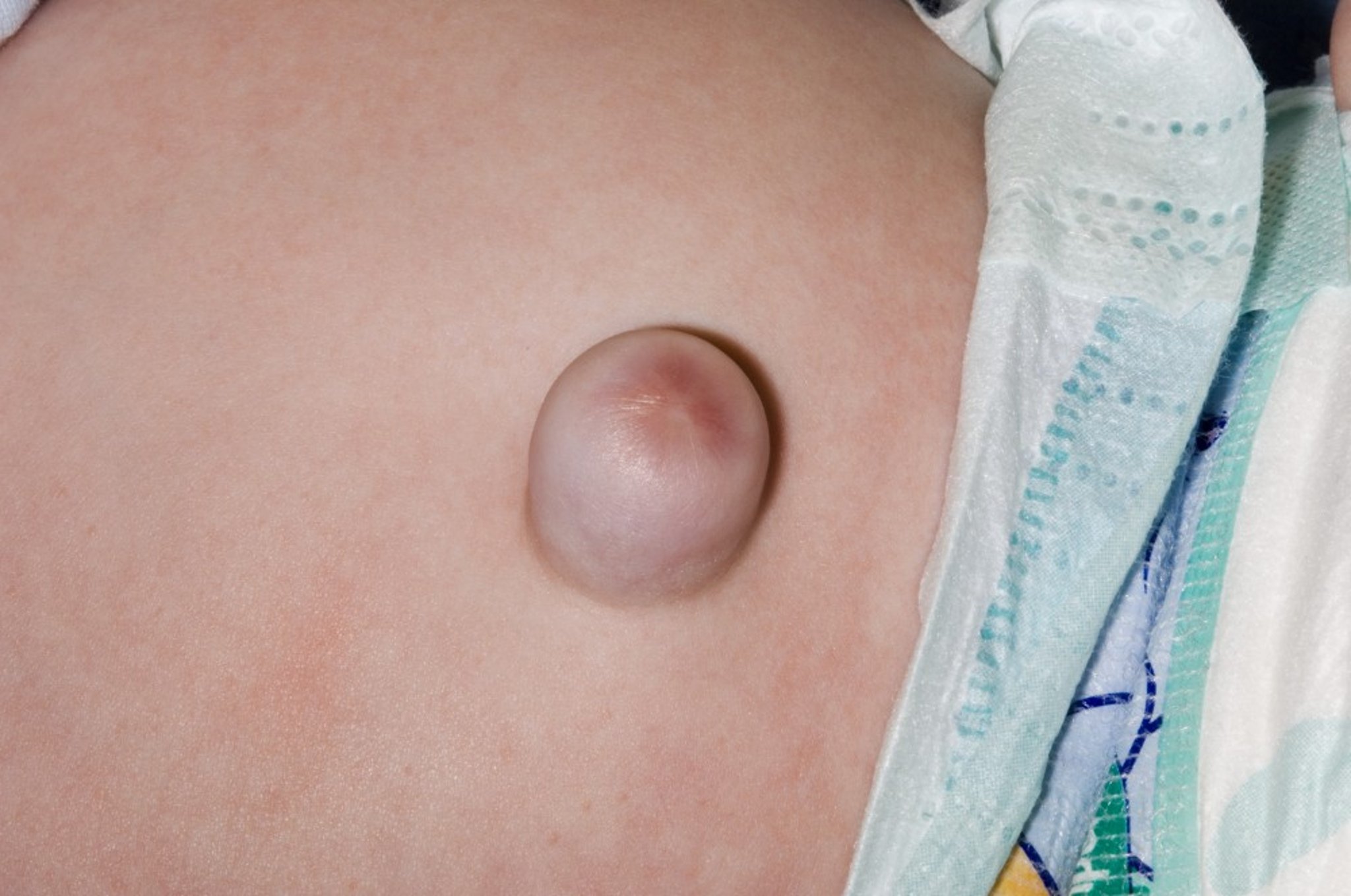
DR P. MARAZZI/SCIENCE PHOTO LIBRARY
Symptoms of Umbilical Hernia
Children usually do not have any symptoms.
Rarely, the intestine becomes trapped in the opening (incarcerated). Incarceration sometimes shuts off the blood supply to the intestine (strangulation), which is dangerous.
Diagnosis of Umbilical Hernia
A doctor's examination
Doctors base the diagnosis of umbilical hernia on the child's physical examination.
Treatment of Umbilical Hernia
Usually no treatment
For very large hernias, surgical repair
Because strangulation is very rare, umbilical hernias are usually not treated and doctors just wait for them to go away on their own. These hernias usually close by 5 years of age.
If a very large umbilical hernia does not close by the time a child is 2 years old, the doctor may advise surgery.
Folk remedies such as taping a coin or other object over the hernia do not work and may irritate the skin.


