





Tarsal tunnel syndrome is pain along the course of the posterior tibial nerve, usually resulting from nerve compression within the tarsal tunnel.
At the level of the ankle, the posterior tibial nerve passes through a fibro-osseous canal and divides into the medial and lateral plantar nerves. Tarsal tunnel syndrome refers to compression of the nerve within this canal, but the term has been loosely applied to neuralgia of the posterior tibial nerve resulting from any cause. Synovitis of the flexor tendons of the ankle caused by abnormal foot function, inflammatory arthritis (eg, rheumatoid arthritis), fibrosis, ganglionic cysts, deformity, and ankle venous stasis edema are contributing factors. Patients with hypothyroidism may develop tarsal tunnel–like symptoms as a result of perineural mucin deposition.
(See also Overview of Foot and Ankle Disorders.)

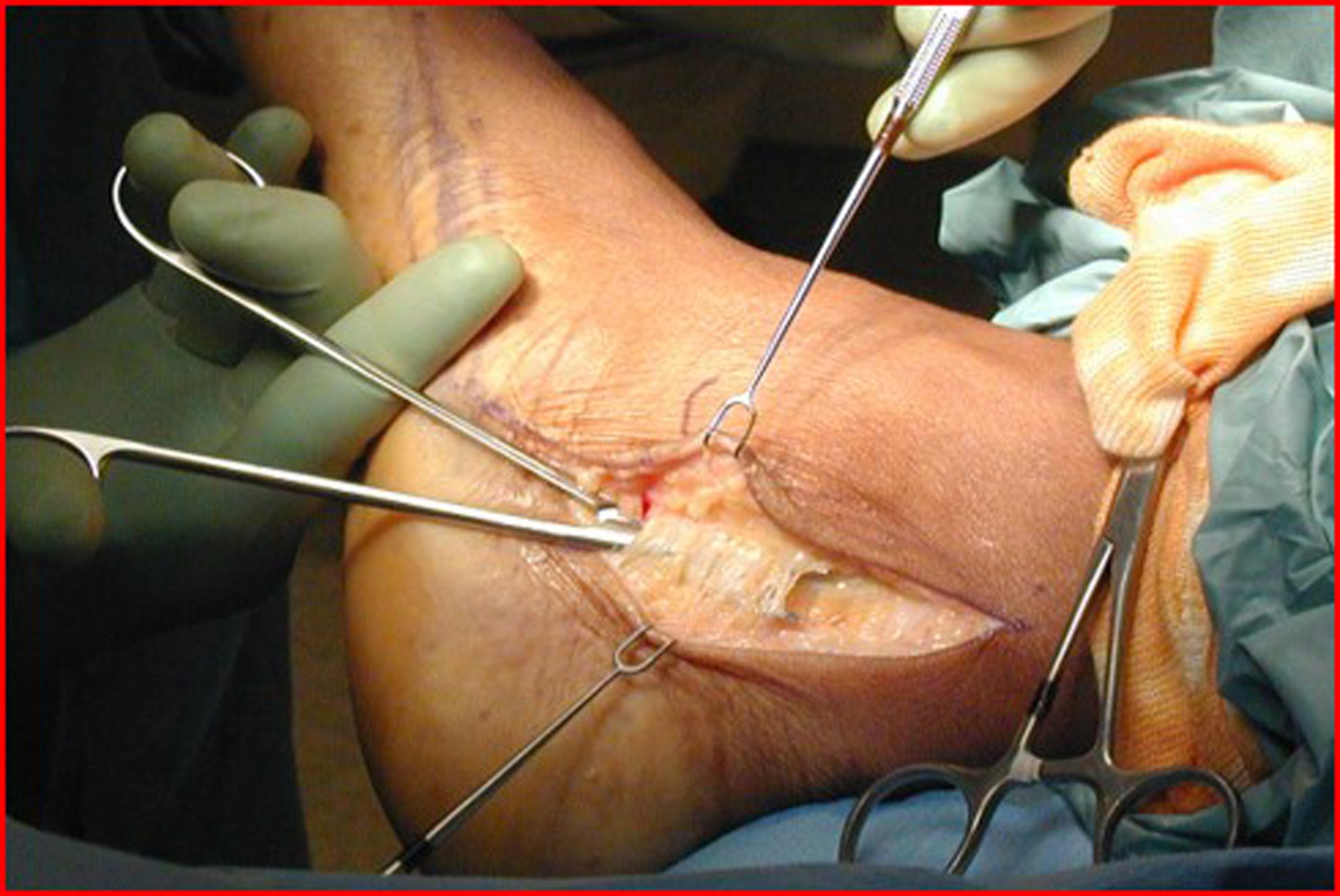
Photo courtesy of James C. Connors, DPM.

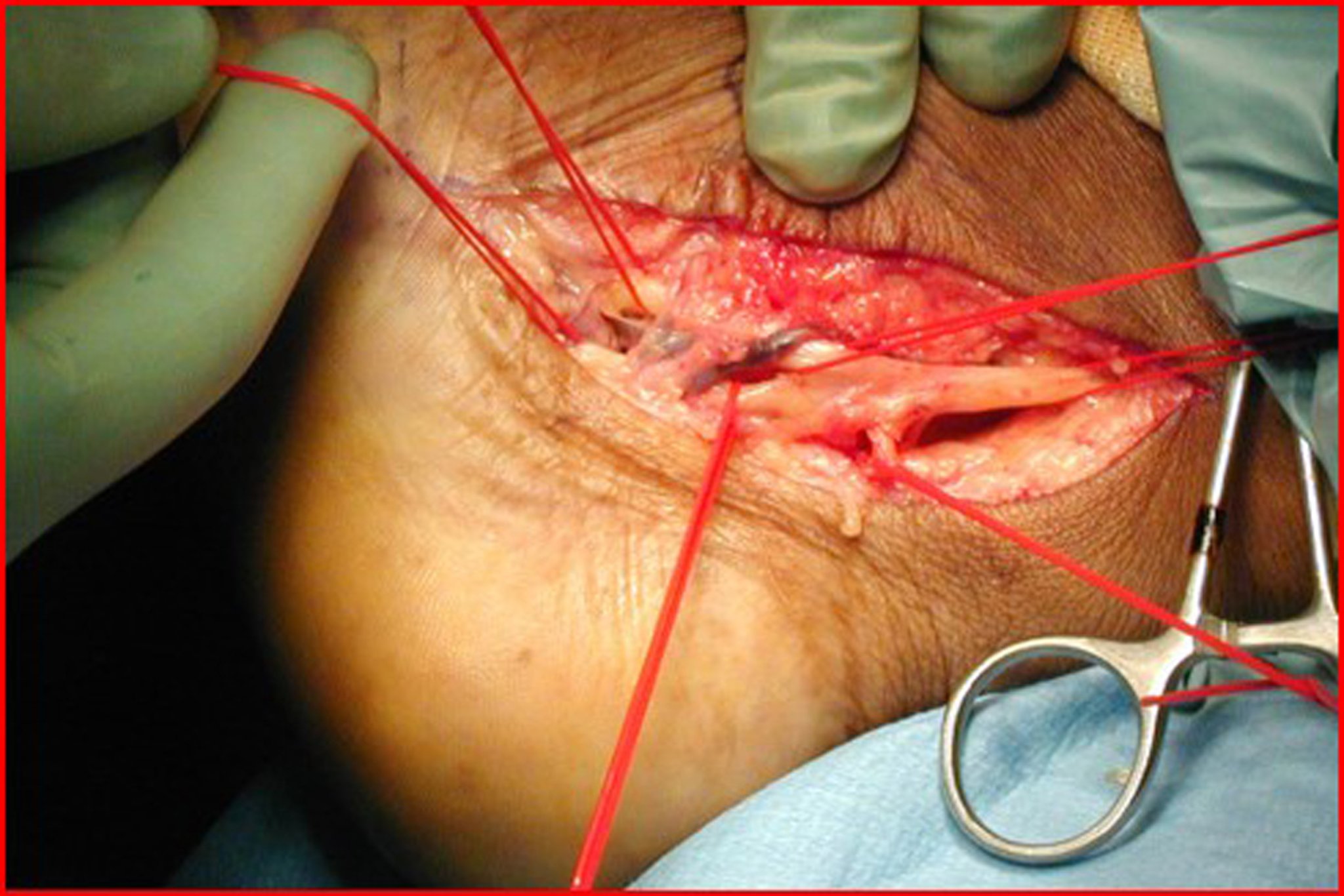
Photo courtesy of James C. Connors, DPM.

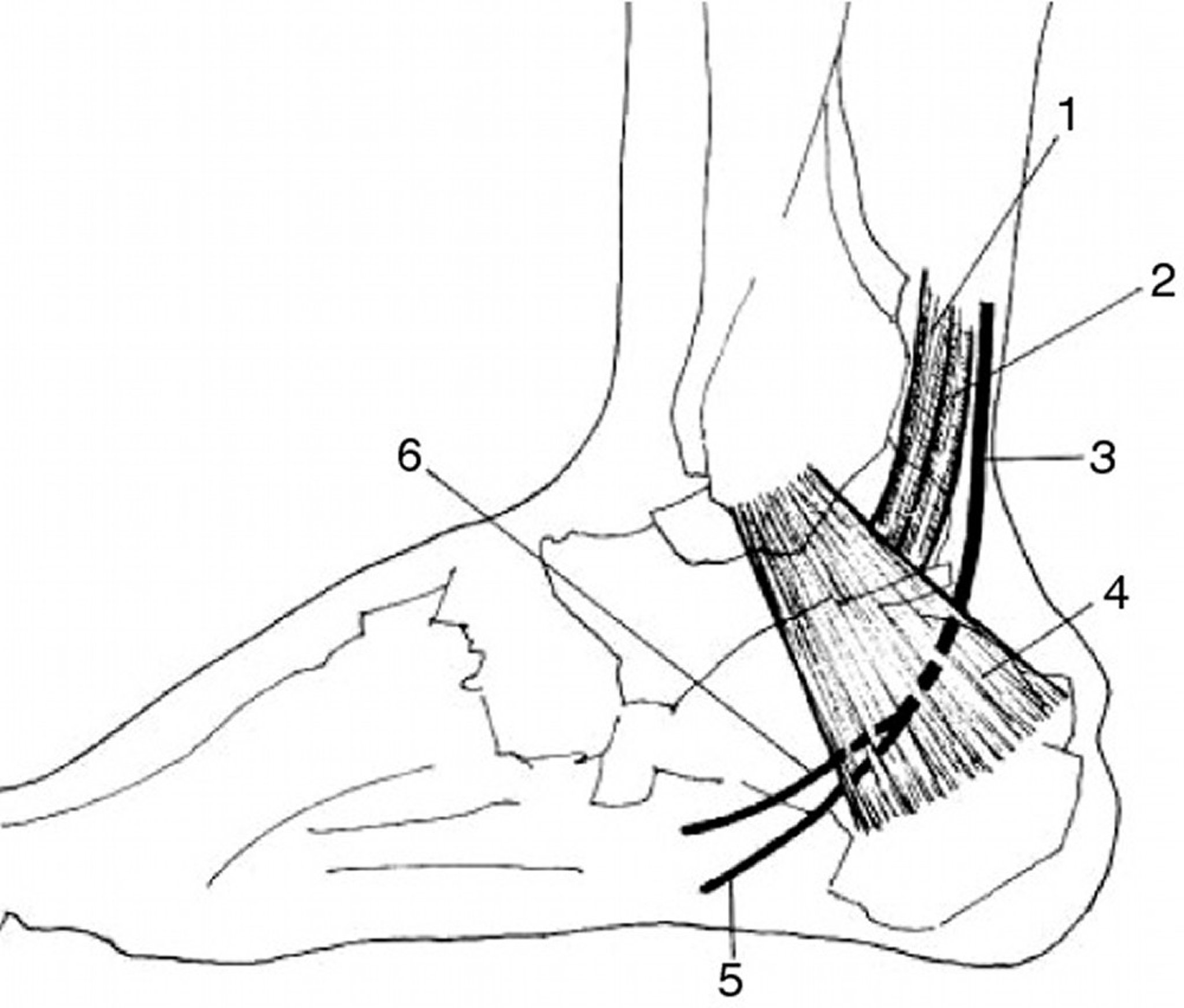
© Springer Science+Business Media
Symptoms and Signs of Tarsal Tunnel Syndrome
In patients with tarsal tunnel syndrome, pain (occasionally burning and tingling) is usually retromalleolar and sometimes in the plantar medial heel and may extend along the plantar surface as far as the toes. Although the pain is worse during standing and walking, pain at rest may occur as the disorder progresses, which helps to distinguish it from plantar fasciitis.
Diagnosis of Tarsal Tunnel Syndrome
Examination and electrodiagnostic testing
Sometimes MRI
Tapping or palpating the posterior tibial nerve below the medial malleolus at a site of compression or injury often causes distal tingling (Tinel sign).
Although false-negative results on electrodiagnostic tests are somewhat common, a positive history combined with supportive physical findings and positive electrodiagnostic results makes the diagnosis of tarsal tunnel syndrome highly likely.
Plantar heel and arch pain lasting > 6 months also strongly suggests distal tibial plantar nerve compression with entrapment. The cause of any swelling near the nerve should be determined. MRI is helpful in identifying any space-occupying lesion in the tarsal tunnel.


Treatment of Tarsal Tunnel Syndrome
Foot inversion with braces or orthoses, corticosteroid injections, surgery, or a combination
In patients with tarsal tunnel syndrome, strapping the foot in a neutral or slightly inverted position and elevating the heel or wearing a brace or orthotic that keeps the foot inverted reduces nerve tension.
Nonsteroidal anti-inflammatory drugs (NSAIDs) may be used initially and may relieve some symptoms. Local infiltration of an insoluble corticosteroid/anesthetic mixture may be effective if the cause is inflammation or fibrosis (see Considerations for Using Corticosteroid Injections).
Surgical decompression may be necessary to relieve suspected fibro-osseus compression with recalcitrant symptoms.


