Patients & CaregiversHealthcare ProfessionalsWorldwide
HomeAbout MerckProductsNewsroomInvestor RelationsCareersResearchLicensingThe Merck Manuals
THE MERCK MANUAL MEDICAL LIBRARY: The Merck Manual of Diagnosis and Therapy
Tips for better results
ABCDEFGHI
JKLMNOPQR
STUVWXYZ

Section

Subject

Topics

Vitamin A

Update Me

Vitamin A (retinol) is required for the formation of rhodopsin, a photoreceptor pigment in the retina. Vitamin A helps maintain epithelial tissues. Normally, the liver stores 80 to 90% of the body's vitamin A. To use vitamin A, the body releases it into the circulation bound to prealbumin (transthyretin) and retinol-binding protein. β-Carotene and other provitamin carotenoids, contained in green leafy and yellow vegetables and deep- or bright-colored fruits, are converted to vitamin A. Carotenoids are absorbed better from vegetables when they are cooked or homogenized and served with some fats or oils.

Retinol activity equivalents (RAE) were developed because provitamin A carotenoids have less vitamin A activity than preformed vitamin A. One microgram retinol = 3.33 IU.

Synthetic vitamin analogs (retinoids) are being used increasingly in dermatology. The possible protective role of β-carotene, retinol, and retinoids against some epithelial cancers is under study. However, risk of certain cancers may be increased after β-carotene supplementation.

Vitamin A Deficiency

Vitamin A deficiency can result from inadequate intake, fat malabsorption, or liver disorders. Deficiency impairs immunity and hematopoiesis and causes skin rashes and typical ocular effects (eg, xerophthalmia, night blindness). Diagnosis is based on typical ocular findings and low vitamin A levels. Treatment consists of vitamin A given orally or, if symptoms are severe or malabsorption is the cause, parenterally.

Etiology

Primary vitamin A deficiency is usually caused by prolonged dietary deprivation. It is endemic in areas such as southern and eastern Asia, where rice, devoid of β-carotene, is the staple food. Xerophthalmia due to primary deficiency is a common cause of blindness among young children in developing countries.

Secondary vitamin A deficiency may be due to decreased bioavailability of provitamin A carotenoids or to interference with absorption, storage, or transport of vitamin A. Interference with absorption or storage is likely in sprue, cystic fibrosis, pancreatic insufficiency, duodenal bypass, chronic diarrhea, bile duct obstruction, giardiasis, and cirrhosis. Vitamin A deficiency is common in prolonged protein-energy malnutrition not only because the diet is deficient but also because vitamin A storage and transport is defective. In children with complicated measles, vitamin A can shorten the duration of the disorder and reduce the severity of symptoms and risk of death.

Symptoms and Signs

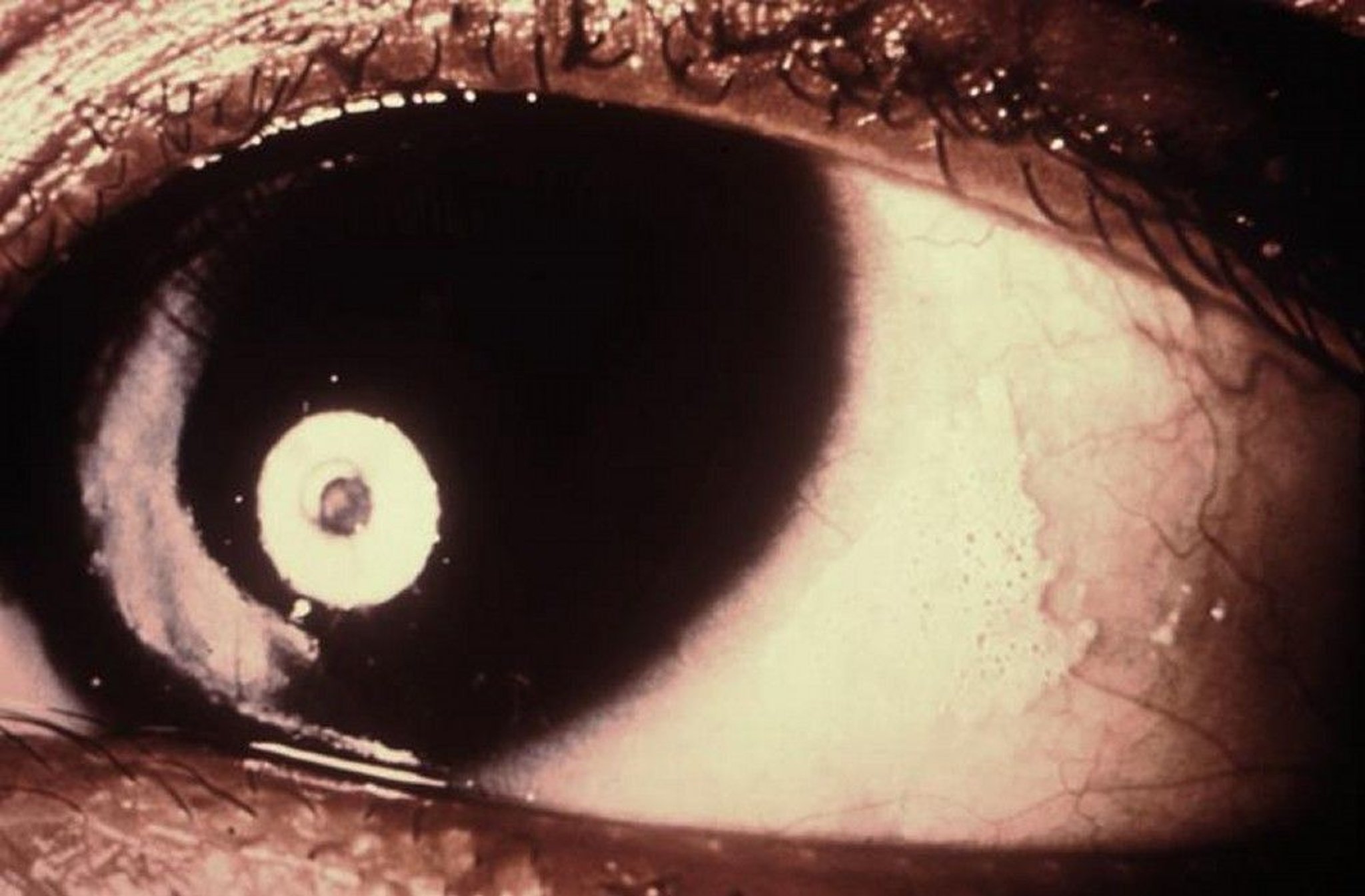
Impaired dark adaptation of the eyes, which can lead to night blindness, is an early symptom. Xerophthalmia (which is nearly pathognomonic) results from keratinization of the eyes. It involves drying (xerosis) and thickening of the conjunctivae and corneas. Superficial foamy patches composed of epithelial debris and secretions on the exposed bulbar conjunctiva (Bitot's spots) develop. In advanced deficiency, the cornea becomes hazy and can develop erosions, which can lead to its destruction (keratomalacia).

Keratinization of the skin and of the mucous membranes in the respiratory, GI, and urinary tracts can occur. Drying, scaling, and follicular thickening of the skin and respiratory infections can result. Immunity is generally impaired.

The younger the patient, the more severe are the effects of vitamin A deficiency. Growth retardation and infections are common among children. Mortality rate can exceed 50% in children with severe vitamin A deficiency.

Diagnosis

Ocular findings suggest the diagnosis. Dark adaptation can be impaired in other disorders (eg, zinc deficiency, retinitis pigmentosa, severe refractive errors, cataracts, diabetic retinopathy). If dark adaptation is impaired, rod scotometry and electroretinography are done to determine whether vitamin A deficiency is the cause.

Plasma levels of retinol are measured. Normal range is 28 to 86 μg/dL (1 to 3 µmol/L). However, levels decrease only after the deficiency is advanced because the liver contains large stores of vitamin A. Also, decreased levels may result from acute infection, which causes retinol-binding protein and transthyretin (also called prealbumin) levels to decrease transiently. A therapeutic trial of vitamin A may help confirm the diagnosis.

Prevention

The diet should include dark green leafy vegetables, deep- or bright-colored fruits (eg, papayas, oranges), carrots, and yellow vegetables (eg, squash, pumpkin). Vitamin A–fortified milk and cereals, liver, egg yolks, and fish liver oils are helpful. Carotenoids are absorbed better when consumed with some dietary fat. If milk allergy is suspected in infants, they should be given adequate vitamin A in formula feedings. In developing countries, prophylactic supplements of vitamin A palmitate in oil 60,000 RAE (200,000 IU) po every 6 mo are advised for all children between 1 and 5 years of age; infants < 6 mo can be given a one-time dose of 15,000 RAE (50,000 IU), and those aged 6 to 12 mo can be given a one-time dose of 30,000 RAE (100,000 IU).

Treatment

Dietary deficiency is traditionally treated with vitamin A palmitate in oil 60,000 IU po once/day for 2 days, followed by 4500 IU po once/day. If vomiting or malabsorption is present or xerophthalmia is probable, a dose of 50,000 IU for infants < 6 mo, 100,000 IU for infants 6 to 12 mo, or 200,000 IU for children > 12 mo and adults should be given for 2 days, with a third dose at least 2 wk later. The same doses are recommended for infants and children with complicated measles. Infants born of HIV-positive mothers should receive 50,000 IU (15,000 RAE) within 48 h of birth. Prolonged daily administration of large doses, especially to infants, must be avoided because toxicity may result.

For pregnant or lactating women, prophylactic or therapeutic doses should not exceed 10,000 IU (3000 RAE)/day to avoid possible damage to the fetus or infant.

Vitamin A Toxicity

Vitamin A toxicity can be acute (usually due to accidental ingestion by children) or chronic. Both types usually cause headache and increased intracranial pressure. Acute toxicity also causes nausea and vomiting. Chronic toxicity also causes changes in skin, hair, and nails; abnormal liver test results; and, in a fetus, birth defects. Diagnosis is usually clinical. Unless birth defects are present, adjusting the dose almost always leads to complete recovery.

Acute vitamin A toxicity in children may result from taking large doses (> 300,000 IU [>100,000 RAE]), usually accidentally. In adults, acute toxicity has occurred when arctic explorers ingested polar bear or seal livers, which contain several million units of vitamin A.

Chronic toxicity in older children and adults usually develops after doses of > 30,000 RAE (> 100,000 IU)/day have been taken for months. Megavitamin therapy is a possible cause, as are massive daily doses (50,000 to 120,000 RAE [150,000 to 350,000 IU]) of vitamin A or its metabolites, which are sometimes given for nodular acne or other skin disorders. Adults who consume > 1500 RAE (> 4500 IU)/day of vitamin A may develop osteoporosis. Infants who are given excessive doses (6,000 to 20,000 RAE [18,000 to 60,000 IU]/day) of water-miscible vitamin A may develop toxicity within a few weeks. Birth defects occur in children of women receiving isotretinoin Some Trade Names
ACCUTANE
Click for Drug Monograph
(which is related to vitamin A) for acne treatment during pregnancy.

Although carotene is converted to vitamin A in the body, excessive ingestion of carotene causes carotenemia, not vitamin A toxicity. Carotenemia is usually asymptomatic but may lead to carotenodermia, in which the skin becomes yellow. When taken as a supplement, β-carotene has been associated with increased cancer risk; risk does not appear to increase when carotenoids are consumed in fruits and vegetables.

Symptoms and Signs

Although symptoms may vary, headache and rash usually develop during acute or chronic toxicity. Acute toxicity causes increased intracranial pressure. Drowsiness, irritability, abdominal pain, nausea, and vomiting are common. Sometimes the skin subsequently peels.

Early symptoms of chronic toxicity are sparsely distributed, coarse hair; alopecia of the eyebrows; dry, rough skin; dry eyes; and cracked lips. Later, severe headache, pseudotumor cerebri, and generalized weakness develop. Cortical hyperostosis of bone and arthralgia may occur, especially in children. Fractures may occur easily, especially in the elderly. In children, toxicity can cause pruritus, anorexia, and failure to thrive. Hepatomegaly and splenomegaly may occur.

In carotenodermia, the skin (but not the sclera) becomes deep yellow, especially on the palms and soles.

Diagnosis

Diagnosis is clinical. Blood vitamin levels correlate poorly with toxicity. However, if clinical diagnosis is equivocal, laboratory testing may help. In vitamin A toxicity, fasting plasma retinol levels may increase from normal (28 to 86 μg/dL [1 to 3 µmol/L]) to > 100 μg/dL (> 3.49 µmol/L), sometimes to > 2000 μg/dL (> 69.8 µmol/L). Hypercalcemia is common.

Differentiating vitamin A toxicity from other disorders may be difficult. Carotenodermia may also occur in severe hypothyroidism and anorexia nervosa, possibly because carotene is converted to vitamin A more slowly.

Prognosis and Treatment

Complete recovery usually occurs if vitamin A ingestion stops. Symptoms and signs of chronic toxicity usually disappear within 1 to 4 wk. However, birth defects in the fetus of a mother who has taken megadoses of vitamin A are not reversible.

Last full review/revision April 2007 by Larry E. Johnson, MD, PhD

Content last modified April 2007

Back to Top

Previous: Thiamin

Next: Vitamin B12

Audio
Figures
Photographs
Tables
Videos
Contact UsSite MapPrivacy PolicyTerms of UseCopyright 1995-2007 Merck & Co., Inc.