





Zinc (Zn) is contained mainly in bones, teeth, hair, skin, liver, muscle, leukocytes, and testes. Zinc is a component of several hundred enzymes, including many nicotinamide adenine dinucleotide (NADH) dehydrogenases, RNA and DNA polymerases, and DNA transcription factors as well as alkaline phosphatase, superoxide dismutase, and carbonic anhydrase.
(See also Overview of Mineral Deficiency and Toxicity.)
A diet high in fiber and phytate (eg, in whole-grain bread) reduces zinc absorption.
Dietary deficiency is unlikely in healthy persons. Secondary zinc deficiency can develop in the following:
Patients taking diuretics
Patients with diabetes mellitus, sickle cell disease, chronic kidney disease, liver disease, alcohol use disorder, or malabsorption, and following weight loss surgery.
Patients with stressful severe acute conditions (eg, sepsis, burns, head injury)
Older institutionalized and homebound patients (common)
Maternal zinc deficiency may cause fetal malformations and low birth weight.
Zinc deficiency in children causes impaired growth, impaired taste (hypogeusia) and smell, delayed sexual maturation, and hypogonadism and oligospermia in men. In children or adults, manifestations also include alopecia, impaired immunity, anorexia, dermatitis, night blindness, anemia, lethargy, and impaired wound healing. Zinc deficiency during pregnancy may result in a low birth weight and preterm birth.
Treatment of zinc deficiency consists of elemental zinc 1 to 3 mg/kg orally once a day until symptoms and signs resolve.
Acrodermatitis enteropathica
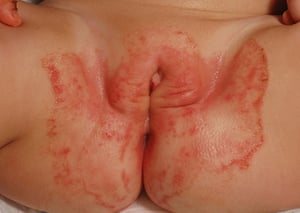
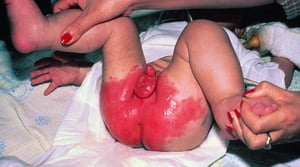
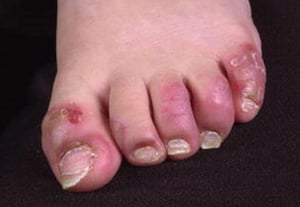
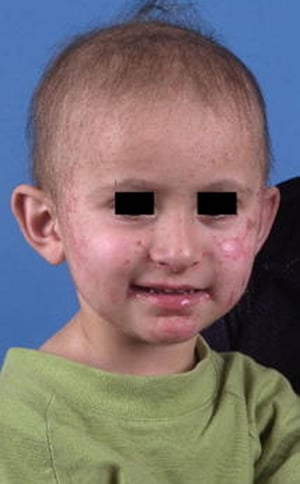
Acrodermatitis enteropathica (a rare, once fatal autosomal recessive disorder) causes malabsorption of zinc. Psoriasiform dermatitis develops around the eyes, nose, and mouth; on the buttocks and perineum; and in an acral distribution. The disorder also causes hair loss, paronychia, impaired immunity, recurrent infection, impaired growth, and diarrhea. Symptoms and signs usually develop after infants are weaned from breast milk. In such cases, doctors suspect acrodermatitis enteropathica. If this diagnosis is correct, elemental zinc1 to 3 mg once a day orally usually results in complete remission.
© Springer Science+Business Media
© Springer Science+Business Media
© Springer Science+Business Media
© Springer Science+Business Media

© Springer Science+Business Media


© Springer Science+Business Media


© Springer Science+Business Media


© Springer Science+Business Media


© Springer Science+Business Media


© Springer Science+Business Media


