





Alcohol consumption is high in most Western countries. According to a survey using the Diagnostic and Statistical Manual of Mental Disorders, Fifth Edition (DSM-5) definition of alcohol use disorder, in 2021, 11.3% of US adults age 18 and older had alcohol use disorder in the past year (see National Institute on Alcohol Abuse and Alcoholism [NIAAA]: Alcohol Use Disorder (AUD) in the United States). The NIAAA reported a 25.5% increase in deaths involving alcohol use, from approximately 79,000 to more than 99,000 per year from 2019 to 2020, up from the 2.2% increase per year over the previous two decades, suggesting an increase due to the COVID-19 pandemic (1).
Disorders of the liver that occur in people with alcohol use disorder, often in sequence, but sometimes coexisting, include
Alcohol-associated hepatic steatosis (fatty liver; in > 90%)
Alcoholic hepatitis (in 10 to 35%)
Alcohol-associated cirrhosis (in 10 to 20%)
(See also the 2019 American Association for the Study of Liver Disease’s practice guidelines for Alcohol-Associated Liver Disease.)
Hepatocellular carcinoma may also develop in patients with cirrhosis, especially if iron accumulation coexists.
Reference
1. White AM, Castle IP, Powell PA, et al: Alcohol-Related Deaths During the COVID-19 Pandemic. JAMA 327(17):1704-1706, 2022. doi:10.1001/jama.2022.4308
Risk Factors for Alcohol-Related Liver Disease
The main risk factors for alcohol-related liver disease are
Quantity and duration of alcohol use
Sex
Genetic and metabolic traits
Obesity
Quantity of alcohol
A standard alcoholic drink contains 14 grams of alcohol, the amount found in a 12-ounce (355-mL) bottle of 5% beer, a 5-ounce (148-mL) glass of wine, or 1.5 ounces (44-mL) of a beverage of 80-proof distilled spirits containing 40% alcohol by volume. (See National Institute on Alcohol Abuse and Alcoholism (NIAAA): Drinking Patterns and Their Definitions).
There appears to be a threshold effect above which the amount and duration of alcohol use increases the risk of the development of liver disease. That threshold is not known and varies by individual risk factors (1).
The NIAAA defines moderate drinking as one standard drink per day for women and two standard drinks per day for men (see also Dietary Guidelines for Americans, 2020-2025). However, the World Health Organization stated that there is no safe level of alcohol consumption that does not affect health (2).
The NIAAA defines "at-risk" (heavy) drinking in males as more than 14 standard drinks per week, or more than 4 drinks per day, and in females as more than 7 standard drinks per week, or more than 3 drinks per day (see NIAAA: Drinking Levels Defined).
Binge drinking may also increase alcohol-related liver disease. The NIAAA defines binge drinking as a pattern of drinking that brings blood alcohol concentration levels to 0.08 g/dL, which typically occurs after 4 drinks for women and 5 drinks for men, in about 2 hours (see NIAAA: Drinking Levels Defined).
Patients with alcohol-related liver disease or other liver diseases, in particular nonalcoholic fatty liver disease, nonalcoholic steatohepatitis, viral hepatitis, and hemochromatosis, or any drinking that leads to negative consequences, should be counseled that there is no safe level of drinking and that they should abstain.
The American Association for the Study of Liver Diseases (AASLD) recommends that patients receiving care in primary care and gastroenterology/hepatology outpatient clinics, emergency departments, and in hospitals (as inpatients) be screened routinely for alcohol use with validated questionnaires. Brief intervention, pharmacotherapy, and referral to treatment should be offered to patients engaged in hazardous drinking (ie, heavy or binge drinking) (3, 4). The AASLD recommends using the Alcohol Use Disorders Inventory Test (AUDIT) if excessive alcohol use is suspected (3).
Alcohol biomarkers, such as urine or hair ethyl glucuronide, urine ethyl sulfate, and phosphatidylethanol (PEth), can be used to support patient history and aid in recovery.
Sex
Women are more susceptible to alcohol-related liver disease, even after adjustment for body size. Women require only 20 to 40 g of alcohol/day to be at risk—half of that for men. Risk in women may be increased because they have less alcohol dehydrogenase in their gastric mucosa; thus, more intact alcohol reaches the liver.
Genetic factors
Alcohol-related liver disease often runs in families, suggesting genetic factors (eg, deficiency of cytoplasmic enzymes that eliminate alcohol).
Nutritional status
A diet high in unsaturated fat increases susceptibility, as does obesity.
Other factors
Other risk factors include iron accumulation in the liver (not necessarily related to iron intake) and concomitant viral hepatitis.
Risk factors references
1. Rehm J, Taylor B, Mohapatra S, et al: Alcohol as a risk factor for liver cirrhosis: a systematic review and meta-analysis. Drug Alcohol Rev 29(4):437-445, 2010. doi:10.1111/j.1465-3362.2009.00153.x
2. Anderson BO, Berdzuli N, Ilbawi A, et al: Health and cancer risks associated with low levels of alcohol consumption. Lancet Public Health 8(1):e6-e7, 2023. doi: 10.1016/S2468-2667(22)00317-6
3. Crabb DW, Im GY, Szabo G, et al: Diagnosis and Treatment of Alcohol-Associated Liver Diseases: 2019 Practice Guidance From the American Association for the Study of Liver Diseases. Hepatology 71(1):306-333, 2020. doi:10.1002/hep.30866
4. Saunders JB, Aasland OG, Babor TF, et al: Development of the Alcohol Use Disorders Identification Test (AUDIT): WHO Collaborative Project on Early Detection of Persons with Harmful Alcohol Consumption--II. Addiction 88(6):791-804, 1993. doi:10.1111/j.1360-0443.1993.tb02093.x
Pathophysiology of Alcohol-Related Liver Disease
Alcohol absorption and metabolism
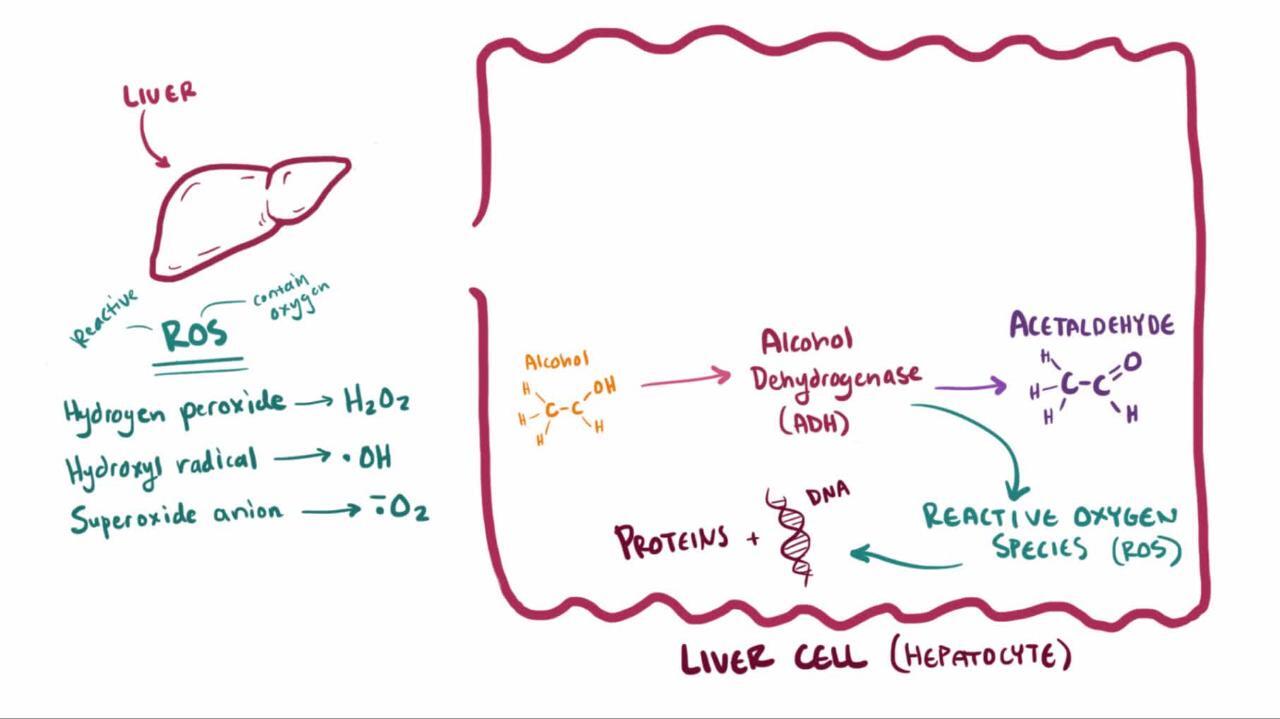
Metabolism via the ADH pathway involves the following:
ADH, a cytoplasmic enzyme, oxidizes alcohol into acetaldehyde. Genetic polymorphisms in ADH account for some individual differences in blood alcohol levels after the same alcohol intake but not in susceptibility to alcohol-related liver disease.
These oxidative reactions generate hydrogen, which converts nicotinamide-adenine dinucleotide (NAD) to its reduced form (NADH), increasing the redox potential (NADH/NAD) in the liver.
The increased redox potential inhibits fatty acid oxidation and gluconeogenesis, promoting fat accumulation in the liver.
Chronic excessive alcohol consumption induces the MEOS (mainly in endoplasmic reticulum), increasing its activity. The main enzyme involved is CYP2E1. When induced, the MEOS pathway can account for 20% of alcohol metabolism. This pathway generates harmful reactive oxygen species, increasing oxidative stress and formation of oxygen-free radicals.
Hepatic fat accumulation
Fat (triglycerides) accumulates throughout the hepatocytes for the following reasons:
Export of fat from the liver is decreased because hepatic fatty acid oxidation and lipoprotein production decrease.
Input of fat is increased because the decrease in hepatic fat export increases peripheral lipolysis and triglyceride synthesis, resulting in hyperlipidemia.
Hepatic fat accumulation may predispose to subsequent oxidative damage.
Endotoxins in the gut
Alcohol changes gut permeability, increasing absorption of endotoxins released by bacteria in the gut. In response to the endotoxins (which the impaired liver can no longer detoxify), liver macrophages (Kupffer cells) release free radicals, increasing oxidative damage.
Oxidative damage
Oxidative stress is increased by
Liver hypermetabolism, caused by alcohol consumption
Free radical–induced lipid peroxidative damage
Reduction in protective antioxidants (eg, glutathione, vitamins A and E), caused by alcohol-related undernutrition
Binding of alcohol oxidation products, such as acetaldehyde, to liver cell proteins, forming neoantigens and resulting in inflammation
Accumulation of neutrophils and other white blood cells (WBCs), which are attracted by lipid peroxidative damage and neoantigens
Inflammatory cytokines secreted by WBCs
Accumulation of hepatic iron, if present, aggravates oxidative damage. Iron can accumulate in alcohol-related liver disease through ingestion of iron-containing fortified wines; most often, the iron accumulation is modest. This condition can be differentiated from hereditary hemochromatosis.
Resultant inflammation, cell death, and fibrosis
A vicious circle of worsening inflammation occurs: Cell necrosis and apoptosis result in hepatocyte loss, and subsequent attempts at regeneration result in fibrosis. Stellate (Ito) cells, which line blood channels (sinusoids) in the liver, proliferate and transform into myofibroblasts, producing an excess of type I collagen and extracellular matrix. As a result, the sinusoids narrow, limiting blood flow. Fibrosis narrows the terminal hepatic venules, compromising hepatic perfusion and thus contributing to portal hypertension. Extensive fibrosis is associated with an attempt at regeneration, resulting in liver nodules. This process culminates in cirrhosis.
Pathology of Alcohol-Related Liver Disease
Hepatic steatosis, alcoholic hepatitis, and cirrhosis are often considered separate, progressive manifestations of alcohol-related liver disease. However, their features often overlap.
Alcohol-related hepatic steatosis (fatty liver) is the initial and most common consequence of excessive alcohol consumption. Hepatic steatosis is potentially reversible. Macrovesicular fat accumulates as large droplets of triglyceride and displaces the hepatocyte nucleus, most markedly in perivenular hepatocytes. The liver enlarges.
Alcoholic hepatitis (steatohepatitis) is a combination of hepatic steatosis, diffuse liver inflammation, and liver necrosis (often focal)—all in various degrees of severity. The damaged hepatocytes are swollen with a granular cytoplasm (balloon degeneration) or contain fibrillar protein in the cytoplasm (Mallory or alcoholic hyaline bodies). Severely damaged hepatocytes become necrotic. Sinusoids and terminal hepatic venules are narrowed. Cirrhosis may also be present.
Alcohol-related cirrhosis is advanced liver disease characterized by extensive fibrosis that disrupts the normal liver architecture. The amount of fat present varies. Alcoholic hepatitis may coexist. The feeble compensatory attempt at hepatic regeneration produces relatively small nodules (micronodular cirrhosis). As a result, the liver usually shrinks. In time, even with abstinence, fibrosis forms broad bands, separating liver tissue into large nodules (macronodular cirrhosis—see Cirrhosis: Pathophysiology).
Symptoms and Signs of Alcohol-Related Liver Disease
Symptoms usually become apparent in patients during their 30s or 40s; severe problems appear about a decade later.
Alcohol-related hepatic steatosis is often asymptomatic. In one third of patients, the liver is enlarged and smooth, but it is not usually tender.
Alcoholic hepatitis ranges from mild and reversible to life threatening. Most patients with moderate disease are undernourished and present with fatigue, fever, jaundice, right upper quadrant pain, tender hepatomegaly, and sometimes a hepatic bruit. About 40% deteriorate soon after hospitalization, with consequences ranging from mild (eg, increasing jaundice) to severe (eg, ascites, portosystemic encephalopathy, variceal bleeding, liver failure with hypoglycemia, coagulopathy). Other manifestations of cirrhosis may be present.
Cirrhosis, if compensated, may be asymptomatic. The liver is usually small; when the liver is enlarged, hepatic steatosis or hepatoma should be considered. Symptoms range from those of alcoholic hepatitis to the complications of end-stage liver disease, such as portal hypertension (often with esophageal varices and upper gastrointestinal bleeding, splenomegaly, ascites, and portosystemic encephalopathy). Portal hypertension may lead to intrapulmonary arteriovenous shunting with hypoxemia (hepatopulmonary syndrome), which may cause cyanosis and nail clubbing. Acute renal failure secondary to progressively decreasing renal blood flow (hepatorenal syndrome) may develop. Hepatocellular carcinoma develops in 10 to 15% of patients with alcohol-related cirrhosis.
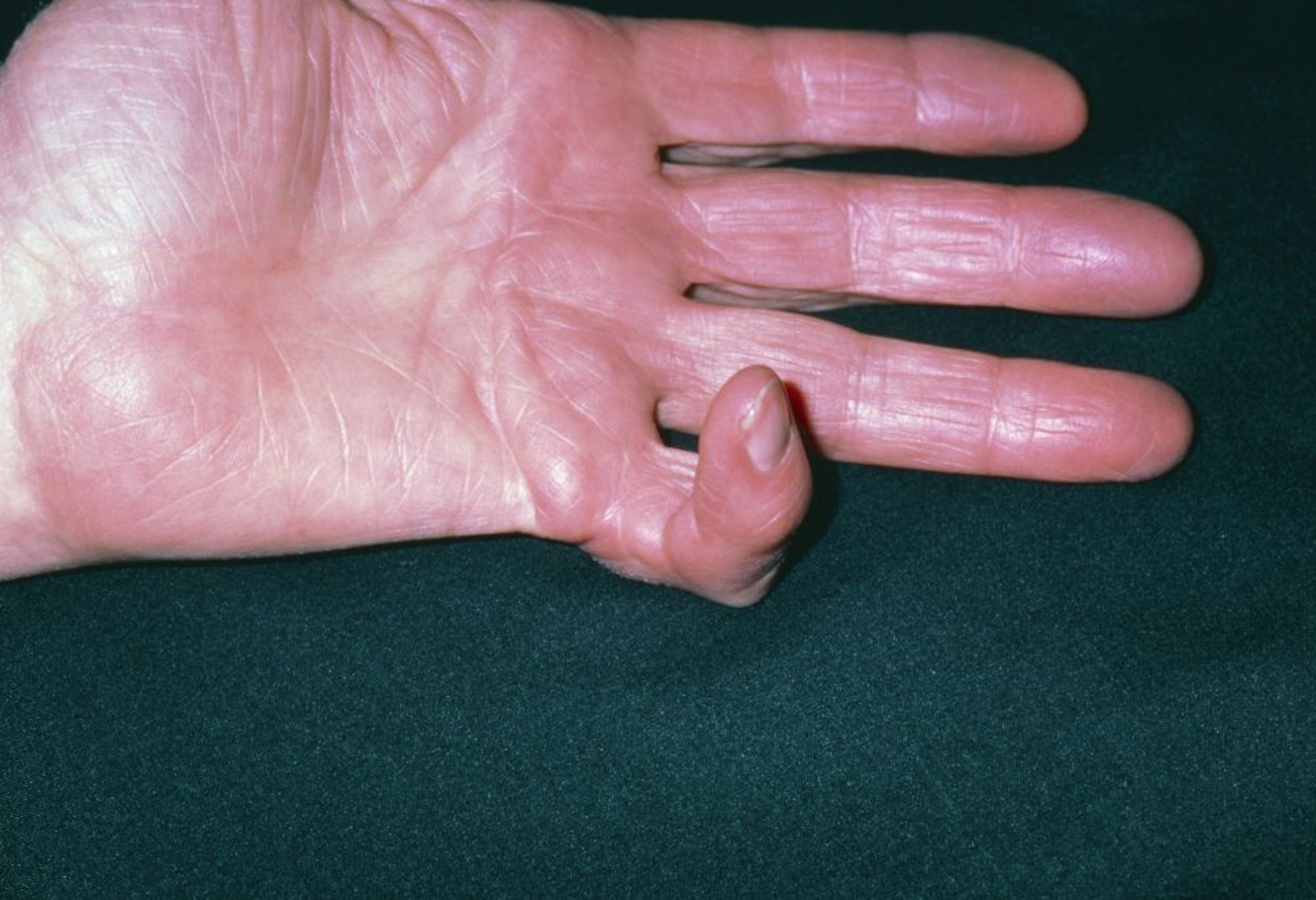
Chronic excessive alcohol consumption, rather than liver disease, causes Dupuytren contracture of the palmar fascia, vascular spiders, myopathy, and peripheral neuropathy. In men, chronic excessive alcohol consumption causes signs of hypogonadism and feminization (eg, smooth skin, lack of male-pattern baldness, gynecomastia, testicular atrophy, decreased body hair). Undernutrition may lead to multiple vitamin deficiencies (eg, of folate and thiamin), enlarged parotid glands, and white nails. In those with chronic excessive alcohol consumption, Wernicke encephalopathy and Korsakoff psychosis result mainly from thiamin deficiency. Pancreatitis is common. Hepatitis C occurs in > 25% of those with alcohol use disorder; this combination markedly worsens the progression of liver disease.
Rarely, patients with hepatic steatosis or cirrhosis present with Zieve syndrome (hyperlipidemia, hemolytic anemia, and jaundice).

DR P. MARAZZI/SCIENCE PHOTO LIBRARY
Diagnosis of Alcohol-Related Liver Disease
Confirmed history of alcohol use
Alcohol biomarkers
Liver tests and complete blood count (CBC)
Sometimes liver biopsy
Alcohol is suspected as the cause of liver disease in any patient who chronically consumes excess alcohol, particularly > 80 g per day. Patients can be screened for alcohol use disorder using the CAGE questionnaire (need to Cut down, Annoyed by criticism, Guilty about drinking, and need for a morning Eye-opener; see Detecting alcoholism. The CAGE questionnaire) or AUDIT (see Alcohol Use Disorders Identification Test). When the patient's alcohol consumption is in doubt, history can be confirmed by family members or alcohol biomarkers. Urine or hair ethyl glucuronide, urine ethyl sulfate, and phosphatidylethanol (PEth) are not affected by liver disease. PeTH is particularly useful because it has a half‐life of approximately 10 to14 days, longer with chronic heavy alcohol consumption. There is no specific test for alcohol-related liver disease, but if the diagnosis is suspected, liver tests (prothrombin time [PT]; serum bilirubin, aminotransferase, and albumin levels) and CBC are done to detect signs of liver injury and anemia.
Elevations of aminotransferases are moderate (< 300 IU/L) and do not reflect the extent of liver damage. The ratio of aspartate aminotransferase (AST) to alanine aminotransferase (ALT) is ≥albumin may be low, usually reflecting undernutrition but occasionally reflecting otherwise obvious liver failure with deficient synthesis. Macrocytosis with a mean corpuscular volume > 100 fL reflects the direct effect of alcohol on bone marrow as well as macrocytic anemia resulting from folate deficiency, which is common among people with alcohol use disorder who are undernourished. Indexes of the severity of liver disease are
Serum bilirubin, which represents secretory function
Prothrombin time or international normalized ratio, which reflects synthetic ability
Thrombocytopenia can result from the direct toxic effects of alcohol on bone marrow or from splenomegaly, which accompanies portal hypertension. Neutrophilic leukocytosis may result from alcoholic hepatitis, although coexisting infection (particularly pneumonia and spontaneous bacterial peritonitis) should also be suspected.
Imaging tests of the liver are not routinely needed for diagnosis. If done for other reasons, abdominal ultrasonography or CT may suggest hepatic steatosis or show splenomegaly, evidence of portal hypertension, or ascites. Ultrasound elastrography measures liver stiffness and thus detects advanced fibrosis. This valuable adjunct can obviate the need for liver biopsy to check for cirrhosis and help assess prognosis. Its exact role is under study.
If abnormalities suggest alcohol-related liver disease, screening tests for other treatable forms of liver disease, especially viral hepatitis, should be done.
Because features of hepatic steatosis, alcoholic hepatitis, and cirrhosis overlap, describing the precise findings is more useful than assigning patients to a specific category, which can only be determined by liver biopsy.
Not all experts agree on the indications for liver biopsy. Proposed indications include the following:
Unclear clinical diagnosis (eg, equivocal clinical and laboratory findings, unexplained persistent elevations of aminotransferase levels)
Clinical suspicion of > 1 cause of liver disease (eg, alcohol plus viral hepatitis)
Desire for a precise prediction of prognosis
Liver biopsy confirms liver disease, helps identify excessive alcohol use as the likely cause, and establishes the stage of liver injury. If iron accumulation is observed, measurement of the iron content and genetic testing can eliminate hereditary hemochromatosis as the cause.
For stable patients with cirrhosis, the American Association for the Study of Liver Diseases (AASLD) recommends that liver ultrasonography, with or without alpha-fetoprotein (AFP) measurement, should be done every 6 months to screen for hepatocellular carcinoma. They also suggest that surveillance not be done for patients with Child’s class C cirrhosis unless they are on the transplant waiting list because of their low anticipated survival (1).
Diagnosis reference
1. Heimbach JK, Kulik LM, Finn RA, et al: AASLD guidelines for the treatment of hepatocellular carcinoma. Hepatology 67(1):358-380, 2018. doi: 10.1002/hep.29086
Treatment of Alcohol-Related Liver Disease
Abstinence
Supportive care
Corticosteroids and enteral nutrition for severe alcoholic hepatitis
Sometimes transplantation
Restricting alcohol intake
Abstinence is the mainstay of treatment; it prevents further damage from alcohol-related liver disease and thus prolongs life. Because compliance is problematic, a compassionate team approach is essential. Behavioral and psychosocial interventions can help motivated patients; they include rehabilitation programs and support groups (see Alcohol Use Disorders and Rehabilitation: Maintenance), brief interventions by primary care clinicians, and therapies that explore and clarify the motivation to abstain (motivational enhancement therapy).
Supportive care
General management emphasizes supportive care. A nutritious diet and vitamin supplements (especially B vitamins) are important during the first few days of abstinence. Alcohol withdrawalportosystemic encephalopathy and thus must be avoided.
Severe acute alcoholic hepatitis commonly requires hospitalization, often in an intensive care unit, to facilitate enteral feeding (which can help manage nutritional deficiencies) and to manage specific complications (eg, infection, bleeding from esophageal varices, specific nutritional deficiencies, Wernicke encephalopathy, Korsakoff psychosis, electrolyte abnormalities, portal hypertension, ascites, portosystemic encephalopathy).
Specific treatment
≥ 32) and who do not have infection, gastrointestinal bleeding, renal failure, or pancreatitis (12). As a result, corticosteroids may be stopped prior to completing a 4-week course if there is no response to corticosteroids as determined by the day 7 Lille score (3).
Other than corticosteroids and enteral feeding, few specific treatments are clearly established. Antioxidants (eg, S-adenosyl-L-methionine, phosphatidylcholine, metadoxine) show promise in ameliorating liver injury during early cirrhosis
Liver transplantation for alcohol-associated cirrhosis should be considered for all patients with decompensated liver disease (ascites, spontaneous bacterial peritonitis, variceal bleeding, hepatic encephalopathy) despite abstinence. With transplantation, 5-year survival rates are comparable to those whose liver disease is not related to alcohol. The American Association for the Study of Liver Diseases (AASLD) recognizes the limitations of a "6 month rule" of abstinence, instead encouraging candidate evaluation to focus on predicting likelihood of abstinence before and after transplant independent of the length of time of sobriety (see Evaluation for liver transplantation in adults: 2013 practice guideline). During the COVID-19 pandemic, transplant waitlist registrants increased more than 50% from pre-COVID predictions, possibly due to the increase in alcohol use disorder as well as changes in transplant center risk stratification (4, 5).
Treatment references
1. Rambaldi A, Saconato HH, Christensen E, et al: Systematic review: Glucocorticosteroids for alcoholic hepatitis—A Cochrane Hepato-Biliary Group systematic review with meta-analyses and trial sequential analyses of randomized clinical trials. Aliment Pharmacol Ther 27(12):1167-1178, 2008. doi: 10.1111/j.1365-2036.2008.03685.x
2. Thursz MR, Richardson P, Allison M, et al: Prednisolone or pentoxifylline for alcoholic hepatitis. N Engl J Med 372:1619-1628, 2015. doi: 10.1056/NEJMoa1412278
3. Forrest EH, Atkinson SR, Richardson P, et al: Application of prognostic scores in the STOPAH trial: Discriminant function is no longer the optimal scoring system in alcoholic hepatitis. J Hepatol 68(3):511-518, 2018. doi: 10.1016/j.jhep.2017.11.017
4. Anderson MS, Valbuena VSM, Brown CS, et al: Association of COVID-19 With New Waiting List Registrations and Liver Transplantation for Alcoholic Hepatitis in the United States. JAMA Netw Open 4(10):e2131132, 2021. doi:10.1001/jamanetworkopen.2021.31132
5. Bittermann T, Mahmud N, Abt P: Trends in Liver Transplantation for Acute Alcohol-Associated Hepatitis During the COVID-19 Pandemic in the US. JAMA Netw Open 4(7):e2118713, 2021. doi:10.1001/jamanetworkopen.2021.18713
Prognosis for Alcohol-Related Liver Disease
Prognosis is determined by the degree of hepatic fibrosis and inflammation. Hepatic steatosis and alcoholic hepatitis without fibrosis are reversible if alcohol is avoided. With abstinence, hepatic steatosis may completely resolve within 6 weeks. Fibrosis and cirrhosis are usually irreversible.
Certain biopsy findings (eg, neutrophils, perivenular fibrosis) indicate a worse prognosis. Proposed quantitative indexes to predict severity and mortality use primarily laboratory features of liver failure such as prothrombin time, creatinine (for hepatorenal syndrome), and bilirubin levels. The Maddrey discriminant function may be used; it is calculated from the following formula:


For this formula, bilirubin level is measured in mg/dL (converted from bilirubin in micromol/L by dividing by 17). A value of > 32 is associated with a high short-term mortality rate (eg, after 1 month, 35% without encephalopathy and 45% with encephalopathy). Other indexes include the Model for End-Stage Liver Disease (MELD) score, Glasgow alcoholic hepatitis score, and Lille score. For patients ≥ 12 years of age, the MELD score is calculated using the following formula:


Once cirrhosis and its complications (eg, ascites, bleeding) develop, the 5-year survival rate is about 50%; survival is higher in patients who abstain and lower in patients who continue drinking.
Coexisting iron accumulation or chronic hepatitis C increases risk of hepatocellular carcinoma.
Key Points
Risk of alcohol-related liver disease increases markedly in men if they ingest > 40 g, particularly > 80 g, of alcohol per day (eg, about 2 to 8 cans of beer, about 3 to 6 glasses of wine, or 3 to 6 shots of hard liquor) for > 10 years; risk increases markedly in women if they ingest about half that amount.
Screen patients using the AUDIT or CAGE questionnaire, and when in doubt about the patient's alcohol consumption, consider use of alcohol biomarkers.
To estimate prognosis, consider unfavorable histologic findings (eg, neutrophils, perivenular fibrosis) and use of a formula (eg, Maddrey discriminant function, Model for End-Stage Liver Disease [MELD] score).
Emphasize abstinence, provide supportive care, and hospitalize and give corticosteroids to patients with severe acute alcoholic hepatitis.
Consider liver transplantation for patients with decompensated liver disease (ascites, spontaneous bacterial peritonitis, variceal bleeding, hepatic encephalopathy) despite abstinence.


