





Systemic sclerosis is a rare chronic disease of unknown cause characterized by diffuse fibrosis and vascular abnormalities in the skin, joints, and internal organs (especially the esophagus, lower gastrointestinal tract, lungs, heart, and kidneys). Common symptoms include Raynaud syndrome, polyarthralgia, dysphagia, heartburn, and swelling and eventually skin tightening and contractures of the fingers. Lung, heart, and kidney involvement accounts for most deaths. Diagnosis is clinical, but laboratory tests support the diagnosis and aid in prognostication. Specific treatment is difficult, and emphasis is often on treatment of complications.
Systemic sclerosis is about 4 times more common among women than men. It is most common among people aged 20 to 50 and is rare in children.
Classification of Systemic Sclerosis
Systemic sclerosis is classified as
Limited systemic sclerosis (CREST syndrome)
Generalized systemic sclerosis (with diffuse skin involvement)
Systemic sclerosis sine scleroderma
In limited systemic sclerosis (CREST syndrome—calcinosis cutis, Raynaud syndrome, esophageal dysmotility, sclerodactyly, telangiectasias), patients develop skin tightening over the face and distal to the elbows and knees and may also have gastroesophageal reflux disease. This type is characterized by slow progression and is often complicated by pulmonary hypertension.
In generalized systemic sclerosis with diffuse skin involvement, patients have Raynaud syndrome and gastrointestinal (GI) complications. This type typically evolves rapidly. Interstitial lung disease and scleroderma renal crisis are the major complications.
In systemic sclerosis sine scleroderma, patients have systemic sclerosis–related antibodies and visceral manifestations of the disease but no skin tightening.
Etiology of Systemic Sclerosis
Pathophysiology of Systemic Sclerosis
Pathophysiology involves vascular damage and activation of fibroblasts; collagen and other extracellular proteins in various tissues are overproduced.
In systemic sclerosis, the skin develops more compact collagen fibers in the reticular dermis, epidermal thinning, loss of rete pegs (epithelial extensions that project into the underlying connective tissue), and atrophy of dermal appendages. T cells may accumulate, and extensive fibrosis in the dermal and subcutaneous layers develops. In the nail folds, capillary loops dilate and some microvascular loops are lost. In the extremities, chronic inflammation and fibrosis of the synovial membrane and surfaces and periarticular soft tissues occur.
Esophageal motility becomes impaired, and the lower esophageal sphincter becomes incompetent; gastroesophageal reflux and secondary strictures can develop. The intestinal muscularis mucosa degenerates, leading to pseudodiverticula in the colon and ileum. Interstitial and peribronchial fibrosis or intimal hyperplasia of small pulmonary arteries can develop; if long-standing, pulmonary hypertension can result. Diffuse myocardial fibrosis or cardiac conduction abnormalities occur. Intimal hyperplasia of interlobular and arcuate arteries can develop within the kidneys, causing renal ischemia and hypertension.
Systemic sclerosis varies in severity and progression, ranging from generalized skin thickening with rapidly progressive and often fatal visceral involvement (diffuse systemic sclerosis) to isolated skin involvement (often just the fingers and face) and slow progression (often several decades) before visceral disease develops. The latter form is termed limited cutaneous scleroderma or CREST syndrome. In addition, systemic sclerosis can overlap with other autoimmune rheumatic disorders—eg, sclerodermatomyositis (tight skin and muscle weakness indistinguishable from autoimmune myositis) and mixed connective tissue disease.
Symptoms and Signs of Systemic Sclerosis
The most common initial symptoms and signs of systemic sclerosis are Raynaud syndrome and insidious swelling of the distal extremities with gradual thickening of the skin of the fingers. Polyarthralgia is also prominent. Gastrointestinal disturbances (eg, heartburn, dysphagia) or respiratory complaints (eg, dyspnea) are occasionally the first manifestations.
Skin and nail manifestations
Swelling of the skin is usually symmetric and progresses to induration. It may be confined to the fingers (sclerodactyly) and hands, or it may affect most or all of the body. The skin eventually becomes taut, shiny, and hypopigmented or hyperpigmented; the face becomes masklike; and telangiectases may appear on the fingers, chest, face, lips, and tongue. However, in some patients, skin can soften to variable degrees. Subcutaneous calcifications may develop, usually on the fingertips (pulps) and over bony eminences. Digital ulcers are common, especially on the fingertips, overlying the finger joints, or over calcinotic nodules. Abnormal capillary and microvascular loops in the nails can be seen with an ophthalmoscope or dissecting microscope.

By permission of the publisher. From Pandya A: Gastroenterology and Hepatology: Stomach and Duodenum. Edited by M Feldman. Philadelphia, Current Medicine, 1996.

By permission of the publisher. From Marder W, Lath V, Crofford L, Lowe L, McCune WJ: Atlas of Rheumatology. Edited by G Hunder. Philadelphia, Current Medicine, 2005.

DR P. MARAZZI/SCIENCE PHOTO LIBRARY


By permission of the publisher. From Pandya A: Gastroenterology and Hepatology: Stomach and Duodenum. Edited by M Feldman. Philadelphia, Current Medicine, 1996.


By permission of the publisher. From Marder W, Lath V, Crofford L, Lowe L, McCune WJ: Atlas of Rheumatology. Edited by G Hunder. Philadelphia, Current Medicine, 2005.


DR P. MARAZZI/SCIENCE PHOTO LIBRARY
Joint manifestations
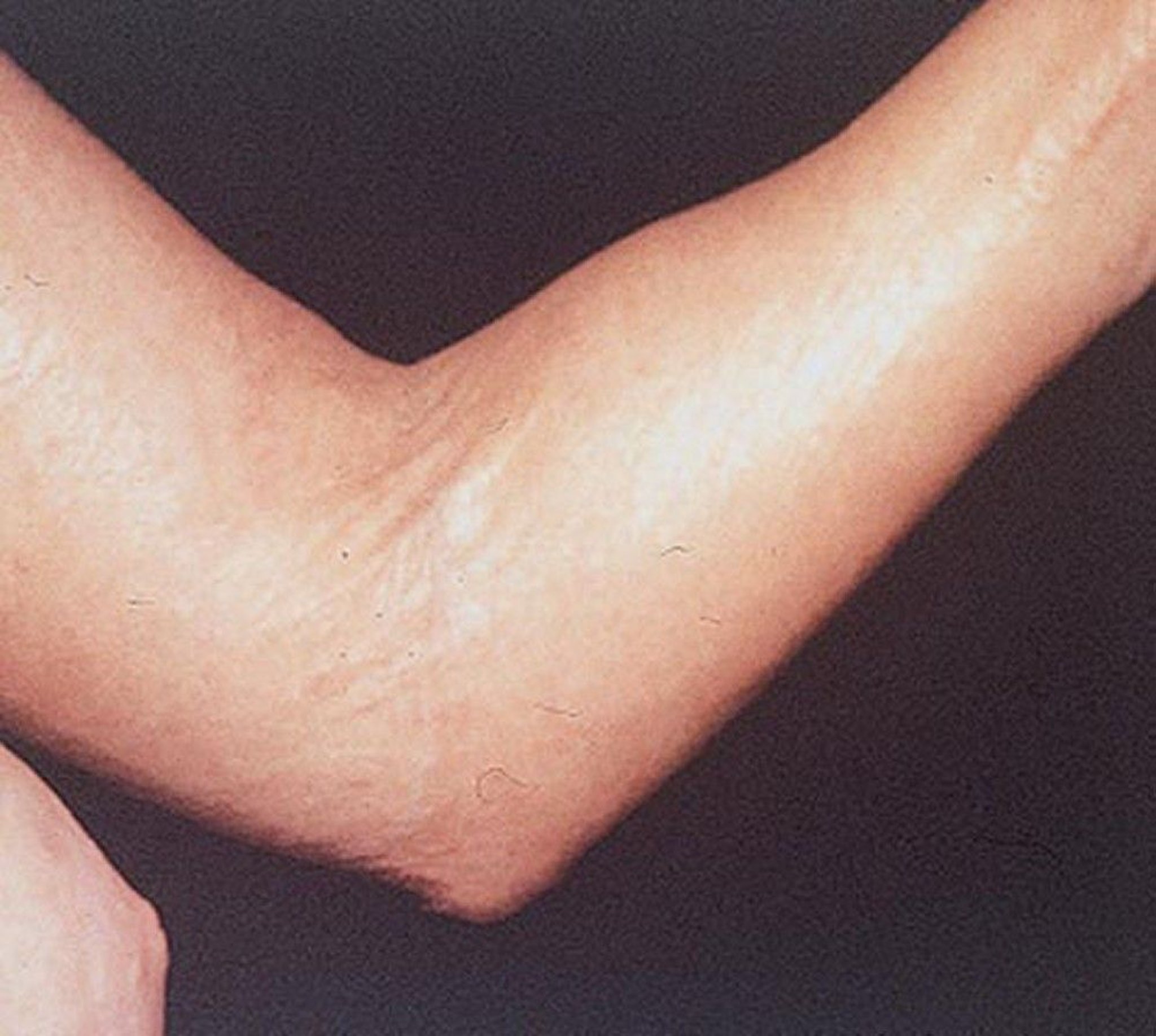
By permission of the publisher. From Marder W, Lath V, Crofford L, Lowe L, McCune WJ: Atlas of Rheumatology. Edited by G Hunder. Philadelphia, Current Medicine, 2005.
Polyarthralgias or mild arthritis can be prominent. Flexion contractures may develop in the fingers, wrists, and elbows. Friction rubs may develop over the joints, tendon sheaths, and large bursae.
Gastrointestinal manifestations
Esophageal dysfunction is the most frequent visceral disturbance and occurs in most patients. Dysphagia (usually retrosternal) usually develops first. Acid reflux can cause heartburn and stricture. Barrett esophagus occurs in one third of patients and predisposes to complications (eg, adenocarcinoma). Hypomotility of the small bowel causes bacterial overgrowth that can lead to malabsorption. Air may penetrate the damaged bowel wall and be visible on x-rays (pneumatosis intestinalis). Leakage of bowel contents into the peritoneal cavity can cause peritonitis. Distinctive wide-mouthed pseudodiverticula can develop in the colon. Biliary cirrhosis may develop in patients with limited systemic sclerosis (CREST syndrome).
Cardiopulmonary manifestations
Lung involvement generally progresses indolently, with substantial individual variability, but is a common cause of death. Lung fibrosis and interstitial lung disease are common and can impair gas exchange, leading to exertional dyspnea and restrictive disease with eventual respiratory failure. Acute alveolitis (potentially responsive to therapy) can develop. Esophageal dysfunction can lead to aspiration pneumonia. Pulmonary hypertension may develop, as can heart failure, both of which are poor prognostic findings. Pericarditis with effusion or pleurisy can occur. Cardiac arrhythmias are common.
Renal manifestations
Severe, often sudden onset renal disease (scleroderma renal crisis) may occur, most commonly in the first 4 to 5 years in patients who usually have diffuse scleroderma and the RNA polymerase III antibody. It is often heralded by sudden, severe hypertension with features of thrombotic microangiopathic hemolytic anemia. It can also occur without acute hypertension or in systemic sclerosis sine scleroderma, and therefore clinical suspicion is required to make the diagnosis. Corticosteroid use is a risk factor for development of scleroderma renal crisis.
Diagnosis of Systemic Sclerosis
Clinical criteria
Antibody testing
Systemic sclerosis should be considered in patients with Raynaud syndrome, typical musculoskeletal or skin manifestations, or unexplained dysphagia, malabsorption, pulmonary fibrosis, pulmonary hypertension, cardiomyopathies, or conduction disturbances. Diagnosis of systemic sclerosis sine scleroderma should be considered in patients who have unexplained visceral findings (eg, pulmonary hypertension). Diagnosis of systemic sclerosis can be obvious in patients with combinations of classic manifestations, such as Raynaud syndrome (with abnormal nail-fold capillary findings), dysphagia, and tight skin. However, in some patients, the diagnosis cannot be made clinically, and confirmatory laboratory tests can increase the probability of disease but their absence does not exclude it.
Antinuclear antibodies (ANA) are present in ≥ 90% of patients, often with an antinucleolar pattern. Rheumatoid factor is positive in one third of patients. Antibody to centromeric protein (anticentromere antibody) occurs in the serum of a high proportion of patients with limited disease but is not specific. Patients with generalized (diffuse) systemic sclerosis are more likely than those with limited disease to have anti-Scl-70 (topoisomerase I) antibodies. RNA polymerase III is associated with generalized systemic sclerosis, scleroderma renal crisis, and cancer. U3 RNP (fibrillarin) antibody is also associated with diffuse disease. The most cost-effective way to test for antibodies is to test for ANA, anti-Scl-70, and anticentromere antibodies first; if results are negative, testing for other antibodies should be considered based on clinical manifestations.
To help establish the diagnosis, clinicians can also consult the American College of Rheumatology (ACR)/European League Against Rheumatism's (EULAR) classification criteria for systemic sclerosis.
ACR/EULAR criteria for systemic sclerosis include the following features:
Skin thickening of the fingers of both hands
Fingertip lesions (eg, ulcers, pitting scars)
Telangiectasia
Abnormal nail-fold capillaries (eg, ectatic blood vessels, dropout areas) on capillaroscopy examination (eg, seen with an ophthalmoscope or dissecting microscope)
Pulmonary arterial hypertension and/or interstitial lung disease
Raynaud syndrome
Systemic sclerosis–related autoantibodies (anticentromere, anti–Scl-70, anti–RNA polymerase III)
These criteria are weighted, in some cases according to subcriteria, and added to generate a score. Scores above a certain threshold are classified as definite systemic sclerosis.
As part of baseline evaluation, pulmonary function testing, high-resolution chest CT (with supine and prone position to ensure that early changes are not due to atelectasis), and echocardiography are used to document cardiopulmonary involvement (interstitial lung disease and/or pulmonary hypertension) and severity of disease. The initial evaluation is indicated even in patients who do not report dyspnea, cough, or exercise intolerance. Echocardiography and pulmonary function testing should be done every 1 to 2 years thereafter.


Image courtesy of Sanjeev Patil, MD.

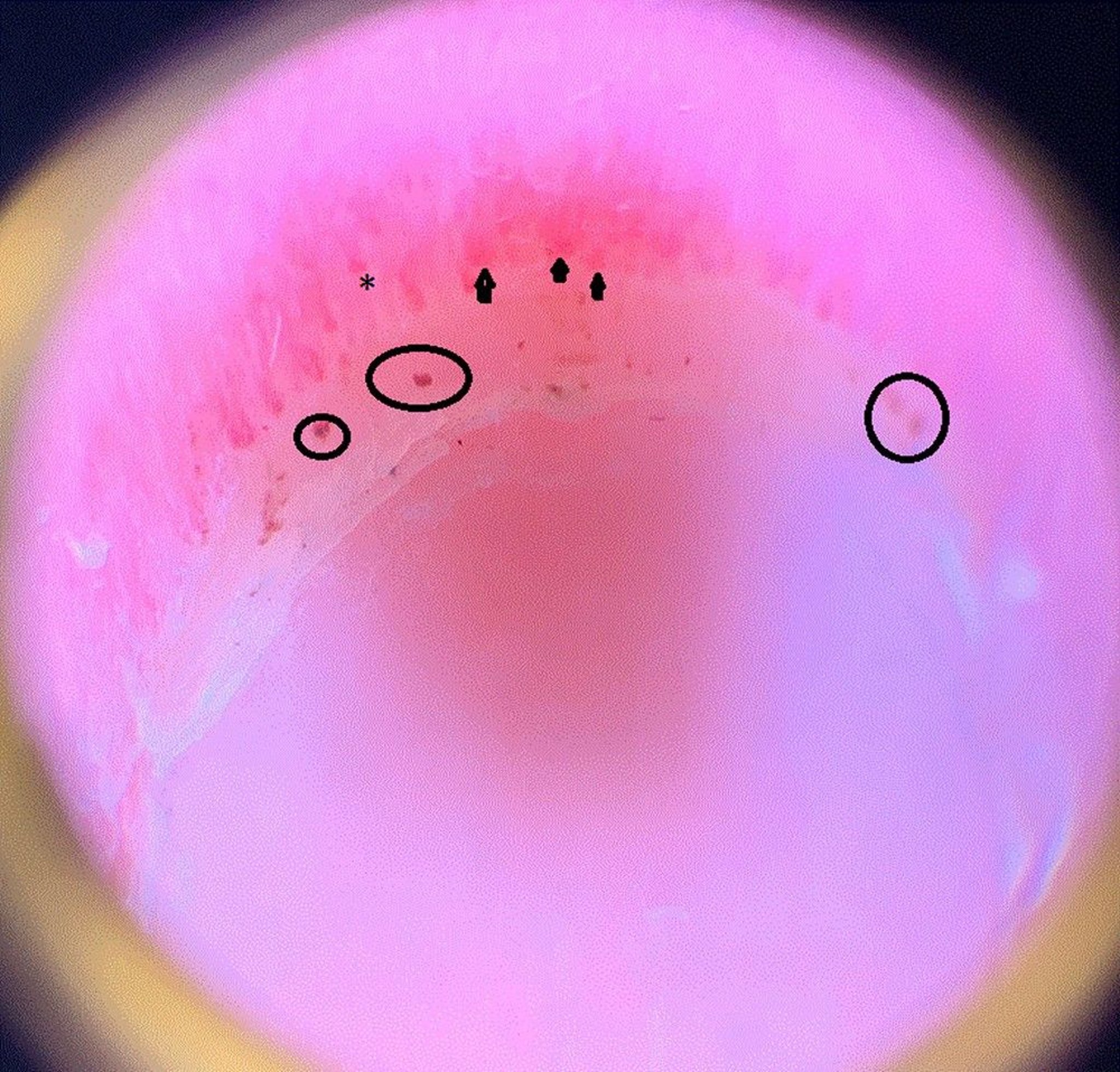
Image courtesy of Sanjeev Patil, MD.
Prognosis for Systemic Sclerosis
Overall 10-year survival is 92% for limited systemic sclerosis and is 65% for diffuse systemic sclerosis. Predictors of early mortality include male sex, late onset, diffuse disease, pulmonary arterial hypertension, and renal crisis (1). The course depends on the type of disease (generalized vs limited) and antibody profiling but can be unpredictable. Patients with diffuse skin disease tend to have a more aggressive clinical course and eventually develop visceral complications (usually within the first 3 to 5 years), which, if severe, can lead to death. Heart failure may be intractable. Ventricular ectopy, even if asymptomatic, increases the risk of sudden death.
Patients with limited systemic sclerosis (CREST syndrome) may have disease that is nonprogressive for long periods; visceral changes (eg, pulmonary hypertension caused by vascular disease of the lung, a peculiar form of biliary cirrhosis) eventually develop, but the course is often remarkably benign.
Prognosis reference
1. Hao Y, Hudson M, Baron M, et al: Early mortality in a multinational systemic sclerosis inception cohort. Arthritis Rheumatol 69(5):1067–1077, 2017. doi: 10.1002/art.40027
Treatment of Systemic Sclerosis
Treatment directed at symptoms and dysfunctional organs
No drug significantly influences the natural course of systemic sclerosis overall, but various drugs are of value in treating specific symptoms or organ systems. Corticosteroids may be helpful if there is overt myositis or mixed connective tissue disease but may predispose to renal crisis and thus are used only if necessary.
1) and has been considered standard of care.
2).
3).
Physical therapy may help preserve muscle strength but is ineffective in preventing joint contractures.
For acute renal crisis, a medical emergency, prompt treatment with an angiotensin-converting enzyme inhibitor can dramatically prolong survival. The mortality rate of renal crisis remains high, but the crisis is often reversible if treatment is prompt. Dialysis may be necessary, temporarily or long-term. Renal transplantation is a feasible option in patients who develop end-stage renal disease.
Recent evidence showed that autologous hematopoietic stem cell transplantation4).
Treatment references
1. Tashkin DP, Roth MD, Clements PJ, et alLancet Respir Med 4(9):708–719, 2016. doi: 10.1016/S2213-2600(16)30152-7
2. Roofeh D, Lin CJF, Goldin J, et alArthritis Rheumatol 73(7):1301-1310, 2021. doi:10.1002/art.41668
3. Distler O, Highland KB, Gahlemann M, et alN Engl J Med 380(26):2518-2528, 2019. doi:10.1056/NEJMoa1903076
4. van Laar JM, Farge D, Sont JK, et alJAMA 311(24):2490–2498, 2014. doi: 10.1001/jama.2014.6368
Key Points
Key findings in systemic sclerosis include skin and joint changes, Raynaud syndrome, and esophageal changes, but life-threatening manifestations may involve organs such as the lungs, heart, or kidneys.
Consider the diagnosis if patients have Raynaud syndrome, typical musculoskeletal or skin manifestations, or unexplained dysphagia, malabsorption, interstitial lung disease, pulmonary hypertension, cardiomyopathies, or conduction disturbances.
Test for ANA, Scl-70 (topoisomerase I), and anticentromere antibodies.
Because there is no clear disease-modifying therapy, direct treatment at involved organs.


