





Chronic obstructive pulmonary disease (COPD) is airflow limitation caused by an inflammatory response to inhaled toxins, often cigarette smoke. Alpha-1 antitrypsin deficiency and various occupational exposures are less common causes in nonsmokers. Symptoms are productive cough and dyspnea that develop over years; common signs include decreased breath sounds, prolonged expiratory phase of respiration, and wheezing. Severe cases may be complicated by weight loss, pneumothorax, frequent acute decompensation episodes, right heart failure, and/or acute or chronic respiratory failure. Diagnosis is based on history, physical examination, chest x-ray, and pulmonary function tests. Treatment is with bronchodilators, corticosteroids, and, when necessary, oxygen and antibiotics. Lung volume reduction procedures or transplantation are used in advanced disease. Survival in COPD is related to the severity of airflow limitation and the frequency of exacerbations.
COPD comprises
Chronic obstructive bronchitis (clinically defined)
Emphysema (pathologically or radiologically defined)
Many patients have features of both.
Chronic obstructive bronchitis is chronic bronchitis with airflow obstruction. Chronic bronchitis is defined as productive cough on most days of the week for at least 3 months total duration in 2 successive years. Chronic bronchitis becomes chronic obstructive bronchitis if spirometric evidence of airflow obstruction develops. Chronic asthmatic bronchitis is a similar, overlapping condition characterized by chronic productive cough, wheezing, and partially reversible airflow obstruction; it occurs predominantly in smokers with a history of asthma. In some cases, the distinction between chronic obstructive bronchitis and chronic asthmatic bronchitis is unclear and may be referred to as asthma COPD overlap (ACO).
Emphysema is destruction of lung parenchyma leading to loss of elastic recoil and loss of alveolar septa and radial airway traction, which increases the tendency for airway collapse. Lung hyperinflation, airflow limitation, and air trapping follow. Airspaces enlarge and may eventually develop blebs or bullae. Obliteration of small airways is thought to be the earliest lesion that precedes the development of emphysema.
Epidemiology of COPD
In the US, about 24 million people have airflow limitation, of whom about 16 million have a diagnosis of COPD. COPD is a leading cause of death, resulting in more than 150,000 deaths each year in the US (1). Prevalence, incidence, and mortality rates increase with age. Prevalence is higher in women, but total mortality is similar in both sexes. COPD seems to aggregate in families independent of alpha-1 antitrypsin deficiency (alpha-1 antiprotease inhibitor deficiency).
COPD is increasing worldwide because of increases in smoking and reduction in mortality due to infectious diseases. In some regions, the widespread use of biomass fuels, such as wood, grasses, or other organic materials, also contributes to COPD prevalence. COPD mortality rates may be higher in medically underserved nations than in nations where medical care is more easily accessed. COPD accounted for 3.23 million deaths globally in 2019 and is the third leading cause of death.
The COVID-19 pandemic has posed a particular risk to patients with COPD. The mortality rate for patients with COPD and COVID-19 was 15% versus 4% in those without COPD (2). Hospitalization rates were twice as great for COPD patients with COVID-19 compared to those without COPD. Overall, however, COVID-19 has been associated with world-wide reduction in COPD hospitalizations (3). The reasons for this are unclear but are thought to reflect the reduction in exposure to other viral infections as a result of increased respiratory infection precautions (3). In addition, it is speculated that hospitalizations were reduced during the pandemic because patients with medical emergencies, such as an acute exacerbation of COPD, avoided the emergency department out of fear of contracting COVID-19 (4).
Epidemiology references
1. Centers for Disease Control and Prevention: National Center for Health Statistics: Leading Causes of Death. Updated January 22, 2022.
2. Meza D, Khuder B, Bailey JI, et al: Mortality from COVID-19 in patients with COPD: A US study in the N3C Data Enclave. Int J Chron Obstruct Pulmon Dis 16:2323–2326, 2021. doi: 10.2147/COPD.S318000
3. Alqahtani JS, Oyelade T, Aldhahir AM, et al: Reduction in hospitalised COPD exacerbations during COVID-19: A systematic review and meta-analysis. PLoS One 2021 Aug 3;16(8):e0255659, 2021. doi: 10.1371/journal.pone.0255659
4. Wong LE, Hawkins JE, Langness S, et al: Where are all the patients? Addressing Covid-19 fear to encourage sick patients to seek emergency care. NEJM Catal Innov Care Deliv May 14, 2020.
Etiology of COPD
There are 2 main causes of COPD:
Smoking (and less often other inhalational exposures)
Genetic factors
Inhalational exposure
Low body weight, childhood respiratory disorders, and exposure to passive cigarette smoke, air pollution, and occupational dust (eg, mineral dust, cotton dust) or inhaled chemicals (eg, cadmium) contribute to the risk of COPD but are of minor importance compared with cigarette smoking.
Genetic factors
The best-defined causative genetic disorder is alpha-1 antitrypsin deficiency, which is an important cause of emphysema in nonsmokers and markedly increases susceptibility to disease in smokers.
More than 30 genetic alleles have been found to be associated with COPD or decline in lung function in selected populations, but none has been shown to be as consequential as alpha-1 antitrypsin.
Pathophysiology of COPD
Various factors cause the airflow limitation and other complications of COPD.
Inflammation
Inhalational exposures can trigger an inflammatory response in airways and alveoli that leads to disease in genetically susceptible people. The process is thought to be mediated by an increase in protease activity and a decrease in antiprotease activity. Lung proteases, such as neutrophil elastase, matrix metalloproteinases, and cathepsins, break down elastin and connective tissue in the normal process of tissue repair. Their activity is normally balanced by antiproteases, such as alpha-1 antitrypsin, airway epithelium–derived secretory leukoproteinase inhibitor, elafin, and matrix metalloproteinase tissue inhibitor. In patients with COPD, activated neutrophils and other inflammatory cells release proteases as part of the inflammatory process; protease activity exceeds antiprotease activity, and tissue destruction and mucus hypersecretion result.
The inflammation in COPD increases as disease severity increases, and, in severe (advanced) disease, inflammation does not resolve completely despite smoking cessation. This chronic inflammation does not seem to respond to corticosteroids, particularly in patients who continue to smoke cigarettes (1).
Infection
Respiratory infection (which COPD patients are prone to) may amplify progression of lung destruction.
Bacteria, especially Haemophilus influenzae, colonize the lower airways of about 30% of patients with COPD. In more severely affected patients (eg, those with previous hospitalizations), colonization with Pseudomonas aeruginosa or other gram-negative bacteria is common. Smoking and airflow obstruction may lead to impaired mucus clearance in lower airways, which predisposes to infection. Repeated bouts of infection increase the inflammatory burden that hastens disease progression. There is no evidence, however, that long-term use of antibiotics slows the progression of COPD.
Airflow limitation
The cardinal pathophysiologic feature of COPD is airflow limitation caused by airway narrowing and/or obstruction, loss of elastic recoil, or both.
Airway narrowing and obstruction are caused by inflammation-mediated mucus hypersecretion, mucus plugging, mucosal edema, bronchospasm, peribronchial fibrosis, and remodelling of small airways or a combination of these mechanisms. Alveolar septa are destroyed, reducing parenchymal attachments to the airways and thereby facilitating airway closure during expiration.
Enlarged alveolar spaces sometimes consolidate into bullae, defined as airspaces ≥ 1 cm in diameter. Bullae may be entirely empty or have strands of lung tissue traversing them in areas of locally severe emphysema; they occasionally occupy the entire hemithorax. These changes lead to loss of elastic recoil and lung hyperinflation.
Increased airway resistance increases the work of breathing. Lung hyperinflation, although it decreases airway resistance, also increases the work of breathing. Increased work of breathing may lead to alveolar hypoventilation with hypoxia and hypercapnia, although hypoxia and hypercarbia can also be caused by ventilation/perfusion (V/Q) mismatch.
Complications
In addition to airflow limitation and sometimes respiratory insufficiency, complications include
Pulmonary hypertension
Respiratory infection
Weight loss and other comorbidities
Chronic hypoxemia increases pulmonary vascular tone, which, if diffuse, causes pulmonary hypertension and cor pulmonale. The increase in pulmonary vascular pressure may be augmented by the destruction of the pulmonary capillary bed due to destruction of alveolar septa.
Viral or bacterial respiratory infections are common among patients with COPD and cause a large percentage of acute exacerbations. It is currently thought that acute bacterial infections are due to acquisition of new strains of bacteria rather than overgrowth of chronic colonizing bacteria.
Weight loss may occur, perhaps in response to insufficient caloric intake and increased levels of circulating tumor necrosis factor (TNF)-alpha. This weight loss may be due to a mismatch between caloric expenditure and nutritional intake because caloric expenditure can be high in the presence of heightened inflammatory cytokines and hypoxemia.
Other coexisting or complicating disorders that adversely affect quality of life and/or survival include osteoporosis, depression, anxiety, coronary artery disease, lung cancer and other cancers, muscle atrophy, and gastroesophageal reflux. The extent to which these disorders are consequences of COPD, smoking, and the accompanying systemic inflammation is unclear.
Pathophysiology reference
1. Pascoe S, Barnes N, Brusselle G, et al: Blood eosinophils and treatment response with triple and dual combination therapy in chronic obstructive pulmonary disease: analysis of the IMPACT trial. Lancet Respir Med 7(9):745–756 2019. doi: 10.1016/S2213-2600(19)30190-0
Symptoms and Signs of COPD
COPD takes years to develop and progress. Most patients have smoked ≥ 20 cigarettes/day for > 20 years.
Productive cough usually is the initial symptom, developing among smokers in their 40s and 50s.
Dyspnea that is progressive, persistent, exertional, or worse during respiratory infection appears when patients are in their late 50s or 60s.
Symptoms usually progress quickly in patients who continue to smoke and in those who have a higher lifetime tobacco exposure. Morning headache develops in more advanced disease and signals nocturnal hypercapnia or hypoxemia.
Signs of COPD include wheezing, a prolonged expiratory phase of breathing, lung hyperinflation manifested as decreased heart and lung sounds, and increased anteroposterior diameter of the thorax (barrel chest). Patients with advanced emphysema lose weight and experience muscle wasting that has been attributed to immobility, hypoxia, or release of systemic inflammatory mediators, such as TNF-alpha.
Signs of advanced disease include pursed-lip breathing, accessory respiratory muscle use, paradoxical inward movement of the lower rib cage during inspiration (Hoover sign), and cyanosis. Signs of cor pulmonale include neck vein distention, splitting of the 2nd heart sound with an accentuated pulmonic component, tricuspid insufficiency murmur, and peripheral edema. Right ventricular heaves are uncommon in COPD because the lungs are hyperinflated.
Spontaneous pneumothorax may occur (possibly related to rupture of bullae) and should be suspected in any patient with COPD whose pulmonary status abruptly worsens.
The symptoms can be graded according to which activities cause dyspnea (see table Breathlessness Measurement using the mMRC Questionnaire).
Breathlessness Measurement Using the Modified British Medical Research Council (mMRC) Questionnaire
Grade | Shortness of Breath |
|---|---|
0 | None except during strenuous exercise |
1 | Occurring when hurrying on level ground or walking up a slight incline |
2 | Resulting in walking more slowly than people of the same age on level ground or Resulting in stopping for breath when walking at own pace on level ground |
3 | Resulting in stopping for breath after walking about 100 meters or after a few minutes on level ground |
4 | Preventing the person from leaving the house or Occurring when dressing or undressing |
Adapted from Mahler DA, Wells CK: Evaluation of clinical methods for rating dyspnea. Chest 93:580–586, 1988. | |
Acute exacerbations
Acute exacerbations occur sporadically during the course of COPD and are heralded by increased symptom severity. The specific cause of any exacerbation is almost always impossible to determine, but exacerbations are often attributed to viral upper respiratory infections, acute bacterial bronchitis, or exposure to respiratory irritants. As COPD progresses, acute exacerbations tend to become more frequent, averaging about 1 to 3 episodes/year.
Diagnosis of COPD
Chest imaging
Pulmonary function testing
Diagnosis is suggested by history, physical examination, and chest imaging findings and is confirmed by pulmonary function tests. Similar symptoms can be caused by asthma, heart failure, and bronchiectasis (see table Differential Diagnosis of COPD). COPD and asthma are sometimes easily confused and may overlap (called asthma COPD overlap).
Systemic disorders that may have a component of airflow limitation suggest COPD; they include HIV infectionsarcoidosis, Sjögren syndrome, bronchiolitis obliterans, lymphangioleiomyomatosis, and eosinophilic granuloma. COPD can be differentiated from interstitial lung diseases by chest imaging, which shows increased interstitial markings in interstitial lung disease, and pulmonary function testing, which shows a restrictive ventilatory defect rather than an obstructive ventilatory defect. In some patients, COPD and interstitial lung disease coexist (combined pulmonary fibrosis and emphysema [CPFE]) in which lung volumes are relatively preserved, but gas exchange is severely impaired.
Pulmonary function tests
Patients suspected of having COPD should undergo pulmonary function testing to confirm airflow limitation, to quantify its severity and reversibility, and to distinguish COPD from other disorders. (Some experts recommend screening pulmonary function testing for all patients with a history of smoking.) Pulmonary function testing is also useful for following disease progression and monitoring response to treatment. The primary diagnostic tests are
FEV1: The volume of air forcefully expired during the first second after taking a full breath
Forced vital capacity (FVC): The total volume of air expired with maximal force
Flow-volume loops: Simultaneous spirometric recordings of airflow and volume during forced maximal expiration and inspiration
Reductions of FEV1, FVC, and the ratio of FEV1/FVC are the hallmark of airflow limitation. Flow-volume loops show a concave pattern in the expiratory tracing (see figure Flow-Volume Loop).
There are 2 basic pathways by which COPD can develop and manifest with symptoms in later life:
In the first pathway, patients may have normal lung function in early adulthood, which is followed by a more rapid decline in FEV1 (about ≥ 60 mL/year).
With the 2nd pathway, patients have impaired lung function in early adulthood, often associated with asthma or other childhood respiratory disease. In these patients, COPD may present with a normal age-related decline in FEV1 (about 30 mL/year).
Although this 2nd pathway model is conceptually helpful, a wide range of individual trajectories is possible (1). When the FEV1 falls below about 1 L, patients develop dyspnea during activities of daily living (although dyspnea is more closely related to the degree of dynamic hyperinflation [progressive hyperinflation due to incomplete exhalation] than to the degree of airflow limitation). When the FEV1 falls below about 0.8 L, patients are at risk of hypoxemia, hypercapnia, and cor pulmonale.
FEV1 and FVC are easily measured with office spirometry. Normal reference values are determined by patient age, sex, and height. Whether to adjust values based on race and/or ethnicity is controversial (see also Racial Issues in Pulmonary Medicine: Pulse Oximetry and Pulmonary Function Testing). Airflow limitation severity in patients with COPD and FEV1/FVC < 0.70 can be classified based on post-bronchodilator FEV1 (2):
Mild: ≥ 80% of predicted
Moderate: 50% to 79% of predicted
Severe: 30% to 49% of predicted
Very severe: < 30% of predicted
Additional pulmonary function testing is necessary only in specific circumstances, such as before lung volume reduction procedures. Other test abnormalities may include
Increased total lung capacity
Increased functional residual capacity
Increased residual volume
Decreased vital capacity
Decreased single-breath diffusing capacity for carbon monoxide (DLCO)
Findings of increased total lung capacity, functional residual capacity, and residual volume can help distinguish COPD from restrictive pulmonary disease, in which these measures are diminished.
Decreased DLCO is nonspecific and is reduced in other disorders that affect the pulmonary vascular bed, such as interstitial lung disease, but can help distinguish emphysema from asthma, in which DLCO is normal or elevated.
Imaging tests
Chest x-ray may have characteristic findings. In patients with emphysema, changes can include lung hyperinflation manifested as a flat diaphragm (ie, increase in the angle formed by the sternum and anterior diaphragm on a lateral film from the normal value of 45° to > 90°), rapid tapering of hilar vessels, and bullae (ie, radiolucencies > 1 cm surrounded by arcuate, hairline shadows). Other typical findings include enlargement of the retrosternal airspace and a narrow cardiac shadow. Emphysematous changes occurring predominantly in the lung bases suggest alpha-1 antitrypsin deficiency. The lungs may look normal or have increased lucency secondary to loss of parenchyma. Among patients with chronic obstructive bronchitis, chest x-rays may be normal or may show a bibasilar increase in bronchovascular markings as a result of bronchial wall thickening.

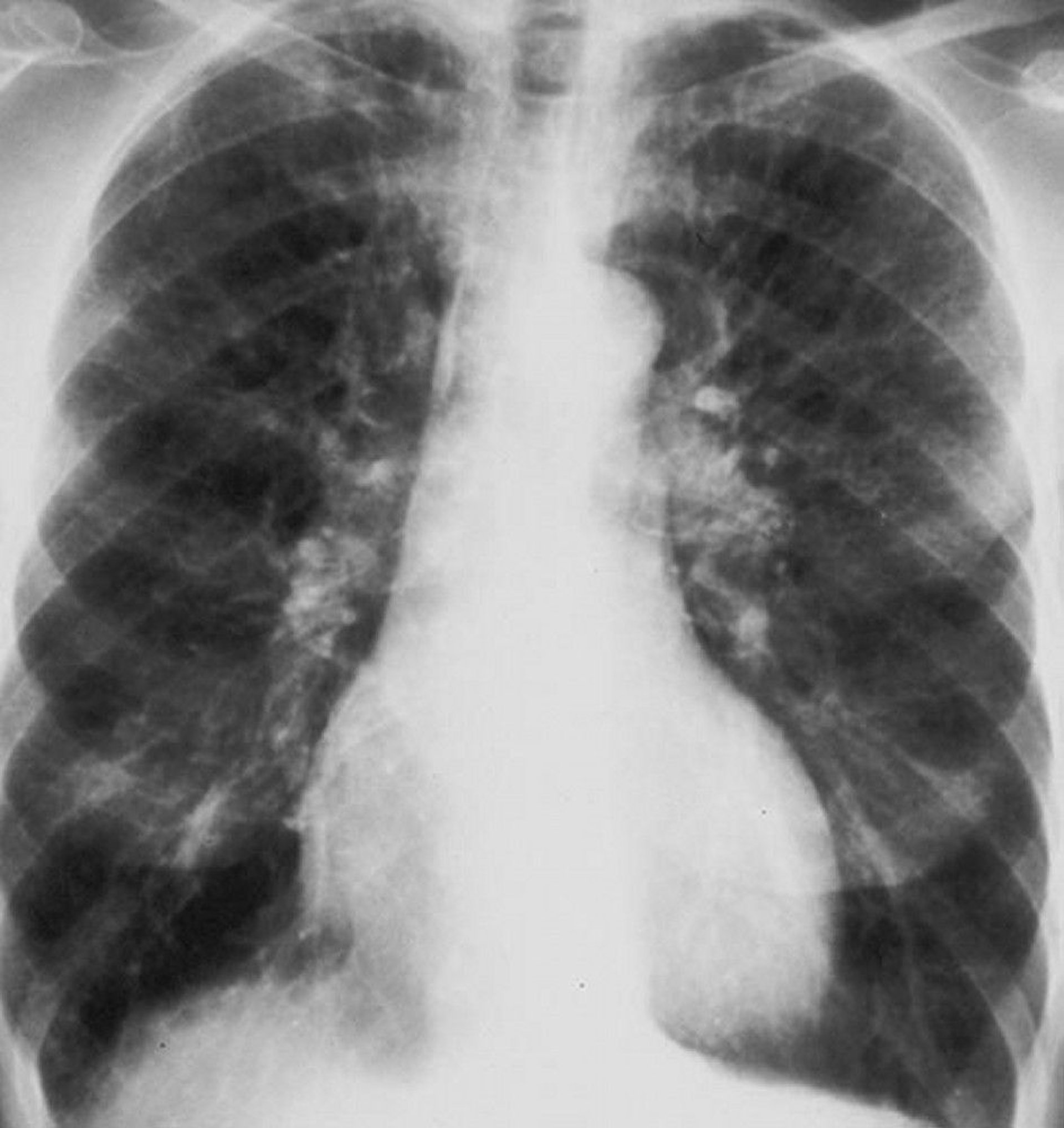
By permission of the publisher. From Barnes P. In Bone's Atlas of Pulmonary and Critical Care Medicine. Edited by J Crapo. Philadelphia, Current Medicine, 2005.

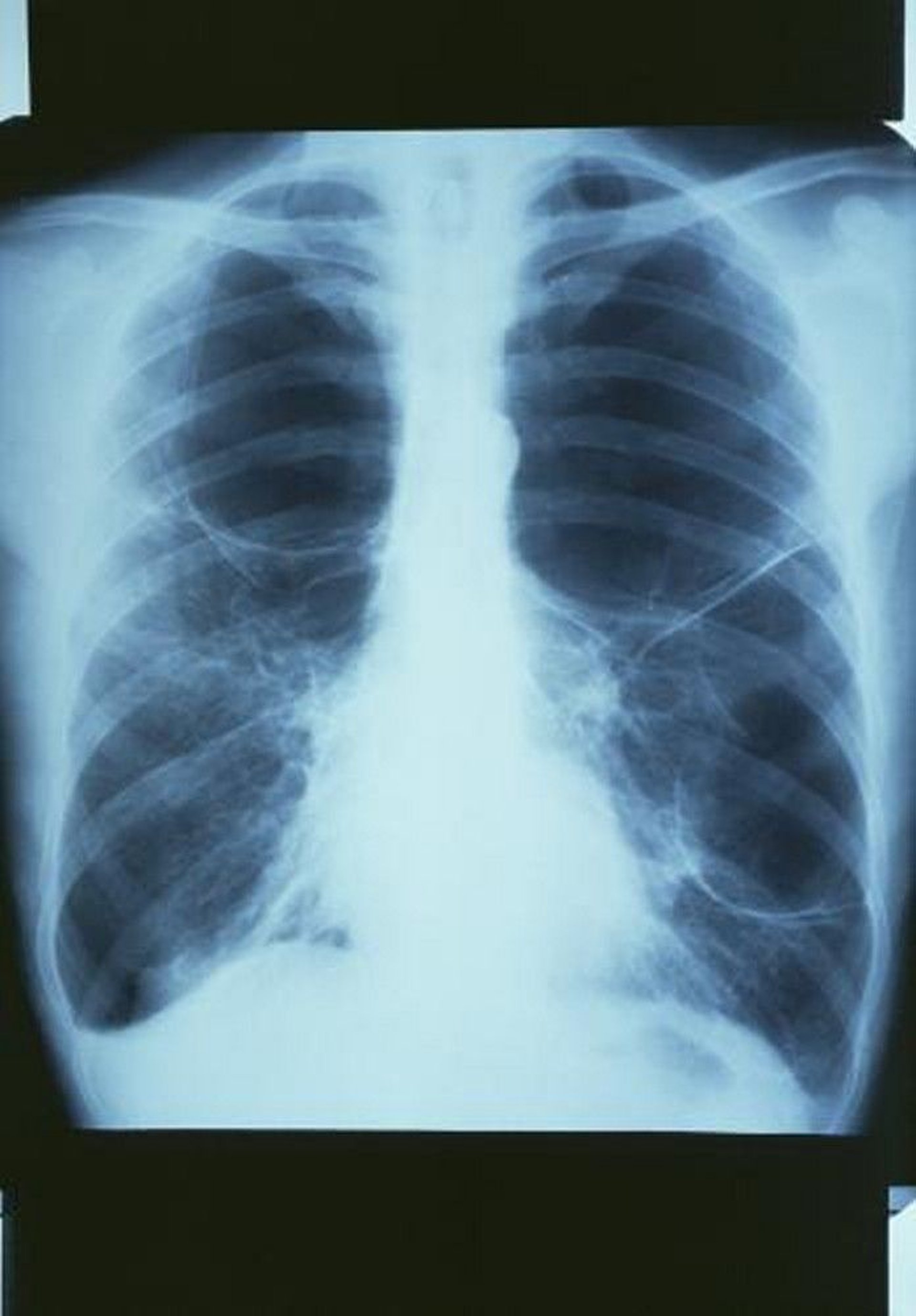
GJLP/CNRI/SCIENCE PHOTO LIBRARY
Prominent hila suggest large central pulmonary arteries that may signify pulmonary hypertension. Right ventricular enlargement that occurs in cor pulmonale may be masked by lung hyperinflation or may manifest as encroachment of the heart shadow on the retrosternal space or by widening of the transverse cardiac shadow in comparison with previous chest x-rays.
Chest CT may reveal abnormalities that are not apparent on the chest x-ray and may also suggest coexisting or complicating disorders, such as pneumonia, pneumoconiosis, or lung cancer. CT helps assess the extent and distribution of emphysema, estimated either by visual scoring or with analysis of the distribution of lung density. Indications for obtaining CT in patients with COPD include evaluation for lung volume reduction procedures, suspicion of coexisting or complicating disorders that are not clearly evident or excluded by chest x-ray, suspicion of lung cancer, and screening for lung cancer. Enlargement of the pulmonary artery diameter greater than the ascending aorta diameter suggests pulmonary hypertension (3).
Adjunctive tests
Alpha-1 antitrypsin levels should be measured in patients < 50 years with symptomatic COPD and in nonsmokers of any age with COPD to detect alpha-1 antitrypsin deficiency. Other indications of possible alpha-1 antitrypsin deficiency include a family history of premature COPD or unexplained liver disease, lower-lobe distribution of emphysema, and COPD associated with antineutrophil cytoplasmic antibody (ANCA)-positive vasculitis. If levels of alpha-1 antitrypsin are low, the diagnosis should be confirmed by genetic testing to establish the alpha-1 antitrypsin phenotype.
ECG, often done to exclude cardiac causes of dyspnea, typically shows diffusely low QRS voltage with a vertical heart axis caused by lung hyperinflation and increased P-wave voltage or rightward shifts of the P-wave vector caused by right atrial enlargement in patients with advanced emphysema. Findings of right ventricular hypertrophy include an R or R′ wave as tall as or taller than the S wave in lead V1; an R wave smaller than the S wave in lead V6; right-axis deviation > 110° without right bundle branch block; or some combination of these. Multifocal atrial tachycardia, an arrhythmia that can accompany COPD, manifests as a tachyarrhythmia with polymorphic P waves and variable PR intervals.
Echocardiography is occasionally useful for assessing right ventricular function and pulmonary hypertension, although air trapping makes it technically difficult in patients with COPD. Echocardiography is most often indicated when coexistent left ventricular or valvular heart disease is suspected.
Hemoglobin and hematocrit are of little diagnostic value in the evaluation of COPD but may show erythrocythemia (hematocrit > 48%) if the patient has chronic hypoxemia. Patients with anemia (for reasons other than COPD) have disproportionately severe dyspnea. The differential white blood cell count may be helpful. A growing body of evidence indicates that eosinophilia predicts response to inhaled corticosteroids.
Serum electrolytes are of little value but may show an elevated bicarbonate level if patients have chronic hypercapnia. Venous blood gases are useful for diagnosis of acute or chronic hypercapnia.
Evaluation of exacerbations
Patients with acute exacerbations usually have combinations of increased cough, sputum, dyspnea, and work of breathing, as well as low oxygen saturation on pulse oximetry, diaphoresis, tachycardia, anxiety, and cyanosis. Patients with exacerbations accompanied by retention of carbon dioxide may be lethargic or somnolent, a very different appearance.
All patients requiring hospitalization for an acute exacerbation should undergo testing to quantify hypoxemia and hypercapnia. Hypercapnia may exist without hypoxemia.
Findings of PaO2 < 50 mm Hg, or PaCO2 > 50 mm Hg, or partial pressure of carbon dioxide in venous blood (PvCO2) > 55 mm Hg in patients with respiratory acidemia (pH < 7.35) define acute respiratory failure. Some patients chronically manifest such levels of PaO2 and PaCO2 in the absence of acute respiratory failure.
A chest x-ray is often done to check for pneumonia or pneumothorax. Very rarely, among patients receiving chronic systemic corticosteroids, infiltrates may represent Aspergillus pneumonia.
Yellow or green sputum is a reliable indicator of neutrophils in the sputum and suggests bacterial colonization or infection. Culture is usually done in hospitalized patients but is not usually necessary in outpatients. In samples from outpatients, Gram stain usually shows neutrophils with a mixture of organisms, often gram-positive diplococci (Streptococcus pneumoniae), gram-negative bacilli (H. influenzae), or both. However, culture and microscopic exam of sputum is usually not necessary for outpatients. Other oropharyngeal commensal organisms, such as Moraxella (Branhamella) catarrhalis, occasionally cause exacerbations. In hospitalized patients, cultures may show resistant gram-negative organisms (eg, Pseudomonas) or, rarely, Staphylococcus. During influenza season, a rapid influenza test will guide treatment with neuraminidase inhibitors, and a respiratory viral panel for respiratory syncytial virus (RSV), rhinovirus, and metapneumovirus may allow tailoring of antimicrobial therapy.
Serum C-reactive protein (CRP) is helpful in guiding the use of antibiotics during exacerbations; use of antibiotics can be decreased without evidence of harm (4, 5).
Diagnosis references
1. Lange P, Celli B, Agusti A, et al: Lung-function trajectories leading to chronic obstructive pulmonary disease. N Engl J Med 373(2):111–122, 2015.
2. Global Initiative for Chronic Obstructive Lung Disease (GOLD): Diagnosis and initial assessment. 2022 Global Strategy for the Diagnosis, Management and Prevention of COPD.
3. Iyer AS, Wells JM, Vishin S, et al: CT scan-measured pulmonary artery to aorta ratio and echocardiography for detecting pulmonary hypertension in severe COPD. Chest 145(4):824–832, 2014.
4. Butler CC, Gillespie D, White P, et al: C-Reactive protein testing to guide antibiotic prescribing for COPD exacerbations. N Engl J Med 381(2):111–120, 2019. doi: 10.1056/NEJMoa1803185
5. Prins HJ, Duijkers R, van der Valk P, et al: CRP-guided antibiotic treatment in acute exacerbations of COPD in hospital admissions. Eur Respir J 53(5):1802014, 2019. doi: 10.1183/13993003.02014-2018
Prognosis for COPD
Severity of airway obstruction predicts survival in patients with COPD. For an FEV1 35 to 55% predicted, the 5-year mortality is 40%. For an FEV1less than 35% predicted, the 5-year mortality is 55% (1).
More accurate prediction of risk of death is possible by simultaneously measuring body mass index (B), the degree of airflow obstruction (O, which is the FEV1), dyspnea (D, which is measured using the Modified British Medical Research Council (mMRC) Questionnaire), and exercise capacity (E, which is measured with a 6-minute walk test); this is the BODE index. Also, older age, heart disease, anemia, resting tachycardia, hypercapnia, and hypoxemia predict decreased survival, whereas a significant response to bronchodilators predicts improved survival. Risk factors for death in patients with acute exacerbation requiring hospitalization include older age, higher PaCO2, and use of maintenance oral corticosteroids. (Details for calculating the BODE index are available at Medical Criteria.)
Patients at high risk of imminent death are those with progressive unexplained weight loss or severe functional decline (eg, those who experience dyspnea with self-care, such as dressing, bathing, or eating). Mortality in COPD may result from intercurrent illnesses rather than from progression of the underlying disorder in patients who have stopped smoking. Death is generally caused by acute respiratory failure, pneumonia, lung cancer, heart disease, or pulmonary embolism.
Prognosis reference
1. Almagro P, Martinez-Camblor P, Soriano JB, et al: Finding the best thresholds of FEV1 and dyspnea to predict 5-year survival in COPD patients: the COCOMICS study. PLoS One 9(2):e89866, 2014. doi: 10.1371/journal.pone.0089866
Treatment of COPD
(See also Treatment of Stable COPD and Treatment of Acute COPD Exacerbation.)
Smoking cessation
Inhaled bronchodilators, corticosteroids, or both
Supportive care (eg, oxygen therapy, pulmonary rehabilitation)
COPD management involves treatment of chronic stable disease and prevention and treatment of exacerbations. Treatment of cor pulmonale, a common complication of long-standing, severe COPD, is discussed elsewhere.
Smoking cessation is critical in treatment of COPD.
Treatment of chronic stable COPD aims to prevent exacerbations and improve lung and physical function. Relieve symptoms rapidly with primarily short-acting beta-adrenergic drugs and decrease exacerbations with inhaled corticosteroids, long-acting beta-adrenergic drugs, long-acting anticholinergic drugs, or a combination (see table Initial Treatment of COPD).
Pulmonary rehabilitation includes structured and supervised exercise training, nutrition counseling, and self-management education.
Oxygen therapy is indicated for selected patients.
Treatment of exacerbations ensures adequate oxygenation and near-normal blood pH, reverses airway obstruction, and treats any cause.
Key Points
Cigarette smoking in susceptible people is the major cause of chronic obstructive pulmonary disease (COPD) in the developed world.
Diagnose COPD and differentiate it from disorders that have similar characteristics (eg, asthma, heart failure) primarily by routine clinical information, such as symptoms (particularly time course), age at onset, risk factors, and results of routine tests (eg, chest x-ray, pulmonary function tests).
Reductions of FEV1, FVC, and the ratio of FEV1/FVC are characteristic findings.
Categorize patients based on symptoms and exacerbation risk into one of 4 groups and use that category to guide drug treatment.
Relieve symptoms rapidly with primarily short-acting beta-adrenergic drugs and decrease exacerbations with inhaled corticosteroids, long-acting beta-adrenergic drugs, long-acting anticholinergic drugs, or a combination.
Encourage smoking cessation using multiple interventions.


