





Nonatheromatous arteriosclerosis is age-related fibrosis in the aorta and its major branches.
(See also Atherosclerosis.)
Arteriosclerosis is a general term for several disorders that cause thickening and loss of elasticity in the arterial wall.
Atherosclerosis, the most common form, is also the most serious and clinically relevant because it causes coronary artery disease and cerebrovascular disease. Atheromatous disease is characterized by the atherosclerotic plaque, which is a vascular lesion composed of lipids, inflammatory and smooth muscle cells, and a connective tissue matrix that may contain thrombi in various stages of organization and calcium deposits.
Nonatheromatous forms of arteriosclerosis include
Arteriolosclerosis
Mönckeberg arteriosclerosis
Nonatheromatous arteriosclerosis causes intimal thickening and weakens and disrupts the elastic lamellae. The smooth muscle (media) layer atrophies, and the lumen of the affected artery widens (becomes ectatic), predisposing to aneurysm or dissection. Hypertension is a major factor in development of aortic arteriosclerosis and aneurysm. Intimal injury, ectasia, and ulceration may lead to thrombosis, embolism, or complete arterial occlusion.
Nonatheromatous arteriosclerosis is usually asymptomatic until complications (eg, aneurysm) develop. It may be incidentally detected during imaging tests done for unrelated reasons.
There is no treatment for nonatheromatous arteriosclerosis beyond control of typical cardiovascular risk factors (eg, hypertension, dyslipidemia).
Arteriolosclerosis
Arteriolosclerosis affects distal arteries in patients with diabetes or hypertension.
Hyaline arteriolosclerosis affects small arteries and arterioles in patients with diabetes; typically, hyaline thickening occurs, the arteriolar wall degenerates, and the lumen narrows, causing diffuse ischemia, especially in the kidneys.
Hyperplastic arteriolosclerosis occurs more often in patients with hypertension; typically, laminated, concentric thickening and luminal narrowing occur, sometimes with fibrinoid deposits and vessel wall necrosis (necrotizing arteriolitis). Hypertension promotes these changes, and arteriolosclerosis, by increasing arteriolar rigidity and increasing peripheral resistance, may help sustain the hypertension.
Mönckeberg arteriosclerosis
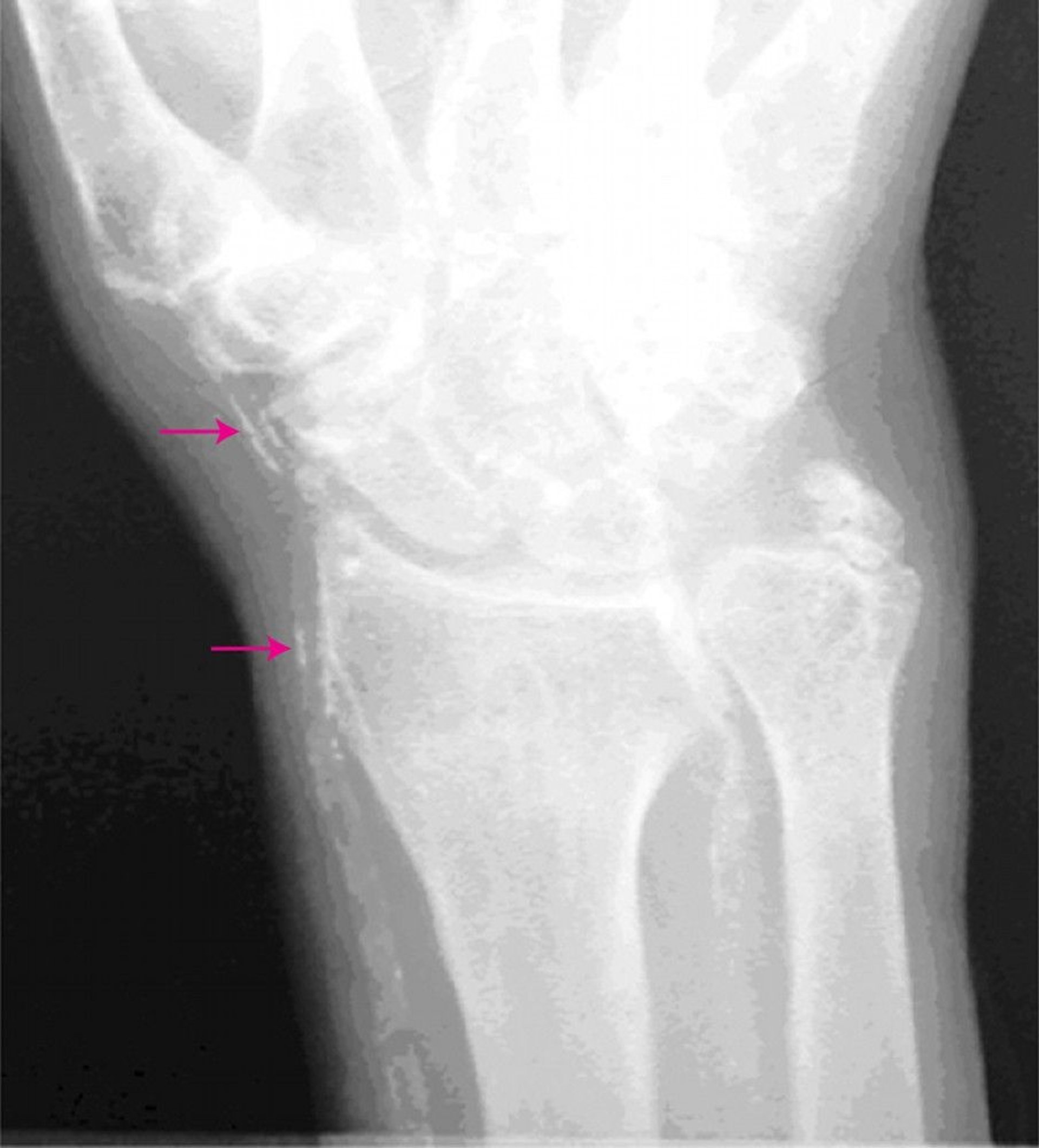
Mönckeberg arteriosclerosis (medial calcific sclerosis) affects patients > 50; age-related medial degeneration occurs with focal calcification and even bone formation within the arterial wall. Segments of the artery may become a rigid calcified tube without luminal narrowing. The diagnosis is usually obvious by plain x-ray. This disorder is clinically important only because it can greatly reduce arterial compressibility, causing extremely but falsely elevated blood pressure readings.

© Springer Science+Business Media
Key Points
Nonatheromatous arteriosclerosis causes thickening and loss of elasticity of the arterial wall in the absence of obvious atheromatous plaque.
There are two variants of nonatheromatous arteriosclerosis: arteriolosclerosis and Mönckeberg arteriosclerosis.
Diabetes, hypertension and age are risk factors for the development of nonatheromatous arteriosclerosis.


