





Atrial fibrillation is a rapid, irregularly irregular atrial rhythm. Symptoms include palpitations and sometimes weakness, effort intolerance, dyspnea, and presyncope. Atrial thrombi may form, causing a significant risk of embolic stroke. Diagnosis is by electrocardiography. Treatment involves rate control with drugs, prevention of thromboembolism with anticoagulation, and sometimes conversion to sinus rhythm by drugs or cardioversion.
(See also Overview of Arrhythmias.)
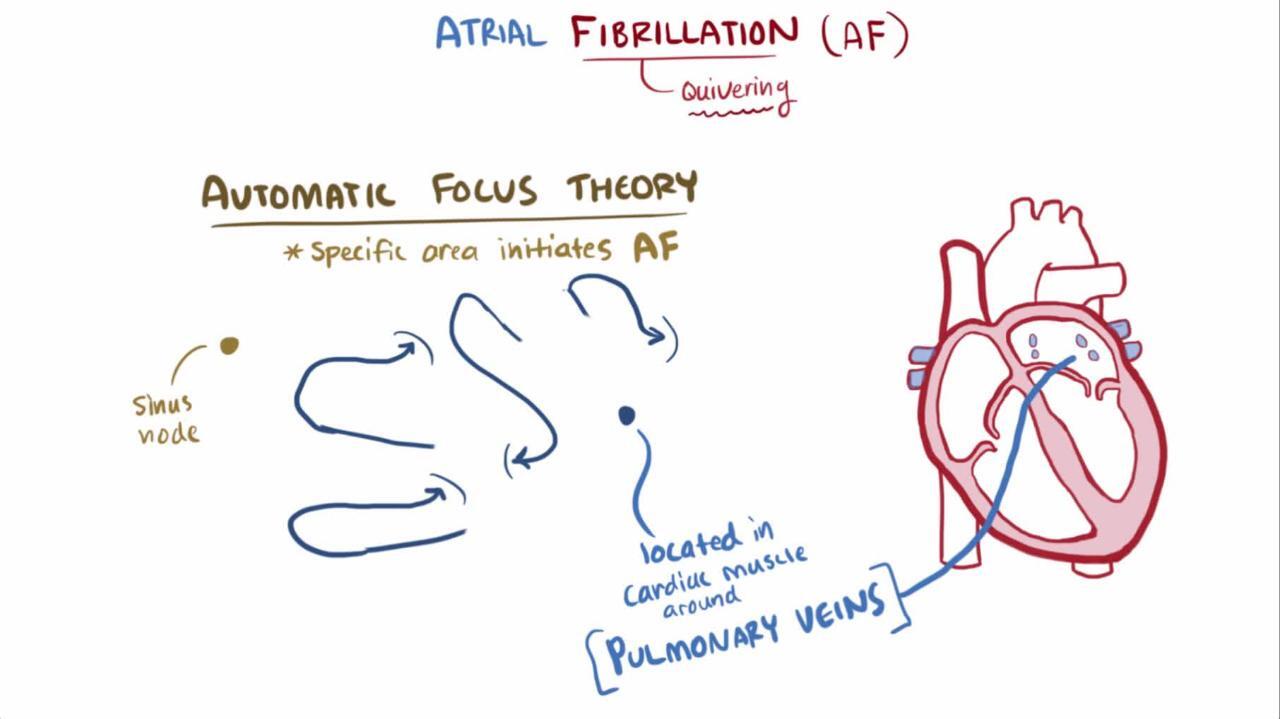
Atrial fibrillation has been attributed to multiple wavelets with chaotic reentry within the atria. However, in many cases, firing of an ectopic focus within venous structures adjacent to the atria (usually the pulmonary veins) is responsible for initiation and perhaps maintenance of atrial fibrillation. In atrial fibrillation, the atria do not contract, and the atrioventricular (AV) conduction system is bombarded with many electrical stimuli, causing inconsistent impulse transmission and an irregularly irregular ventricular rate, which is usually in the tachycardia rate range.
Atrial fibrillation is one of the most common arrhythmias, affecting between 3 and 6 million adults in the US. Men and White people are more likely to have atrial fibrillation than women and Black people. Prevalence increases with age; almost 10% of people > 80 years are affected. Atrial fibrillation tends to occur in patients with an underlying heart disorder.
Complications of atrial fibrillation
The absent atrial contractions predispose to thrombus formation; annual risk of cerebrovascular embolic events is about 7%. Risk of stroke is higher in older patients and in patients with a rheumatic valvular disorder, mechanical heart valve, hyperthyroidism, hypertension, diabetes, left ventricular systolic dysfunction, or previous thromboembolic events. Systemic emboli can also cause malfunction or necrosis of other organs (eg, heart, kidneys, gastrointestinal tract, eyes) or a limb.
Atrial fibrillation also may impair cardiac output; loss of atrial contraction can lower cardiac output at normal heart rate by about 10%. Such a decrease is usually well tolerated except when the ventricular rate becomes too fast (eg, > 140 beats/minute), or when patients have borderline or low cardiac output to begin with. In such cases, heart failure may develop.
Etiology of Atrial Fibrillation
The most common causes of atrial fibrillation are
Valvular heart disorders: mitral stenosis, mitral regurgitation, tricuspid regurgitation
Binge alcohol drinking (holiday heart)
Less common causes of atrial fibrillation include
Atrial septal defects and other congenital heart defects
Lone atrial fibrillation is atrial fibrillation without an identifiable cause in patients < 60 years.
Classification of Atrial Fibrillation
Paroxysmal atrial fibrillation is atrial fibrillation that lasts < 1 week having converted spontaneously or by an intervention to normal sinus rhythm. Episodes may recur.
Persistent atrial fibrillation is continuous atrial fibrillation that lasts > 1 week.
Long-standing persistent atrial fibrillation lasts > 1 year, but there is still the possibility of restoring sinus rhythm.
Permanent atrial fibrillation cannot be converted to sinus rhythm (the term also includes patients for whom a decision has been made not to attempt conversion to sinus rhythm). The longer atrial fibrillation is present, the less likely is spontaneous conversion and the more difficult is cardioversion because of atrial remodeling (rapid atrial rate-induced changes in atrial electrophysiology that are dominated by a decrease in atrial refractoriness and may also include increase in spatial dispersion of atrial refractoriness, slowed atrial conduction velocity, or both).
Symptoms and Signs of Atrial Fibrillation
Atrial fibrillation is often asymptomatic, but many patients have palpitations, vague chest discomfort, or symptoms of heart failure (eg, weakness, light-headedness, dyspnea), particularly when the ventricular rate is very rapid (often 140 to 160 beats/minute). Patients may also present with symptoms and signs of acute stroke or of other organ damage due to systemic emboli.
The pulse is irregularly irregular with loss of a waves in the jugular venous pulse. A pulse deficit (the apical ventricular rate is faster than the rate palpated at the wrist) may be present because left ventricular stroke volume is not always sufficient to produce a peripheral pressure wave for a beat closely coupled to the previous beat.
Diagnosis of Atrial Fibrillation
Electrocardiography (ECG)
Echocardiography
Thyroid function tests
Diagnosis of atrial fibrillation is by ECG (see figure Atrial fibrillation). Findings include
Absence of P waves
Presence of f (fibrillatory) waves between QRS complexes; f waves are irregular in timing, irregular in morphology; baseline undulations at rates > 300/minute, usually best seen in lead V1 and not always apparent in all leads
Irregularly irregular R-R intervals
Atrial Fibrillation

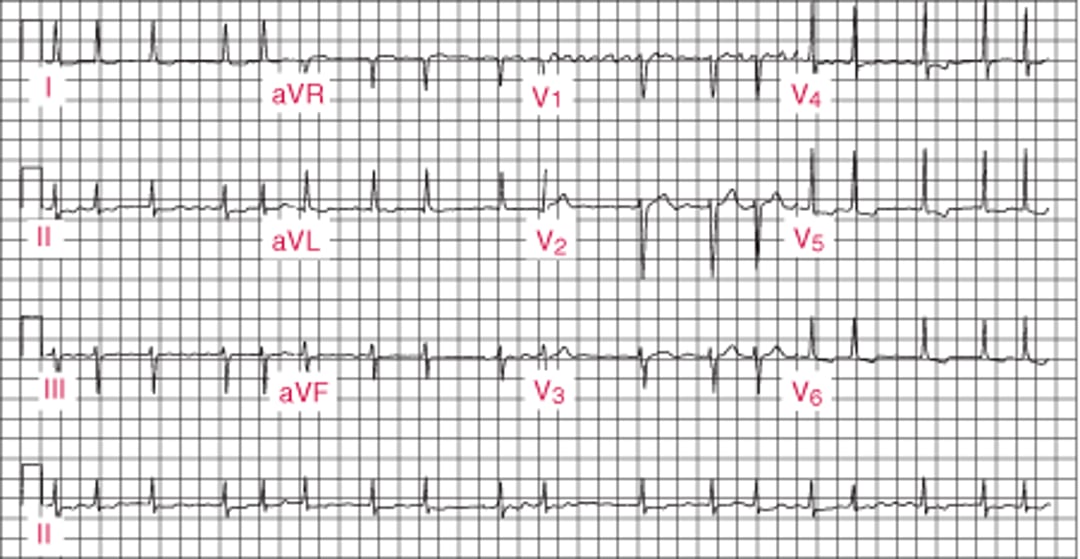
Other irregular rhythms may resemble atrial fibrillation on ECG but can be distinguished by the presence of discrete P or flutter waves, which can sometimes be made more visible with vagal maneuvers. Muscle tremor or electrical interference may resemble f waves, but the underlying rhythm is regular.
Atrial fibrillation may also cause a phenomenon that mimics ventricular extrasystoles or ventricular tachycardia (Ashman phenomenon). This phenomenon typically occurs when a short R-R interval follows a long R-R interval; the longer interval lengthens the refractory period of the infra-Hisian conduction system, and the subsequent QRS complex(es) are conducted aberrantly, typically with right bundle branch morphology.
Echocardiography and thyroid function tests are important in the initial evaluation.
Echocardiography is done to assess structural heart defects (eg, left atrial enlargement, left ventricular wall motion abnormalities suggesting past or present ischemia, valvular disorders, cardiomyopathy) and to identify additional risk factors for stroke (eg, atrial blood stasis or thrombus, complex aortic plaque). Atrial thrombi are more likely in the atrial appendages, where they are best detected by transesophageal rather than transthoracic echocardiography.
Pearls & Pitfalls
|
Treatment of Atrial Fibrillation
Rate control with medications or AV node ablation
Sometimes rhythm control with synchronized cardioversion, medications, or atrial fibrillation substrate ablation
Prevention of thromboembolism
If a significant underlying disorder is suspected, patients with new-onset atrial fibrillation may benefit from hospitalization. Patients with recurrent episodes do not require hospitalization unless other symptoms suggest the need for it. Once causes have been managed, treatment of atrial fibrillation focuses on ventricular rate control, rhythm control, and prevention of thromboembolism.
Ventricular rate control
Patients with atrial fibrillation of any duration require rate control (typically to < 100 beats/minute at rest) to control symptoms and prevent tachycardia-induced cardiomyopathy.
For acute paroxysms of rapid rate (eg, 140 to 160 beats/minute), IV AV node blockers are used (for doses, see table Antiarrhythmic Drugs). CAUTION: AV node blockers should not be used in patients with Wolff-Parkinson-White syndrome when an accessory AV pathway is involved (indicated by wide QRS duration); these drugs increase frequency of conduction via the bypass tract, possibly causing ventricular fibrillation.
heart failure is present. These medications may be used orally for long-term rate control.
Rhythm control
In patients with heart failure or other hemodynamic compromise directly attributable to new-onset atrial fibrillation, restoration of normal sinus rhythm is indicated to improve cardiac output. In other cases, conversion of atrial fibrillation to normal sinus rhythm is optimal, but the antiarrhythmic medications that are capable of doing so (class Ia, Ic, III) have a risk of adverse effects and may increase mortality. Conversion to sinus rhythm does not eliminate the need for chronic anticoagulation.
For acute conversion, synchronized cardioversion or drugs can be used. Before conversion is attempted, the ventricular rate should be controlled to < 120 beats/minute, and, many patients should be anticoagulated (for criteria and methods, see Prevention of thromboembolism during rhythm control). If atrial fibrillation has been present > 48 hours, patients should typically be given an oral anticoagulant (conversion, regardless of method used, increases risk of thromboembolism). Anticoagulation should be maintained for > 3 weeks before conversion or can be given for a shorter time before conversion if transesophageal echocardiography (TEE) does not show left atrial thrombus. Anticoagulation should be continued for at least 4 weeks after cardioversion. Many patients need chronic anticoagulation (see Long-term measures to prevent thromboembolism).
Pearls & Pitfalls
|
Synchronized cardioversion (100 joules, followed by 200 and 360 joules as needed) converts atrial fibrillation to normal sinus rhythm in 75 to 90% of patients, although recurrence rate is high. Efficacy and maintenance of sinus rhythm after the procedure is improved with use of class Ia, Ic, or III antiarrhythmic medications 24 to 48 hours before the procedure. Cardioversion is more effective in patients with shorter duration of atrial fibrillation, lone atrial fibrillation, or atrial fibrillation with a reversible cause; it is less effective when the left atrium is enlarged (> 5 cm), atrial appendage flow is low, or a significant underlying structural heart disorder is present.
Medications for conversion of atrial fibrillation to sinus rhythmAntiarrhythmic drugs). All are effective in about 50 to 60% of patients, but adverse effects differ. These medications should not be used until rate has been controlled by a beta-blocker or nondihydropyridine calcium channel blocker.
≥≥ 70 kg, otherwise 450 mg) that patients carry and self-administer when palpitations develop (“pill-in-the-pocket” approach). This approach must be limited to patients who have no sinoatrial or AV node dysfunction, bundle branch block, QT prolongation, Brugada syndrome, or structural heart disease. Its hazard (estimated at 1%) is the possibility of converting atrial fibrillation to a slowish atrial flutter that conducts 1:1 in the 200 to 240 beat/minute range. This potential complication can be reduced in frequency by coadministration of an AV nodal suppressing drug (eg, a beta-blocker or a nondihydropyridine calcium antagonist).
Angiotensin-converting enzyme (ACE) inhibitors, angiotensin II receptor blockers (ARBs), and aldosterone blockers may attenuate the myocardial fibrosis that provides a substrate for atrial fibrillation in patients with heart failure, but the role of these drugs in routine atrial fibrillation treatment has yet to be defined.
Ablation procedures for atrial fibrillation
For patients who do not respond to or cannot take rate-controlling medications, ablation of the AV node may be done to cause complete heart block; insertion of a permanent pacemaker is then necessary. Ablation of only one AV nodal pathway (AV node modification) reduces the number of atrial impulses reaching the ventricles and eliminates the need for a pacemaker, but this approach is considered less effective than complete ablation and is rarely used.
Ablation procedures that accomplish electrical isolation of the pulmonary veins from the left atrium can prevent atrial fibrillation without causing AV block. In comparison to other ablation procedures, pulmonary vein isolation has a lower success rate (60 to 80%) and a higher complication rate (1 to 5%). Accordingly, this procedure is often reserved for the best candidates (eg, younger patients who have no significant structural heart disease, patients without other options such as those with medication-resistant AF, or patients with left ventricular systolic dysfunction and heart failure.
Randomized clinical trials addressing the need for continued long-term oral anticoagulation after an apparently successful ablation procedure are underway.
Prevention of thromboembolism
Prevention of thromboembolism is an important goal in the treatment of patients with atrial fibrillation. Current American Heart Association/American College of Cardiology/Heart Rhythm Society guidelines recommend use of the CHA2DS2-VASc score and specific cardiac factors to guide thromboembolic therapy.
Long-term measures to prevent thromboembolism are taken for certain patients with atrial fibrillation depending on their estimated risk of stroke versus risk of bleeding (eg, as per the CHA2DS2-VASc score and the HAS-BLED tool).
Conversion of atrial fibrillation with either an antiarrhythmic drug or with DC cardioversion conveys a higher risk for thromboembolic events. When a patient with atrial fibrillation who is not anticoagulated is to undergo cardioversion additional considerations are required. If urgent cardioversion is required because of hemodynamic compromise, cardioversion is done and anticoagulation is started as soon as is practical and continued for at least 4 weeks. If the onset of the current episode of atrial fibrillation is clearly within 48 hours, cardioversion may proceed without prior or subsequent anticoagulation in men with a CHA2DS2-VASc score of 0 and in women with a CHA2DS2-VASc score of 1 (class IIb recommendation).
If the onset of the current episode of atrial fibrillation is not clearly within 48 hours, the patient should be anticoagulated for 3 weeks before and at least 4 weeks after cardioversion regardless of the patient's predicted risk of a thromboembolic event (class I recommendation). Alternatively, therapeutic anticoagulation is started, transesophageal echocardiography (TEE) is done, and, if no left atrial or left atrial appendage clot is seen, cardioversion may be done, followed by at least 4 weeks of anticoagulation therapy (class IIa recommendation).
The guidelines for antithrombotic therapy in atrial fibrillation differ in different regions. The current guidelines in the United States are as follows:
Long-term oral anticoagulant therapy is recommended for patients with rheumatic mitral stenosis, mechanical artificial heart valve, and nonvalvular atrial fibrillation with CHA2DS2-VASc scores of ≥ 2 in men and ≥ 3 in women (class of recommendation I) and may be considered for patients with nonvalvular atrial fibrillation and CHA2DS2-VASc scores of ≥ 1 in men and ≥ 2 in women (class of recommendation IIb).
No antithrombotic therapy is recommended for patients with nonvalvular atrial fibrillation and CHA2DS2-VASc scores of 0 in men and 1 in women (class of recommendation IIa).
These general guidelines are altered in patients with more than moderate renal impairment.
The left atrial appendage may be surgically ligated or closed with a transcatheter device when appropriate antithrombotic therapy is absolutely contraindicated.
An individual patient's risk of bleeding may be estimated with any of a number of prognostic tools, of which the most commonly used is HAS-BLED (see table HAS-BLED Tool for Predicting Risk of Bleeding in Patients With Atrial Fibrillation). The HAS-BLED score serves best in identifying conditions that, if modified, reduce bleeding risk rather than in identifying patients with a higher risk of bleeding who should not receive anticoagulation.
Key Points
Atrial fibrillation is an irregularly irregular atrial rhythm that may be episodic or continuous; paroxysms of tachycardia may occur.
QRS complexes are typically narrow; a wide complex may occur with intraventricular conduction defects or Wolff-Parkinson-White syndrome.
Patients should have electrocardiography, echocardiography, and thyroid function testing.
Heart rate is controlled typically to <
Restoration of sinus rhythm is not as important as rate control and does not eliminate the need for anticoagulation but may help patients with continuing symptoms or hemodynamic compromise (eg, heart failure); synchronized cardioversion or medication can be used.
Anticoagulation is usually necessary before cardioversion.
Long-term oral anticoagulation to prevent stroke is required for patients with risk factors for thromboembolism.
More Information
The following English-language resources may be useful. Please note that THE MANUAL is not responsible for the content of these resources.
January CT, Wann LS, Alpert JS, et al: 2014 ACC/AHA/HRS Guideline for the management of patients with atrial fibrillation: a report of the American College of Cardiology/American Heart Association Task Force of Practice Guidelines and the Heart Rhythm Society. Circulation130:2071-2104, 2014.
January CT, Wann LS, Calkins H, et al: 2019 AHA/ACC/HRS Focused Update of the 2014 AHA/ACC/HRS Guideline for the Management of Patients With Atrial Fibrillation: A Report of the American College of Cardiology/American Heart Association Task Force on Clinical Practice Guidelines and the Heart Rhythm Society. J Am Coll Cardiol 74(1):104–132, 2019. doi: 10.1016/j.jacc.2019.01.011


