





Infective endocarditis is infection of the endocardium, usually with bacteria (commonly, streptococci or staphylococci) or fungi. It may cause fever, heart murmurs, petechiae, anemia, embolic phenomena, and endocardial vegetations. Vegetations may result in valvular incompetence or obstruction, myocardial abscess, or mycotic aneurysm. Diagnosis requires demonstration of microorganisms in blood and usually echocardiography. Treatment consists of prolonged antimicrobial treatment and sometimes surgery.
Endocarditis usually refers to infection of the endocardium (ie, infective endocarditis). The term can also include noninfective endocarditis, in which sterile platelet and fibrin thrombi form on cardiac valves and adjacent endocardium. Noninfective endocarditis sometimes leads to infective endocarditis. Both can result in embolization and impaired cardiac function.
The diagnosis of infective endocarditis is usually based on a constellation of clinical findings rather than a single definitive test result.
Infective endocarditis can occur at any age. Men are affected about twice as often as women. Incidence of infection and mortality increase with increasing age. Patients who use illicit intravenous drugs, immunocompromised patients, patients with prosthetic heart valves and other intracardiac devices are at highest risk. There is also an increased risk in patients with indwelling intravascular catheters.
Etiology of Infective Endocarditis
The normal heart is relatively resistant to infection. Bacteria and fungi do not easily adhere to the endocardial surface, and constant blood flow helps prevent them from settling on endocardial structures. Thus, 2 factors are typically required for endocarditis:
A predisposing abnormality of the endocardium
Microorganisms in the bloodstream (bacteremia)
Massive bacteremia or particularly virulent microorganisms (eg, Staphylococcus aureus) cause endocarditis on normal valves.
Endocardial factors
Endocarditis usually involves the heart valves. Major predisposing factors are congenital heart defects, rheumatic valvular disease, bicuspid aortic valves, calcific aortic valves, mitral valve prolapse, hypertrophic cardiomyopathy, and prior endocarditis. Prosthetic valves and other intracardiac devices are a particular risk. Occasionally, mural thrombi, ventricular septal defects, and patent ductus arteriosus sites become infected. The nidus for infection is usually a sterile fibrin-platelet vegetation formed when damaged endothelial cells release tissue factor.
Infective endocarditis occurs most often on the left side (eg, mitral or aortic valve). About 10 to 20% of cases are right-sided (tricuspid or pulmonic valve). Patients who use illicit intravenous drugs have a much higher incidence of right-sided endocarditis (about 30 to 70%).
Microorganisms
Microorganisms that infect the endocardium may originate from distant infected sites (eg, cutaneous abscess, inflamed or infected gums, urinary tract infection) or have obvious portals of entry such as a central venous catheter or a drug injection site. Almost any implanted foreign material (eg, ventricular or peritoneal shunt, prosthetic device) is at risk of bacterial colonization, thus becoming a source of bacteremia and hence endocarditis. Endocarditis also may result from asymptomatic bacteremia, such as typically occurs during invasive dental, medical, or surgical procedures. Even toothbrushing and chewing can cause bacteremia (usually due to viridans streptococci) in patients with gingivitis.
Causative microorganisms vary by site of infection, source of bacteremia, and host risk factors (eg, IV illicit drug use), but overall, streptococci and Staphylococcus aureus cause 80 to 90% of cases. Enterococci, gram-negative bacilli, HACEK organisms (Haemophilus species, Actinobacillus actinomycetemcomitans, Cardiobacterium hominis, Eikenella corrodens, and Kingella kingae), and fungi cause most of the rest. However, the incidence of staphylococcal and enterococcal endocarditis has been increasing, and streptococcal endocarditis has been decreasing.
The disease develops in 3 stages:
Bacteremia: Microorganisms are present in the blood
Adhesion: The microorganism adheres to abnormal or damaged endothelium via surface adhesions
Colonization: Proliferation of the organism together with inflammation, leading to a mature vegetation
Many of the causative microorganisms produce polysaccharide biofilms that shield them from host immune defences and impede antibiotic penetration.
Pathophysiology of Infective Endocarditis
Endocarditis has local and systemic consequences.
Local consequences
Local consequences of infective endocarditis include
Myocardial abscesses with tissue destruction and sometimes conduction system abnormalities (usually with low septal abscesses)
Sudden, severe valvular regurgitation, causing heart failure and death (usually due to mitral or aortic valve lesions)
Aortitis due to contiguous spread of infection
Prosthetic valve infections are particularly likely to involve valve ring abscesses, obstructing vegetations, myocardial abscesses, and mycotic aneurysms manifested by valve obstruction, dehiscence, and conduction disturbances.
Systemic consequences
Systemic consequences of endocarditis are primarily due to
Embolization of infected material from the heart valve
Immune-mediated phenomena (primarily in chronic infection)
Right-sided lesions typically produce septic pulmonary emboli, which may result in pulmonary infarction, pneumonia, or empyema. Left-sided lesions may embolize to any tissue, particularly the kidneys, spleen, and central nervous system. Mycotic aneurysms can form in any major artery. Cutaneous and retinal emboli are common. Diffuse glomerulonephritis may result from immune complex deposition.
Classification of Infective Endocarditis
Infective endocarditis may have an indolent, subacute course or a more acute, fulminant course with greater potential for rapid decompensation.
Subacute bacterial endocarditis (SBE), although aggressive, usually develops insidiously and progresses slowly (ie, over weeks to months). Often, no source of infection or portal of entry is evident. SBE is caused most commonly by streptococci (especially viridans, microaerophilic, anaerobic, and nonenterococcal group D streptococci and enterococci) and less commonly by S. aureus, Staphylococcus epidermidis, Gemella morbillorum, Abiotrophia defectiva (formerly, Streptococcus defectivus), Granulicatella species, and fastidious Haemophilus species. SBE often develops on abnormal valves after asymptomatic bacteremia due to periodontal, gastrointestinal, or genitourinary infections.
Acute bacterial endocarditis (ABE) usually develops abruptly and progresses rapidly (ie, over days). A source of infection or portal of entry is often evident. When bacteria are virulent or bacterial exposure is massive, ABE can affect normal valves. It is usually caused by S. aureus, group A hemolytic streptococci, pneumococci, or gonococci.
Prosthetic valvular endocarditis (PVE) develops in 2 to 3% of patients within 1 year after valve replacement and in 0.5%/year thereafter. It is more common after aortic than after mitral valve replacement and affects mechanical and bioprosthetic valves equally. Early-onset infections (< 2 months after surgery) are caused mainly by contamination during surgery with antimicrobial-resistant bacteria (eg, S. epidermidis, diphtheroids, coliform bacilli) or by fungi (eg, Candida species, Aspergillus species). Late-onset infections are caused mainly by contamination with low-virulence organisms during surgery or by transient asymptomatic bacteremias, most often with streptococci; S. epidermidis; diphtheroids; and the fastidious gram-negative bacilli, Haemophilus species, Actinobacillus actinomycetemcomitans, and Cardiobacterium hominis.
Symptoms and Signs of Infective Endocarditis
Symptoms and signs vary based on the classification but are nonspecific.
Subacute bacterial endocarditis
Initially, symptoms of subacute bacterial endocarditis are vague: low-grade fever (< 39° C), night sweats, fatigability, malaise, and weight loss. Chills and arthralgias may occur. Symptoms and signs of valvular insufficiency may be a first clue. Initially, ≤ 15% of patients have fever or a murmur, but eventually almost all develop both. Physical examination may be normal or include pallor, fever, change in a preexisting murmur or development of a new regurgitant murmur, and tachycardia.
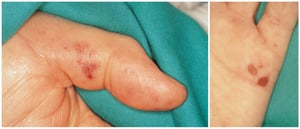
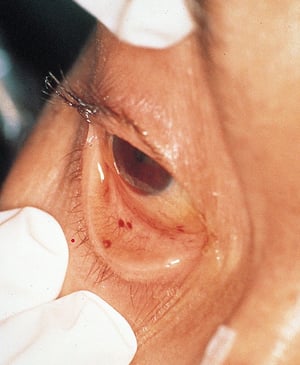
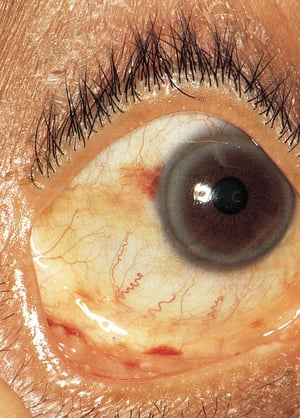
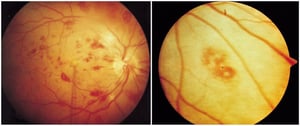
Retinal emboli can cause round or oval hemorrhagic retinal lesions with small white centers (Roth spots). Cutaneous manifestations include petechiae (on the upper trunk, conjunctivae, mucous membranes, and distal extremities), painful erythematous subcutaneous nodules on or near the tips of digits (Osler nodes), nontender hemorrhagic macules or papules on the palms or soles (Janeway lesions), and splinter hemorrhages under the nails. About 35% of patients have central nervous system (CNS) effects, including transient ischemic attacks, stroke, toxic encephalopathy (due to infective microemboli), and, if a mycotic CNS aneurysm ruptures, brain abscess and subarachnoid hemorrhage. Renal emboli may cause flank pain and, rarely, gross hematuria. Splenic emboli may cause left upper quadrant pain. Prolonged infection may cause splenomegaly or clubbing of fingers and toes.

© Springer Science+Business Media

© Springer Science+Business Media
© Springer Science+Business Media

Image courtesy of CDC/Dr. Thomas F. Sellers via the Centers for Disease Control and Prevention Public Health Image Library.


© Springer Science+Business Media


© Springer Science+Business Media


© Springer Science+Business Media


Image courtesy of CDC/Dr. Thomas F. Sellers via the Centers for Disease Control and Prevention Public Health Image Library.
© Springer Science+Business Media
© Springer Science+Business Media
© Springer Science+Business Media


© Springer Science+Business Media


© Springer Science+Business Media


© Springer Science+Business Media
Acute bacterial endocarditis and prosthetic valvular endocarditis
Symptoms and signs of acute bacterial endocarditis and prosthetic valvular endocarditis are similar to those of subacute bacterial endocarditis, but the course is more rapid. Fever is almost always present initially, and patients appear toxic; sometimes septic shock develops. Heart murmur is present initially in about 50 to 80% and eventually in > 90%. Rarely, purulent meningitis occurs.
Right-sided endocarditis
Septic pulmonary emboli may cause cough, pleuritic chest pain, and sometimes hemoptysis. A murmur of tricuspid regurgitation is typical.
Diagnosis of Infective Endocarditis
Blood cultures
Echocardiography and sometimes other imaging modalities
Clinical criteria
Because symptoms and signs are nonspecific, vary greatly, and may develop insidiously, diagnosis requires a high index of suspicion. Endocarditis should be suspected in patients with fever and no obvious source of infection, particularly if a heart murmur is present. Suspicion of endocarditis should be very high if blood cultures are positive in patients who have a history of a heart valve disorder, who have had certain recent invasive procedures, or who use IV illicit drugs. Patients with documented bacteremia should be examined thoroughly and repeatedly for new valvular murmurs and signs of emboli.
Other than positive blood cultures, there are no specific laboratory findings. Established infections often cause a normocytic-normochromic anemia, elevated white blood cell count, increased erythrocyte sedimentation rate, increased immunoglobulin levels, and the presence of circulating immune complexes and rheumatoid factor, but these findings are not diagnostically helpful. Urinalysis often shows microscopic hematuria and, occasionally, red blood cell casts, pyuria, or bacteriuria.
Identification of organisms
Identification of the organism and its antimicrobial susceptibility is vital to guide treatment.
If endocarditis is suspected, 3 blood samples for culture (20-mL each) should be obtained, ideally > 6 hours apart (if presentation suggests acute bacterial endocarditis, 2 cultures within the first 1 to 2 hours). Each set of cultures should be obtained from a separate, fresh venipuncture site (ie, not from preexisting vascular catheters). Blood cultures do not need to be restricted to times during chills or fever because most patients have continuous bacteremia. When endocarditis is present and no prior antibiotic therapy was given, all 3 blood cultures usually are positive because the bacteremia is continuous; at least one culture is positive in 99%. Premature use of empiric antibiotic therapy should be avoided in patients with acquired or congenital valvular or shunt lesions to avoid culture-negative endocarditis. If prior antimicrobial therapy was given, blood cultures should still be obtained, but results may be negative.
Blood cultures may require 3 to 4 weeks of incubation for certain organisms; however, some proprietary, automated culture monitoring systems can identify positive cultures within a week. Other organisms (eg, Aspergillus) may not produce positive cultures. Some organisms (eg, Coxiella burnetii, Bartonella species, Chlamydia psittaci, Brucella species) require serodiagnosis; others (eg, Legionella pneumophila) require special culture media or polymerase chain reaction (eg, Tropheryma whippelii). Negative blood culture results may indicate suppression due to prior antimicrobial therapy, infection with organisms that do not grow in standard culture media, or another diagnosis (eg, noninfective endocarditis, atrial myxoma with embolic phenomena, vasculitis).
Imaging studies
Transthoracic echocardiography (TTE) should be done initially. It has sensitivity of 50 to 90% and specificity > 90%. Transesophageal echocardiography (TEE) can reveal vegetations too small to be seen on TTE. It has sensitivity of 90 to 100%.
Transesophageal echocardiography should be done when
Patients have a prosthetic valve (where TTE sensitivity is limited)
Transthoracic echocardiogram is nondiagnostic
Diagnosis of infective endocarditis has been established clinically (done to detect perforations, abscesses, and fistulas)
Serial TEE enables diagnosis of complications that evolve during treatment, such as increasing vegetation size or abscess formation.
CT is used as needed to fully define paravalvular abscesses and for detection of mycotic aneurysms. Positron emission tomography (PET) scanning improves the sensitivity of the modified Duke criteria without compromising specificity . It is especially useful for infection associated with implanted devices, where imaging is hampered by metallic shadowing and postoperative changes (1). PET scanning also detects extracardiac infection, such as septic emboli, and is an emerging tool for the diagnosis of endocarditis originating in prosthetic and intracardiac devices. CT and PET abnormalities are now included as major criteria in the European guidelines (2).
Routine brain imaging has been proposed because up to 60% of patients have clinically silent lesions. It's utility for prognosis and management is yet to be defined.
Diagnostic criteria
Infective endocarditis is definitively diagnosed when microorganisms are seen histologically in (or cultured from) endocardial vegetations obtained during cardiac surgery, embolectomy, or autopsy. Because vegetations are not usually available for examination, there are various clinical criteria for establishing a diagnosis. They include the modified Duke Criteria (3—with a sensitivity and specificity > 90%—see tables Diagnostic Requirements for Infective Endocarditis and Modified Duke Clinical Diagnostic Criteria for Infective Endocarditis) and the European Society of Cardiology (ESC) 2015 modified criteria (2).
The ESC criteria are similar to the modified Duke criteria but include expanded imaging results as major criteria as follows:
Vegetation, abscess, pseudoaneurysm, intracardiac fistula, valvular perforation or aneurysm, or new partial dehiscence of prosthetic valve identified by echocardiography
Abnormal activity around a prosthetic valve (implanted > 3 months earlier) detected by PET/CT or single-photon emission computed tomography (SPECT)/CT with radiolabeled leukocytes
Paravalvular lesions identified by cardiac CT
The ESC also differs from the modified Duke minor criteria by specifying that detecting silent vascular phenomena by imaging only is sufficient.
Diagnosis references
1. Dilsizian V, Budde RPJ, Chen W, et al: Best practices for imaging cardiac device-related infections and endocarditis: A JACC: Cardiovascular Imaging Expert Panel Statement. JACC Cardiovasc Imaging 15(5):891–911, 2022. doi: 10.1016/j.jcmg.2021.09.029
2. Habib G, Lancellotti P, Antunes MJ, et al: 2015 ESC Guidelines for the management of infective endocarditis: The Task Force for the Management of Infective Endocarditis of the European Society of Cardiology (ESC). Endorsed by: European Association for Cardio-Thoracic Surgery (EACTS), the European Association of Nuclear Medicine (EANM). Eur Heart J 36:3075–3123, 2015.
3. Otto CM, Nishimura RA, Bonow RO, et al: 2020 ACC/AHA Guideline for the management of patients with valvular heart disease: A report of the American College of Cardiology/American Heart Association Joint Committee on Clinical Practice Guidelines. J Am Coll Cardiol 77(4):e25–e197, 2021. doi: 10.1016/j.jacc.2020.11.018
Prognosis for Infective Endocarditis
Overall, the in-hospital mortality rate for endocarditis is 15 to 20%, with a 1-year mortality rate approaching 40% (1). Untreated, infective endocarditis is always fatal. Even with treatment, death is more likely and the prognosis is generally poorer for older people and people who have
Infection with resistant organisms
An underlying disorder
A long delay in treatment
Aortic valve or multiple valve involvement
Large vegetations
Polymicrobial bacteremia
Prosthetic valve infections
Mycotic aneurysms
Valve ring abscess
Major embolic events
Septic shock is more likely in patients with diabetes, acute kidney injury, S. aureus infection, vegetation size > 15 mm, and signs of persistent infection. The mortality rate for viridans streptococcal endocarditis without major complications is < 10% but is virtually 100% for Aspergillus endocarditis after prosthetic valve surgery.
The prognosis is better with right-sided than left-sided endocarditis because tricuspid valve dysfunction is tolerated better, systemic emboli are absent, and right-sided S. aureus endocarditis responds better to antimicrobial therapy.
Prognosis reference
1. Otto CM, Nishimura RA, Bonow RO, et al: 2020 ACC/AHA Guideline for the management of patients with valvular heart disease: A report of the American College of Cardiology/American Heart Association Joint Committee on Clinical Practice Guidelines. J Am Coll Cardiol 77(4):e25–e197, 2021. doi: 10.1016/j.jacc.2020.11.018
Treatment of Infective Endocarditis
IV antibiotics (based on the organism and its susceptibility)
Sometimes valve debridement, repair, or replacement
Dental evaluation and treatment (to minimize oral sources of bacteremia)
Removal of potential source of bacteremia (eg, internal catheters, devices)
Withholding anticoagulation in patients with cerebral embolism
Treatment consists of a prolonged course of antimicrobial therapy (1). Surgery may be needed for mechanical complications or resistant organisms. Typically, antimicrobials are given IV. Because they must be given for 2 to 8 weeks, home IV therapy is often used.
Any apparent source of bacteremia must be managed: necrotic tissue debrided, abscesses drained, and foreign material and infected devices removed. People with infective endocarditis should be evaluated by a dentist and treated for oral diseases that could cause bacteremia and subsequent endocarditis. Existing IV catheters (particularly central venous ones) should be changed. If endocarditis persists in a patient with a newly inserted central venous catheter, that catheter should also be removed. Organisms within biofilms adherent to catheters and other devices may not respond to antimicrobial therapy, leading to treatment failure or relapse. If continuous infusions are used instead of intermittent boluses, infusions should not be interrupted for long periods.
Antibiotic regimens
Drugs and dosages depend on the microorganism and its antimicrobial susceptibility. (For typical regimens, see table Some Antibiotic Regimens for Endocarditis.)
Although most patients are stable enough to wait for culture results, empiric antibiotic therapy before organism identification may be necessary in seriously ill patients. Antibiotics should not be given until adequate blood cultures (minimally, generally 2 or 3 samples from different sites over 1 hour) have been obtained. Antibiotics should be broad spectrum to cover all likely organisms, typically including sensitive and resistant staphylococci, streptococci, and enterococci. Empiric antibiotic regimens should reflect local patterns of infection and antibiotic resistance; however, typical examples of broad-spectrum antibiotic coverage may include
As soon as possible, the empiric drug regimen should be adjusted based on culture results.
Patients who use IV illicit drugs frequently do not adhere to treatment, use IV access lines inappropriately, and tend to leave the hospital too soon. For such patients, short-course IV or (less preferably) oral therapy may be used. For right-sided endocarditis caused by methicillin-sensitive S. aureus
For left-sided endocarditis, current guidelines recommend 6 weeks of parenteral antibiotic therapy. However, a recent multicenter, randomized, non-blinded study of uncomplicated left-sided endocarditis found that switching to oral antibiotics (after a minimum of 10 days of parenteral therapy) to be non-inferior to continued parenteral therapy. In addition, length of hospital stay was shortened in the patients switched to oral therapy. This approach has the potential to reduce the psychologic stress and some of the risks inherent to prolonged inpatient parenteral therapy (2).
Cardiac valve surgery
Surgery (debridement, valve repair, or valve replacement) is sometimes required for treatment of infectious endocarditis (3). Surgery is typically indicated in
Patients with heart failure (particularly those with prosthetic, aortic, or native mitral valve endocarditis and those with pulmonary edema or cardiogenic shock)
Patients with uncontrolled infection (those with persistent infection, infection with fungal or resistant organisms, recurrent prosthetic valve endocarditis, or endocarditis complicated by heart block, abscess, aneurysm, fistula, or enlarging vegetation)
Patients at risk for embolism (particularly those with prosthetic, aortic or mitral native valve endocarditis, and large vegetations [defined in the United States as > 10 mm] or those with recurrent emboli). Early surgery in these patients decreases the risk of embolic events.
Timing of surgery requires experienced clinical judgment. If heart failure caused by a correctable lesion is worsening (particularly when the organism is S. aureus, a gram-negative bacillus, or a fungus), surgery may be required after only 24 to 72 hours of antimicrobial therapy.
Endocarditis involving an implanted cardiac electronic device requires complete removal of the pacemaker or defibrillator, including all leads and the generator.
Right-sided endocarditis is usually managed medically. If surgery is necessary (due to heart failure or lack of therapeutic response), then valve repair is preferred over replacement to avoid future prosthetic valve infection due to any continued IV drug use.
Surgery is usually delayed for a month after intracranial hemorrhage or major ischemic stroke.
Anticoagulation
Patients taking anticoagulants are at increased risk for hemorrhagic stroke and for bleeding resulting from urgent invasive procedures. Anticoagulation should be withheld in patients with cerebral emboli, because it increases the risk of hemorrhagic transformation. The decision to withhold anticoagulation in other patients should be based on the relative risks of hemorrhagic stroke and thromboembolism (4).
Response to treatment
After starting therapy, patients with penicillin-susceptible streptococcal endocarditis usually feel better, and fever is reduced within 3 to 7 days. Fever may continue for reasons other than persistent infection (eg, drug allergy, phlebitis, infarction due to emboli). Patients with staphylococcal endocarditis tend to respond more slowly. Diminution of vegetation size can be followed by serial echocardiography. Echocardiography should be done at the completion of therapy to establish a new baseline for valvular appearance (including sterile vegetations) and insufficiency.
Relapse usually occurs within 4 weeks. Antibiotic retreatment may be effective, but surgery may also be required. In patients without prosthetic valves, recrudescence of endocarditis after 6 weeks usually results from a new infection rather than a relapse. Even after successful antimicrobial therapy, sterile emboli and valve rupture may occur up to 1 year later. Risk of recurrence is significant, so ongoing life-long dental and cutaneous hygiene is advised. Patients who require antibiotic therapy for any reason should have at least 3 sets of blood cultures drawn before antibiotics are started.
Treatment references
1. Baddour LM, Wilson WR, Bayer AS, et al: Infective endocarditis in adults: Diagnosis, antimicrobial therapy, and management of complications: A scientific statement for healthcare professionals from the American Heart Association. Circulation 132:1435–1486, 2015.
2. Iversen K, Ihlemann N, Gill SU, et al: Partial oral versus intravenous antibiotic treatment of endocarditis. N Engl J Med 380:415–424, 2019. DOI: 10.1056/NEJMoa1808312
3. Cahill TJ, Baddour LM, Habib G, et al: Challenges in infective endocarditis. J Am Coll Cardiol 69(3):325–344, 2017.
4. Otto CM, Nishimura RA, Bonow RO, et al: 2020 ACC/AHA Guideline for the management of patients with valvular heart disease: A report of the American College of Cardiology/American Heart Association Joint Committee on Clinical Practice Guidelines. J Am Coll Cardiol 77(4):e25–e197, 2021. doi: 10.1016/j.jacc.2020.11.018
Prevention of Infective Endocarditis
Preventive dental examination and therapy before surgery to repair heart valves or congenital heart lesions is recommended.
Measures to reduce health care–acquired bacteremia aim to curb the rising incidence of iatrogenic bacteremia and subsequent endocarditis are also recommended.
Dental and cutaneous hygiene is recommended for the general population but particularly for patients at intermediate risk (those with native valve disease) and high-risk.
High-risk patients
The American Heart Association (AHA) recommends antimicrobial prophylaxis for patients at high risk of an adverse outcome as a result of infective endocarditis (see ACC/AHA Guidelines). Such patients include those with
Prosthetic heart valves, including transcatheter implanted prostheses
Prosthetic material used for heart valve repair (eg, annuloplasty rings, chords)
Previous infective endocarditis
Certain congenital heart diseases (CHD): Unrepaired cyanotic CHD (including palliative shunts and conduits), completely repaired CHD during the first 6 mo after surgery if prosthetic material or device was used, repaired CHD that has residual defects at or adjacent to the site of repair
Heart transplant recipients with valvulopathy
European Society of Cardiology prophylaxis regimens are described in reference 1.
Procedures requiring antibiotic prophylaxis
Most procedures for which prophylaxis is required for high-risk patients are oral-dental procedures that manipulate the gingiva or the periapical region of teeth or perforate the oral mucosa. Other procedures include those respiratory tract procedures in which mucosa is incised, vaginal delivery in some high-risk patients (patients with prosthetic cardiac valve or prosthetic material used for cardiac valve repair and for patients with unrepaired and palliated cyanotic congenital heart disease), and gastrointestinal, genitourinary, or musculoskeletal procedures that involve an area with an established infection (see table Procedures Requiring Antimicrobial Endocarditis Prophylaxis). Guidelines for endocarditis prophylaxis vary geographically.
Prophylactic antibiotic regimens
For most patients and procedures, a single dose shortly before the procedure is effective. For oral-dental and respiratory procedures, a drug effective against viridans group streptococci is used (see table Recommended Endocarditis Prophylaxis During Oral-Dental or Respiratory Tract Procedures
Recommended Endocarditis Prophylaxis During Oral-Dental or Respiratory Tract Procedures*
Route | Drug and Dosage in Adults (and Children) | Drug and Dosage in Adults (and Children) Allergic to Penicillin |
|---|---|---|
Oral (given 1 hour before procedure) | or or | |
Parenteral (given 30 minutes before procedure) | or | |
* For patients without active infection. | ||
Adapted from Wilson W, Taubert KS, Gewitz M, et al: Prevention of infective endocarditis. Circulation 116(15):1736–1754, 2007. | ||
Prevention reference
1. Habib G, Lancellotti P, Antunes MJ, et al: 2015 ESC Guidelines for the management of infective endocarditis: The Task Force for the Management of Infective Endocarditis of the European Society of Cardiology (ESC) Endorsed by: European Association for Cardio-Thoracic Surgery (EACTS), the European Association of Nuclear Medicine (EANM). Eur Heart J 36(44):3075–3128, 2015. doi: 10.1093/eurheartj/ehv319
Key Points
Because the normal heart is relatively resistant to infection, endocarditis occurs mainly when there is a predisposing abnormality of the endocardium.
Predisposing cardiac abnormalities include congenital heart defects, rheumatic valvular disease, bicuspid or calcific aortic valves, mitral valve prolapse, hypertrophic cardiomyopathy, prior endocarditis, and intracardiac devices.
Local cardiac consequences include myocardial abscess, conduction system abnormalities, and sudden, severe valvular regurgitation.
Systemic consequences include immune phenomena (eg, glomerulonephritis) and septic emboli, which may affect any organ put particularly the lungs (with right sided endocarditis), kidneys, spleen, central nervous system, skin, and retina (with left-sided endocarditis).
Do blood cultures and diagnose using modified Duke or European Society of Cardiology clinical criteria.
Treat with a prolonged course of antimicrobial therapy; surgery may be needed for mechanical complications or resistant organisms.
Give antimicrobial prophylaxis for patients at high risk of an adverse outcome from infective endocarditis, including those with prosthetic heart valves or heart valve repair, previous infective endocarditis, certain congenital heart diseases, or who are heart transplant recipients with valvulopathy.


