





Laryngitis is inflammation of the larynx, usually the result of a virus or overuse. The result is acute change in the voice, with decreased volume and hoarseness. Diagnosis is based on clinical findings. Laryngoscopy is required for symptoms persisting 3 weeks. Viral laryngitis is self-limited. Other infectious or irritating causes may require specific treatment.
The most common cause of acute laryngitis is
Viral upper respiratory infection
Coughing-induced laryngitis may also occur in bronchitis, pneumonia, influenza, pertussis, measles, and diphtheria. Excessive use of the voice (especially with loud speaking or singing), allergic reactions, gastroesophageal reflux, bulimia, or inhalation of irritating substances (eg, cigarette smoke or certain aerosolized drugs) can cause acute or chronic laryngitis. More rarely, medications can induce potentially life-threatening laryngeal edema, such as angiotensin-converting enzyme (ACE) inhibitor–induced angioedema of the airway. Bacterial laryngitis is extremely rare. Smoking and exposure to other heated fumes can cause Reinke edema, a watery swelling of the vocal cords.
(See also Overview of Laryngeal Disorders.)
Symptoms and Signs of Laryngitis
The most prominent symptom of laryngitis is usually
A persistent change of voice
Volume may be decreased; some patients have aphonia (no sound production). Hoarseness, a sensation of tickling, rawness, and a constant urge to clear the throat may occur. Symptoms vary with the severity of the inflammation.
Fever, malaise, dysphagia, and throat pain may occur in more severe infections. Laryngeal edema, although rare, may cause stridor and dyspnea.

CNRI/SCIENCE PHOTO LIBRARY
Diagnosis of Laryngitis
Clinical evaluation
Sometimes indirect or direct flexible laryngoscopy
Diagnosis of laryngitis is based on symptoms.
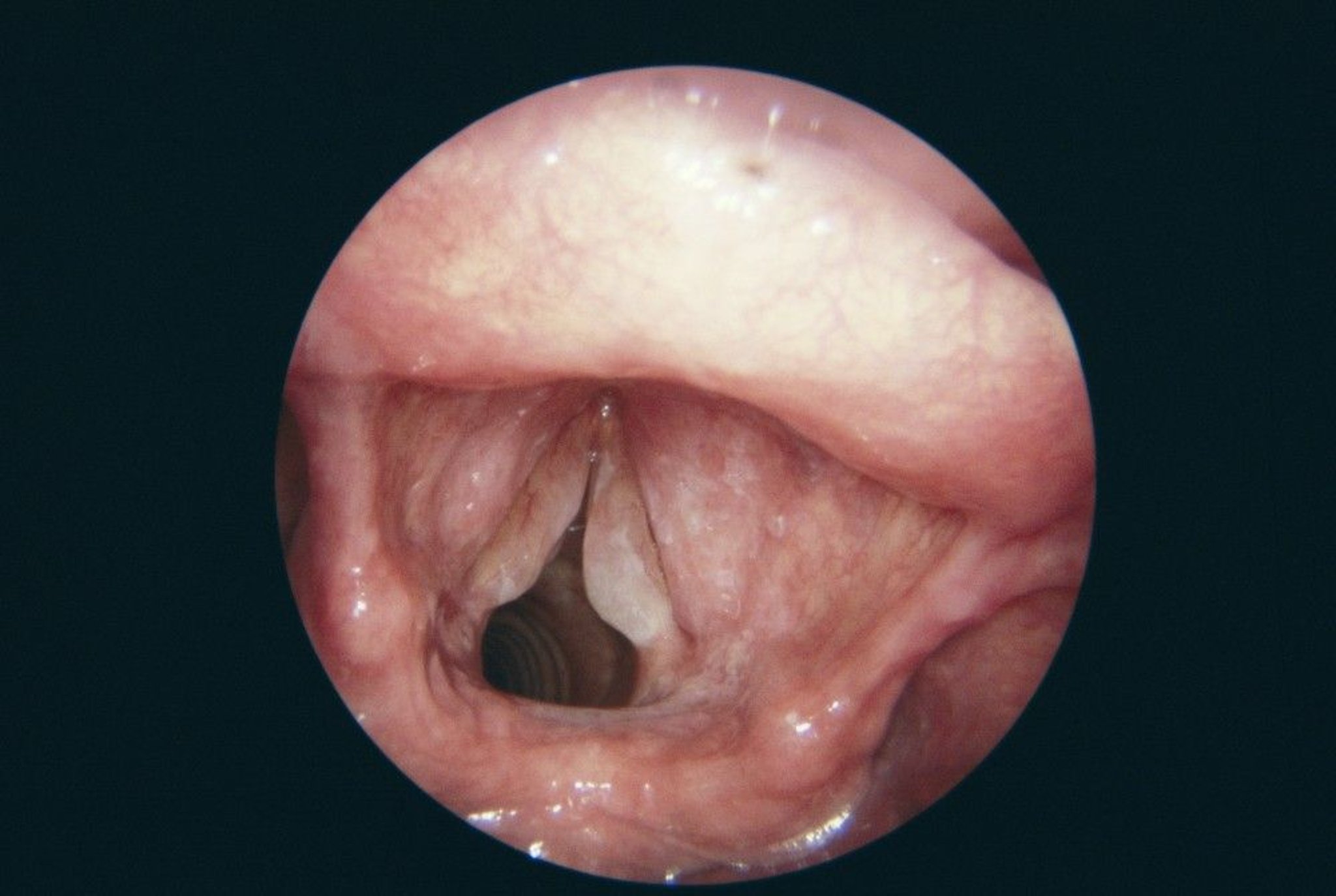
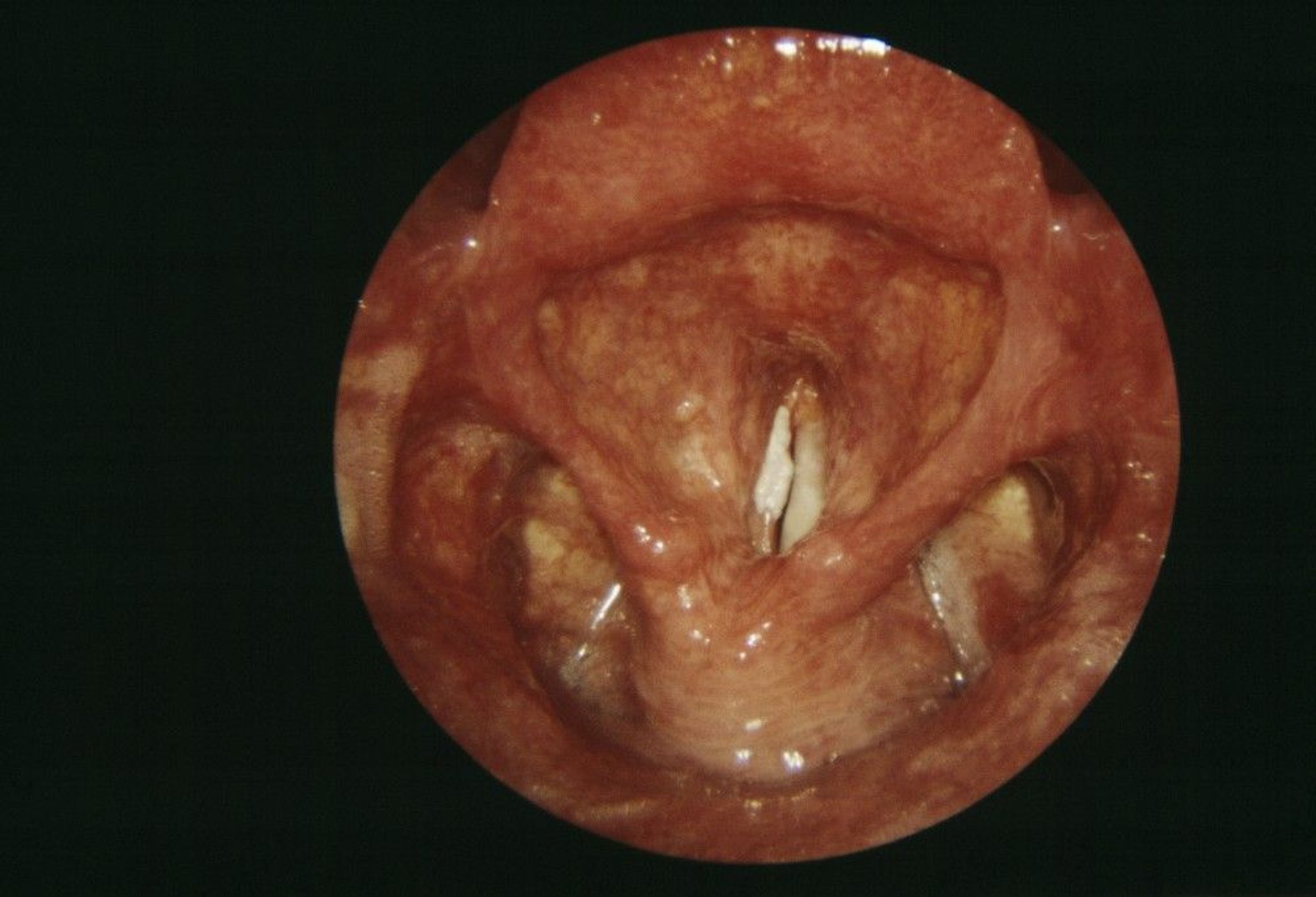
Indirect or direct flexible laryngoscopy is recommended for symptoms persisting > 3 weeks; findings in laryngitis may include mild to marked erythema of the mucous membrane, which may also be edematous. With reflux, there is swelling of the inner lining of the larynx and redness of the arytenoids. With chronic irritation, leukoplakia can develop.

CNRI/SCIENCE PHOTO LIBRARY
If a pseudomembrane is present, diphtheria is suspected.
Treatment of Laryngitis
Symptomatic treatment (eg, cough suppressants, voice rest, hydration, steam inhalations)
No specific treatment is available for viral laryngitis.
Cough suppressants, voice rest, hydration, and steam inhalations relieve symptoms and promote resolution of acute laryngitis. Smoking cessation and treatment of acute or chronic bronchitis may relieve laryngitis.
Depending on the presumed cause, specific treatments to control gastroesophageal reflux or drug-induced laryngitis may be beneficial.


