





Postextraction problems are a subset of dental emergencies that require immediate treatment. These problems include
Swelling and pain
Postextraction alveolitis
Osteomyelitis
Osteonecrosis of the jaw
Bleeding
Swelling and pain
Postoperative pain varies from moderate to severe and is treated with analgesics (see Treatment of Pain).
Postextraction alveolitis (dry socket)
Postextraction alveolitis is pain emanating from bare bone if the socket’s clot lyses. Although this condition is self-limited, it is quite painful and usually requires some type of intervention. It is much more common among people who smoke or use oral contraceptives and occurs mainly after removal of mandibular molars, usually wisdom teeth. Typically, the pain begins on the 2nd or 3rd postoperative day, is referred to the ear, and lasts from a few days to many weeks.
Osteomyelitis
Osteomyelitis, which in rare cases is confused with alveolitis, is differentiated by fever, local tenderness, and swelling. If symptoms last a month, a sequestrum (ie, localized area of necrotic bone), which is diagnostic of osteomyelitis, should be sought by x-ray. Osteomyelitis requires long-term treatment with antibiotics effective against both gram-positive and gram-negative organisms and referral for definitive care.

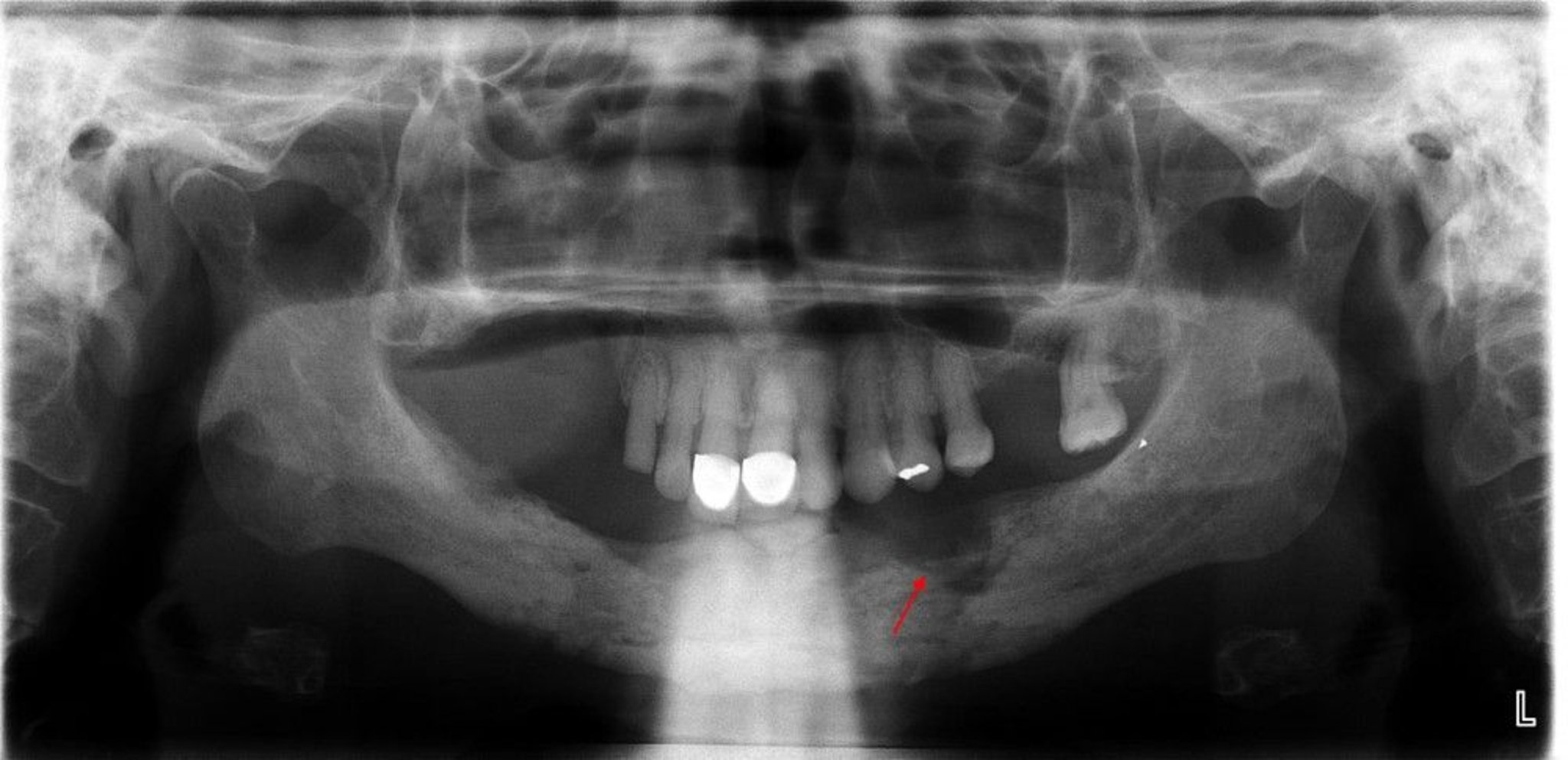
Image courtesy of Byron (Pete) Benson, DDS, MS, Texas A&M University Baylor College of Dentistry.
Osteonecrosis of the jaw (ONJ)
Osteonecrosis of the jaw is an oral lesion involving persistent exposure of mandibular or maxillary bone, which usually manifests with pain, loosening of teeth, and purulent discharge (1). ONJ may occur after dental extraction but also may develop after trauma or radiation therapy to the head and neck.
Medication-related ONJ (MRONJ) refers to the association discovered between use of antiresorptive agents and ONJ. These agents include bisphosphonates, osteoclast-inhibiting drugs, and cathepsin K inhibitors. Cancer patients receiving IV bisphosphonates have a 4-fold increased risk of ONJ, perhaps due to greater bioavailability of IV bisphosphonates (2). However, oral bisphosphonate therapy for noncancer patients seems to pose very low risk of ONJ; the prevalence in this population is about 0.1% according to a recent estimate. Stopping oral bisphosphonate therapy is unlikely to reduce this already low rate of ONJ, and maintaining good oral hygiene is a more effective preventive measure than stopping oral bisphosphonates before dental procedures. Higher doses and longer duration (therapy >
Management of osteonecrosis of the jaw is challenging and typically involves palliation, limited debridement, antibiotics, and oral rinses.
Bleeding
Postextraction bleeding usually occurs in the small vessels. Any clots extending out of the socket are removed with gauze, and a 4-inch gauze pad (folded) or a tea bag (which contains tannic acid) is placed over the socket. Then the patient is instructed to apply continuous pressure by biting for 1 hour. The procedure may have to be repeated 2 or 3 times. Patients are told to wait at least 1 hour before checking the site so as not to disrupt clot formation. They also are informed that a few drops of blood diluted in a mouth full of saliva appear to be more blood than is actually present.
3). In those who are at increased risk of bleeding due to comorbid disease or in those undergoing more extensive procedures, consulting with their patient's physician about timing of antiplatelet or anticoagulant dosing or a brief 24- to 48-hour interruption in therapy is indicated
References
1. American Dental Association (ADA) Science and Research Institute, LLC: Antibiotic Prophylaxis Prior to Dental Procedures. Accessed September 16, 2022. https://www.ada.org/resources/research/science-and-research-institute/oral-health-topics/antibiotic-prophylaxis.
2. Yarom N, Shapiro CL, Peterson DE, et al: Medication-related osteonecrosis of the jaw: MASCC/ISOO/ASCO clinical practice guideline. J Clin Oncol 1;37(25):2270-2290, 2019. doi: 10.1200/JCO.19.01186
3. American Dental Association (ADA) Science and Research Institute, LLC: Oral Anticoagulant and Antiplatelet Medications and Dental Procedures. Accessed September 16, 2022. https://www.ada.org/resources/research/science-and-research-institute/oral-health-topics/oral-anticoagulant-and-antiplatelet-medications-and-dental-procedures


