





Psoriasis is an inflammatory disease that manifests most commonly as well-circumscribed, erythematous papules and plaques covered with silvery scales. Multiple factors contribute, including genetics. Common triggers include trauma, infection, and certain medications. Symptoms are usually minimal, but mild to severe itching may occur. Cosmetic implications may be major. Some people also develop psoriatic arthritis. Diagnosis is based on appearance and distribution of lesions. Treatment can include topical treatments (eg, corticosteroids, vitamin D3 analogs, calcineurin inhibitors, tazarotene, roflumilast, tapinarof, emollients, salicylic acid, coal tar, anthralin
Psoriasis is hyperproliferation of epidermal keratinocytes combined with inflammation of the epidermis and dermis.
Estimates of the prevalence of psoriasis vary widely across different populations, and it is likely that psoriasis is underreported among people with dark skin compared with people with light skin (1). One study reported rates ranging from 0 to 1.4% in children and 0.5 to 11.4% in adults (2). Peak onset is roughly bimodal, most often at ages 16 to 22 and at ages 57 to 60, but the disorder can occur at any age.
References
1. Kaufman BP, Alexis AF: Psoriasis in Skin of Color: Insights into the Epidemiology, Clinical Presentation, Genetics, Quality-of-Life Impact, and Treatment of Psoriasis in Non-White Racial/Ethnic Groups. Am J Clin Dermatol 19(3):405-423, 2018. doi: 10.1007/s40257-017-0332-7
2. Michalek IM, Loring B, John SM: A systematic review of worldwide epidemiology of psoriasis. J Eur Acad Dermatol Venereol 31(2):205–212, 2017. doi: 10.1111/jdv.13854
Etiology of Psoriasis
The cause of psoriasis is unclear but involves immune stimulation of epidermal keratinocytes; T cells seem to play a central role. Family history is common, and certain genes and human leukocyte antigens (Cw6, B13, B17) are associated with psoriasis. Genomewide linkage analysis has identified numerous psoriasis susceptibility loci; the PSORS1 locus on chromosome 6p21 plays the greatest role in determining a patient's susceptibility of developing psoriasis. An environmental trigger is thought to evoke an inflammatory response and subsequent hyperproliferation of keratinocytes (1).
Well-identified triggers include
Injury (Koebner phenomenon)
Sunburn
HIV infection
Beta-hemolytic streptococcal infection (leading to guttate psoriasis)
Emotional stress
Alcohol consumption
Tobacco smoking
Obesity
Etiology reference
1. Zhou X, Chen Y, Cui L, et al: Advances in the pathogenesis of psoriasis: From keratinocyte perspective. Cell Death Dis 13(1):81, 2022. doi: 10.1038/s41419-022-04523-3
Symptoms and Signs of Psoriasis
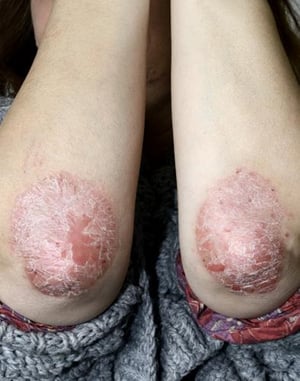
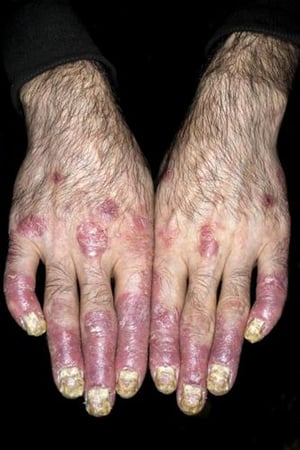
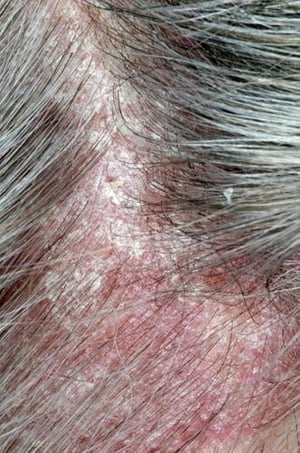
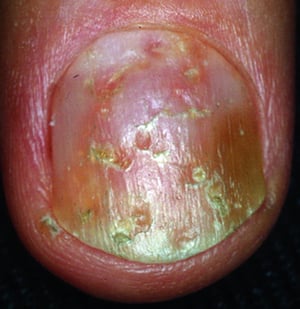
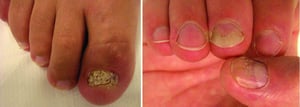
Lesions are either asymptomatic or pruritic and are most often localized on the scalp, extensor surfaces of the elbows and knees, sacrum, buttocks (commonly the gluteal cleft), and genitals. The nails, eyebrows, axillae, umbilicus, and perianal region may also be affected.
Plaques may look violaceous in patients with dark skin and pink or red in patients with light skin, but key features such as scaling and distribution (eg, on extensor elbows, trunk, legs, and periumbilical area) are consistent across all skin tones.
The disease can be widespread, involving confluent areas of skin extending between these regions.
Lesions differ in appearance depending on type.
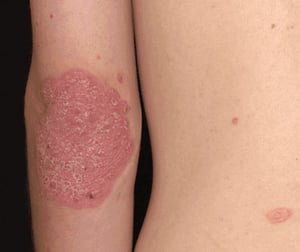
Photo provided by Thomas Habif, MD.
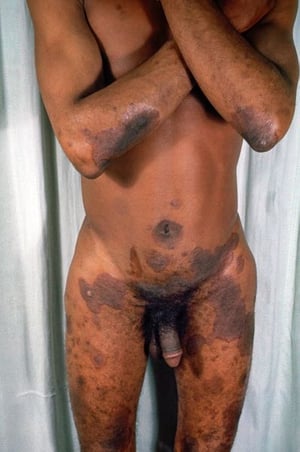
Image courtesy of Karen McKoy, MD.
SCIENCE PHOTO LIBRARY
DR. HAROUT TANIELIAN/SCIENCE PHOTO LIBRARY
DR P. MARAZZI/SCIENCE PHOTO LIBRARY
© Springer Science+Business Media
© Springer Science+Business Media
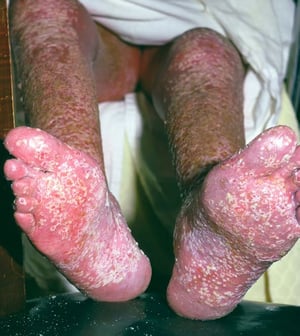
Image courtesy of Karen McKoy, MD.
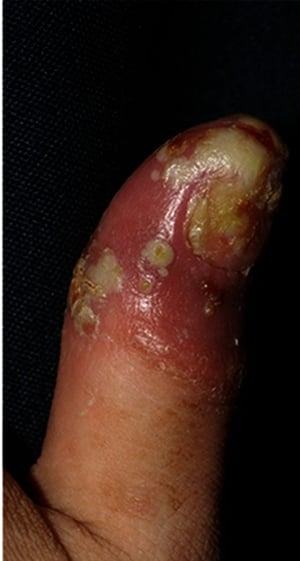
© Springer Science+Business Media
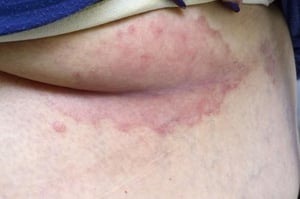
SCIENCE PHOTO LIBRARY
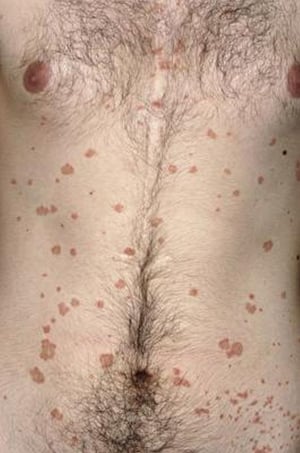
DR P. MARAZZI/SCIENCE PHOTO LIBRARY
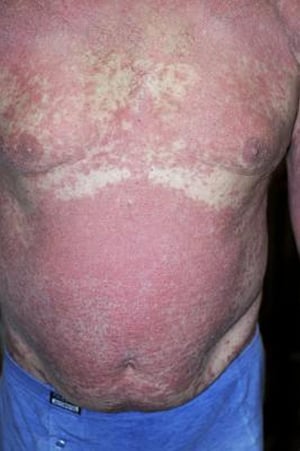
SCIENCE PHOTO LIBRARY
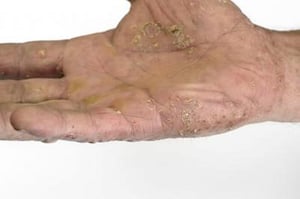
SCIENCE PHOTO LIBRARY
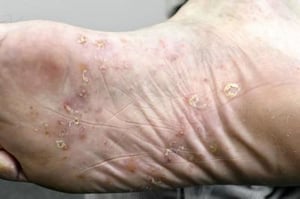
SCIENCE PHOTO LIBRARY
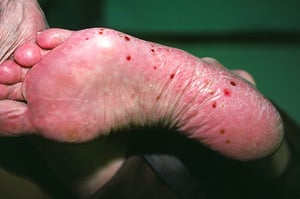
Image courtesy of Karen McKoy, MD.


Photo provided by Thomas Habif, MD.


Image courtesy of Karen McKoy, MD.


SCIENCE PHOTO LIBRARY


DR. HAROUT TANIELIAN/SCIENCE PHOTO LIBRARY


DR P. MARAZZI/SCIENCE PHOTO LIBRARY


© Springer Science+Business Media


© Springer Science+Business Media


Image courtesy of Karen McKoy, MD.


© Springer Science+Business Media


SCIENCE PHOTO LIBRARY

DR P. MARAZZI/SCIENCE PHOTO LIBRARY


SCIENCE PHOTO LIBRARY


SCIENCE PHOTO LIBRARY

SCIENCE PHOTO LIBRARY

Image courtesy of Karen McKoy, MD.
Among the various psoriasis subtypes (see table Subtypes of Psoriasis), plaque psoriasis (psoriasis vulgaris or chronic plaque psoriasis) accounts for about 90%; lesions are discrete, erythematous papules or plaques covered with thick, silvery, shiny scales. Lesions appear gradually and remit and recur spontaneously or with the appearance and resolution of triggers.
Arthritis develops in 5 to 30% of patients and can be disabling (psoriatic arthritis); joint destruction may ultimately occur.
Psoriasis is rarely life-threatening but can affect a patient’s self-image. Besides the patient's appearance, the sheer amount of time required to treat extensive skin or scalp lesions and to maintain clothing and bedding may adversely affect quality of life.
Diagnosis of Psoriasis
Clinical evaluation
Rarely biopsy
Diagnosis of psoriasis is most often by clinical appearance and distribution of lesions.
Differential diagnosis includes
Dermatophytoses (potassium hydroxide wet mount should be done for any scaly plaques, especially if they do not have a classic appearance of eczema or psoriasis)
Squamous cell carcinoma in situ (Bowen disease, especially when on the trunk; this diagnosis should be considered for isolated plaques that do not respond to usual therapy)
Biopsy is rarely necessary and may not be diagnostic; however, it may be considered in cases where the clinical findings are not classic.
Disease is graded as mild, moderate, or severe based on the body surface area affected and how the lesions affect the patient's quality of life. To be considered mild, usually < 10% of the skin surface should be involved. There are many more complex scoring systems for disease severity (eg, the Psoriasis Area and Severity Index), but these systems are useful mainly in research protocols.
Treatment of Psoriasis
Topical treatments
Ultraviolet (UV) light therapy
Systemic therapies
Topical treatments
Corticosteroids are usually used topically but may be injected into small or recalcitrant lesions. (CAUTION: Systemic corticosteroids may precipitate exacerbations or development of pustular psoriasis and should not be used to treat psoriasis.) Topical corticosteroids are used twice daily. Corticosteroids are most effective when used overnight under occlusive polyethylene coverings or incorporated into tape; a corticosteroid cream is applied without occlusion during the day. Corticosteroid potency is selected according to the extent of involvement.
Vitamin D3 analogs
Calcineurin inhibitors
is a topical retinoid. It is less effective than corticosteroids as monotherapy but is a useful adjunct because of its keratolytic effect. It is typically used on thicker psoriasis plaques that may appear on the trunk and extremities but also may be used on the face.
is a topical phosphodiesterase-4 (PDE-4) inhibitor. It is particularly useful as a corticosteroid-sparing treatment for facial and intertriginous areas (eg, buttocks, groin, axillae).
is a topical aryl hydrocarbon receptor (AhR) agonist. It is also useful as a corticosteroid-sparing therapy on facial and intertriginous areas.
Emollients include emollient creams, ointments, petrolatum, paraffin, and even hydrogenated vegetable (cooking) oils. They reduce scaling and are most effective when applied twice daily and immediately after bathing. Lesions may appear redder as scaling decreases or becomes more transparent. Emollients are safe and should generally be used as an adjunct for mild to moderate plaque psoriasis.
is a keratolytic that softens scales, facilitates their removal, and increases absorption of other topical agents. It is especially useful as a component of scalp treatments; scalp scale can be quite thick.
preparations are anti-inflammatory and decrease keratinocyte hyperproliferation via an unknown mechanism. Ointments or solutions are typically applied at night and washed off in the morning. Coal tar products can be used in combination with topical corticosteroids or with exposure to natural or artificial broad-band UVB light (280 to 320 nm) in slowly increasing increments (Goeckerman regimen). Shampoos should be left in for 5 to 10 minutes and then rinsed out.
is a topical antiproliferative, anti-inflammatory agent. Its mechanism of action is unknown. Effective dose is 0.1% cream or ointment increased to 1% as tolerated. Anthralin may be irritating and should be used with caution in intertriginous areas; it also stains. Irritation and staining can be avoided by washing off the anthralin 20 to 30 minutes after application. Using a liposome-encapsulated preparation may also avoid some disadvantages of anthralin.
Phototherapy
UV light therapy is typically used in patients with extensive psoriasis; however, its use is declining because of the availability of various effective systemic therapies. The mechanism of action is unknown, although UVB light reduces DNA synthesis and can induce mild systemic immunosuppression. In psoralen plus ultraviolet A (PUVA), oral methoxypsoralen, a photosensitizer, is followed by exposure to long-wave UVA light (330 to 360 nm). PUVA has an antiproliferative effect and also helps to normalize keratinocyte differentiation. Doses of light are started low and increased as tolerated. Severe burns can result if the dose of medication or UVA is too high.
Although the treatment is less messy than topical treatments and may produce remissions lasting several months, repeated treatments may increase the incidence of UV-induced skin cancer and melanoma. Less UV light is required when used with oral retinoids (the so-called re-PUVA regimen). Narrowband UVB light (311 to 312 nm), which is used without psoralens, is similar in effectiveness to PUVA. Excimer laser therapy is a type of phototherapy using a 308-nm laser directed at focal psoriatic plaques.
Systemic therapies
taken orally is an effective treatment for severe disabling psoriasis, especially severe psoriatic arthritis or widespread erythrodermic or pustular psoriasis unresponsive to topical agents or UV light therapy (narrowband UVB) or PUVA. Methotrexate seems to interfere with the rapid proliferation of epidermal cells. Hematologic, renal, and hepatic function should be monitored. Dosage regimens vary, so only physicians experienced in its use for psoriasis should undertake methotrexate therapy.
can be used for severe psoriasis. It should be limited to courses of several months (rarely, up to 1 year) and alternated with other therapies. Its effect on the kidneys and potential long-term effects on the immune system preclude more liberal use.
Systemic retinoidsisotretinoinisotretinoin, but the agent is not retained in the body beyond 1 month. Long-term treatment may cause diffuse idiopathic skeletal hyperostosis (DISH).
Several classes of biologics (therapeutic monoclonal antibodies) have shown efficacy for the treatment of moderate to severe plaque psoriasis (1, 2):
TNF inhibitors:
Interleukin (IL)-23 inhibitors:
IL-17 inhibitors:
a PDE-4 inhibitor, is an oral small-molecule medication for plaque psoriasis; however, postmarketing data suggest it is less effective than biologics (3).
is an oral small-molecule agent that inhibits tyrosine kinase 2 (part of the Janus kinase family) and has shown efficacy for treatment of psoriasis (4, 56); however, more studies are needed before it is routinely used for this indication.
is an IL-36 inhibitor that may be used to treat generalized pustular psoriasis.
Biosimilar medications are being developed and used for various therapeutic monoclonal antibodies as their patents expire (7). These medications have very similar efficacies and toxicities to reference products; slight differences in components are not clinically meaningful.
Other immunosuppressantsprogressive multifocal leukoencephalopathy.
Choice of therapy
Choice of specific agents and combinations requires close cooperation with the patient, always keeping in mind the untoward effects of the treatments. There is no single ideal combination or sequence of agents, but treatment should be kept as simple as possible. Monotherapy is preferred, but combination therapy is the norm. First-line treatment for psoriasis includes topical corticosteroids and topical vitamin D3 analogs (either as monotherapy or in combination).
Mild plaque psoriasis
Moderate to severe plaque psoriasis should be treated with topical agents and either phototherapy or systemic agents. Immunosuppressants are used for moderate to severe disease unresponsive to other agents.
Scalp plaques
Severe cases of scalp psoriasis may need to be treated with systemic immunosuppressants (eg, biologics, small molecules).
Special treatment needs for subtypes of psoriasis are described above.
(See also the American Academy of Dermatology's clinical guideline for psoriasis.)
Treatment references
1. Sbidian E, Chaimani A, Garcia-Doval I, et al: Systemic pharmacological treatments for chronic plaque psoriasis: A network meta-analysis. Cochrane Database Syst Rev 12(12):CD011535, 2017. doi: 10.1002/14651858.CD011535.pub2
2. Armstrong AW, Read C: Pathophysiology, clinical presentation, and treatment of psoriasis: A review. JAMA 323(19):1945–1960, 2020. doi: 10.1001/jama.2020.4006
3. Armstrong AW, Puig L, Joshi A, et al: Comparison of Biologics and Oral Treatments for Plaque Psoriasis: A Meta-analysis. JAMA Dermatol 156(3):258–269, 2020. doi: 10.1001/jamadermatol.2019.4029
4. Armstrong AW, Gooderham M, Warren RB, et al: Deucravacitinib versus placebo and apremilast in moderate to severe plaque psoriasis: Efficacy and safety results from the 52-week, randomized, double-blinded, placebo-controlled phase 3 POETYK PSO-1 trial. J Am Acad Dermatol 88(1):29–39, 2023. doi: 10.1016/j.jaad.2022.07.002
5. Strober B, Thaçi D, Sofen H, et al: Deucravacitinib versus placebo and apremilast in moderate to severe plaque psoriasis: Efficacy and safety results from the 52-week, randomized, double-blinded, phase 3 Program fOr Evaluation of TYK2 inhibitor psoriasis second trial. J Am Acad Dermatol 88(1):40–51, 2023. doi: 10.1016/j.jaad.2022.08.061
6. Bachelez H, van de Kerkhof PC, Strohal R, et al: Tofacitinib versus etanercept or placebo in moderate-to-severe chronic plaque psoriasis: A phase 3 randomised non-inferiority trial. Lancet 386(9993):552-561, 2015. doi: 10.1016/S0140-6736(14)62113-9
7. Ruda RC, Kelly KA, Feldman SR: Real-world outcomes following switching from anti-TNF reference products to biosimilars for the treatment of psoriasis. J Dermatolog Treat 34(1):2140569, 2023. doi: 10.1080/09546634.2022.2140569
Key Points
Psoriasis is a common inflammatory disorder affecting the skin that has a genetic component and several triggers (eg, trauma, infection, certain medications).
The most common skin findings are usually well-circumscribed, erythematous papules and plaques covered with silvery scales in plaque psoriasis, but lesions differ between the other less common subtypes of psoriasis.
Psoriatic arthritis develops in 5 to 30% of patients and can cause joint destruction and disability.
Diagnose based on the appearance and distribution of lesions.
Ultraviolet (UV) light therapy may be an alternative for patients who resist systemic immunosuppression.
More Information
The following English-language resources may be useful. Please note that THE MANUAL is not responsible for the content of these resources.
Psoriasis Area and Severity Index (PASI): An online calculator to determine a patient's PASI score
American Academy of Dermatology: Psoriasis Clinical Guidelines: Joint guidelines from the American Academy of Dermatology and the National Psoriasis Foundation
National Psoriasis Foundation: A resource providing information about treatments and community support


