





Furuncles (boils) are skin abscesses caused by staphylococcal infection, which involve a hair follicle and surrounding tissue. Carbuncles are clusters of furuncles connected subcutaneously, causing deeper suppuration and scarring. They are smaller and more superficial than subcutaneous abscesses. Diagnosis is by appearance. Treatment is warm compresses and often oral antistaphylococcal antibiotics.
(See also Overview of Bacterial Skin Infections.)
Both furuncles and carbuncles may affect healthy young people but are more common among people who have obesity, are immunocompromised (including those with neutrophil defects), are older, and possibly those who have diabetes. Clustered cases may occur among those living in crowded quarters with relatively poor hygiene or among contacts of patients infected with virulent strains.
Predisposing factors include bacterial colonization of skin or nares, hot and humid climates, and occlusion or abnormal follicular anatomy (eg, comedones in acne).
Methicillin-resistant Staphylococcus aureus (MRSA) is a common cause.
Furuncles are common on the neck, breasts, face, and buttocks. They are uncomfortable and may be painful when closely attached to underlying structures (eg, on the nose, ear, or fingers). Appearance is a nodule or pustule that discharges necrotic tissue and sanguineous pus.


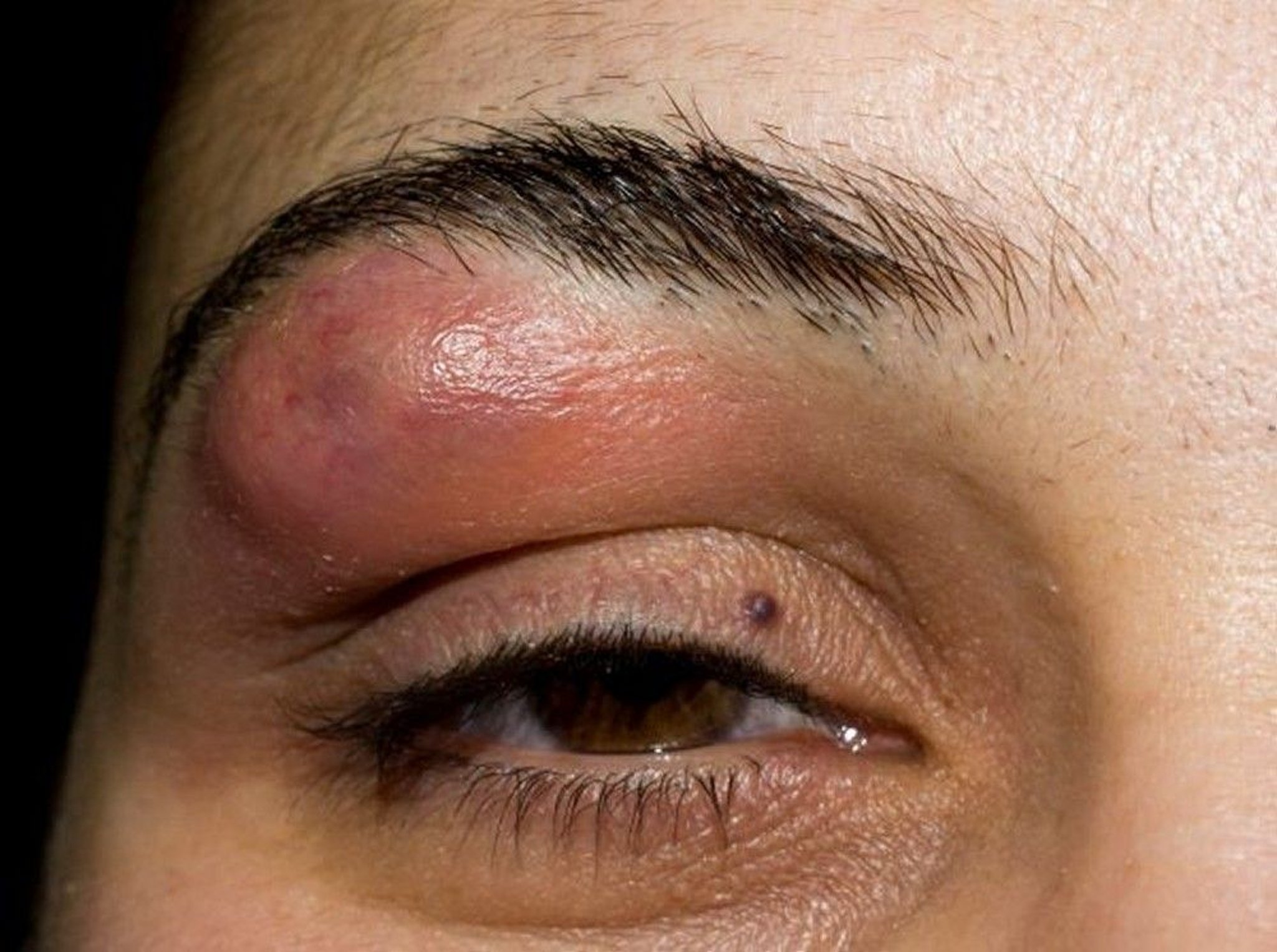
DermPics/SCIENCE PHOTO LIBRARY
Carbuncles are clusters of furuncles that are subcutaneously connected. They may be accompanied by fever.


Diagnosis of Furuncles and Carbuncles
Clinical evaluation
Culture of lesion
Diagnosis is by examination.
Material for culture should be obtained.
Treatment of Furuncles and Carbuncles
Drainage
Often antibiotics effective against MRSA
Abscesses are incised and drained. Intermittent hot compresses are used to facilitate drainage.
Antibiotics, when used, should be effective against MRSA, pending culture and sensitivity test results. In afebrile patients, treatment of a single lesion < 5 mm requires no antibiotics. Systemic antibiotics are recommended for the following:
Lesions > 5 mm or < 5 mm that do not resolve with drainage
Multiple lesions
Evidence of expanding cellulitis
Immunocompromise
Patients at risk of endocarditis
Fever
Inpatients with furunculosis in hospital settings where MRSA is prevalent may require isolation from other inpatients and treatment as recommended for cellulitis based on culture results.
S. aureus
Key Points
Suspect a furuncle if a nodule or pustule involves a hair follicle and discharges necrotic tissue and sanguineous pus, particularly if on the neck, breasts, face, or buttocks.
Culture furuncles and carbuncles.
Drain lesions.
Prescribe antibiotics effective against methicillin-resistant Staphylococcus aureus (MRSA) for patients who are immunocompromised, febrile, or at risk of endocarditis; for lesions < 5 mm that do not resolve with drainage; and for lesions that are > 5 mm, multiple, or expanding.


