





(See also Overview of Skin Cancer.)

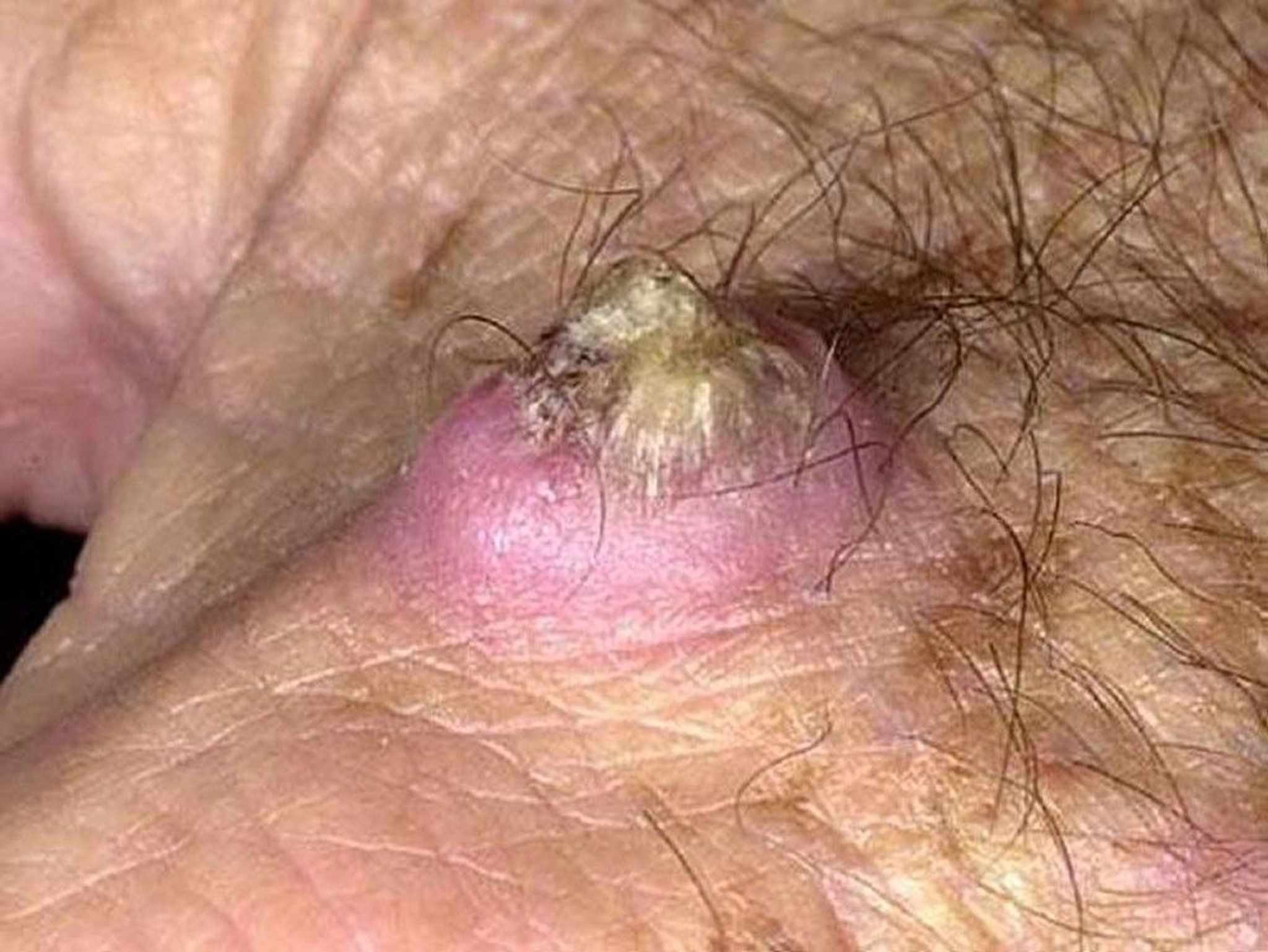
Photo provided by Thomas Habif, MD.

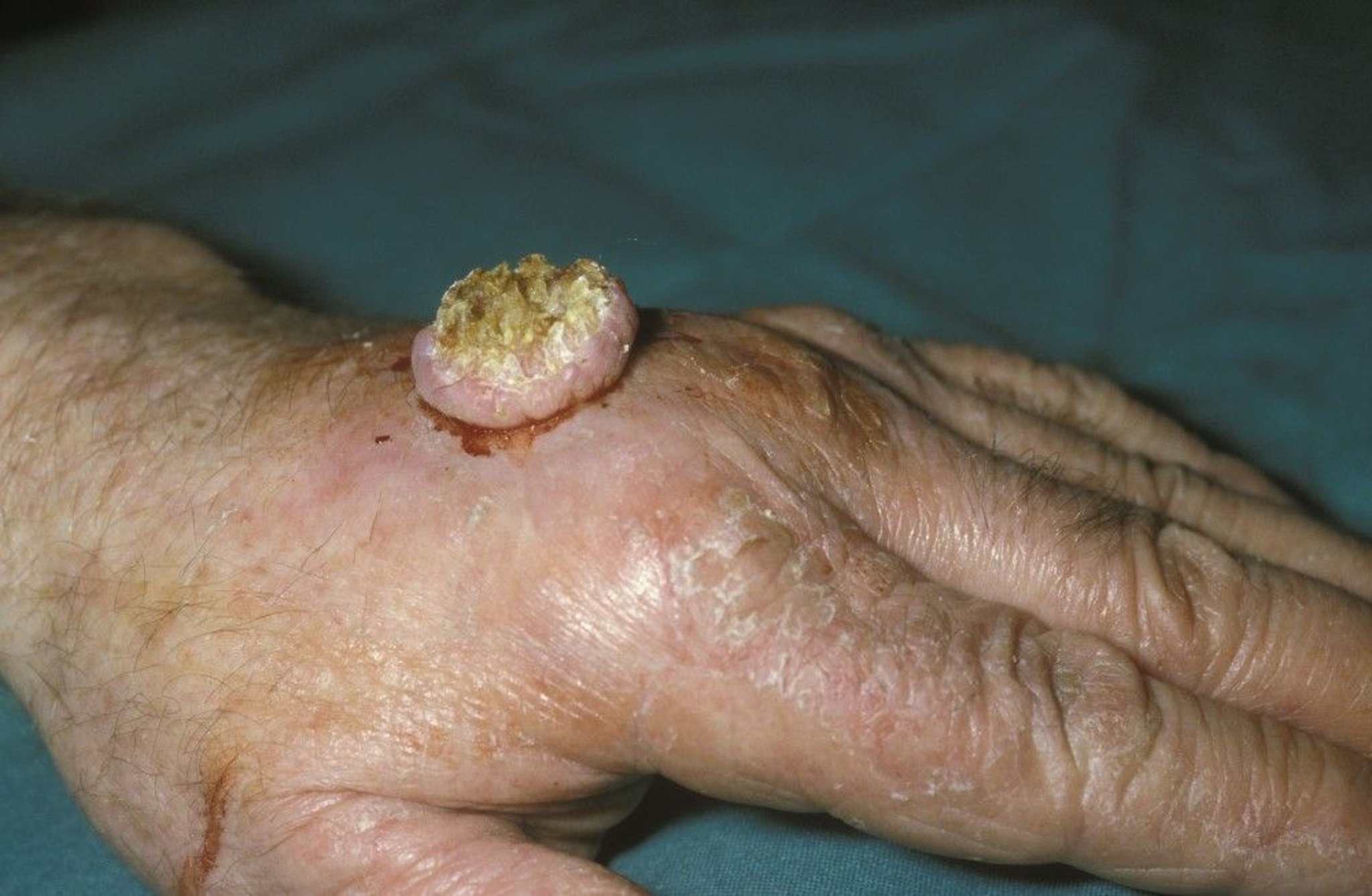
DR M.A. ANSARY/SCIENCE PHOTO LIBRARY
Etiology of keratoacanthoma is unknown. Most experts consider these lesions to be well-differentiated squamous cell carcinomas with a tendency to involute.
Development is rapid. Usually the lesion reaches its full size, typically 1 to 3 cm but sometimes > 5 cm, within 1 or 2 months. Common sites are sun-exposed areas, the face, the forearms, and the dorsum of the hands.
Spontaneous involution may start within a few months, but involution is not guaranteed.
Diagnosis of Keratoacanthoma
Biopsy or excision
Because this lesion cannot be relied on to involute, biopsy or excision is recommended.
Treatment of Keratoacanthoma
Prevention of Keratoacanthoma
It is unclear whether keratoacanthoma risk increases with increasing ultraviolet (UV) exposure. Because it may, a number of measures are often recommended to limit exposure.
Sun avoidance: Seeking shade, minimizing outdoor activities between 10 AM and 4 PM (when sun's rays are strongest), and avoiding sunbathing and the use of tanning beds
Use of protective clothing: Long-sleeved shirts, pants, and broad-brimmed hats
Use of sunscreen: At least sun protection factor (SPF) 30 with broad-spectrum UVA/UVB protection, used as directed (ie, reapplied every 2 hours and after swimming or sweating); should not be used to prolong sun exposure


