





(See also Overview of Platelet Disorders.)
Pathophysiology of TTP
Thrombotic thrombocytopenic purpura (similar to hemolytic-uremic syndrome [HUS]) involves nonimmunologic platelet destruction. Endothelial damage is common. Loose strands of platelets and fibrin are deposited in multiple small vessels and damage passing platelets and red blood cells (RBCs), causing significant thrombocytopenia and anemia (microangiopathic hemolytic anemia). Platelets are also consumed within multiple small thrombi, contributing to the thrombocytopenia.
acute kidney injury is rare, unlike in HUS. The microthrombi do not include RBCs or fibrin (unlike thrombi in disseminated intravascular coagulation) and do not manifest the vessel wall granulocytic infiltration characteristic of vasculitis). Large-vessel thrombi are uncommon.
Etiology of TTP
Thrombotic thrombocytopenic purpura (TTP) is caused by
gene.
In many acquired cases, the cause of the autoantibody is unknown. Known causes and associations include
Female sex
Black ethnicity
Pregnancy (TTP is often indistinguishable from severe preeclampsia or eclampsia)
Symptoms and Signs of TTP
Hereditary cases often manifest in infancy and early childhood. Acquired cases typically occur among adults. Initial symptoms range from mild and gradual to acute and severe. Without treatment, the disease progresses and is often fatal.
Anemia typically causes weakness and fatigue.
Thrombocytopenia often causes purpura or bleeding.
Manifestations of ischemia develop with varying severity in multiple organs. These manifestations include weakness, confusion, seizures, and/or coma, abdominal pain, nausea, vomiting, diarrhea, and arrhythmias caused by myocardial damage. Fever does not usually occur. The symptoms and signs of thrombotic thrombocytopenic purpura and hemolytic-uremic syndrome (HUS) are indistinguishable, except that neurologic symptoms are less common with HUS.
Diagnosis of TTP
Complete blood count (CBC) with platelets, peripheral blood smear, reticulocyte count, direct antiglobulin (Coombs) test, lactate dehydrogenase (LDH), prothrombin time (PT), partial thromboplastin time (PTT), fibrinogen, haptoglobin, and serum bilirubin (direct and indirect)
Urinalysis and renal function tests
ADAMTS 13 activity and autoantibody levels
Exclusion of other thrombocytopenic disorders
The diagnosis of TTP is suggested by
Thrombocytopenia and anemia
Fragmented red blood cells on the blood smear indicative of microangiopathic hemolysis (schistocytes: helmet cells, triangular RBCs, distorted-appearing RBCs)
Evidence of hemolysis (falling hemoglobin level, polychromasia, elevated reticulocyte count, elevated serum LDH and bilirubin, reduced haptoglobin)
Negative direct antiglobulin test
Normal coagulation profile
<≥disseminated intravascular coagulation, sepsis, occult cancer with hypercoagulability and migratory thrombophlebitis (Trousseau syndrome), preeclampsia, systemic sclerosis, systemic lupus erythematosus, accelerated hypertension
Otherwise unexplained thrombocytopenia and microangiopathic hemolytic anemia are sufficient evidence for a presumptive diagnosis.

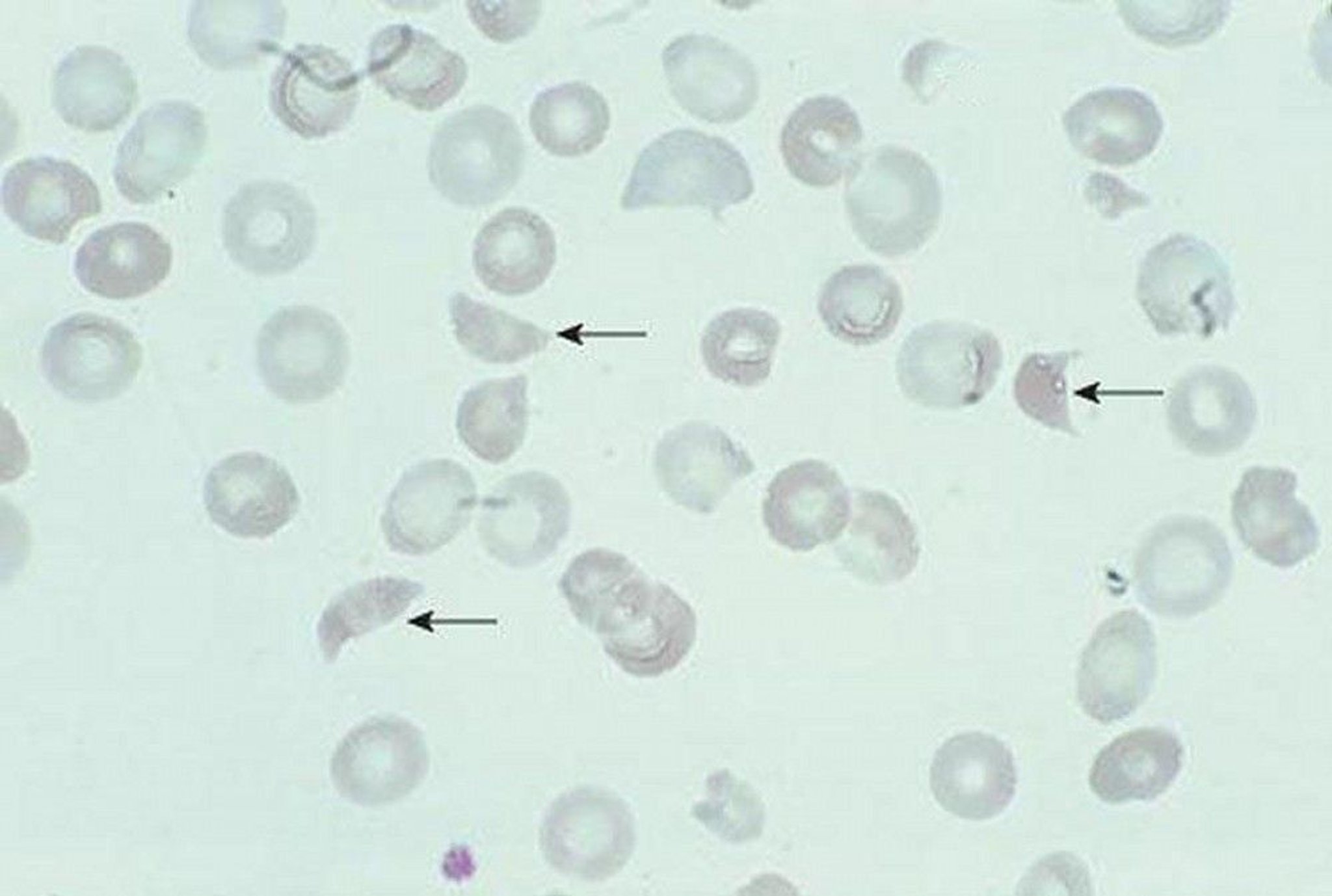
By permission of the publisher. From Tefferi A, Li C. In Atlas of Clinical Hematology. Edited by JO Armitage. Philadelphia, Current Medicine, 2004.
Treatment of TTP
Plasma exchange
Untreated thrombotic thrombocytopenic purpura is almost always fatal. With plasma exchange
Key Points
Platelets and red blood cells are destroyed nonimmunologically by microvascular thrombi, leading to thrombocytopenia, anemia, and organ ischemia.
Untreated thrombotic thrombocytopenic purpura is usually fatal.


